


Release Date: March 29, 1995 Developer: Origins Systems
Get It On: GOG
In the mid-90s, every PC game box promised a “cinematic experience” that would melt your motherboard. Most of them were lying, but Origin Systems—the legendary studio behind Ultima and Wing Commander—actually delivered. In 1995, they unleashed a weird, gory, and technically mind-blowing masterpiece called BioForge. It was a game that felt like it arrived from a dark, metallic future, and even though it never got the blockbuster franchise treatment it deserved, it remains one of the most fascinating artifacts in gaming history. It’s a cyberpunk survival horror fever dream that asks the age-old question: what do you do when you wake up as a cyborg in a dungeon with a missing memory and a very heavy metal arm?
A Rude Awakening in the Name of Science
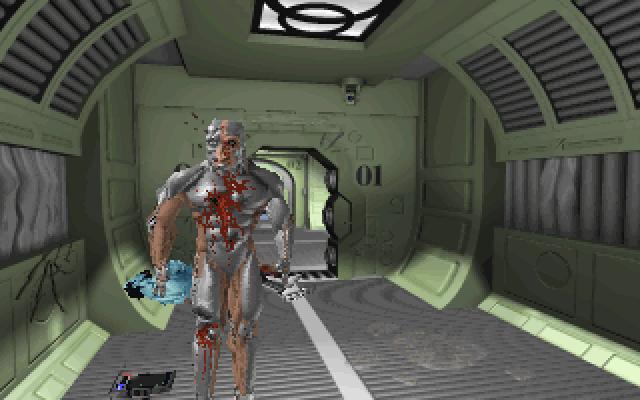
The game kicks off with one of the most effective and unsettling openings of the era. You wake up in a laser-barred cage, and you aren’t exactly yourself. You play as Lex, or at least that’s the name you eventually piece together. You’ve been kidnapped by a fanatical cult known as the Mondites, led by the dangerously unhinged Dr. Mastaba. These guys have a real obsession with “perfection through technology,” which is just a fancy way of saying they like to chop people up and turn them into living weapons.
When you first see yourself in the mirror, it’s a shock. You aren’t some sleek superhero; you are a hulking, clanking cyborg monstrosity with exposed wires and heavy plating. The game captures that sense of body horror perfectly. You don’t just walk; you stomp. You don’t just punch; you shatter things. The atmosphere is immediately thick with dread and metallic clanging, making you feel every bit of the industrial nightmare you’re trapped in. The writing is surprisingly sharp, leaning into a cyber-noir aesthetic where every log file you find adds a layer of grime to the already filthy world of the Daedalus research station.
Technological Sorcery and the Curse of Tank Controls
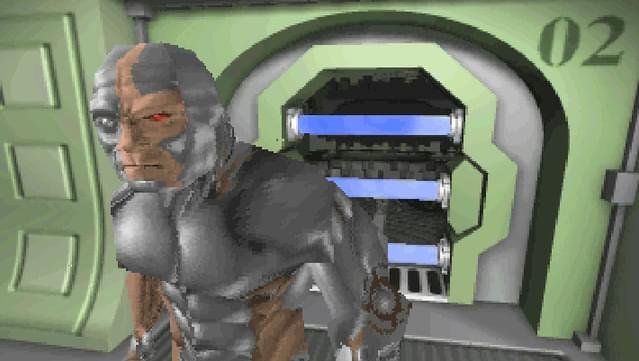
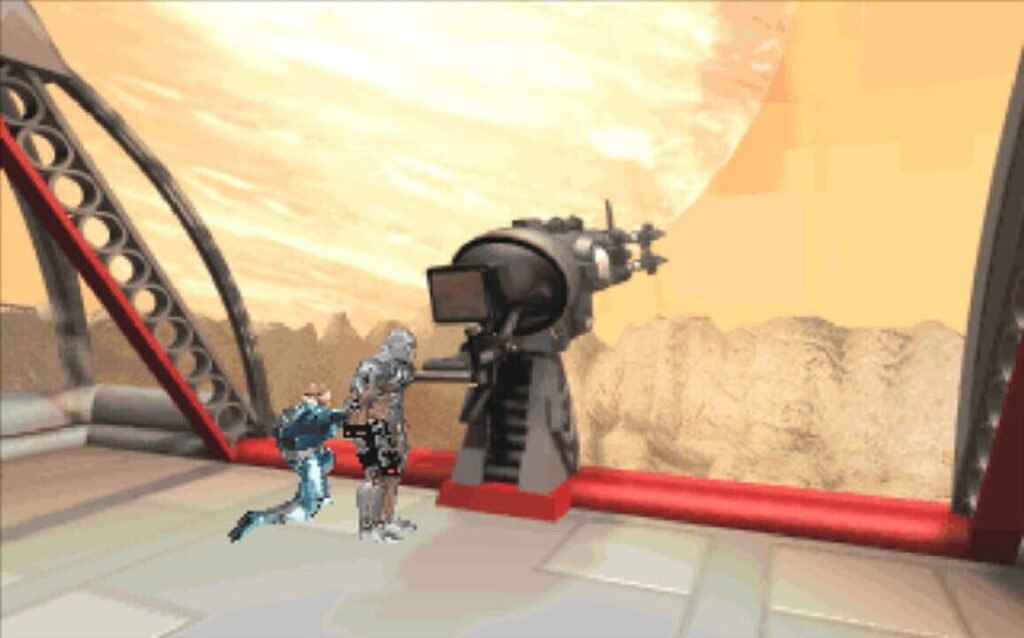
From a technical standpoint, BioForge was essentially a wizard’s trick in 1995. While most of the world was still getting used to 2D sprites, Origin was using fully 3D polygonal characters layered over beautifully rendered, high-resolution pre-rendered backgrounds. It looked years ahead of its time. The character animations used motion capture, which gave Lex and his enemies a weight and fluidity that was almost unheard of back then. If you hit an enemy in the head, they reacted differently than if you kicked them in the shins. This locational damage system wasn’t just for show; it was a core part of the brutal, physics-based combat.
However, having all that cutting-edge tech came with a price: the infamous tank controls. Long before Resident Evil made “turning like a tractor” a household frustration, BioForge was asking players to navigate complex 3D spaces using the arrow keys. It was clunky, it was awkward, and in the heat of a fight, it was downright terrifying. But strangely, it added to the immersion. You were a malfunctioning cyborg, after all. You weren’t supposed to be graceful. Every movement felt like you were fighting against your own mechanical bulk, which made the stakes of every encounter feel incredibly high.
The Legend of the Severed Arm
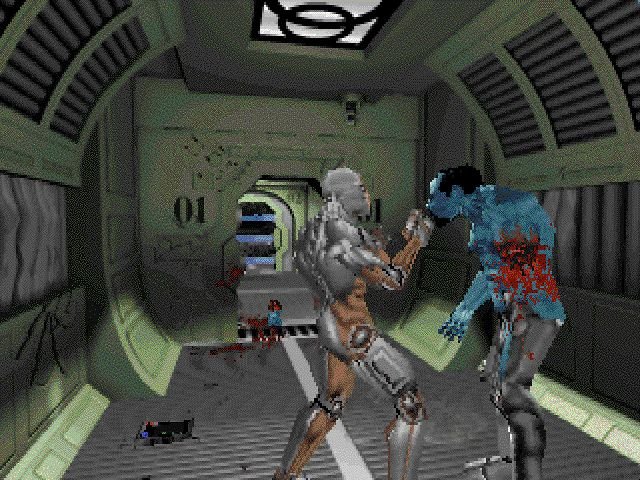
You can’t talk about BioForge without talking about its most iconic, “did they really just do that?” moment. Early in the game, you encounter a fellow prisoner who has clearly lost his mind. After a brief and unfortunate altercation, you find yourself in possession of… his severed arm. In most games, this would be a key item for a puzzle. In BioForge, it’s a weapon. You can literally beat your enemies to death with another man’s limb. It’s this specific brand of dark humor and unapologetic grit that gave the game its cult status.
The combat system itself was surprisingly deep. You could toggle into a combat stance that changed your movement keys into different types of attacks. There were low, medium, and high strikes, and managing your battery power was essential. If you used your powerful internal blaster too much, you’d run out of juice and be forced to rely on your mechanical fists. It was a stressful balancing act that kept the gameplay from ever feeling like a mindless brawler. You had to be methodical, choosing when to tank a hit and when to unleash a devastating combo.
Alien Ruins and a Plot That Never Ends
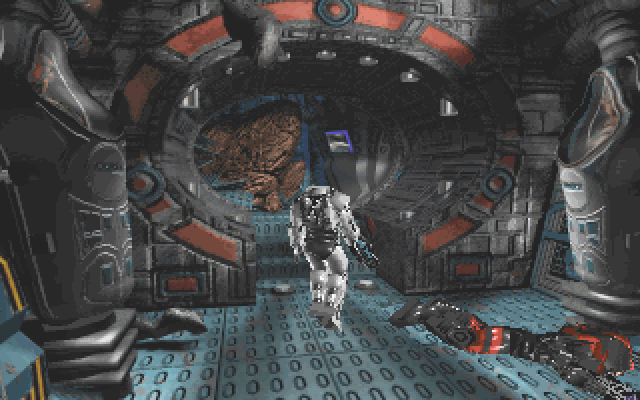
As you progress, the story shifts from a simple prison break into something much more cosmic. You discover that the research station is built on top of the ruins of an ancient alien civilization called the Phaeon. The mystery of what happened to these aliens—and how their technology is being twisted by Dr. Mastaba—is genuinely compelling. The game does an incredible job of making you feel like a small part of a much larger, much older story. The environmental storytelling, through the use of holographic logs and eerie alien artifacts, was masterfully done for the time.
But here is the real tragedy of BioForge: the ending. The game concludes on a massive, tantalizing cliffhanger that practically screams “To Be Continued.” Unfortunately, due to disappointing sales at the time, we never got the sequel. A planned expansion pack, BioForge Plus, was canceled late in development, leaving Lex’s story forever unresolved. For decades, fans have been left wondering what happened to our favorite clanking protagonist as he flew off into the unknown. It’s one of gaming’s greatest “what ifs,” leaving a void that even modern spiritual successors haven’t quite filled.
The Legacy of a Cybernetic Underdog
Despite its lack of a sequel, BioForge‘s influence can be seen in everything from the cinematic horror of Dead Space to the choice-driven narratives of modern RPGs. It was a game that dared to be weird, difficult, and technologically ambitious at a time when the rules of 3D gaming were still being written. It’s a testament to the creativity of Origin Systems and their willingness to push the boundaries of what a PC could do.
If you’re a fan of retro gaming or just someone who appreciates a story with a lot of heart (and a lot of chrome), BioForge is absolutely worth a revisit. You can find it on digital storefronts like GOG, and with a little bit of patience for those tank controls, you’ll find a world that is just as atmospheric and haunting today as it was nearly thirty years ago. It’s a reminder that even in the cold, hard world of machines, there’s a hell of a story to be told.
A New Heart for an Old Machine: The OpenBioForge Project
If you love BioForge but find that the 1995 controls make you feel more like a malfunctioning toaster than a badass cyborg, there is a beacon of hope shining from the modding community. Enter OpenBioForge, an ambitious, fan-led open-source engine recreation that aims to drag Lex out of the DOS era and into the modern world.
The Vision of Tim Comport
The project is the brainchild of developer Tim Comport, a long-time fan who has spent years reverse-engineering the game’s original code. The goal isn’t just to make the game run on modern PCs—we already have DOSBox for that—but to completely rewrite the game engine from scratch. By doing this, the project can implement features that the original developers at Origin Systems could only dream of back in the mid-90s.
During a major 30th Anniversary Showcase in 2025, Comport showed off significant progress, proving that this isn’t just “vaporware.” The project successfully recreates the game’s unique S.A.L.S.A. animation system (System for Animating Lifelike Synthetic Actors), which was the secret sauce behind the game’s fluid, lifelike movements.
Modern Upgrades for a Classic Cyborg
The “Open” in OpenBioForge brings some massive Quality of Life improvements that change the entire feel of the game:
- Responsive Controls: The project is tackling the “tank controls” head-on. It introduces a hybrid locomotion system that allows for much more fluid, modern movement and includes full gamepad support with analog stick control.
- Enhanced Graphics: While it preserves the iconic pre-rendered backgrounds, the 3D character models are now rendered using OpenGL. This means no more jagged software-rendered pixels—just crisp, smooth cybernetic textures.
- Physics Overhaul: A custom physics engine has been integrated to handle collisions and environmental interactions more naturally, making the brutal combat feel even more impactful.
- Cross-Platform Play: Because it’s a new engine, it’s being built to run natively on Windows, Linux, and macOS without needing a clunky emulator.
It is important to note that OpenBioForge is an engine, not a free version of the game. Much like OpenMW for Morrowind, you still need to own a legal copy of the original game (like the one from GOG) because the project doesn’t include any of the copyrighted assets like music, textures, or voice acting. It simply provides a modern “brain” to run those original files
As of early 2026, the project is still a work-in-progress. While you can’t download a finished “1.0” version just yet, the developer has stated that the source code will eventually be released under the GPL v3 license. It is a labor of love dedicated to game preservation, ensuring that one of the most unique sci-fi adventures ever made remains playable for another thirty years.