
Release Date: September 20, 1996 Developer: Bethesda Softworks Get It On: GOG
When Games Were Too Big for Their Own Good
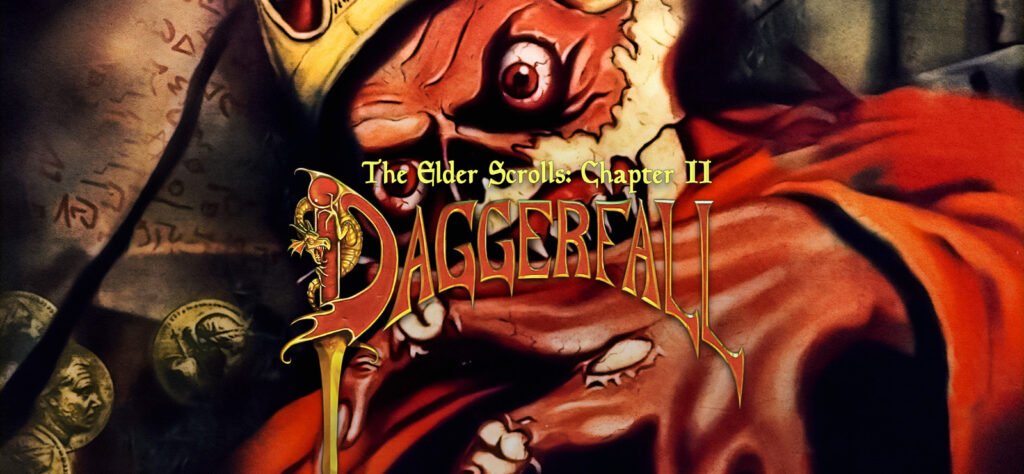
Back in the mid-nineties, the gaming industry was a bit like the Wild West. Developers weren’t just trying to make better games; they were trying to invent new ways to exist within digital spaces. Enter The Elder Scrolls II: Daggerfall, a game so mind-numbingly massive and ambitious that it effectively broke the scale of what we thought an Open World RPG could be. While modern gamers often praise the density of Skyrim or the narrative focus of The Witcher 3, Daggerfall represents a different philosophy entirely: the dream of a true Life Simulator set in a high-fantasy world. It wasn’t just a sequel to Arena; it was a declaration that the physical limits of a game world should only be restricted by the size of your hard drive.
Even today, looking back from 2026, the sheer scope of the Iliac Bay is intimidating. We’re talking about a map the size of Great Britain, filled with thousands of towns, hundreds of thousands of NPCs, and dungeons that can take literal hours of real-world time to navigate. It earned the nickname “Buggerfall” shortly after launch for being a technical catastrophe, but underneath the crashes and the falling-through-the-floor glitches lay a masterpiece of systemic design. It is a game that wants you to live a second life, whether that life involves becoming a legendary hero or just a guy who owes the Bank of Daggerfall a significant amount of gold and decided to skip town to Hammerfell.
The Most Stressful Questionnaire in Gaming History
The journey begins with a character creator that puts almost every modern equivalent to shame. Instead of just picking a class and moving on, Daggerfall lets you craft a person. You can choose to answer a series of moral and tactical questions that determine your starting equipment and reputation, or you can dive into the deep end and build a custom class. This is where the game’s legendary Advantages and Disadvantages system comes into play. You want to be a warrior who is completely immune to magic but also happens to be terrified of the dark and unable to use silver weapons? You can do that. By balancing these traits, you can manipulate the difficulty dagger, which dictates how fast your character levels up.
It is a level of roleplaying depth that feels almost lost in the modern era of streamlined experiences. You aren’t just choosing how hard you hit; you’re choosing how you interact with the laws of the world. If you take the “forbidden weaponry” disadvantage for iron and steel, you’re basically committing to a very difficult early game, but the reward is a character that becomes a god-tier powerhouse once they find Daedric gear. This system encourages a level of experimentation that makes every single playthrough feel distinct from the last, even before you step foot outside the opening dungeon of Privateer’s Hold.
A World Built by Math and Ambition
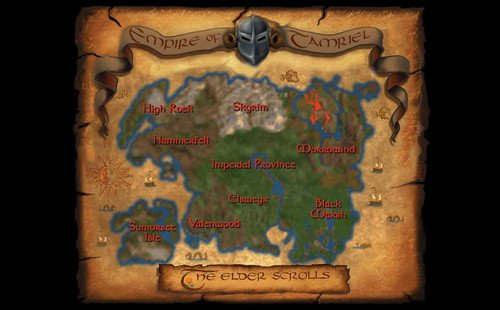
The most famous—or perhaps infamous—aspect of Daggerfall is its procedural generation. Unlike the handcrafted hills of modern Tamriel, the Iliac Bay was generated via algorithms. This results in a world that is objectively “empty” by modern standards, but it provides a sense of unrivaled scale. When you step out of a tavern and look at the map, you’re seeing a province. Walking from one city to another is a journey that would take days of real time if you didn’t use the fast travel system. This scale gives the world a feeling of “realness” that the smaller, denser maps of later games struggle to replicate.
Within this massive expanse, the game tracks your reputation with dozens of different factions. You are a member of the Mages Guild, a candidate for the Dark Brotherhood, and a pawn in the political machinations of the royal families of Daggerfall, Wayrest, and Sentinel. The game handles these relationships with a complexity that makes the world feel lived-in. If you get caught stealing in a small village, the local guards will remember. If you fail a quest for a noble, your standing with their entire court will plummet. It creates a feeling that you are a small part of a very large, very indifferent machine, which is a refreshing change from the “chosen one” narratives that dominate the genre.
Swinging Mice and Dungeon Delving
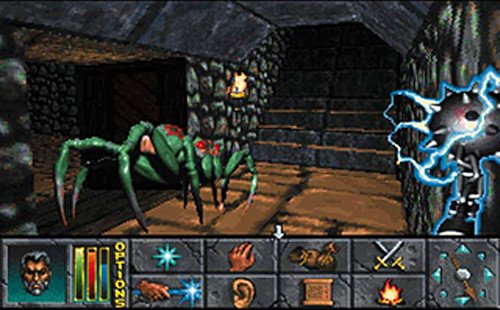
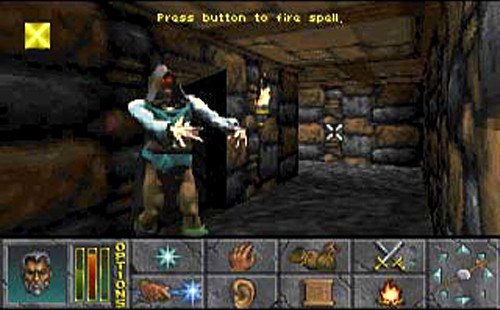
The combat in Daggerfall is a product of its time, but it remains incredibly engaging. To attack, you hold down the right mouse button and physically swing your mouse in the direction you want your sword to go. A horizontal swipe does a standard slash, an upward thrust provides more accuracy, and a downward chop deals more damage. It’s a tactile system that keeps you engaged with the screen rather than just clicking a button and watching an animation play out. When you combine this with the Spell Maker—a system that allows you to create custom magical effects by combining different properties—the gameplay becomes a playground for power gamers and creative thinkers alike.
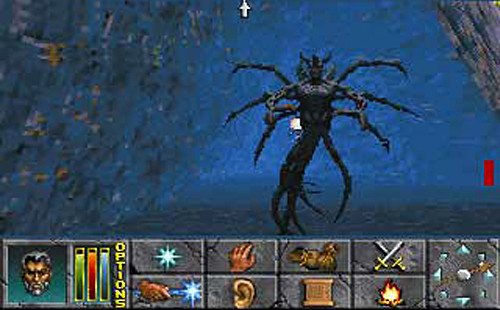
However, you can’t talk about Daggerfall without mentioning the dungeons. These are not the linear paths found in Skyrim. These are megadungeons—sprawling, multi-leveled labyrinths that use the same “red brick” aesthetic to hide secret doors, teleporters, and pits. Navigating them requires a genuine sense of direction and a heavy reliance on the 3D Map, which is itself a bit of a nightmare to read. There is a legitimate sense of relief when you finally find the quest item or the boss and manage to make your way back to the exit. It’s grueling, it’s confusing, and it’s one of the most rewarding dungeon-crawling experiences in the history of CRPGs.
The Ghost King and the Giant Robot
The Main Quest of Daggerfall is surprisingly sophisticated for a 1996 title. You are sent by Emperor Uriel Septim VII to do two things: find a missing letter and exorcise the ghost of King Lysandus. What starts as a simple investigation quickly spirals into a political thriller involving ancient artifacts, betrayal, and a giant brass golem known as the Numidium. Unlike later games where the “good” and “bad” endings are clearly defined, Daggerfall features a variety of different outcomes based on which faction you decide to hand the Totem of Tiber Septim to.
This leads to the “Warp in the West,” a canonical event in Elder Scrolls lore that explains how all the endings happened simultaneously. It’s a brilliant bit of writing that respects the player’s choice while maintaining a cohesive world history. The questline forces you to engage with the political landscape of the Iliac Bay, making you realize that the monsters in the dungeons are often less dangerous than the diplomats in the palaces. It’s a story about power and the lengths people will go to obtain it, and it holds up remarkably well three decades later.
The Modern Miracle of Daggerfall Unity
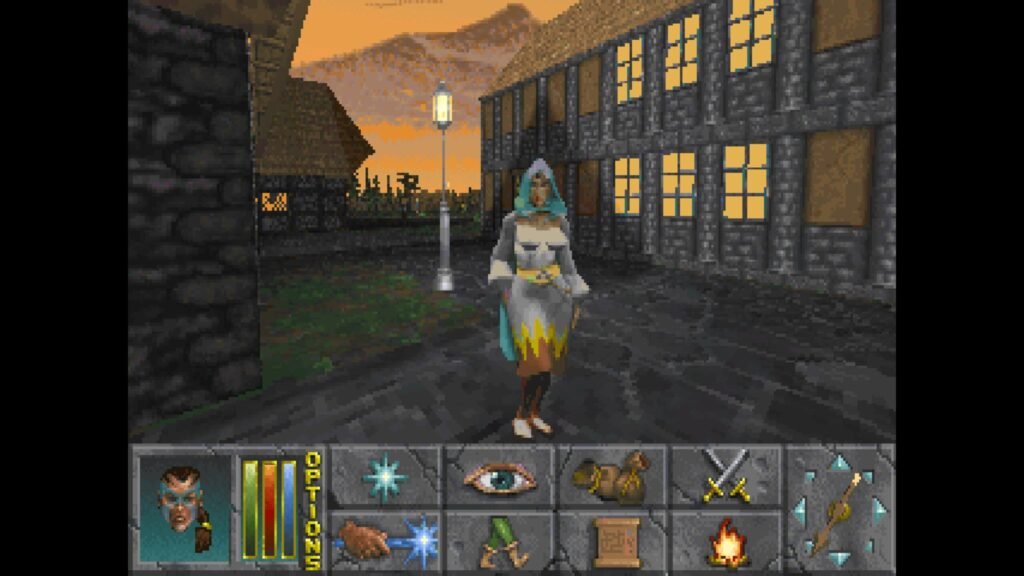
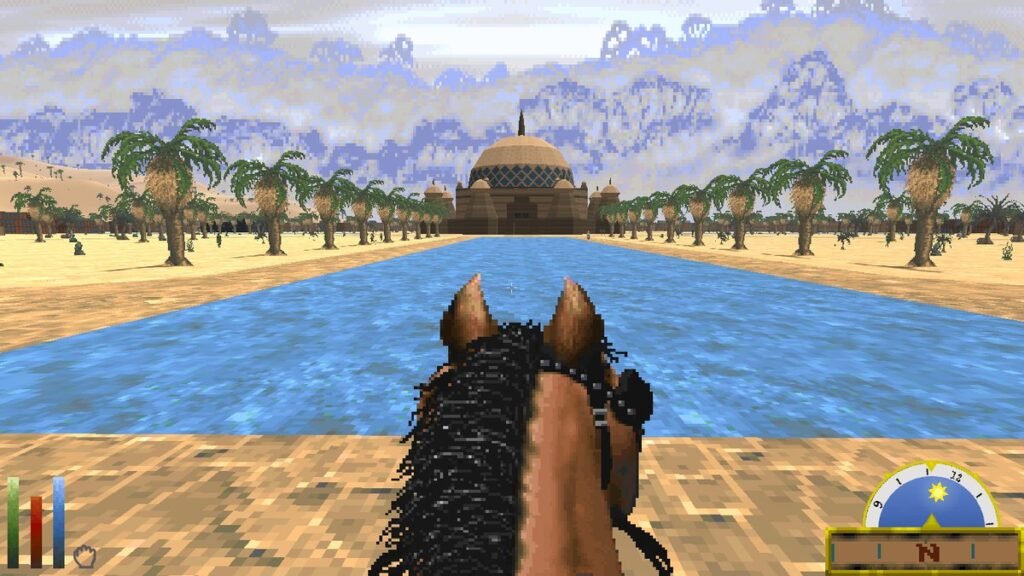
For years, playing Daggerfall was a chore involving DOSBox configurations and a constant fear of the game crashing during a transition. However, the community-led project known as Daggerfall Unity has completely revitalized the experience. Developed by Gavin “Interkarma” Clayton and a dedicated team of volunteers, this engine rewrite brings the game into the modern era while preserving its soul. It fixes the thousands of bugs that plagued the original release, introduces high-resolution support, and implements a much-needed modern control scheme. Most importantly, it opened the floodgates for a massive modding scene. You can now play Daggerfall with beautiful 3D environments, improved NPC AI, and expanded questlines that make the world feel even more alive. By the time it reached its 1.0 release in late 2023, it became the definitive way to play, proving that the game’s original vision was simply too big for the hardware of 1996. Even in 2026, the modding community continues to push the boundaries of what this engine can do, ensuring that the Iliac Bay will never truly go dark.
A Legacy of Unfiltered Freedom
In the end, The Elder Scrolls II: Daggerfall is a game about freedom. It doesn’t hold your hand, it doesn’t tell you where to go, and it certainly doesn’t care if you get lost in a hole for three hours. It is a monument to a specific era of game design where “more” actually meant “more.” While it can be intimidating, clunky, and occasionally frustrating, there is a majesty to its ambition that few games have dared to touch since. It is the raw, uncut essence of the RPG genre—a world where you can be anyone, do anything, and potentially break everything in the process. If you have any interest in the history of the genre, or if you just want to see what happens when a developer swings for the fences and actually hits a home run, you owe it to yourself to return to the bay. Just remember to pack a few Recall spells; you’re going to need them.