

To understand where the modern Role-Playing Game truly began, you have to go back to a time when graphics were made of lines, “storage” meant a floppy disk, and difficulty levels were set to “pure agony.” In 1981, Andrew Greenberg and Robert Woodhead released a little game called Wizardry: Proving Grounds of the Mad Overlord under the Sir-Tech banner. It was the blueprint for nearly every party-based dungeon crawler that followed, eventually serving as the primary inspiration for Japanese giants like Dragon Quest and Final Fantasy. Fast forward to today, and the preservation specialists at Digital Eclipse have done the unthinkable: they’ve taken that archaic, wireframe masterpiece and rebuilt it from the ground up for a modern audience without losing a single drop of its original, brutal soul.
A Masterclass in Digital Archaeology
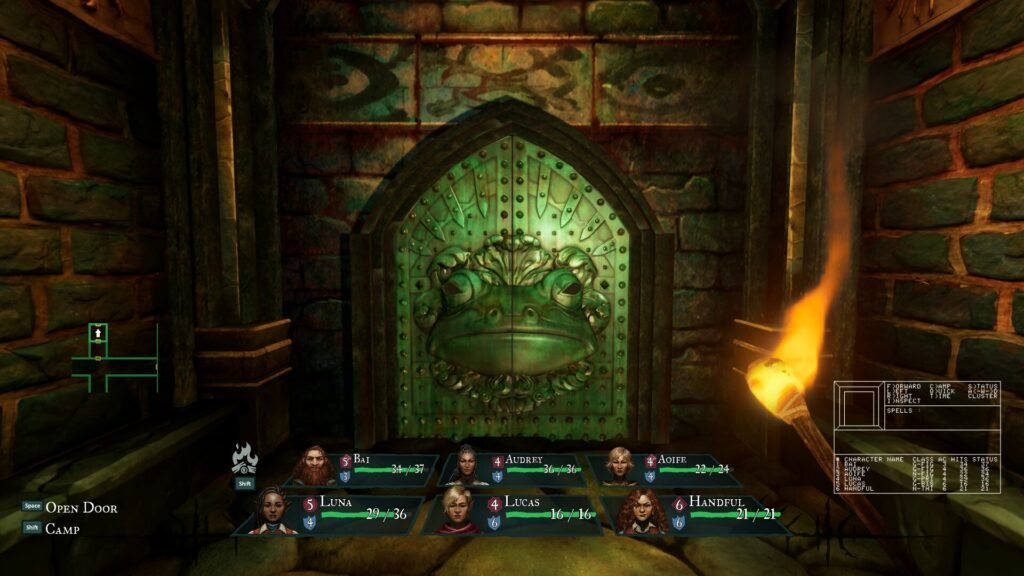
Digital Eclipse has earned a massive reputation in the industry for being the “Criterion Collection” of video games. Whether it’s their work on Atari 50 or The Making of Karateka, they don’t just port games; they document them. With the Wizardry remake, they took a unique approach that they call the “Gold Master Series” style of development. Instead of just making a game that looks like Wizardry, they actually built the new Unreal Engine 4 visuals directly on top of the original 1981 Apple II code.
When you play this remake, you aren’t playing a “reimagining” that tweaks the math or changes the encounter rates to be more “fair” by modern standards. You are playing the original game, line for line, bug for bug (mostly), but with a gorgeous new coat of paint. In fact, if you look at the bottom right of the screen while playing, you can actually toggle a small window that shows the original low-res wireframe version of the dungeon moving in perfect synchronization with the new 3D environments. It is a stunning bit of technical wizardry that serves as a constant reminder of the game’s legendary pedigree.
Entering the Labyrinth of Trebor
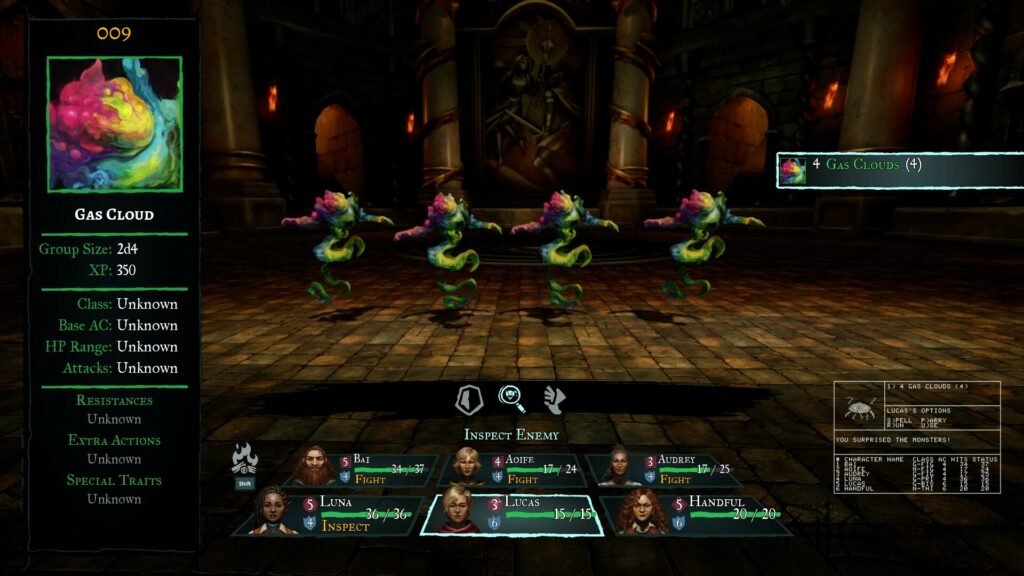
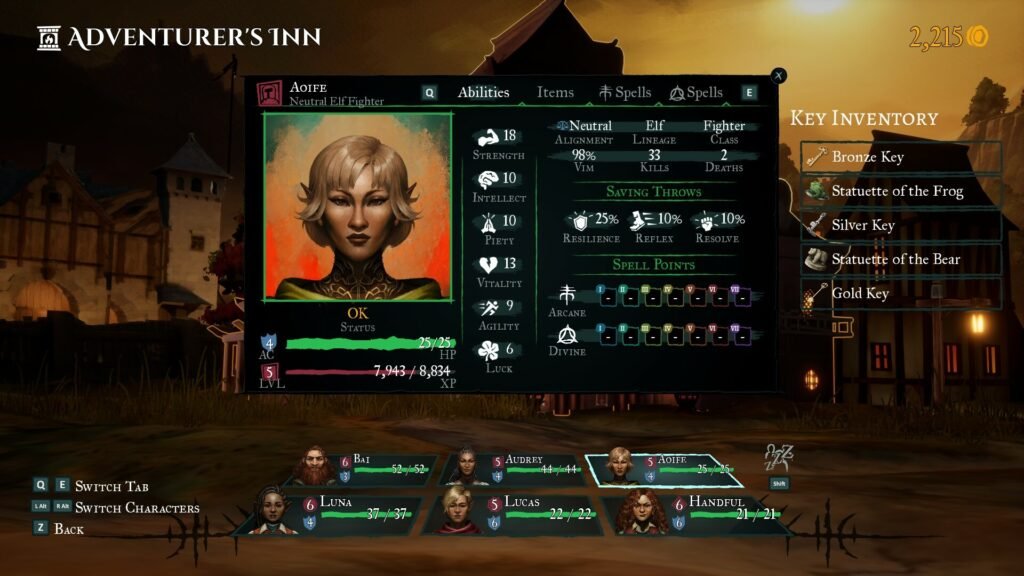
The premise is as classic as it gets. You are tasked by the slightly unhinged Overlord Trebor to descend into a ten-floor labyrinth to recover an amulet stolen by the evil archmage Werdna (which, as many eagle-eyed fans know, is just the creators’ names spelled backward). You start in the Castle, where you must assemble a party of six brave (or suicidal) adventurers. The character creation is a deep dive into classic RPG statistics, where you roll for bonus points and choose between races like Humans, Elves, Dwarves, Gnomes, and Hobbits.
Classes are standard but vital, ranging from the front-line Fighters and Priests to the back-row Mages and Thieves. For the truly dedicated, there are elite classes like the Samurai, Lord, Ninja, and Bishop, though getting the stats required to roll one of these at the start of the game is like winning the lottery. Once your party is formed, you head into the dungeon, and that is where the real “fun” begins. By fun, I mean the constant, hovering threat of permadeath and the realization that the dungeon does not care about your feelings.
Respecting the Old School Brutality
The Proving Grounds of the Mad Overlord is famous—or perhaps infamous—for being one of the most punishing experiences in gaming history. In the original version, if your entire party died on level four, they stayed there. You had to roll a brand-new party, train them up, and physically hike down to the spot where your old party died just to recover their corpses and bring them back to the temple for a (very expensive and potentially failing) resurrection.
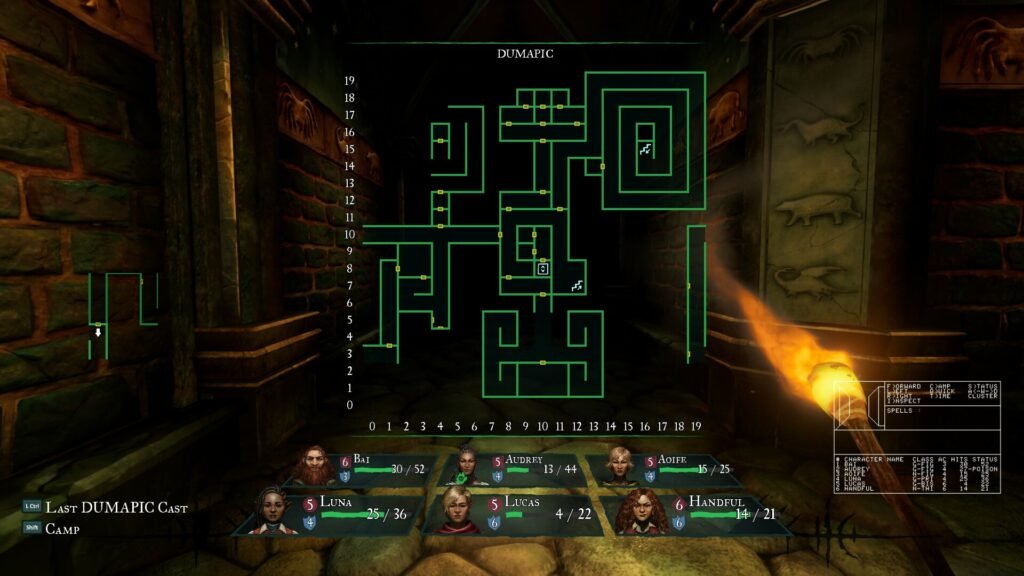
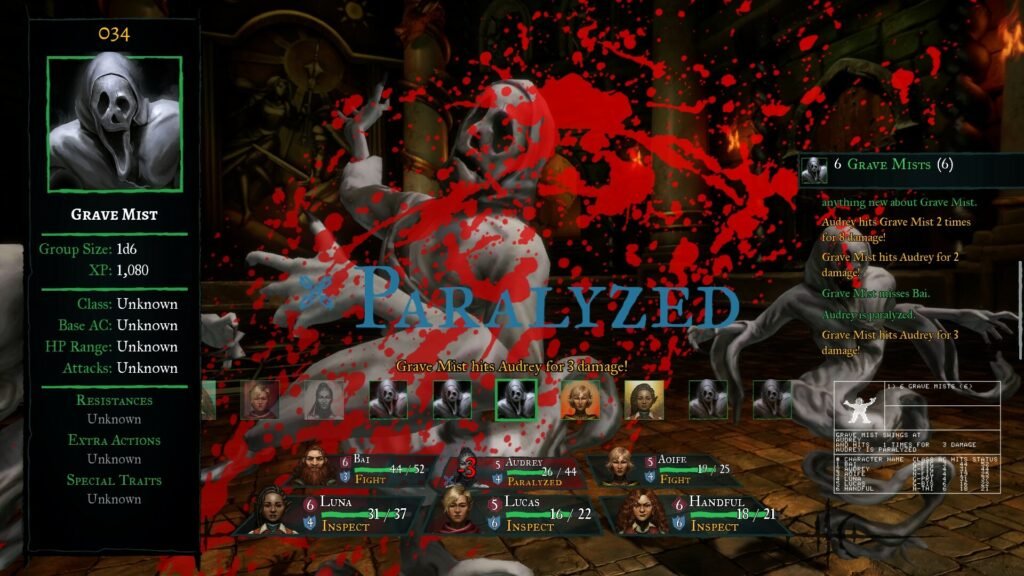
Digital Eclipse has handled this brilliantly. They have kept the original difficulty intact for the purists, but they’ve added a host of optional Quality of Life (QoL) features that make the game much more palatable for someone who didn’t grow up drawing their own maps on graph paper. You can now enjoy features like Auto-Mapping, which is a godsend for anyone who has ever been teleported into a dark room and lost their sense of direction. They’ve also streamlined the UI, making combat—which is turn-based and relies heavily on spell management—much faster and more intuitive. However, the core tension remains. One bad encounter with a group of Creeping Cruds or a Level Drain from a vampire can still ruin your entire week, and that’s exactly how it should be.
Visuals that Breathe Life into the Dark
The graphical overhaul is nothing short of spectacular. The dungeon is no longer just a series of white lines on a black background; it is a damp, oppressive, and atmospheric labyrinth filled with flickering torches, ancient stonework, and terrifying monsters. The creature designs are particularly noteworthy. Digital Eclipse took the original, often bizarre 2D monster portraits and turned them into fully animated, 3D nightmares that retain the “sketchbook” feel of the 1980s manual illustrations.
Seeing a Murphy’s Ghost or a Greater Demon in high-definition for the first time is a treat for long-time fans. The lighting effects in the Unreal Engine add a layer of tension that simply wasn’t possible on the Apple II. When your “Light” spell starts to flicker and fade, and the shadows begin to close in on your party, the sense of dread is palpable. The audio design complements this perfectly, with a soundtrack that feels epic yet lonely, capturing the isolation of being miles beneath the earth in search of a madman’s trinket.
Why the Mad Overlord Still Matters
You might wonder why anyone would want to play a game from 1981 in the year 2026. The answer lies in the purity of the loop. There is something incredibly satisfying about the “town-to-dungeon” cycle of Wizardry. You go in, you push your luck as far as your MP will allow, you find a piece of loot that might be a magical sword or a deadly trap, and you pray you make it back to the stairs before a random encounter wipes you out. It is the purest form of risk vs. reward gaming.
Digital Eclipse’s remake of Wizardry: Proving Grounds of the Mad Overlord is a bridge between generations. It allows veterans to revisit their youth without the frustration of mounting old hardware, and it gives newcomers a chance to see the roots of the RPG genre in a format that doesn’t feel like a chore to play. It is a love letter to the era of manual-heavy gaming, where the world was mysterious and the victories were hard-earned. If you have any interest in the history of the medium, or if you just want to see if you have what it takes to survive Werdna’s wrath, this is an essential addition to your library.