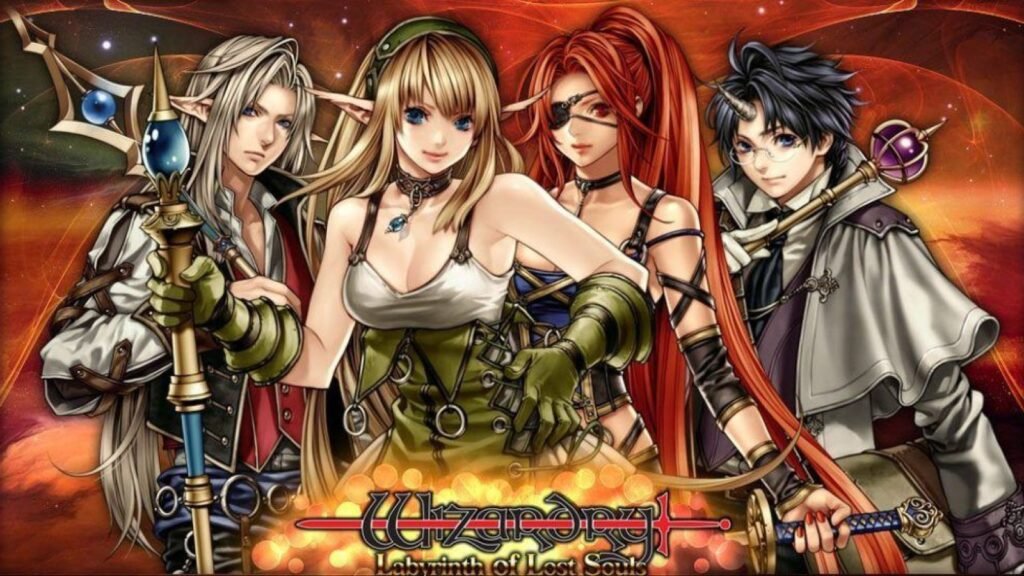

While the Wizardry series originally began as a Western PC phenomenon, its DNA essentially became the foundation for the entire JRPG genre. While Western audiences moved toward open-world action games like Skyrim, the Japanese development community stayed obsessed with the “blobber”—the first-person, grid-based dungeon crawler. Developed by Acquire and eventually brought to PC by XSEED Games, Labyrinth of Lost Souls is a vibrant, punishing, and deeply atmospheric love letter to those classic roots, draped in beautiful modern anime-style artwork.
The Japanese Stewardship of a Legend
To understand Labyrinth of Lost Souls, you have to appreciate the weird and wonderful history of the Wizardry brand. After the original developers at Sir-Tech closed their doors, the license for the series actually transitioned to Japanese companies who had been making spin-offs for decades. This resulted in a unique evolution where the mechanics stayed strictly old-school, but the visual presentation shifted toward the high-fantasy aesthetic popular in Japanese media. When you boot up Labyrinth of Lost Souls, the first thing that hits you is the gorgeous character art by Yuki Hayabusa. It’s a far cry from the tiny, static portraits of the 80s, offering a cast of heroes that look like they belong in a prestige fantasy anime, yet the game beneath that polish is as brutal as anything from 1981.
The game acts as a sort of entry point for modern players into the world of hardcore DRPGs (Dungeon Role-Playing Games), but it doesn’t hold your hand. It expects you to respect its systems, and it expects you to die. Frequently. For fans of the genre, that’s not a deterrent; it’s a promise of a rewarding, high-stakes adventure where every single step into the dark matters.
Building Your Imperial Expedition
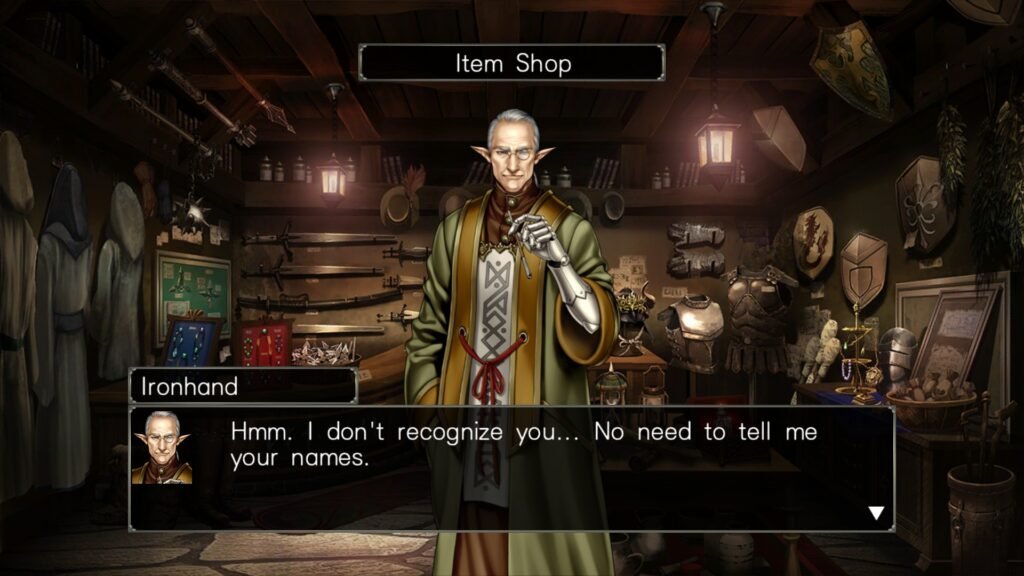
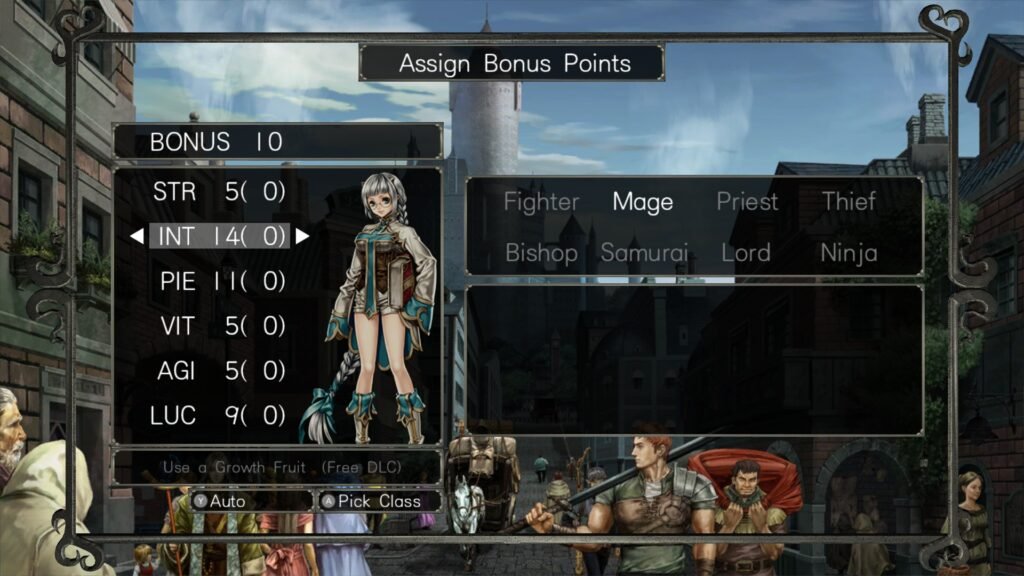
The journey begins in the City of Athar, which serves as your central hub. Like any good Wizardry title, your first task is assembling a party of six brave souls. You have a selection of classic races—Humans, Elves, Dwarves, Gnomes, and the adorable but deceptively capable Porklu (this game’s version of a Hobbit). From there, you assign them to classes like Fighter, Mage, Priest, and Thief. If you’re lucky with your initial stat rolls, you might even snag an elite class like the Samurai, Ninja, or Bishop right out of the gate, though most players will have to “class change” later in the game once their characters have grown stronger.
What makes Labyrinth of Lost Souls interesting is the way it handles character alignment. Your party’s Alignment (Good, Neutral, or Evil) dictates who can work together and which classes are available. It adds a layer of party management that forces you to think about the social dynamics of your group. Do you want a party of righteous paladins, or a gritty group of thieves and assassins who are only in it for the gold? The choice is yours, but remember that certain spells and equipment are locked behind these moral choices, making your party composition one of the most important tactical decisions you’ll make.
Descending into the Shiin’s Dungeon
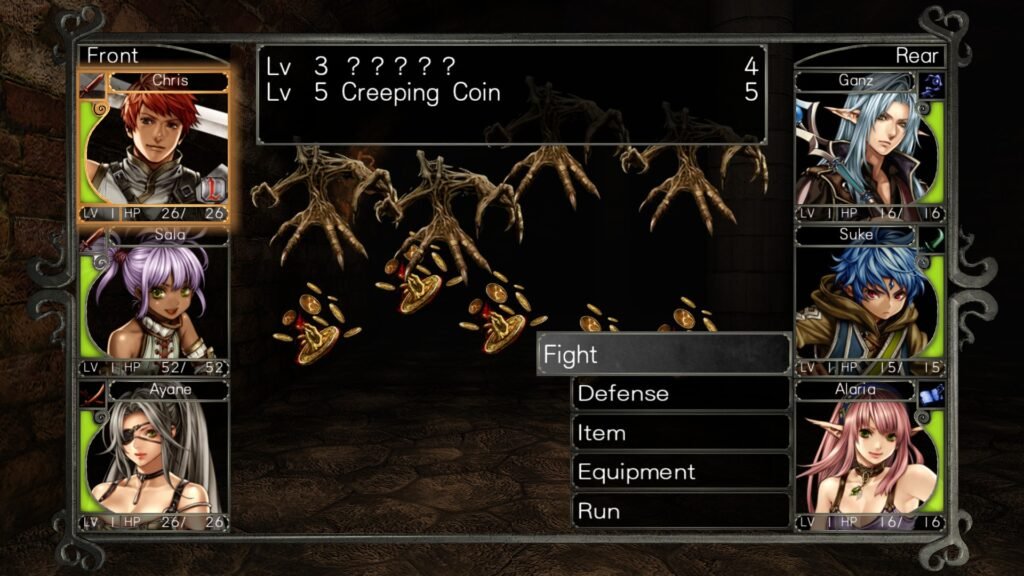
The meat of the game takes place in the sprawling, multi-floor labyrinths known as Shiin’s Dungeon and the Deepest Level. These are not your typical modern RPG maps where you can just follow a quest marker to victory. These are true first-person mazes filled with hidden doors, teleporters, pitfalls, and anti-magic zones. The tension of exploring a new floor is real; your resources are always limited, and your MP (Magic Points) is divided into tiers, meaning you only have a few casts of your most powerful spells before you have to retreat to the surface to rest.
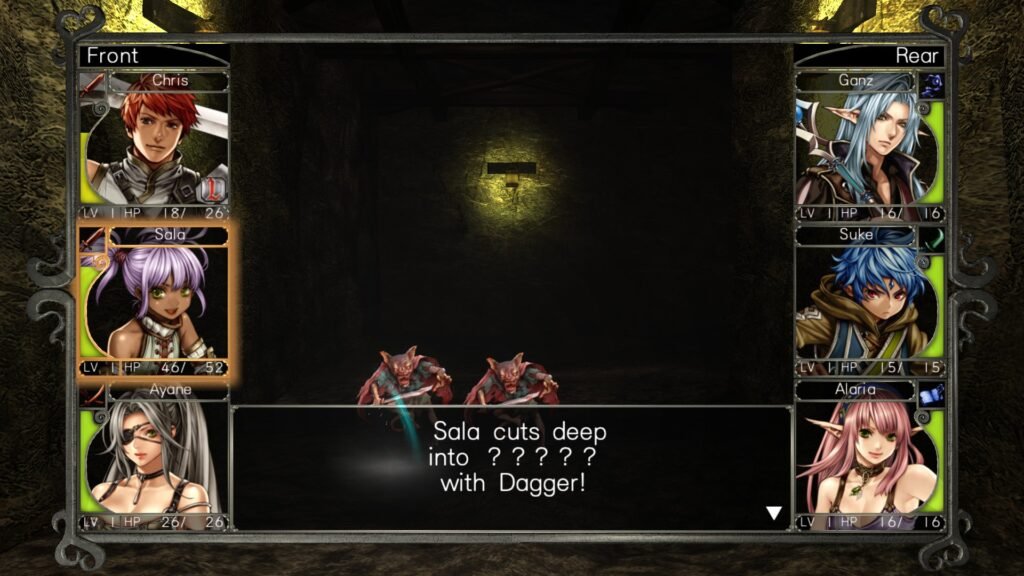
The combat is a fast-paced, turn-based affair that prioritizes strategy over flashy animations. You’ll face off against hordes of monsters, from standard skeletons to bizarre, original creations that look like they stepped out of a fever dream. The game uses a “front row/back row” system, where your heavy hitters protect your fragile spellcasters. Managing your AoE spells and knowing when to use a Thief’s ability to hide or disarm a trap is the difference between a successful haul and a Total Party Kill.
The Terror of the “Lost” Status
We need to talk about the “Lost” mechanic because it is the stuff of nightmares for the uninitiated. In Wizardry: Labyrinth of Lost Souls, death is not always the end, but it is a massive gamble. When a character dies, they enter a “Dead” state. You can take them to the Temple to have them resurrected, but there is always a chance the ritual fails. If it fails, the character becomes Ash. If the resurrection fails again while they are in the Ash state, the character is Lost.
When a character is Lost, they are deleted. Forever. All their levels, their gear, and your emotional investment in them vanish into the digital ether. This creates a level of permadeath tension that very few modern games can replicate. Every time you cast a resurrection spell, your heart is in your throat. It forces you to play carefully, to value your party’s lives, and to know exactly when to run away from a fight. It’s a “tough love” approach to game design that makes your eventual victories feel incredibly earned.
A Modern Home on PC
While the game originally made waves on the PlayStation 3 and Vita, the modern PC port on Steam is arguably the best way to play it today. The port includes all the original DLC, such as the additional story scenarios and extra dungeon floors that were originally sold separately. It also features a much-needed boost in resolution, allowing the intricate monster designs and character portraits to shine on a large monitor. The UI has been tweaked for mouse and keyboard support, though many purists still prefer playing with a controller to mimic that classic console feel.
For those who find the grind a bit too much, the PC version also offers some flexibility in how you approach the game, but it never compromises on the core Wizardry identity. It remains a game about the unknown, about the fear of what’s around the next corner, and the joy of finding a rare piece of loot after hours of struggling through the dark. It is a niche title, certainly, but for anyone who misses the days when games didn’t pull their punches, it is a dark, beautiful, and addictive journey.