
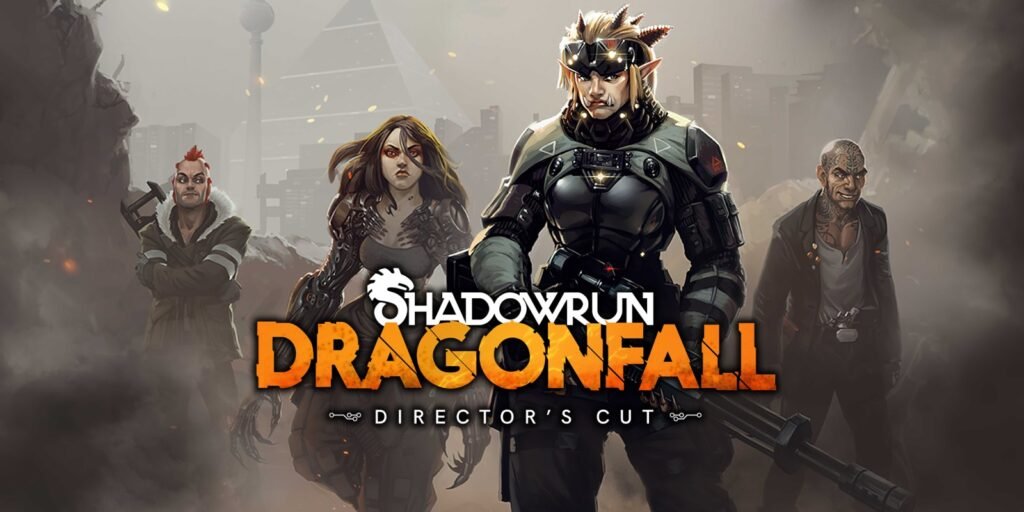

Release Date: February 27, 2014 Developer: Harebrained Schemes
Get It On: GOG
There is a specific kind of magic that happens when a developer completely nails the landing on a second attempt. When Harebrained Schemes first dropped Shadowrun Returns back in 2013, it was a solid, nostalgic trip down memory lane for fans of the classic tabletop RPG. It gave us the neon lights, the deckers, the street samurais, and the magic. But it felt a bit like a proof of concept—a linear ride through a digital playground. Then came Shadowrun: Dragonfall, originally a massive expansion that later earned its own well-deserved standalone Director’s Cut. That is where the magic turned into absolute awesomeness.
If you have ever wanted to experience a world where corporate espionage, high-tech hacking, and ancient elven magic collide over a backdrop of rain-slicked concrete, this is your holy grail. Let us dive into why this specific slice of Berlin’s anarchist Flux State remains one of the finest isometric RPGs ever crafted.
Welcome to the Flux State
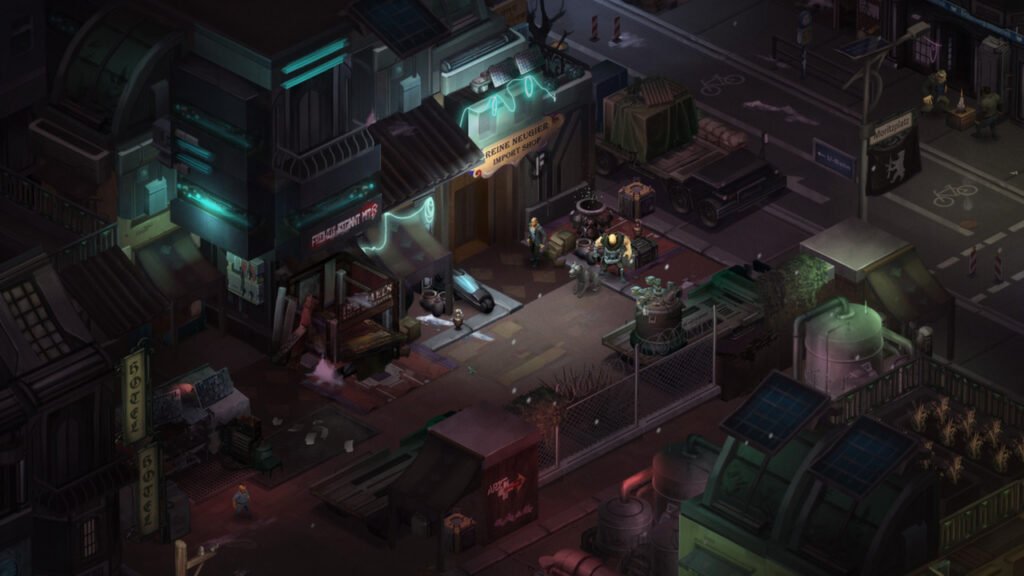
Most cyberpunk stories love to park you in the middle of a neon-drenched megacity controlled entirely by monolithic corporations. Shadowrun: Dragonfall takes a sharp left turn. It drops your custom-built Shadowrunner straight into the heart of Berlin. In the Shadowrun lore, Berlin is a unique beast known as the Flux State. It is a sprawling, chaotic experiment in democratic anarchy where the megacorps have been pushed back, leaving a patchwork of neighborhoods run by neighborhood committees, local gangs, and independent factions.
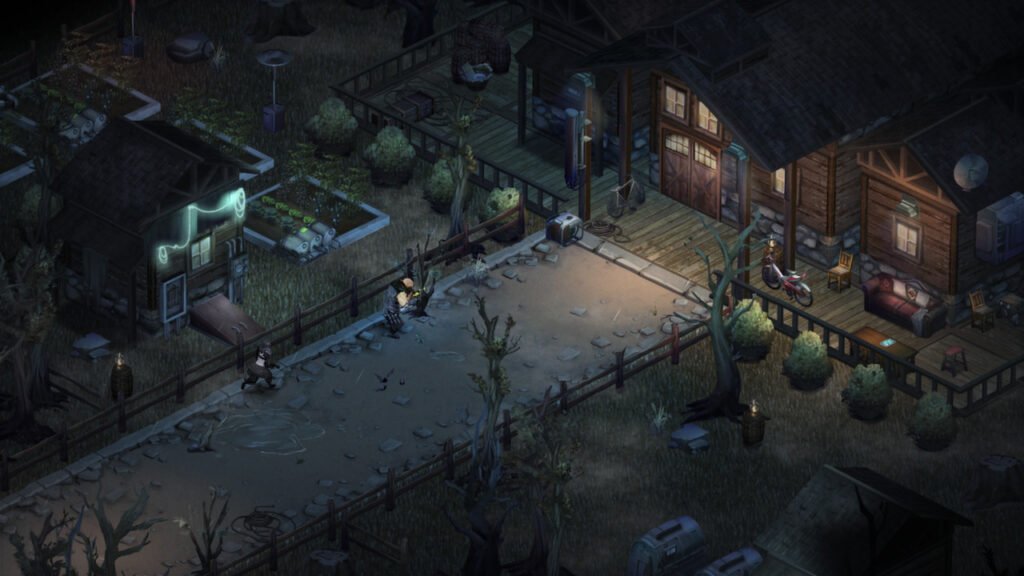
This setting serves as the ultimate playground for a tactical RPG. Instead of just fighting against “The Man,” you are navigating a fragile political ecosystem where every choice you make ripples through the community. Your home base is a cozy, low-tech neighborhood called the Kreuzbasar. It feels alive, grounded, and intensely personal. You get to know the local cyberware clinic owner, the resident tech dealer, and the neighborhood kids. It gives you something real to fight for, which makes the stakes feel incredibly high when everything inevitably goes sideways.
The plot kicks off with what was supposed to be a simple, routine heist. You and your team are hired to steal data from a secure vault. But in the world of shadowrunning, simple jobs do not exist. The heist goes disastrously wrong, a legendary teammate is killed, and you accidentally stumble upon a terrifying conspiracy involving a mythic entity known as the Feuerschwinge—a great dragon thought to have been destroyed decades ago. What follows is a desperate scramble for survival, information, and cold, hard cash as you try to figure out who set you up and how to stop a looming apocalypse.
The Art of the Perfect Crew
You cannot survive the Berlin underworld alone, and thankfully, Harebrained Schemes blessed us with one of the best companion rosters in RPG history. Your crew is not just a bunch of stat blocks with portraits; they are deeply flawed, incredibly complex human beings (and meta-humans) with their own traumatic pasts, philosophical outlooks, and personal side quests.
First, there is Eiger, a former military sniper from the troll subspecies. She is professional, rigid, and initially hates your guts for taking over the team leadership after the opening disaster. Earning her respect feels like a monumental achievement. Then you have Glory, a human street samurai whose body is heavily modified with cold, mechanical cyberware. Her backstory is a dark, tragic dive into cults and demonic pacts, and her quiet, lethal demeanor hides a harrowing emotional core.
For your magical and digital needs, the game hands you Dietrich and Blitz. Dietrich is an aging punk shaman who channels the Dragonslayer mentor spirit. He is the moral anchor of the team, a guy who remembers the old days of the Berlin riots and fights for the little guy. Blitz, on the other hand, is a hyperactive, slightly arrogant decker who acts as your matrix specialist. He is constantly looking for a shortcut to fame and fortune, but his loyalty to the crew is undeniable.
Spending time between missions talking to these characters in the Kreuzbasar is easily half the fun of the game. They react to your decisions, argue with each other, and grow over the course of the story. By the time you reach the final act, they do not just feel like tools in your combat toolbox; they feel like your actual found family.
Tactical Depth on the Grid
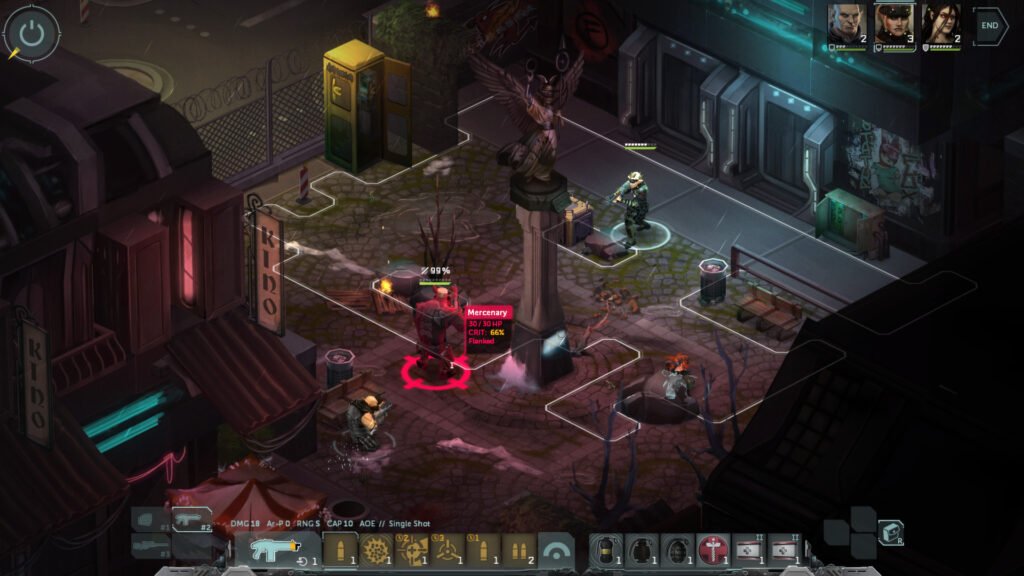
When it is time to stop talking and start shooting, Shadowrun: Dragonfall shifts into a deeply satisfying turn-based combat system heavily inspired by the modern XCOM games. You are managing action points, navigating a robust cover system, and trying to flank enemies while keeping your own squishy teammates safe.
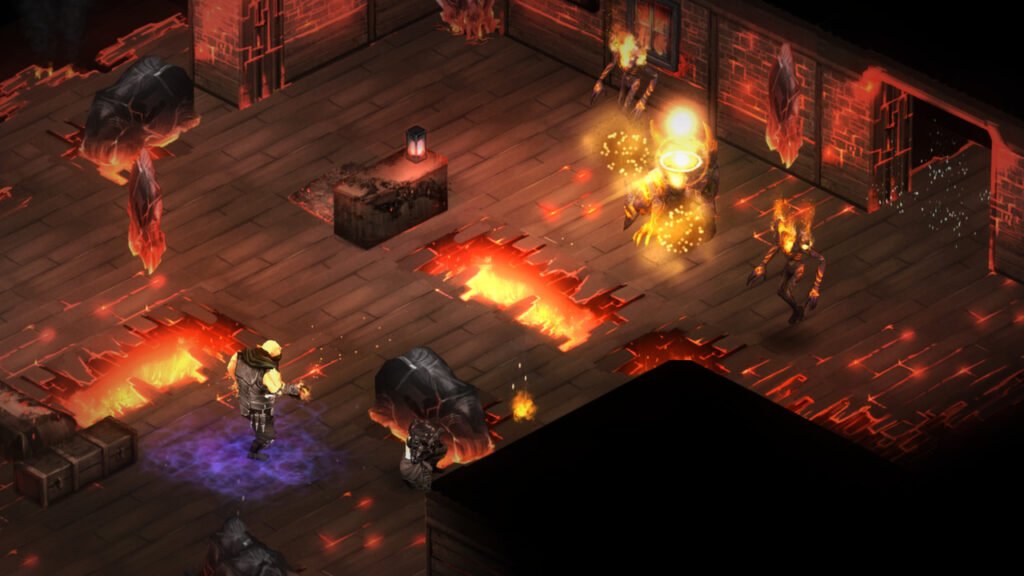
What makes the combat uniquely brilliant is the sheer variety of playstyles enabled by the Shadowrun universe. If you build your main character as a Mage, you are tossing fireballs and manipulating the battlefield with barriers. A Shaman can summon spirits directly from environmental vents, though you have to balance your control over them lest they break free and attack everyone. Physical Adepts use magic internally to turn themselves into lethal, melee-focused martial artists who sprint across the map to deliver devastating sword strikes.
Then you have the tech side. A cybered-up Street Samurai can fire multiple bursts from an assault rifle while using automated drones to flush enemies out of high cover. But the coolest mechanic belongs to the Deckers. In certain missions, your hacker needs to jack into the Matrix—a virtual reality cyberspace representation of the local network. While the rest of your team is holding off corporate security in the physical world, your decker is fighting off black IC (security programs) in a digital neon landscape to unlock doors, turn off turrets, and steal valuable paydata. Managing both the physical battle and the digital battle simultaneously creates an incredible sense of cinematic tension.
Choice, Consequence, and Gray Morality
Nothing in Berlin is black and white. Shadowrun: Dragonfall shines brightest when it forces you into uncomfortable ethical corners. Almost every major mission features multiple paths to completion and heavy narrative choices that lack a cleanly “good” option.
Are you willing to release a weaponized bioweapon into a corporate facility to secure a massive payout, or will you destroy it and face the wrath of an angry fixer? Do you side with a group of underground ghouls who just want to be left alone to eat corpses, or do you wipe them out to appease the terrified human locals? The game constantly challenges your personal code of ethics.
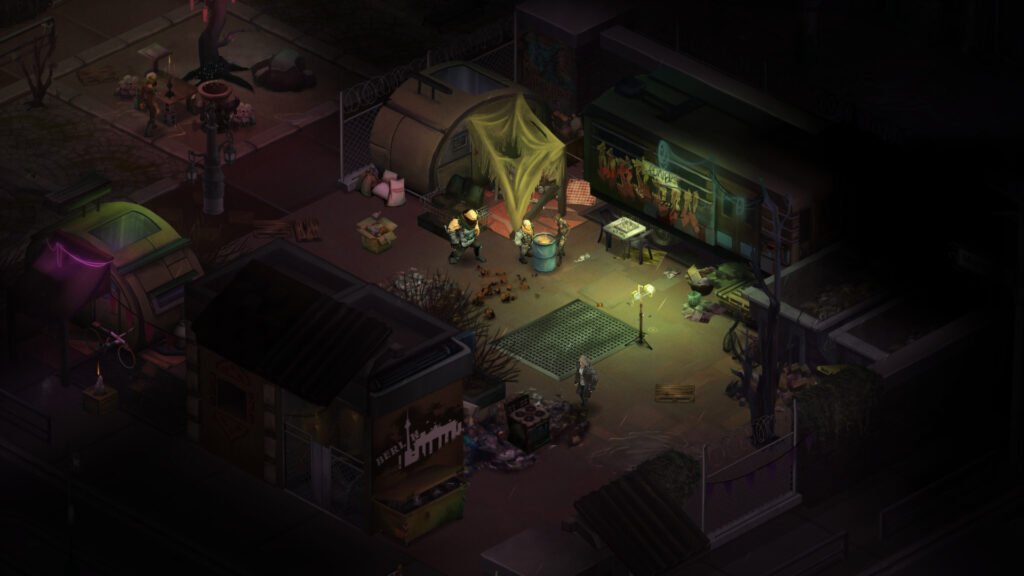
Furthermore, your character’s stats heavily influence how you interact with the world. Investing points into the Charisma attribute unlocks various Etiquettes, which represent your familiarity with specific subcultures. Having the Corporate Etiquette might let you bluff your way past a security guard, while the Street Etiquette helps you haggle with a black-market merchant or avoid a gang war. This gives the game immense replay value, as a smooth-talking elven decker will experience the narrative in a completely different way than an intimidating orkish brawler.
The Verdict on a Cyberpunk Classic
Even years after its release, Shadowrun: Dragonfall stands tall as a masterclass in RPG design. It proves that you do not need a multi-million dollar AAA budget or photorealistic graphics to tell a deeply compelling, immersive story. Harebrained Schemes used excellent writing, phenomenal atmospheric music, and smart tactical systems to build a world that swallows you whole.
It captures the absolute essence of what makes cyberpunk great: the desperate struggle for humanity inside a cold, mechanized world, lit by flickering neon and fueled by a killer synth soundtrack. If you have a soft spot for great storytelling, tactical combat, or just want to tell a corporate dragon to get bent, you owe it to yourself to load up this classic.