
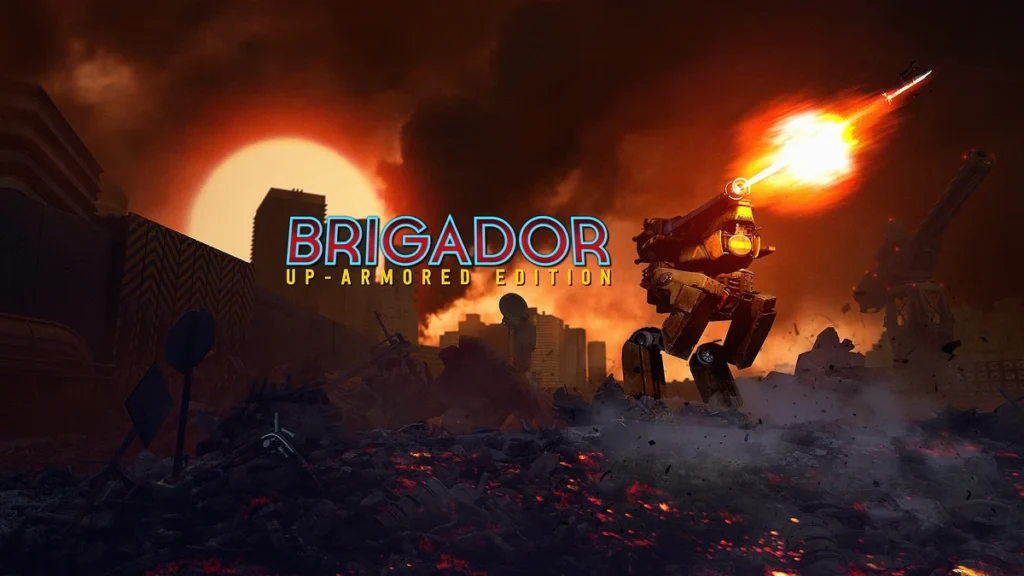

Let’s take a look at Brigador. Not the flashy new sequel that’s just hit Early Access, but the original 2016 beast that still hits like a railgun to the face years later. If you’ve ever stared at a rainy neon skyline and thought “man, I wish I could just drive a walking tank through that whole block and turn it into smoking rubble,” this game was made for you. It’s pure, unapologetic vehicular violence wrapped in a grimy cyberpunk package that feels like Blade Runner got into a bar fight with Desert Strike and Syndicate.
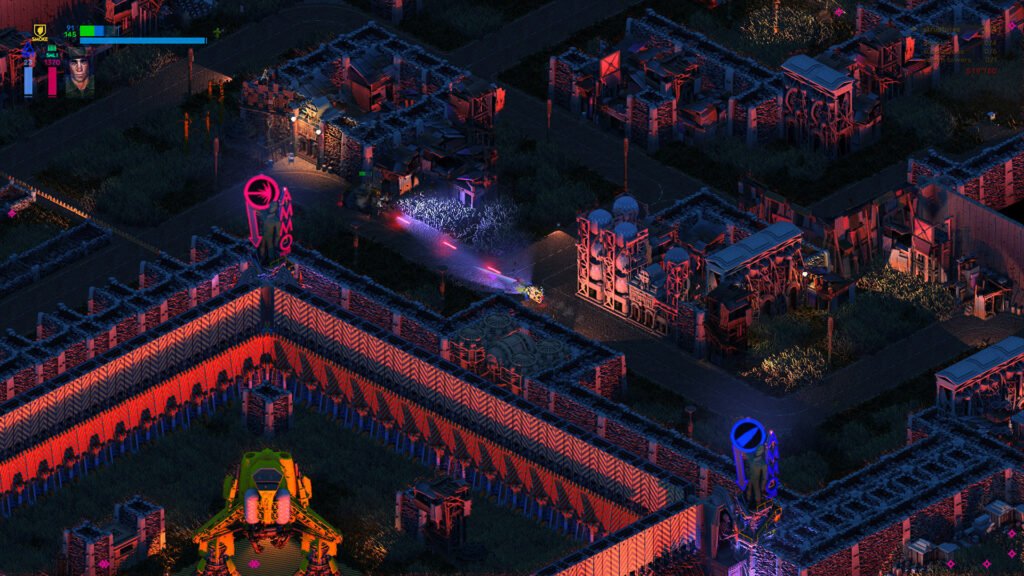
The setup is simple and deliciously cynical. Great Leader is dead. The city-state of Solo Nobre on the colony world Novo Solo is about to tear itself apart. You play as a Brigador — a mercenary pilot who has zero loyalty to the planet and every reason to take the corporate contract that just landed in your lap. Your job? Soften the place up for an off-world conglomerate by destroying orbital defenses, assassinating captains, leveling critical infrastructure, and generally making the loyalist forces regret ever waking up that morning. Ideology is for suckers. You’re here for the payout and a ticket off this rock.
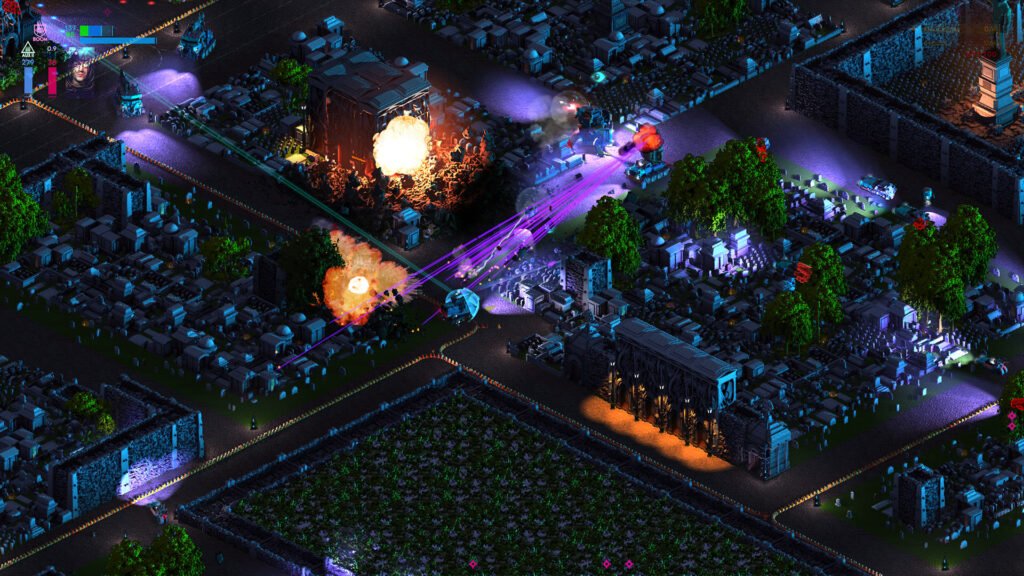
What makes Brigador special isn’t some deep narrative (the story is thin on purpose and mostly delivered through cool pilot bios and lore dumps). It’s the moment-to-moment feeling of piloting ridiculous war machines through dense, fully destructible city districts at night. The art style is gorgeous in that lo-fi, model-kit way. Everything has this tangible, almost toy-like quality under the neon glow and rain. Buildings crumble realistically. Fuel tanks explode in satisfying fireballs. Infantry get turned into red paste under your treads or legs. The whole city feels like a playground built specifically for you to break.
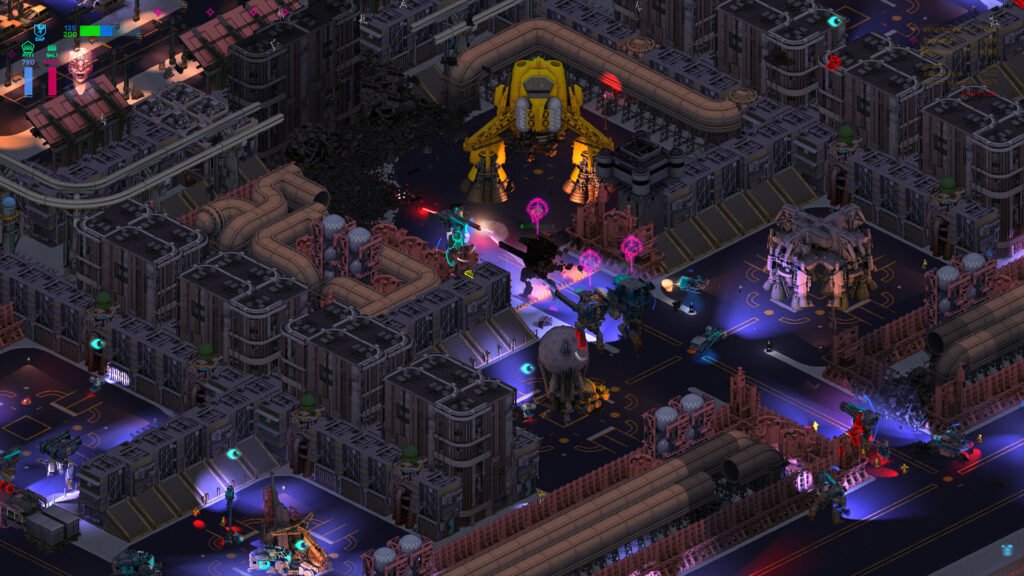
You get an absurd amount of toys to play with. By the time you’ve unlocked everything in the Up-Armored Edition, you’re looking at fifty-six different vehicles and around forty weapons. We’re talking spindly hovercraft that dance around enemy fire, lumbering bipedal mechs that can absorb a ridiculous amount of punishment, classic tanks, weird experimental chassis, even some absolute clown cars of death. Every vehicle has its own personality. Some turn like a boat, others feel like they’re on ice, a few are pure glass-cannon speed demons. Pair that with ballistic weapons that actually drop over distance, guided missiles, flamethrowers, artillery that lob shells in beautiful arcs, and point-defense systems, and you’ve got a loadout system that rewards experimentation.
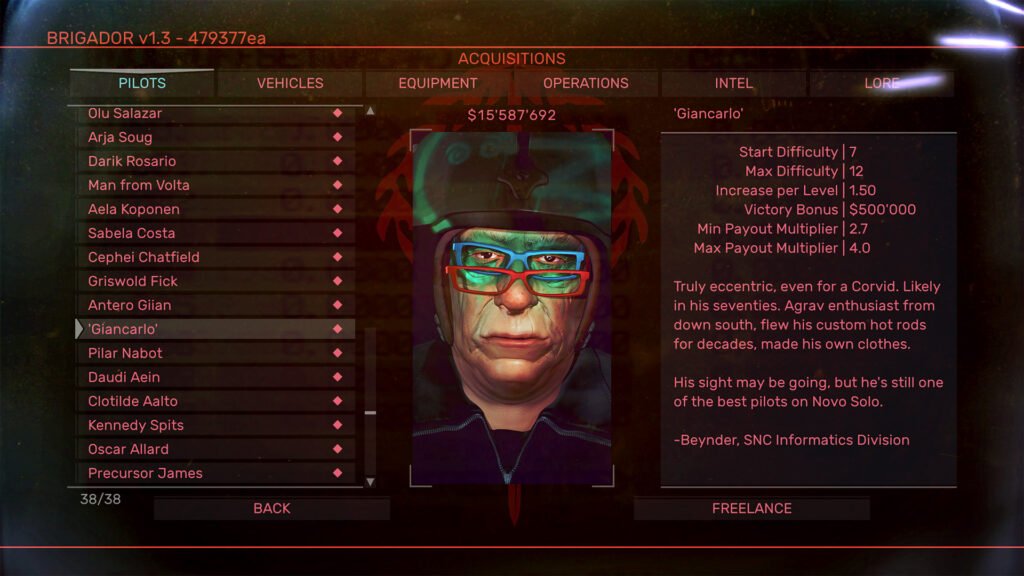
The campaign is structured pretty smartly. Early missions lock you into specific loadouts so you learn the ropes without getting completely steamrolled. Later on you get more freedom. Objectives usually boil down to “kill these marked captains,” “destroy these buildings,” or “wipe out enough of the opposition that they stop shooting.” Then you have to extract. Staying longer means more money and more risk. Dying means you lose the run and the cash. It creates this constant tension between greed and survival that feels great once it clicks.
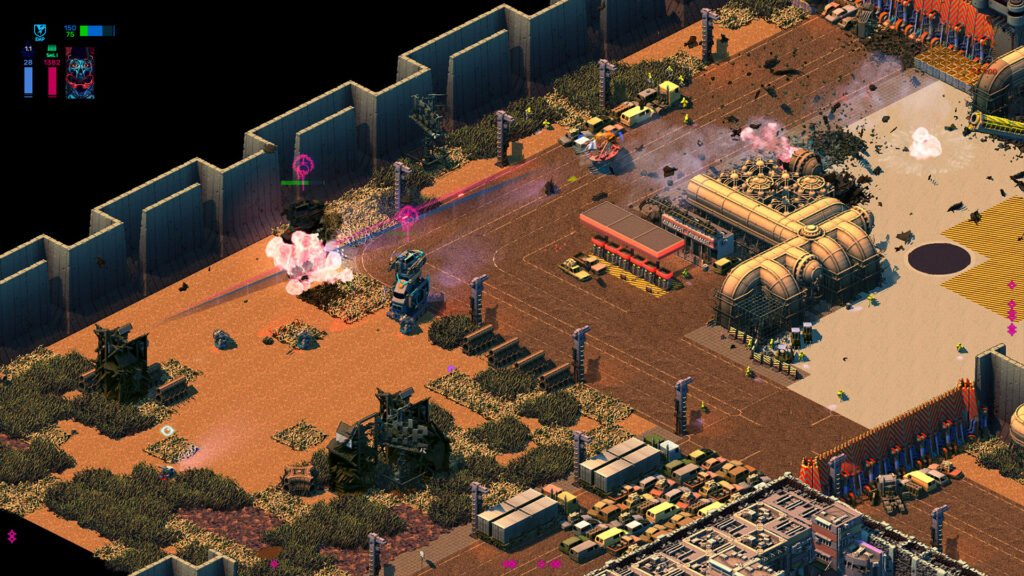
Then there’s Freelance mode, which is where a lot of people end up living. You take the money you earned in the campaign, unlock every vehicle and weapon you want, and build your own challenge runs across the same maps (plus extras). It’s basically a sandbox for people who want to theory-craft the perfect death machine and then take it out for a spin. Some nights I just boot it up, pick the most ridiculous combination of weapons I can think of, and go cause problems on purpose. Other nights I force myself into a fragile little scout craft and try to complete a hard map without dying once. Both feel rewarding in different ways.
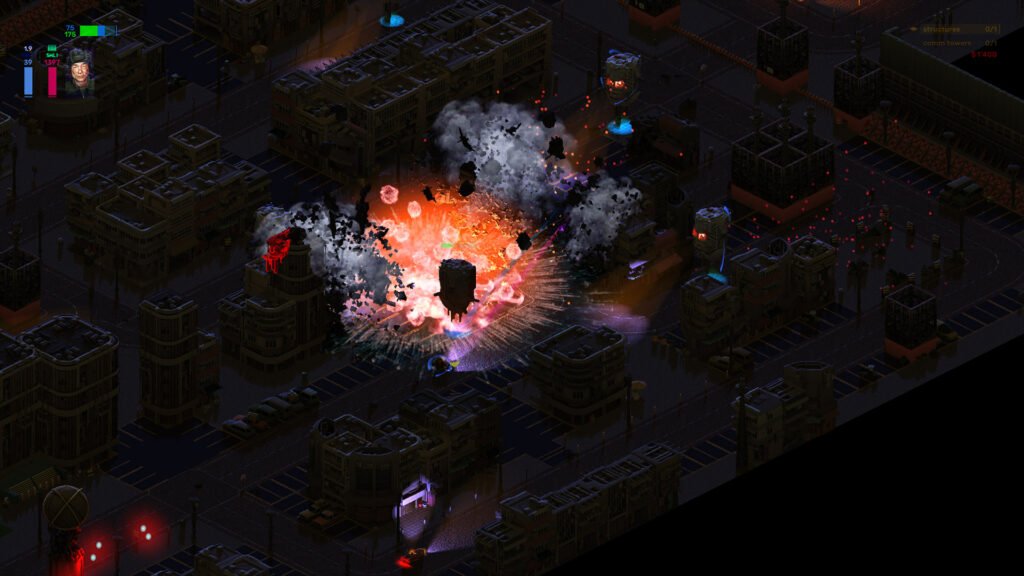
Controls are the one thing that still divides people. The game was originally built around tank-style controls where the body and turret can face different directions. After the Up-Armored update they added a more modern twin-stick option that a lot of players prefer. Either way, there’s a learning curve. You will die. A lot. The game is deliberately hard in that classic arcade way where one bad positioning decision or a missed shot can snowball into a catastrophic chain reaction. Enemy captains are dangerous, the AI will flank you, and friendly fire (well, environmental fire) is very real. Once you internalize the rhythms though — when to peek, when to use buildings as cover, when to just full-send and melt everything — it becomes one of the most satisfying combat loops in the genre.
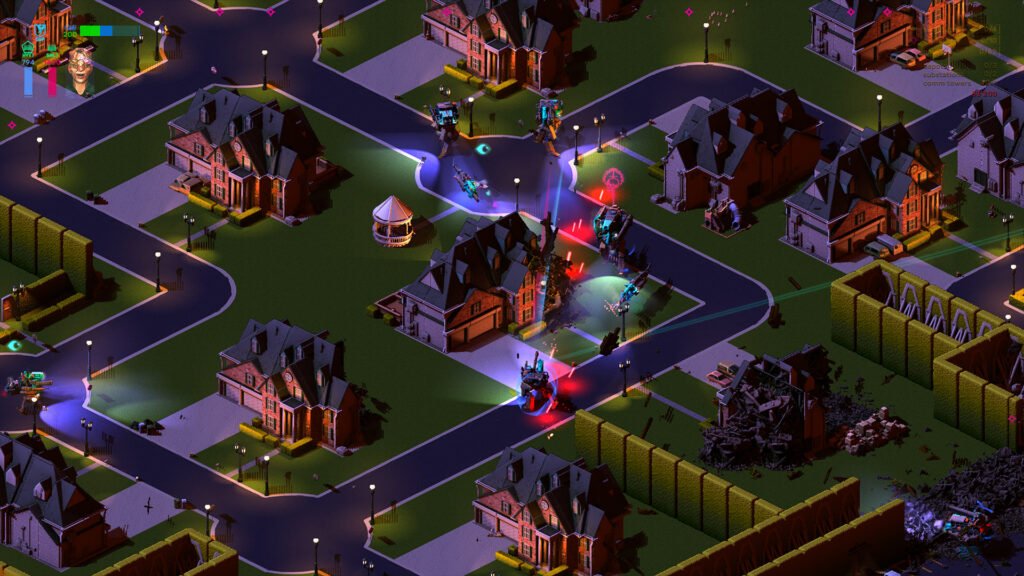
The soundtrack by Makeup and Vanity Set deserves its own paragraph. It is perfect. Cold, pulsing synthwave that feels like it was beamed straight out of an alternate 1985 where everyone drove armed hovercars. Tracks like “No Way Out” get stuck in your head for days. Combined with the rain, the distant sirens, the radio chatter, and the constant crack of gunfire, the atmosphere is thick enough to cut with a combat knife. This is one of those games where the mood does half the heavy lifting.
Is it perfect? Nah. The UI can be clunky. The story never really goes anywhere interesting beyond the initial setup. Some of the later campaign missions feel a bit samey if you’re not in the right headspace. And that difficulty spike early on has definitely caused more than a few refunds over the years. But none of those things kill the core appeal for me. When Brigador is firing on all cylinders — when you’ve got the perfect loadout, the music is hitting, and an entire city block is collapsing around you in slow-motion glory — it scratches an itch almost nothing else does.
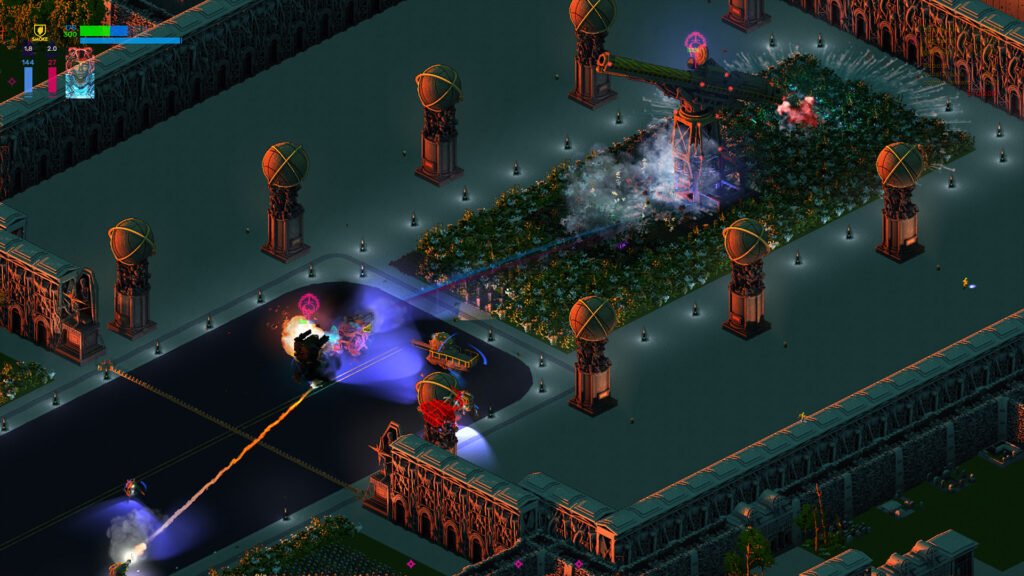
It sits in this weird, wonderful middle ground between pure arcade shooter and thoughtful tactical combat. You’re not managing heat or ammo in a hardcore sim sense, but you’re constantly making real decisions about positioning, weapon choice, and risk versus reward. It’s closer in spirit to the old Armored Core games or the chaos of classic Syndicate than it is to modern twin-stick fare, yet it still feels fresh.
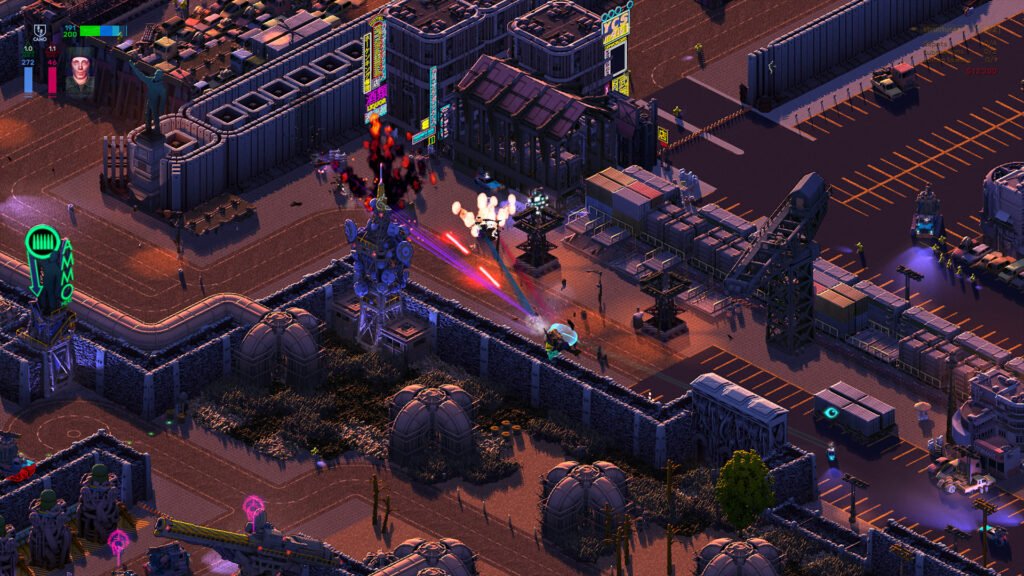
Ten years on (and with a sequel finally here), the original still holds up ridiculously well. The custom engine, the hand-crafted levels, the sheer amount of content unlocked through play — it all feels like a labor of love from a tiny team that just really wanted to make the coolest mech destruction sandbox they could. Stellar Jockeys didn’t have a big publisher or a massive budget. They just had a vision of neon-lit streets, stompy robots, and the pure joy of watching a carefully planned assault go completely off the rails in the best possible way.
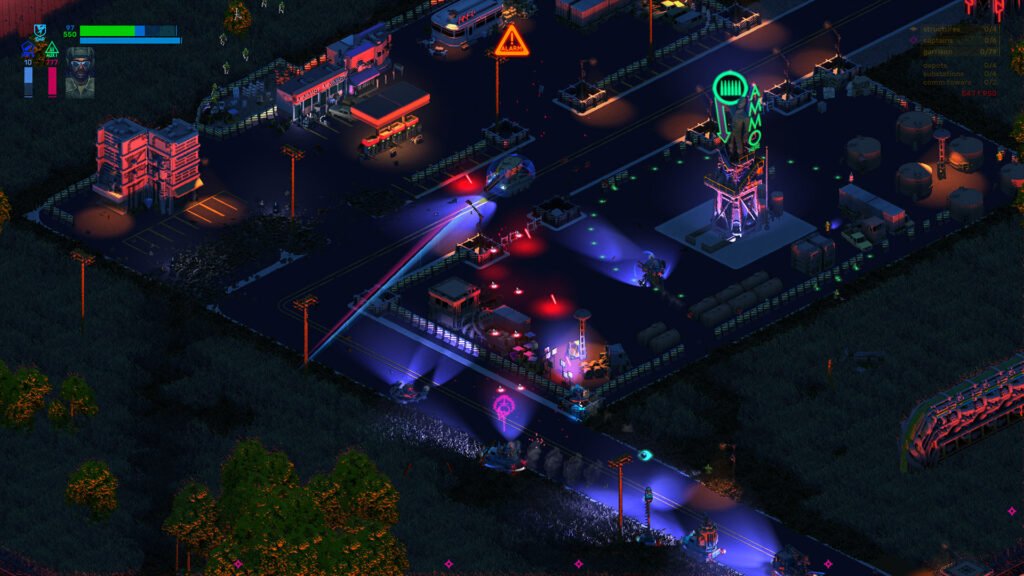
If you like mechs, if you like cyberpunk aesthetics, if you like games that respect your time by letting you jump in for a single intense mission or lose an entire evening theory-crafting loadouts, Brigador is still one of the best in the business. It doesn’t hold your hand. It doesn’t care if you live or die. It just hands you the keys to a walking arsenal and points you at a city that needs to burn.
And honestly? Sometimes that’s all you need.