


Release Date: August 27, 2002 Developer: Black Isle Studios
Get It On: GOG
When we look back at the “Golden Age” of computer role-playing games (CRPGs), the names that dominate the conversation are usually Baldur’s Gate or Planescape: Torment. However, standing tall like a glacier in the shadow of those giants is Icewind Dale II. Developed by the legendary Black Isle Studios and released at the tail end of the Infinity Engine’s lifespan, this title remains one of the most mechanically satisfying and atmospheric adventures in the Dungeons & Dragons digital library.
The Last Stand of the Infinity Engine
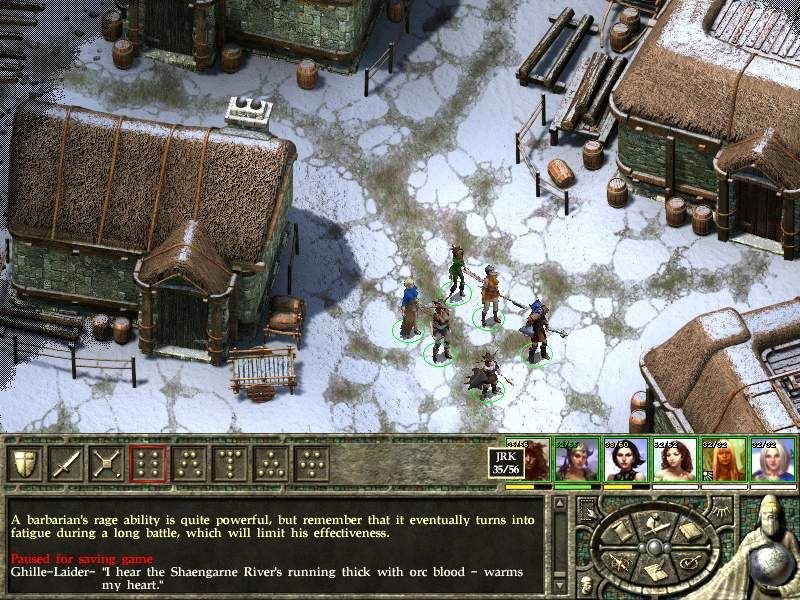
By 2002, the Infinity Engine was considered “ancient” by industry standards. 3D engines were beginning to take over, yet Black Isle managed to coax one final masterpiece out of the aging software. Icewind Dale II (IWD2) serves as a poignant farewell to the isometric, pre-rendered aesthetic that defined a generation of RPGs.
What sets IWD2 apart from its predecessor and its cousins is the transition to the D&D 3rd Edition (3E) ruleset. For fans of the tabletop game at the time, this was a revolutionary shift. Unlike the AD&D 2nd Edition rules found in Baldur’s Gate, which relied on the often-confusing THAC0 system, 3E introduced a more intuitive d20-based mechanic. It also brought in multiclassing without restrictions, feats, and skills, allowing for a level of character customization that was unprecedented in the engine’s history. You weren’t just picking a class; you were building a bespoke strike team.
A Story Written in Ice and Blood
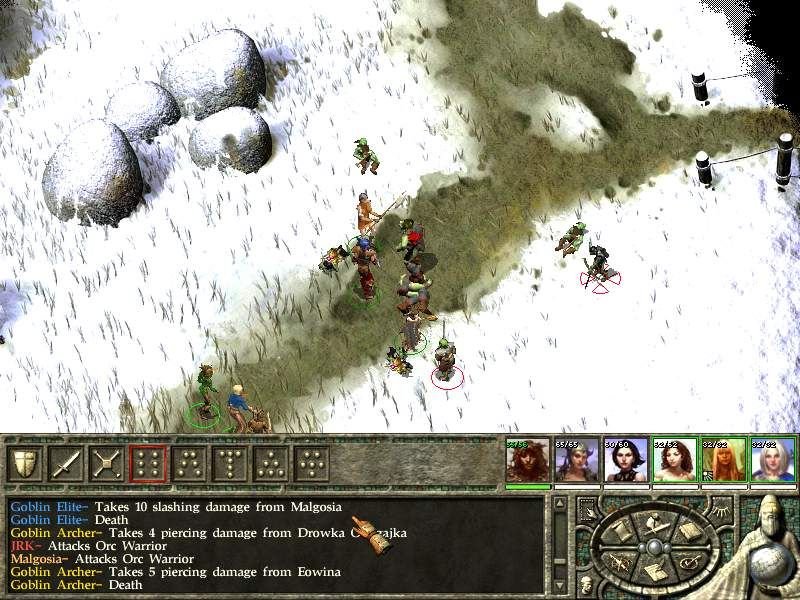
Set thirty years after the events of the first game, Icewind Dale II returns players to the Spine of the World. The Ten Towns are under siege, but the threat isn’t just a mindless horde of goblins. This time, the antagonists are the Legion of the Chimera, led by the outcasts Isair and Madae.
One of the game’s greatest strengths is its writing. While the Icewind Dale series is often pigeonholed as the “action-oriented” sibling of Baldur’s Gate, the narrative in the sequel is surprisingly sophisticated. The villains aren’t just evil for the sake of it; they are “half-breeds” and outcasts seeking a place in a world that hates them. This layer of political and social complexity elevates the “hack-and-slash” gameplay, giving weight to every dungeon crawl.
The journey begins in the harbor town of Targos, and from there, it’s a relentless march through some of the most beautifully realized environments in the genre. From the volcanic depths of Dragon’s Eye to the haunting, time-looped corridors of the Severed Hand, the game never fails to evoke a sense of isolation and wonder.
Tactical Mastery: Combat and Party Building
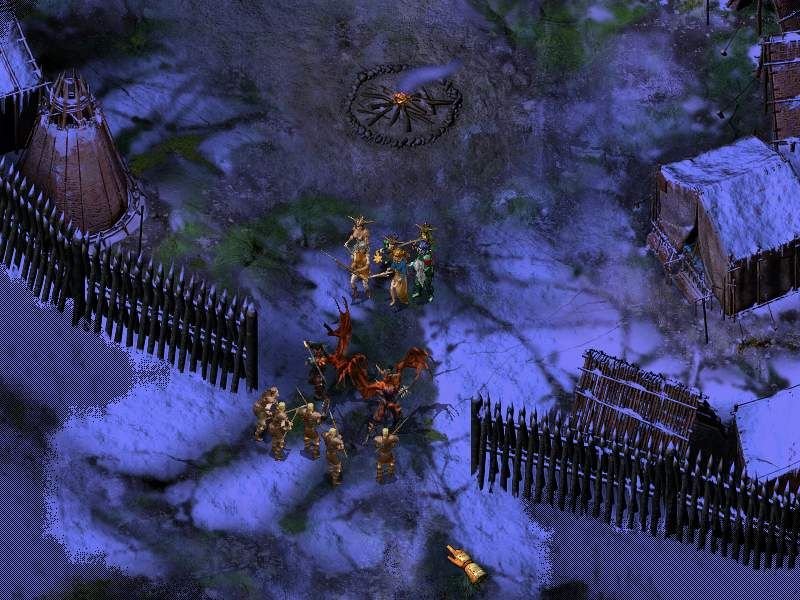
If Planescape: Torment is about the “Who,” then Icewind Dale II is about the “How.” The game expects you to create a full party of six characters from scratch. There are no pre-written companions with personal quests to distract you; your party’s personality is whatever you imagine it to be.
The combat is notoriously difficult, especially on higher settings like Heart of Fury mode. Success requires a deep understanding of the 3E ruleset. You need to balance your front-line tanks, your divine healers, and your arcane crowd-control specialists. The introduction of feats like Cleave or Spell Focus changed the tactical landscape, making every level-up a strategic decision.
Unlike the first game, IWD2 also places a heavier emphasis on non-combat solutions. High Intelligence or Charisma can occasionally talk your way out of a fight or unlock a hidden quest path. This reactivity based on your party’s stats makes the world feel lived-in and responsive to your specific build.
The Beauty of the Frozen Frontier
Visually, the game is a triumph of 2D artistry. The hand-painted backgrounds are stunningly detailed, capturing the oppressive chill of the North. Whether it’s the way the light glimmers off an ice temple or the oppressive shadows of a drow-infested cave, the art direction is timeless.
Accompanying these visuals is a hauntingly beautiful score by Inon Zur. While Jeremy Soule’s work on the first game was iconic, Zur brought a darker, more militaristic tone to the sequel that fits the “war for the North” theme perfectly. The wind-swept orchestral themes remain some of the best in gaming history, perfectly capturing the feeling of six lone travelers against an unforgiving wilderness.
The Lost Code and the Legacy
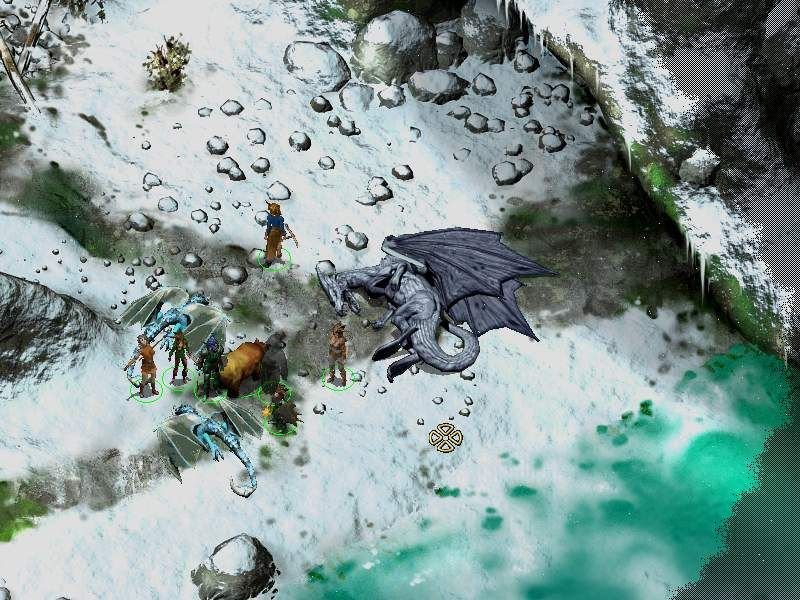
In recent years, Icewind Dale II has gained a bit of a “forbidden” status. While the other Infinity Engine games received “Enhanced Editions” by Beamdog, IWD2 was left out. The reason is a tragedy of gaming history: the original source code was lost.
Despite this, the community’s love for the game has never wavered. A dedicated group of fans recently released a massive “Enhanced Edition” mod that fixes bugs, adds quality-of-life features, and modernizes the experience without the original code. Even decades later, people are willing to move mountains just to keep this specific adventure playable.
Final Verdict
Icewind Dale II is a masterclass in tactical RPG design. It successfully bridged the gap between the old-school isometric look and the modern complexity of 3rd Edition Dungeons & Dragons. While it lacks the companion-driven drama of Baldur’s Gate II, it compensates with superior combat mechanics, deep customization, and an atmosphere that is second to none.
If you are a fan of CRPGs and haven’t braved the Spine of the World in this particular installment, you are missing out on the final, polished breath of a legendary era. It is a grueling, beautiful, and deeply rewarding experience that proves that even in the coldest climates, the fire of great game design can burn bright.