

Release Date: December 21, 1998 Developer: BioWare
Get It On: GOG
In the late 1990s, the western role-playing game was widely considered a dying breed. The market was saturated with shooters and real-time strategy titles, leaving fans of deep, narrative-driven experiences wandering a digital wasteland. Then, in December 1998, a little-known Canadian developer named BioWare released Baldur’s Gate. Built on the ambitious Infinity Engine, it didn’t just revitalize the genre; it redefined what a computer RPG (cRPG) could be. By translating the complex, turn-based rules of Advanced Dungeons & Dragons 2nd Edition into a seamless, pausable real-time experience, BioWare created a masterpiece that remains the gold standard for world-building and player agency.
A World of Iron and Intrigue
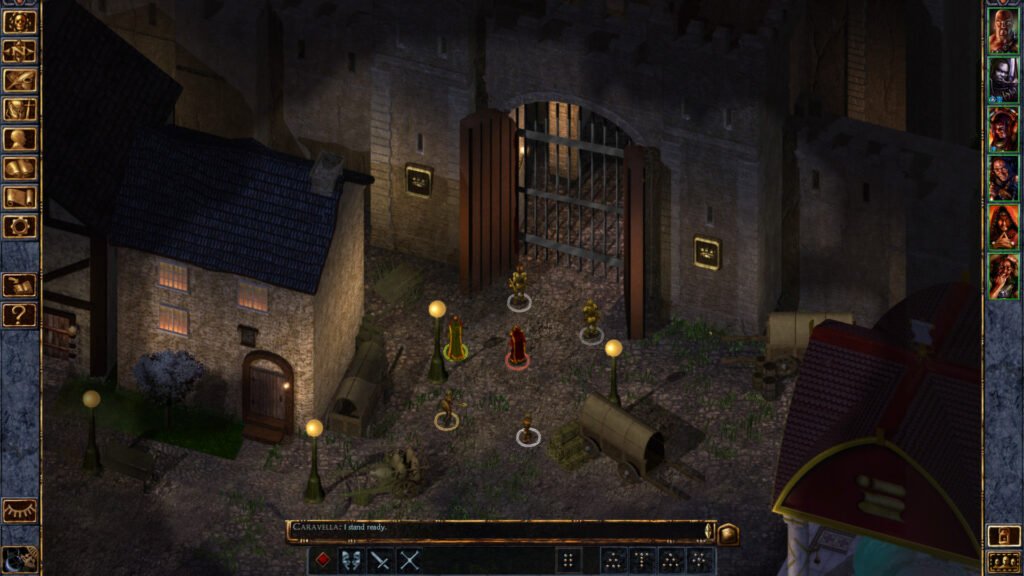
The game begins with a deceptively simple premise. You play as the ward of the mage Gorion, raised within the secluded library-fortress of Candlekeep. Your quiet life is shattered when Gorion is murdered by a mysterious, hulking figure in spiked armor, forcing you to flee into the wider world of the Sword Coast. What starts as a personal quest for survival and vengeance quickly spirals into a massive political conspiracy involving an international iron shortage, bandit raids, and the looming threat of war between the city-state of Baldur’s Gate and the nation of Amn.
What makes the narrative of Baldur’s Gate so effective is its pacing. The game doesn’t immediately burden you with world-ending stakes. Instead, it allows you to be a low-level adventurer, struggling to kill giant rats and deliver letters for a few gold pieces. This “zero-to-hero” progression makes the eventual discovery of your divine heritage—that you are a child of Bhaal, the dead God of Murder—feel earned rather than ordained. The Sword Coast feels like a living, breathing place, filled with hand-painted isometric environments that possess a lush, timeless beauty.
The Art of the Party
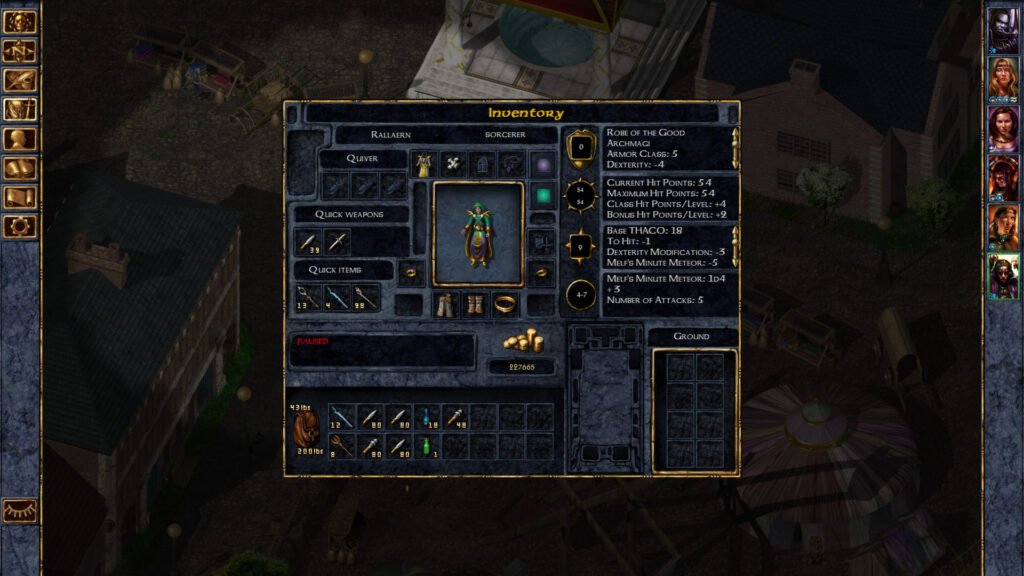
Central to the Baldur’s Gate experience is its cast of companions. While later BioWare games would lean more heavily into complex romances, the first game focused on personality and alignment. From the iconic, miniature-giant-space-hamster-wielding ranger Minsc to the cynical, power-hungry necromancer Edwin, the companions you recruit feel like distinct individuals.
The game’s reputation system and alignment mechanics add a layer of tension to party management. If your “Hero of Nashkel” acts too virtuously, your evil-aligned companions will eventually grow disgusted and leave. Conversely, if you succumb to your darker impulses, your paladins and druids may turn their blades against you. This dynamic forces the player to consider the social harmony of their group, making the journey feel like a true ensemble adventure rather than a solo power fantasy.
Strategic Depth and Real-Time Combat
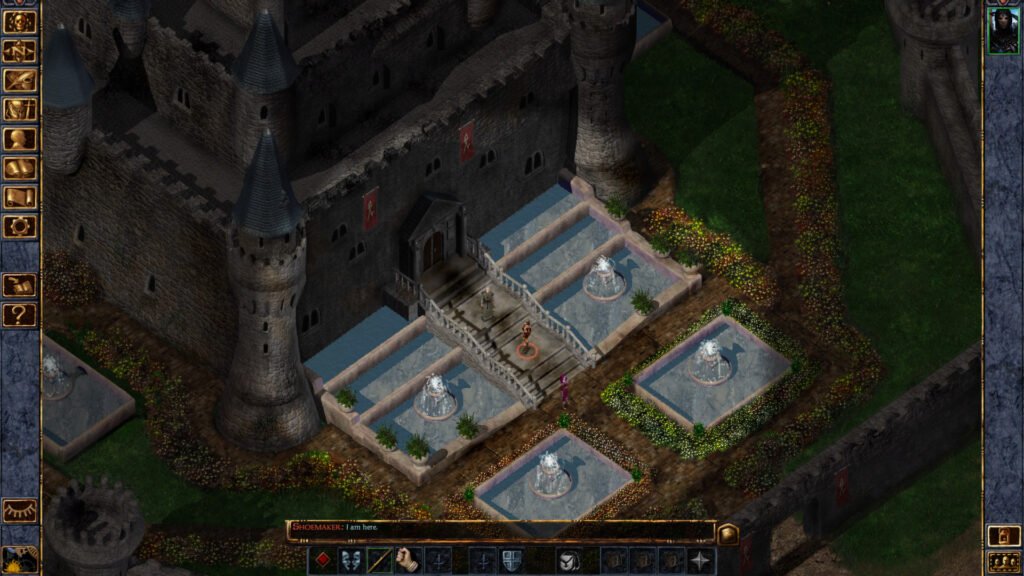
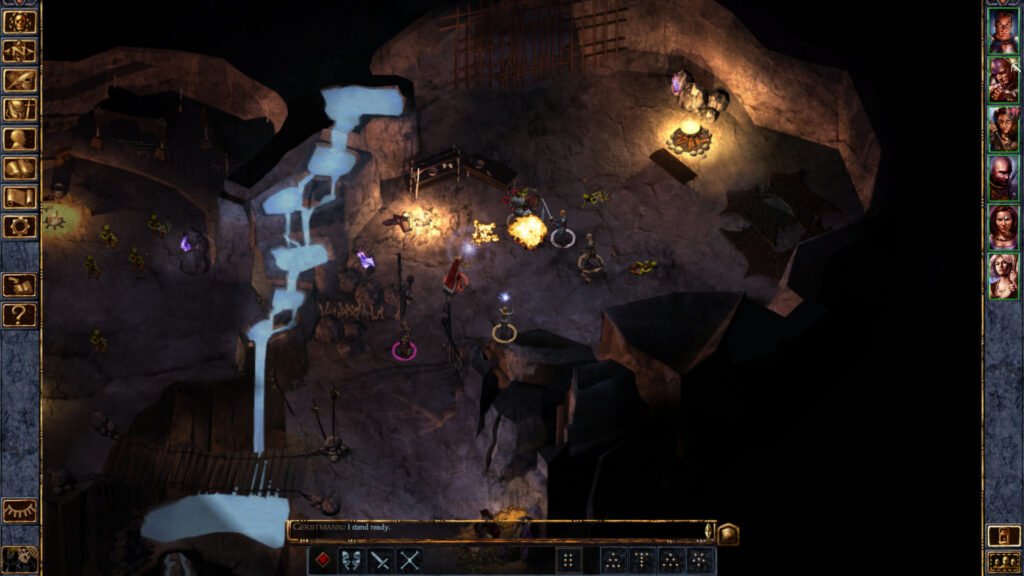
Combat in Baldur’s Gate is a tactical puzzle. Using the “Real-Time with Pause” system, players can freeze the action at any moment to issue commands. This was revolutionary at the time, providing the strategic depth of a tabletop session without the sluggishness of traditional turn-based play. You must manage spell slots, positioning, and status effects meticulously. A single well-placed Sleep spell or Fireball can turn the tide of a battle, but a failure to account for an enemy’s magic resistance or a sudden ambush by kobold archers can lead to a quick “Game Over.”
The difficulty is famously “old-school.” Early levels are brutal, and a single lucky critical hit from a bandit can end your protagonist’s life instantly. However, this lethality encourages creativity. You learn to scout ahead with thieves, use terrain to your advantage, and carefully choose which magical items to carry. The sense of accomplishment upon finally defeating the antagonist, Sarevok, in the depths of the Undercity is immense, largely because the game refuses to hold your hand.
The Enhanced Edition and a Living Legacy
In 2012, Beamdog released Baldur’s Gate: Enhanced Edition, bringing this classic to modern operating systems with a host of quality-of-life improvements. Beyond providing native support for high-resolution displays and an updated UI, the Enhanced Edition integrated mechanics from the sequel, such as class kits and sub-races, which significantly expanded character customization. Beamdog also added new companions—like the Wild Mage Neera and the Blackguard Dorn Il-Khan—and a standalone combat arena called The Black Pits. While purists occasionally debate the stylistic changes of the new cinematics, there is no denying that the Enhanced Edition made the game accessible to a whole new generation of players, ensuring the saga of the Bhaalspawn would not be lost to digital obsolescence.
Perhaps the most remarkable aspect of Baldur’s Gate is its active modding community, which has remained vibrant for nearly three decades. Even in 2026, modders continue to release massive total conversions, new quest lines, and “Big World” setups that allow players to link the entire trilogy into one continuous, 200-hour epic. From the NPC Project, which adds thousands of lines of dialogue to the original cast, to technical fixes that keep the engine running on the latest hardware, the fans have treated the game like a living document. This dedication is a testament to the game’s foundational strength; it is a world so rich that people are still finding new ways to tell stories within it.
Baldur’s Gate is more than just a nostalgic relic; it is a masterclass in RPG design. Its blend of tactical combat, deep lore, and reactive storytelling created a blueprint that modern titles still follow. Whether you are a veteran returning to the Friendly Arm Inn or a newcomer curious about the roots of the genre, the Sword Coast is waiting.