

Strategos, developed by Strategos Games and published by MicroProse Software, is a bold entry into an ever-evolving landscape of digital wargaming, where few titles attempt to bridge the gap between the accessibility of mainstream real-time tactics and the uncompromising depth of tabletop simulations. Releasing into Early-Access on January 20, 2026, it offers a meticulously crafted simulation of ancient warfare that prioritizes command realism over “click-per-second” arcade action.
Spanning nearly a thousand years of history—from the Persian Wars to the rise of the Sassanid Empire—Strategos is an encyclopedic tribute to the art of war in classical antiquity.
A Vision of Command Realism
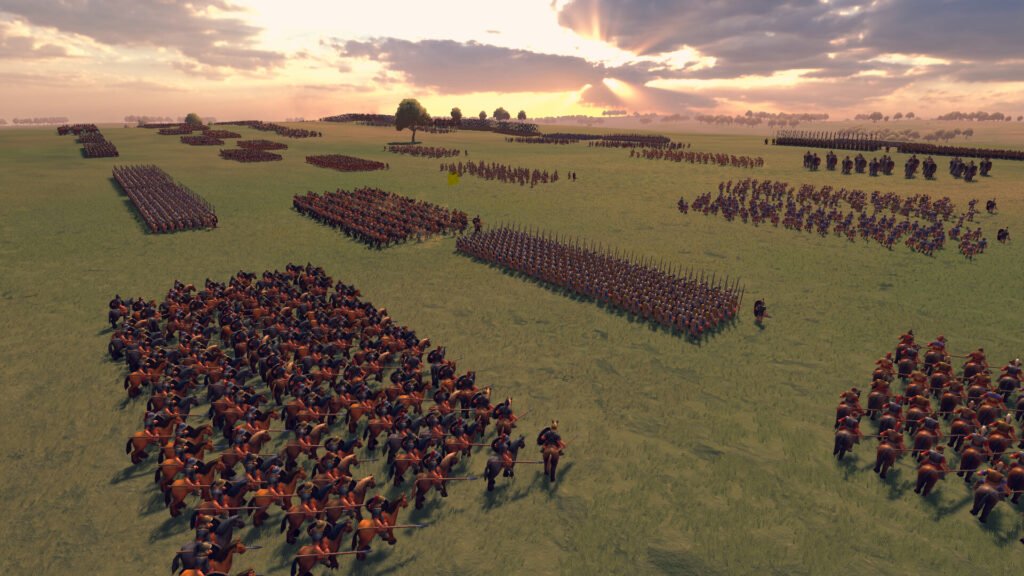
At first glance, Strategos might draw comparisons to the Total War series, but the two are fundamentally different in philosophy. While Total War focuses on the spectacle of thousands of soldiers clashing, Strategos focuses on the friction of command.
The game’s most defining feature is its Advanced Command and Control system. In most strategy games, a unit follows an order the millisecond a player clicks. In Strategos, you play as the general, not an omnipotent deity. To issue a command to a wing of your army that is half a mile away, you must rely on couriers. These messengers must physically travel across the battlefield to deliver your orders. If a courier is intercepted or the unit is already embroiled in a desperate “unordered charge,” your carefully laid plans may never reach their destination.
This creates a high-stakes environment where positioning your general is a tactical decision in itself. Do you stay in the rear to maintain a broad view of the field, or do you ride to the front to shout orders directly to your wavering phalanx?
The Scale of Antiquity
The sheer volume of content in Strategos is staggering. The developer has included:
- 120+ Factions: Ranging from the well-known Roman Legions and Spartan Hoplites to the more obscure Meroitic Kushites, Bithynians, and Spanish Celtiberians.
- 250+ Unique Units: Each unit is defined by more than just attack and defense stats. They possess distinct behaviors, such as the tendency for certain tribal infantry to charge without orders or the specific “pushing” physics of a Hellenistic pike phalanx.
- Historical Accuracy: The game doesn’t just offer generic “Greeks”; it distinguishes between Early and Late Achaemenid Persians, multiple flavors of Macedonian armies (Alexander, Early Successor, Late Successor), and various stages of the Roman Republic and Empire.
Deep Tactical Mechanics
The “hardcore tabletop feel” mentioned by the developers is evident in the game’s underlying systems. Success in Strategos is rarely about brute force; it is about managing Cohesion and Morale.
1. Formation and Disorder
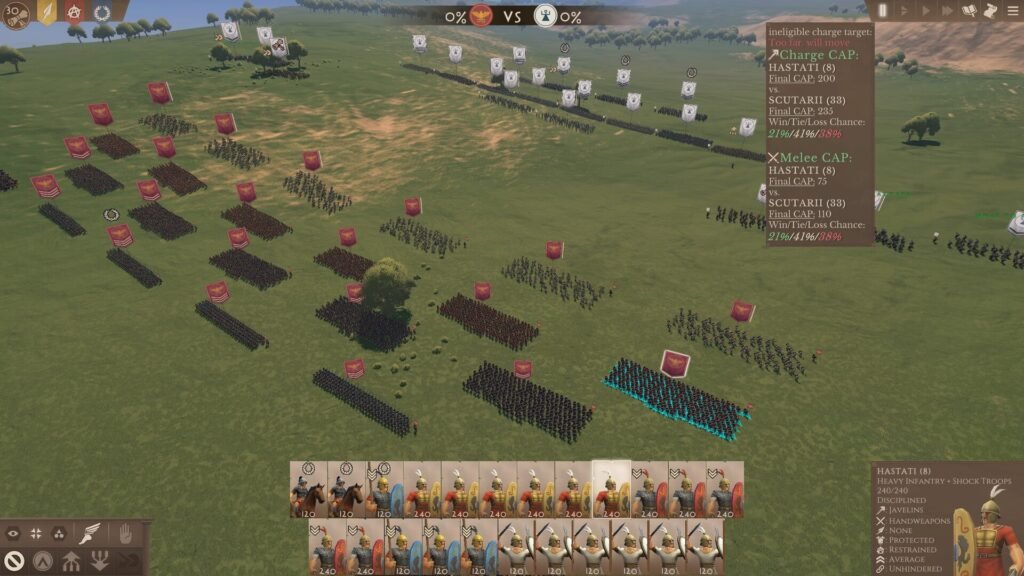
Units in Strategos function as cohesive blocks. Moving through rough terrain like woods or marshes doesn’t just slow units down—it causes disorder. A disordered unit loses its combat bonuses and becomes highly vulnerable to a disciplined charge. Maintaining the integrity of your battle line is often more important than the actual fighting.
2. The Morale Shock
Battles in the ancient world were rarely fights to the death; they were fights to the “rout.” Strategos simulates this through morale shocks. Seeing a friendly unit on the flank flee, or witnessing the death of a general, can trigger a cascading panic across your entire line.
3. Fog of War and Scouting
The game utilizes a realistic line-of-sight system. Terrain features like hills and forests truly hide enemy movements, making light cavalry and “Scouts” essential. A player who fails to scout might find their main line outflanked by a hidden reserve of Numidian cavalry, ending the battle before the heavy infantry even engages.
Gameplay Modes: From History to Sandbox
Strategos offers a variety of ways to engage with its systems:
- Historical Reenactments: Players can step into the sandals of great commanders at famous battles like Issos, Trebia, Zama, and Raphia. These scenarios are meticulously researched, placing units in their historically recorded positions and challenging players to either replicate the victory or change the course of history.
- The Campaign Mode: Rather than a global “map-painting” game, the campaign is an operational experience. It combines strategic movement and supply management with the game’s signature tactical battles. The initial launch features a Sicily-based campaign focused on the First Punic War.
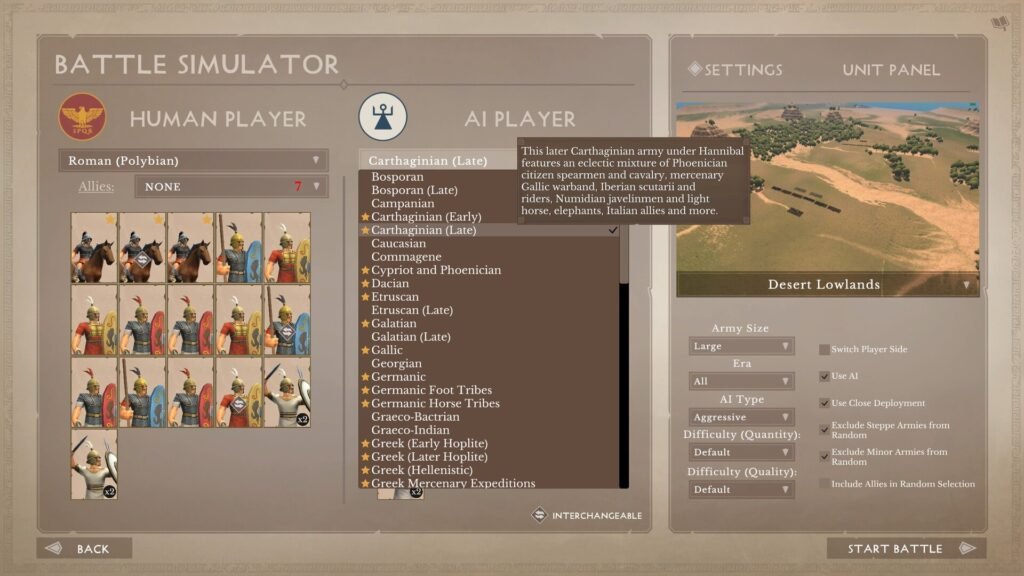
- Custom Battle Simulator: For those who want to experiment, the custom battle mode allows for “what-if” scenarios. You can pit a Mid-Imperial Roman army against a coalition of Gallic tribes and Hellenistic Successors, with full control over map types, weather, and AI aggression levels.
Visuals and Performance
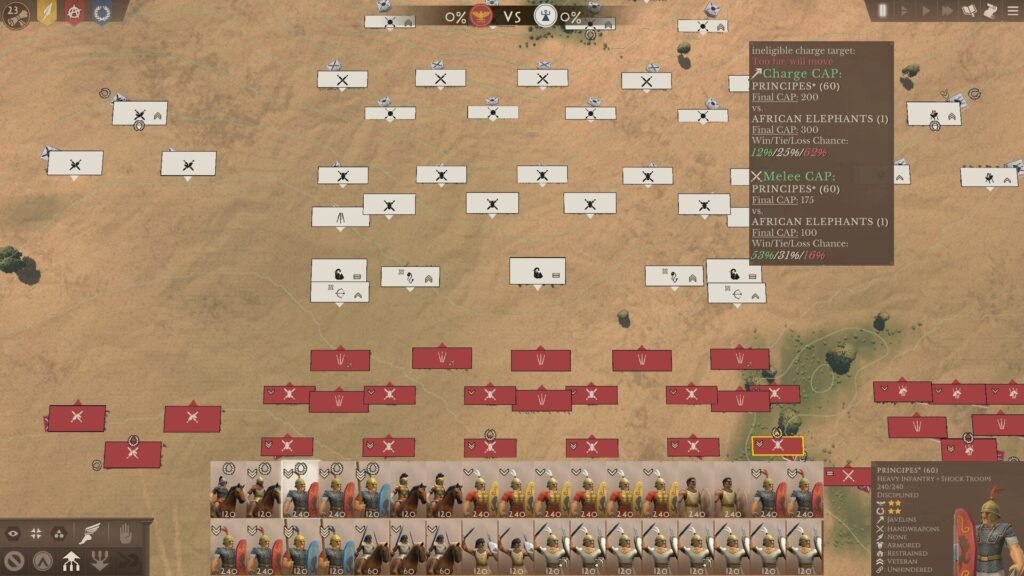
Strategos leans into a functional, low-poly aesthetic that emphasizes clarity and scale. While it may not compete with AAA titles in terms of individual unit textures, it compensates by allowing thousands of soldiers to be rendered simultaneously without crippling performance. The UI is designed like a wargamer’s toolkit—dense with information, showing unit states like “under fire,” “pursuing,” or “cohesion level” at a glance.
Strategos by Strategos Games is a “grognard’s” dream come true, but it remains accessible enough for any strategy fan willing to respect its learning curve. By shifting the focus away from micro-management and toward high-level leadership and the chaos of the ancient battlefield, it offers an experience that feels authentic to the period.
It is a game about the weight of a general’s decision and the terrifying reality that, once the trumpets sound and the lines clash, a commander’s control is often a fragile illusion.