
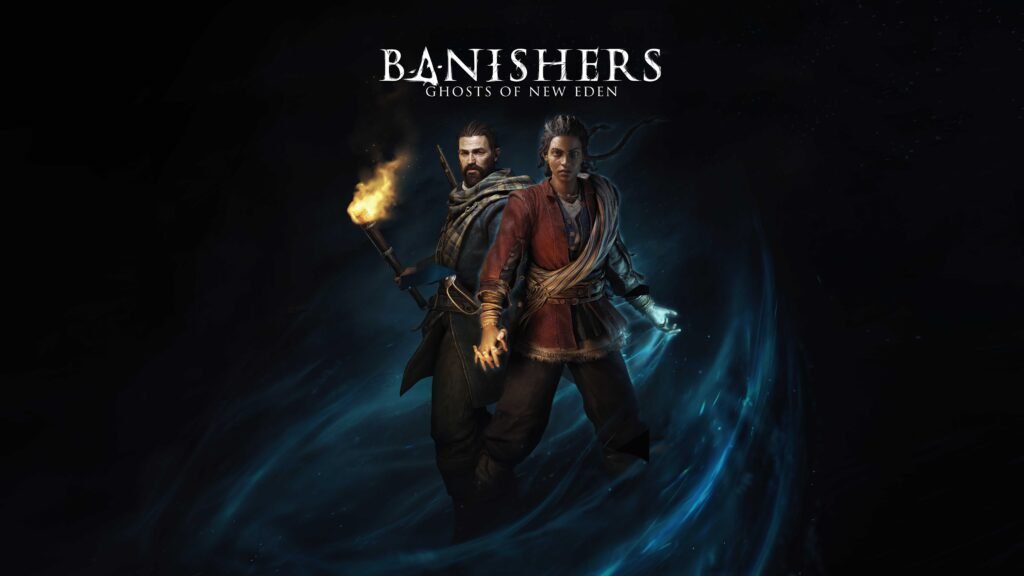

Coming from Don’t Nod, the studio that gave us Life is Strange and Vampyr, Banishers: Ghosts of New Eden is a fascinating blend of deep, emotional storytelling and a combat system that feels very familiar—mostly because it’s a God of War clone in the best way possible.
It’s a game that I really wanted to love, but it’s held back by some repetitive design choices. Still, if you’re here for a narrative-driven journey, this is absolutely a trip worth taking.

A Ghost Story with Real Soul
The strongest pillar of Banishers is, without question, its excellent story. Set in 1695 in a supernatural version of North America, you play as Red mac Raith and Antea Duarte. They aren’t just partners in the professional sense; they are lovers who work as “Banishers”—essentially 17th-century ghost hunters who help the living by getting rid of the dead.
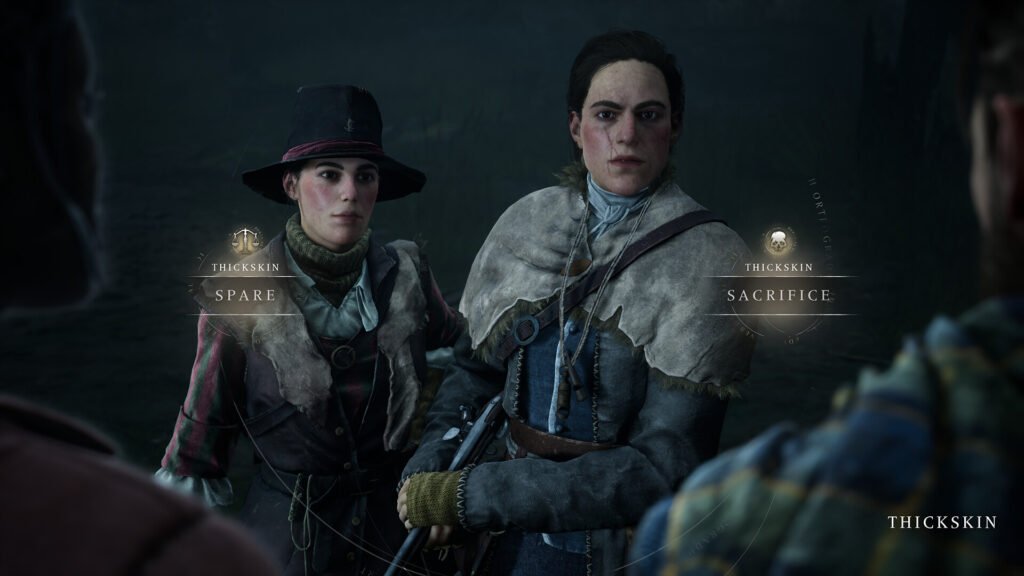
The twist hits early: Antea is killed and becomes the very thing she spent her life hunting. This sets up a heart-wrenching dynamic where Red has to decide whether to follow the Banisher code and let her soul ascend, or betray his vows by “sacrificing” the living to bring her back to life. Every moral choice you make throughout the game feels heavy. Unlike many RPGs where choices feel like “be a saint” or “be a jerk,” Banishers lives in a gray area where you’re constantly weighing your love for Antea against the lives of the settlers you encounter.
The God of War Blueprint
From the moment you take control of Red, the inspiration is obvious. The over-the-shoulder camera, the “meaty” feel of the strikes, and the way you explore semi-linear environments screams God of War (2018). You’ve even got the “buddy” mechanic, though here it’s much more integrated. You can instantly swap between Red (who uses physical weapons like a saber and firebane) and Antea’s ghost form (who uses spectral punches and powers).
This tag-team approach is cool for the first few hours. Seeing Red finish a combo and then instantly blinking into Antea to deliver a spectral blast is satisfying and fluid. It gives the combat a rhythm that Vampyr lacked, making it feel like a polished AA experience that punches well above its weight class in terms of presentation.

The Struggle with Repetition
However, as you move deeper into the haunted woods of New Eden, the cracks start to show. The biggest issue is a severe lack of enemy variety. For a game that can take anywhere from 25 to 50 hours to beat, you end up fighting the same three or four types of ghosts and possessed corpses over and over again. Whether you’re in a frozen mountain pass or a murky swamp, you’re basically dealing with the same “floaty ghost” or “shambling wolf” archetypes.
This lack of diversity extends to the gear as well. There is a noticeable lack of weapon variety. While you do eventually get a musket—which is a blast to use—your primary tools remain the same throughout the entire journey. You can upgrade your gear to see the numbers go up, but you aren’t finding new weapon types or drastically different ways to play. Because of this, the repetitive gameplay starts to set in around the halfway mark. You find yourself entering a “ghost arena,” clearing the same mobs you’ve killed a hundred times, and then moving to the next story beat.

A World Worth Investigating
Despite this, the investigation mechanics will keep you hooked. The game is structured around “Haunting Cases,” which act like supernatural detective stories. You’ll arrive at a settlement, find someone being plagued by a spirit, and have to find clues to uncover the truth behind the haunting.
These aren’t just filler side quests; they are some of the best-written content in the game. You’ll uncover stories of betrayal, hidden romance, and colonial greed. By the time you reach the “Intent” phase of a case, where you have to decide the fate of the ghost and the haunted person, you genuinely care about the outcome. This is where the game’s heart is, and it’s what keeps you pushing through the more mundane combat encounters.
Visuals and Atmosphere
Visually, the game is a mood. The atmospheric world-building is top-tier. New Eden feels cold, damp, and genuinely cursed. The lighting through the trees and the design of the “Void” sections create a sense of dread that perfectly complements the narrative. It doesn’t have the astronomical budget of a Sony first-party title, but the art direction is so strong that you rarely notice the “AA” limitations. The voice acting also deserves a shoutout—Red and Antea have incredible chemistry, and their constant banter makes the long treks through the wilderness feel much shorter.

The Verdict: Play it for the Story
All in all, Banishers: Ghosts of New Eden is a good God of War clone that falls just short of greatness due to its technical and gameplay loops. The repetitive gameplay and the stagnant enemy pool are real hurdles.
However, if you are looking for an emotional, mature story with characters you’ll actually remember after the credits roll, this is a must-play. It’s a bold attempt at a high-end action RPG that proves Don’t Nod are still the kings of making you feel bad about your choices. It’s worth playing for the story alone, even if you find yourself wishing there were a few more types of ghosts to banish along the way.