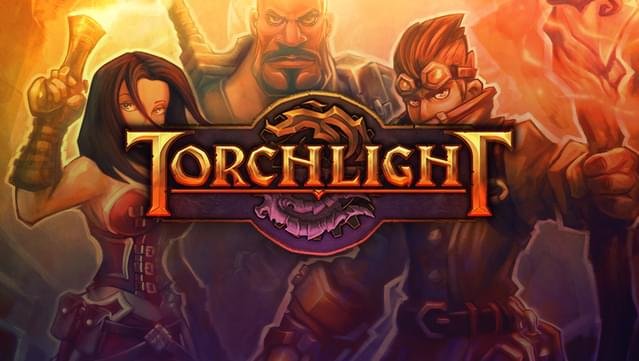

Release Date: October 27, 2009 Developer: Runic Games
Get It On: GOG
The Pedigree of Greatness
If you were hanging around the gaming scene back in the late 2000s, you probably remember the agonizing wait for a certain three-quel from Blizzard. While the world was twiddling its thumbs, a small team called Runic Games decided to drop a little something called Torchlight. This wasn’t just some random indie project; it was spearheaded by the masterminds behind the original Diablo games and the creator of Fate. When you have that kind of ARPG royalty behind the curtain, you know you’re in for a treat. They didn’t try to reinvent the wheel, but they certainly polished it until you could see your reflection in it. The game arrived with a sense of focus that felt refreshing. Instead of trying to be a sprawling open-world epic, it stayed lean, mean, and incredibly addictive. It’s the kind of game that respects your time while simultaneously making you lose track of four hours because you just wanted to find one more pair of legendary boots.
A World You Actually Want to Save
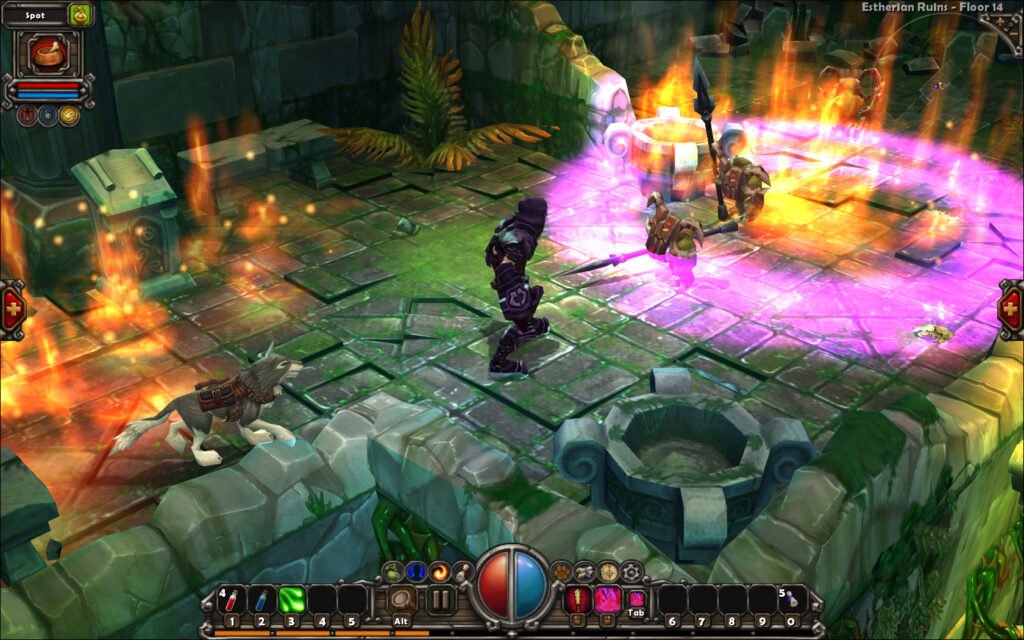
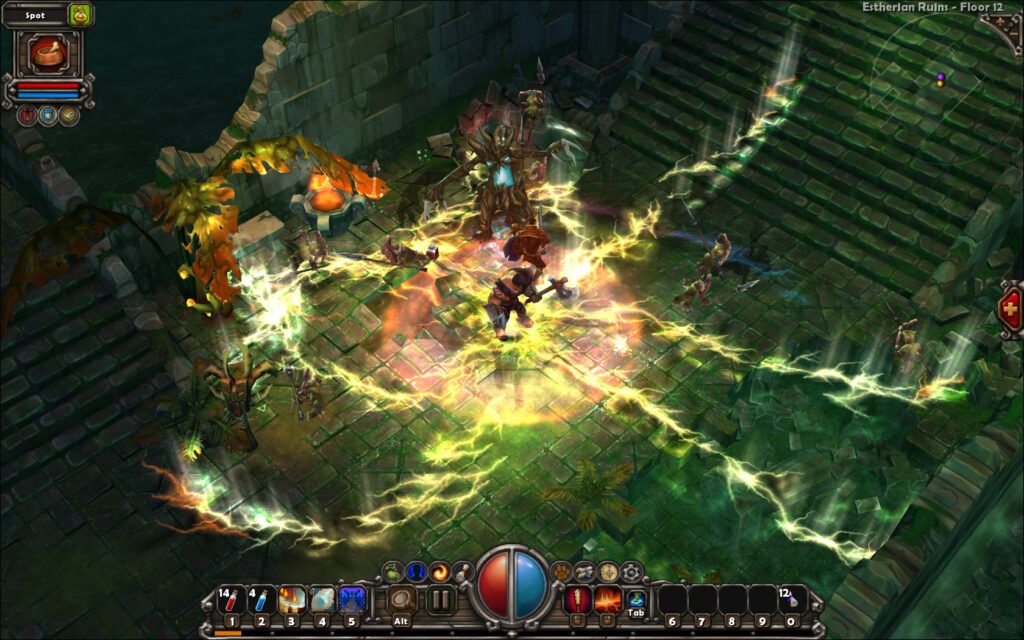
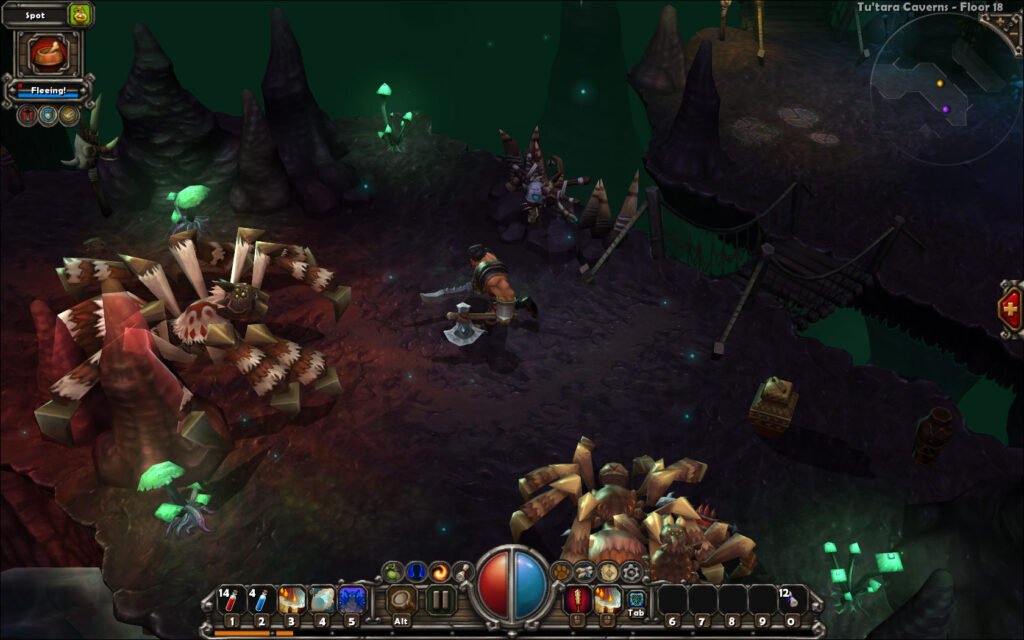
Most games in this genre lean heavily into the “everything is brown, grey, and miserable” aesthetic. Torchlight took a sharp turn into a vibrant, stylized art style that honestly looks better today than many “photorealistic” games from the same era. It’s got this chunky, steampunk aesthetic mixed with a bit of a comic-book vibe. The town of Torchlight itself is a cozy hub perched right on top of a mountain of trouble. Deep beneath the floorboards lies a massive vein of Ember, a magical ore that is basically the plutonium of this world. It grants power, but it also corrupts everything it touches. This setup gives the game a perfect excuse to throw you into procedural dungeons that shift from overgrown mines to ancient tombs and mechanical fortresses. Because the colors pop and the animations are so fluid, the act of clearing a room full of monsters feels more like a celebratory fireworks display than a chore.
Three Flavors of Destruction
You get three distinct classes to play with, and while that might seem low by modern standards, each one is a masterclass in satisfying hack-and-slash mechanics. First up is the Destroyer, your quintessential beefcake who likes to solve problems with his fists and giant swords. If you want to dive into the middle of a pack of goblins and turn them into red mist, this is your guy. Then you have the Vanquisher, a master of ranged combat and traps. She’s all about maintaining distance and turning the battlefield into a literal minefield. Finally, there is the Alchemist, who serves as the mage-equivalent but with a cool twist. He uses Ember to summon mechanical minions and blast enemies with arcane energy. The skill trees are flexible enough that you can really lean into a specific playstyle, whether you want to be a glass cannon or a tanky commander of a robot army. The progression feels constant, with every level-up offering a tangible boost in power that makes you feel like an absolute unit.
Your Best Friend is a Pack Mule
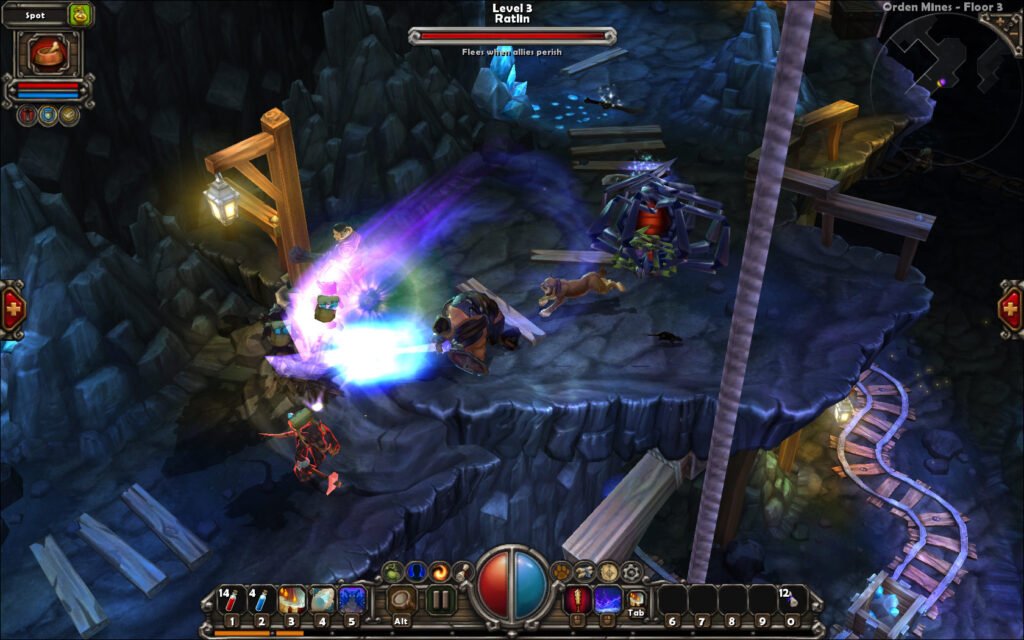
We have to talk about the real MVP of Torchlight, which is the pet system. Every hero starts with either a dog or a cat, and they aren’t just there for emotional support. Your pet is a fully functional combatant that can learn its own spells and wear its own jewelry. But the absolute stroke of genius—the feature that every other game should have stolen immediately—is the ability to send your pet back to town. When your backpack is overflowing with rusty swords and enchanted helmets, you just click a button and your furry friend trots back to the merchant to sell it all for you. It keeps the gameplay loop incredibly tight because you never have to break your momentum to go on a “inventory management” field trip. If that wasn’t enough, you can even go fishing in the dungeon. Feeding different types of fish to your pet can temporarily transform them into various monsters like a poisonous spider or a giant elemental, adding a weirdly delightful layer of strategy to your dungeon crawling.
The Never-Ending Grind
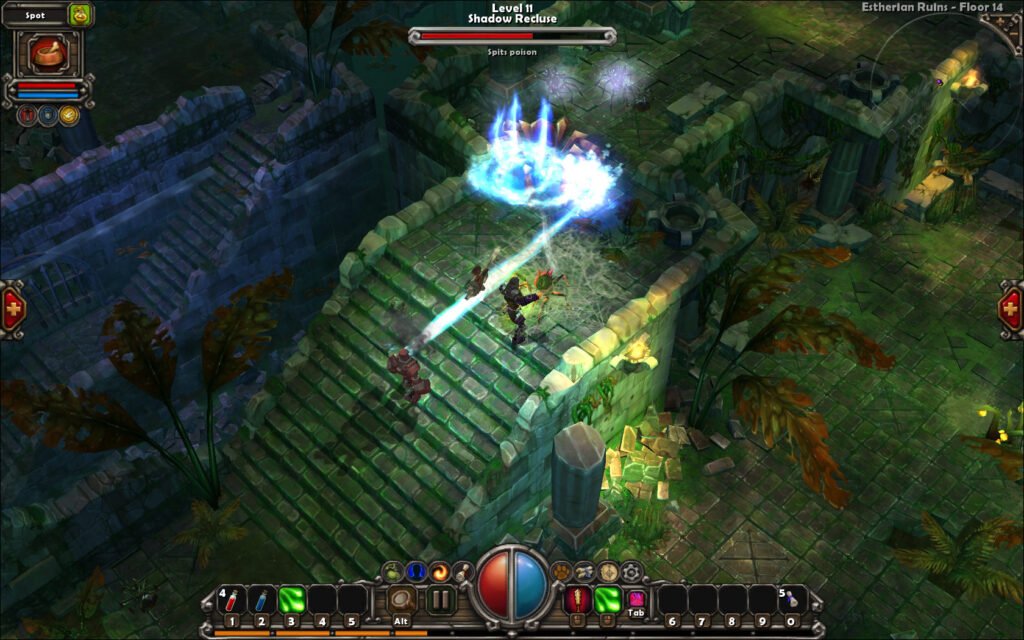
One of the coolest things about the original Torchlight is that it doesn’t really have to end. Once you finish the main story and deal with the big bad at the bottom of the mine, you unlock the Shadow Vault. This is an infinite dungeon that scales with your level forever. It’s the ultimate playground for players who just want to see how far they can push their character build. This is where the loot-fest truly kicks into high gear. You’ll be hunting for unique items and set pieces that provide massive bonuses to your stats. The game also features a retirement system, where your high-level character can pass down a “legacy” item to a new character, giving them a head start with an enchanted piece of gear. It encourages you to experiment with all the classes without feeling like you’re starting from scratch every time. The sheer volume of enchanting, socketing gems, and transmogrifying items ensures that there is always a goal on the horizon.
A Masterclass in Atmosphere
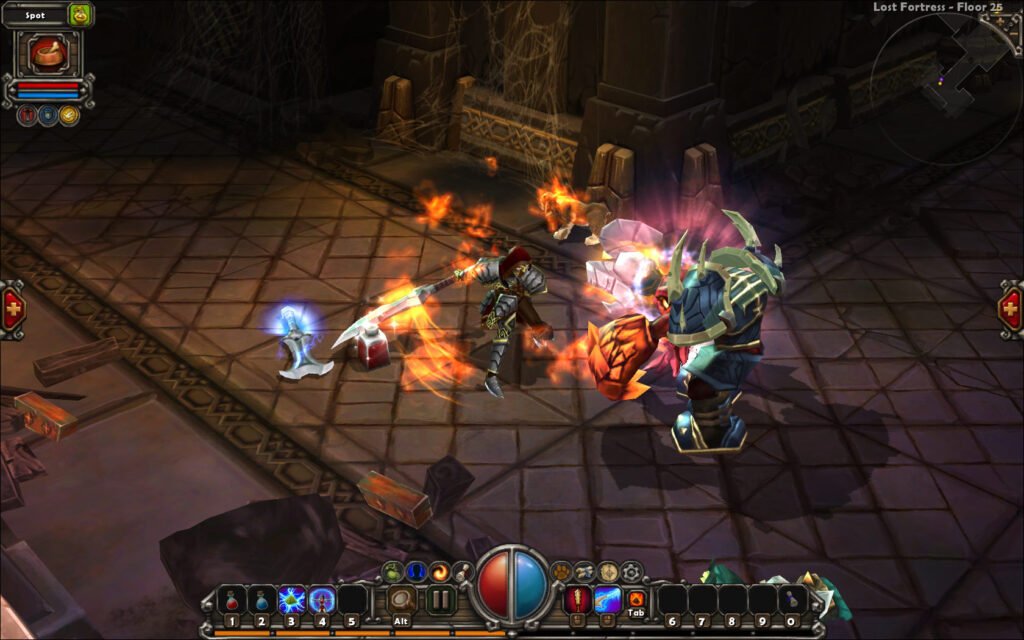
While the gameplay is the meat and potatoes, the secret sauce is the music. Matt Uelmen, the legendary composer who defined the sound of the early ARPG era, brought his A-game here. The acoustic guitars in the town of Torchlight evoke a sense of “dangerous peace” that is hauntingly beautiful. As you go deeper, the score shifts into more industrial and eerie tones that perfectly match the shifting environments. It creates an immersion that is hard to find in a game that looks so cartoonish on the surface. The sound design follows suit; the “clink” of gold dropping on the floor and the “thud” of a critical hit are tuned to give you that hit of dopamine every few seconds. It’s a sensory experience that understands the fundamental psychology of why we love to click on monsters and watch them explode.
The Legacy of the Torch
Looking back, Torchlight was a pivot point for the genre. It proved that you didn’t need a multi-million dollar cinematic budget to create a world that people wanted to inhabit for hundreds of hours. It was built with modding in mind, and the TorchED tools allowed the community to keep the game alive with new classes, items, and dungeons for years. Even in a world where we have massive titles with seasonal passes and live-service hooks, there is something incredibly pure about the first Torchlight. It’s a complete package that focuses on the joy of the dungeon crawler. It’s accessible enough for a casual gamer to pick up and enjoy, yet deep enough for the hardcore theory-crafter to get lost in the math of Ember-based magic. If you haven’t revisited it lately, or if you’re a newcomer looking for a smooth entry into the world of ARPGs, this game is a mandatory play. It’s a reminder that sometimes, the best way to move forward is to take the classic formulas we love and just execute them with an incredible amount of heart and polish.