
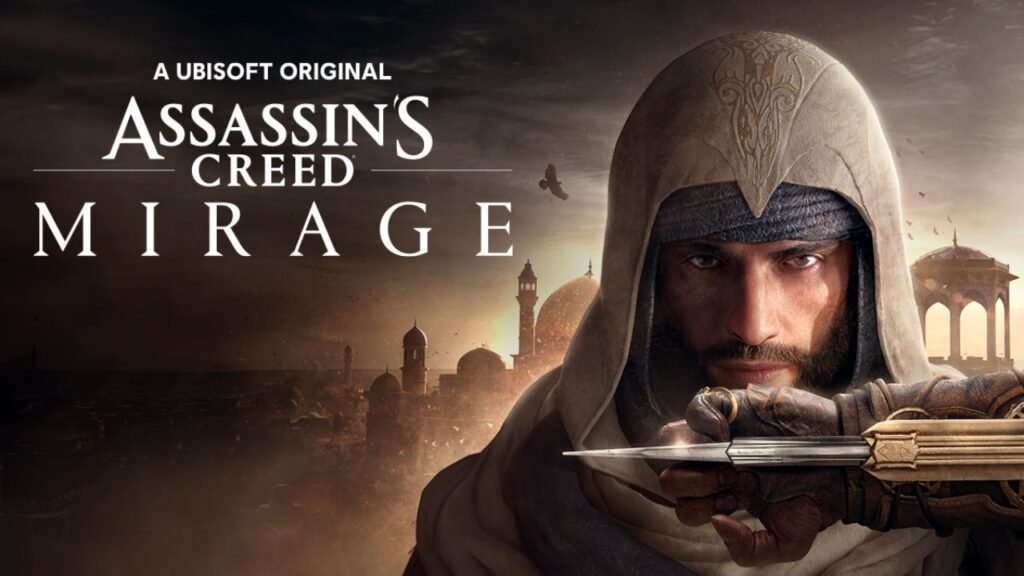

If you had told me a few years ago that the Assassin’s Creed franchise would actually stop growing like a bloated RPG and finally return to its roots, I probably would have laughed you out of the room. But here we are in 2026, and looking back at Assassin’s Creed Mirage, it feels like Ubisoft Bordeaux didn’t just make a game—they made a time machine. Whether you’re a veteran who still remembers the first time Altaïr took a leap of faith or a newcomer who just wants a tight, focused stealth experience, this game has aged like fine wine. It is a refreshing departure from the massive hundreds-of-hours-long marathons we’ve seen recently, proving that sometimes, less really is more.
A Much-Needed Breath of Fresh Desert Air
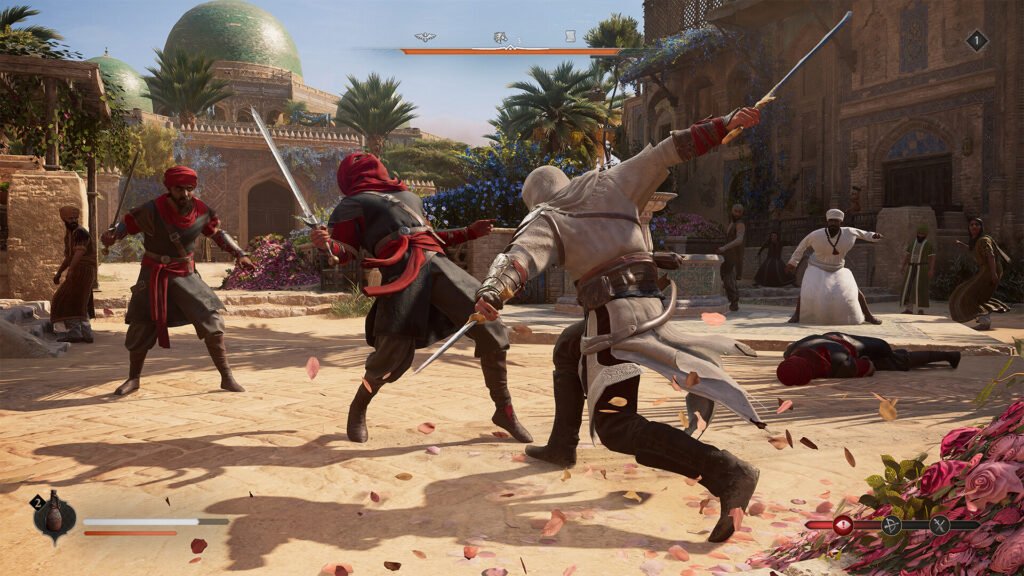
From the second you step into 9th-century Baghdad, you can tell this isn’t the sprawling, never-ending map of Valhalla. The city is dense, vibrant, and—most importantly—built for parkour. As Basim, a street thief turned Hidden One, you’re not just wandering through a flat landscape. You’re navigating a vertical labyrinth where every clothesline, wooden beam, and rooftop garden is a potential escape route. The developers clearly put a massive amount of love into the urban design, ensuring that the city itself feels like a character. It’s a return to the “city-as-a-playground” philosophy that made the early games so iconic, and honestly, running across the sun-drenched tiles of the Round City never gets old.
The smaller scope of the game allowed the team to polish the details that usually get lost in massive open worlds. You aren’t constantly distracted by a thousand question marks on the map. Instead, the focus is on the investigation system. You’re a detective as much as an assassin, gathering clues, eavesdropping on guards, and slowly unraveling the web of the Order of the Ancients. This structure makes the narrative feel tight and personal. You aren’t saving the entire world from a cosmic threat; you’re watching a young man struggle with his destiny and the dark visions that plague his mind.
Baghdad: A Vertical Masterpiece
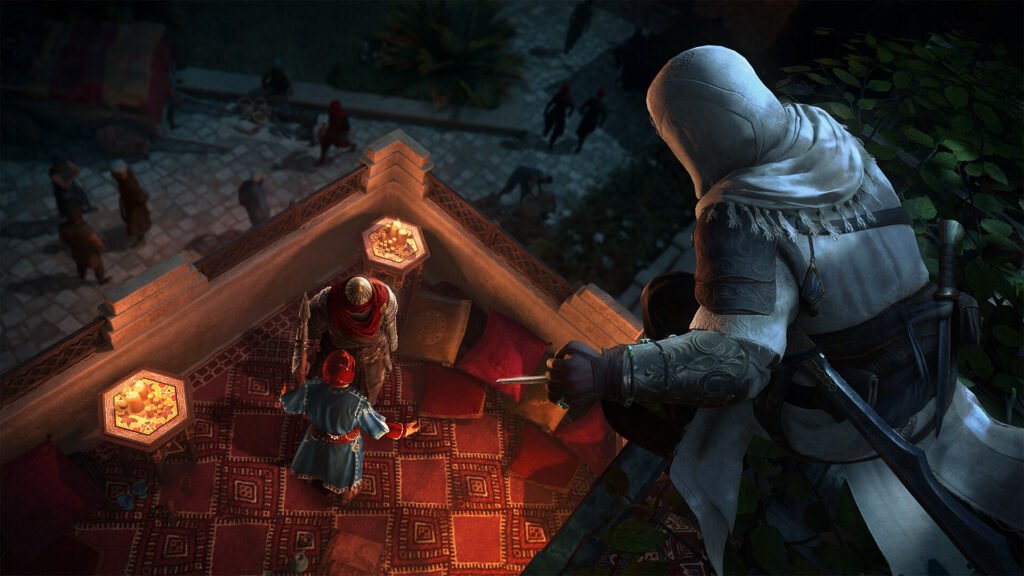
One of the best things about Mirage is how it handles movement. The fluidity of the parkour is the best it’s been in years. While it might not have the extreme complexity of Unity, it feels intentional and snappy. You can feel the weight of Basim as he vaults over obstacles, and the return of things like the pole vault and corner swings makes traversing the four distinct districts a total joy. Whether you’re sneaking through the industrial grit of Harbiyah or the lush gardens of the Abbasiyah district, the environment always provides multiple ways to reach your goal.
This verticality is essential because the game actually punishes you for being sloppy. If you’re spotted on the street, the notoriety system kicks in quickly. Suddenly, civilians start recognizing you, and the Abbasid Guard becomes much more aggressive. It forces you to stay on the rooftops or use the social stealth mechanics to blend into the crowds. Being a “blade in the crowd” isn’t just a catchy slogan here; it’s a survival mechanic. Tearing down wanted posters or bribing a Munadi to clear your name adds a layer of tension to your everyday exploration that was sorely missing from the recent warrior-focused entries.
Blades in the Crowd, Not Axes in the Face
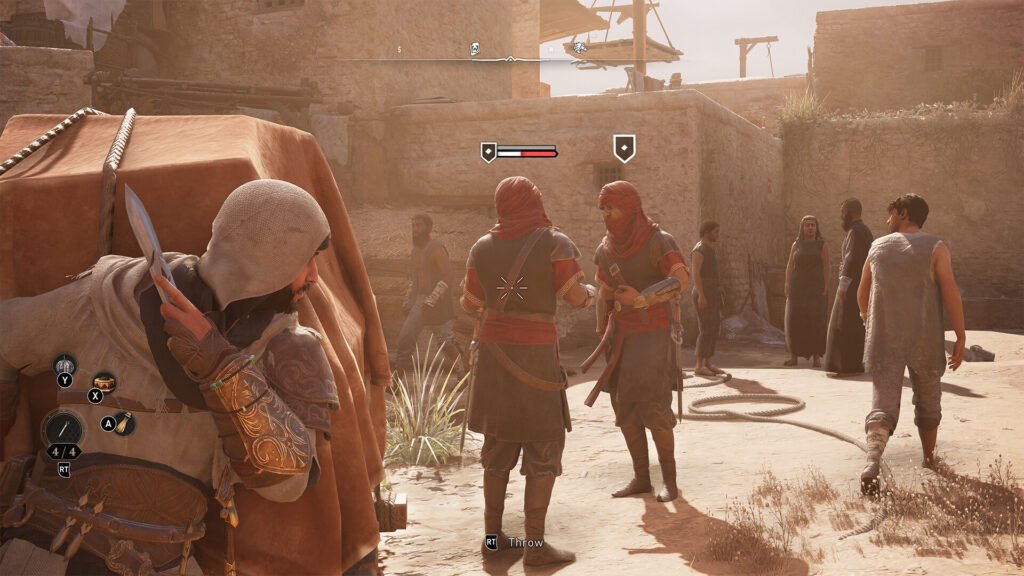
The stealth-first design is where the game really shines. Unlike the “warrior” approach of the previous trilogy, Mirage forces you to actually act like an assassin. You’re fragile. If you get surrounded by five guards in a narrow alley, you’re probably going to have a bad time. This shift back to using tools like smoke bombs, noisemakers, and throwing knives makes every successful mission feel earned. The Black Box missions are the absolute highlight of the experience, giving you a target and a handful of creative ways to take them out. You might bribe a merchant to get you inside a palace, or sneak through the sewers to find a hidden entrance. The choice is yours, and that freedom makes the kills feel incredibly satisfying.
We also have to talk about Assassin’s Focus. While some fans were worried about it looking too “supernatural,” in practice, it’s a brilliant way to handle multiple kills in a high-speed stealth run. It represents Basim’s incredible speed and reflexes, allowing you to chain together takedowns that look like something straight out of a movie. When you combine this with the eagle vision and your literal eagle companion, Enkidu, you have all the information you need to ghost through a fortress without anyone ever knowing you were there.
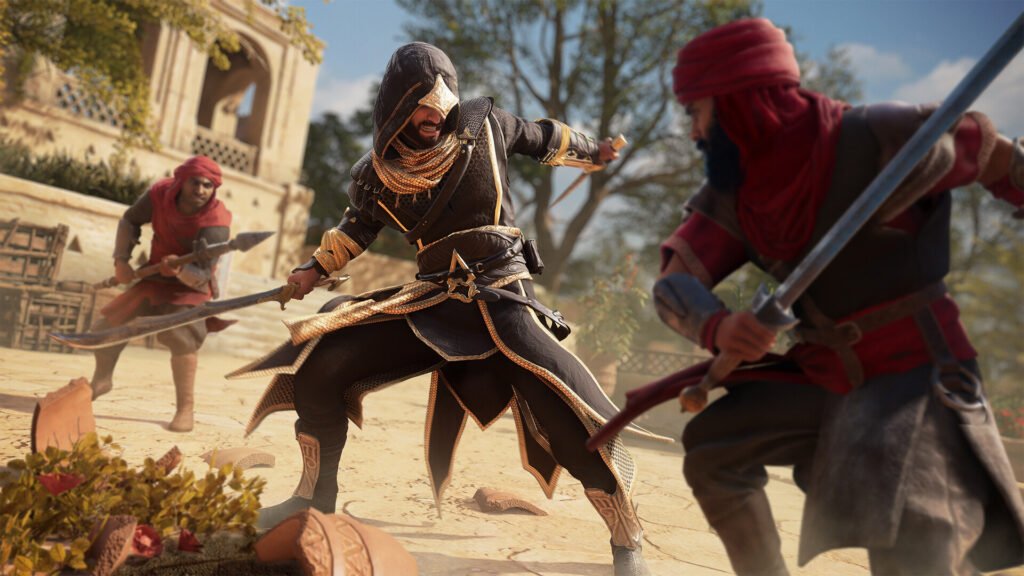
The Evolution of Basim Ibn Ishaq
At the heart of it all is Basim. We first met him as a mysterious mentor in Valhalla, but seeing his origin story in Mirage adds so much depth to his character. He’s not a hero in the traditional sense; he’s a man driven by a desperate need for justice and answers. His relationship with his mentor, Roshan, is one of the best-written dynamics in the series. You can feel the tension as Basim pushes against the rules of the Hidden Ones, trying to find his own path while dealing with the literal “jinni” that haunts his dreams.
The storytelling is grounded and avoids the over-the-top mythological detours that sometimes bogged down the previous games. It stays focused on the Creed and the cost of joining such a secretive organization. By the time you reach the ending, you have a much better understanding of why Basim becomes the man he is. It’s a tragic, beautifully told tale that proves you don’t need a hundred hours of dialogue to make a player care about a character.
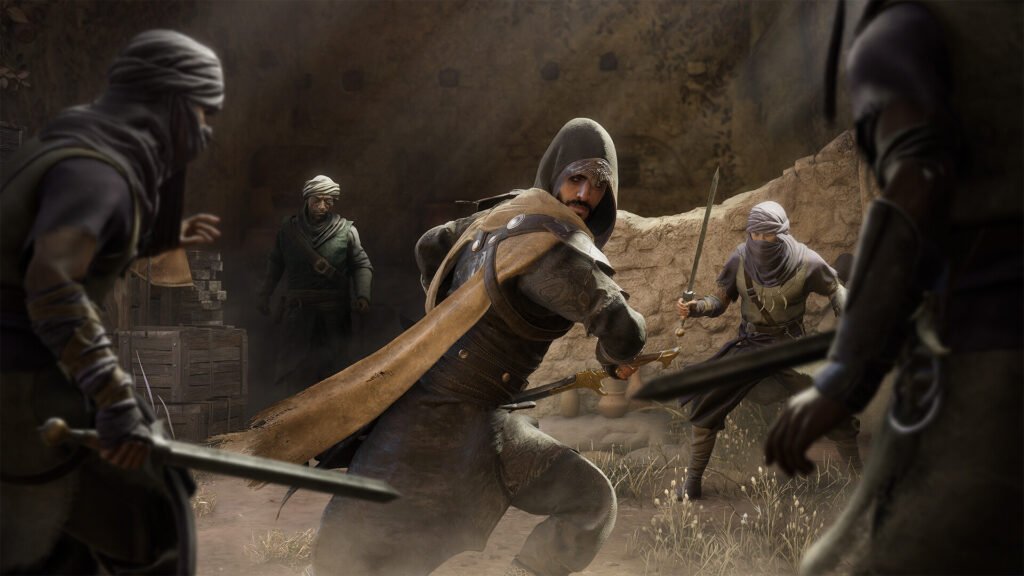
Technically Tight and Visually Vibrant
On a technical level, Mirage is a gorgeous game. The lighting in Baghdad is stunning, especially during the “golden hour” when the sun reflects off the turquoise domes and sandy streets. The soundtrack, composed by Brendan Angelides, is a masterpiece of atmospheric music, blending traditional Middle Eastern instruments with modern synth elements that represent the Animus. It’s moody, haunting, and perfectly fits the vibe of the game.
The performance is also rock-solid. Even in the middle of a crowded market with dozens of NPCs, the frame rate stays steady. Ubisoft also included a Discovery Tour mode and an extensive codex that provides historical context for everything you see. It’s clear that a lot of research went into making this a faithful and respectful recreation of a lost era. Whether you’re reading about the “House of Wisdom” or learning about the intricate water systems of the time, the game doubles as a fascinating history lesson.
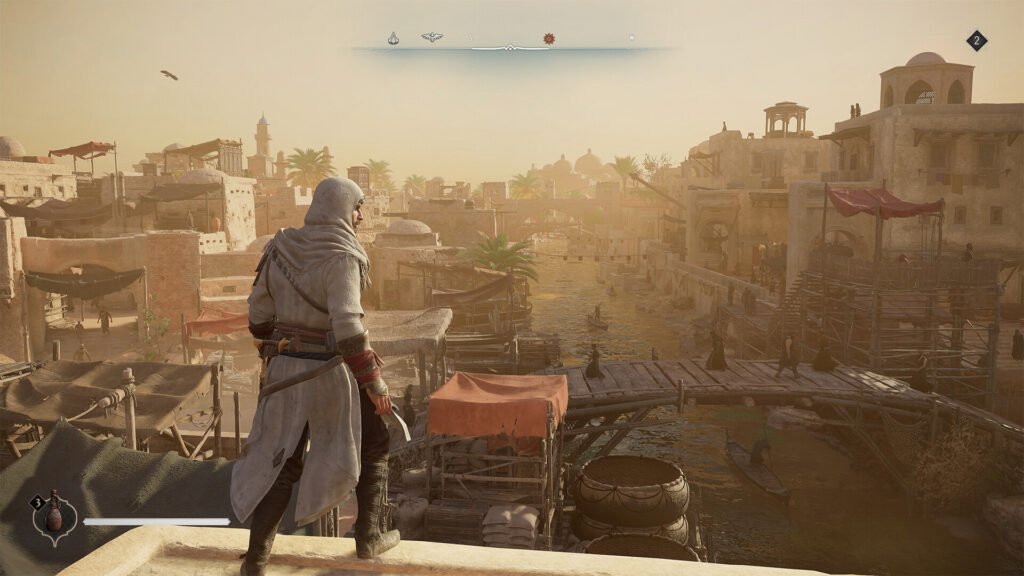
Valley of Memory: The Ultimate Victory Lap
Of course, we can’t talk about the current state of the game without mentioning the Valley of Memory DLC. This free major update, which arrived toward the end of 2025, was the perfect thank-you to the fans. It takes Basim to the breathtaking region of AlUla, adding over six hours of new story content that focuses on his search for his long-lost father. The change in scenery is spectacular, trading the dense city streets for wide-open oases and the hauntingly beautiful rock-cut tombs of Hegra.
But it wasn’t just about the new map; the update brought a massive gameplay overhaul. It introduced manual jumping and refined the parkour even further, addressing the community’s feedback about movement feeling a bit automated. They also added the Ultimate Assassin difficulty and a permadeath mode for the true masochists out there. Between the new oud-playing mini-game and the expanded tool upgrades, the Valley of Memory DLC turned a great game into an essential masterpiece. It’s a heartfelt tribute to the series’ history and a reminder that when Assassin’s Creed stays focused, nothing else in the genre can touch it.