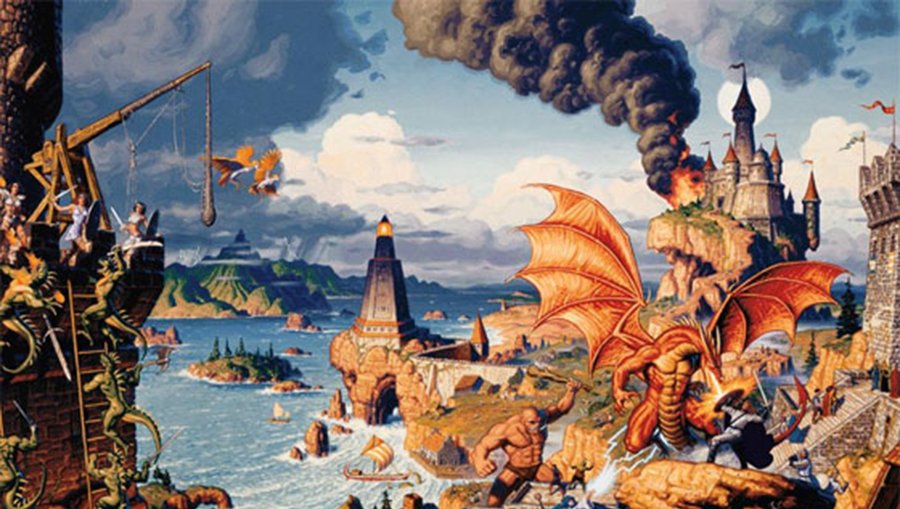

In 1997, a game called Ultima Online (UO) dropped us into a world that felt less like a piece of software and more like a second life. Developed by Origin Systems and led by the legendary Richard Garriott, known to his subjects as Lord British, UO wasn’t just the first successful MMORPG—it was a chaotic, beautiful, and often brutal social experiment that changed gaming forever.
The Dream of a Living World
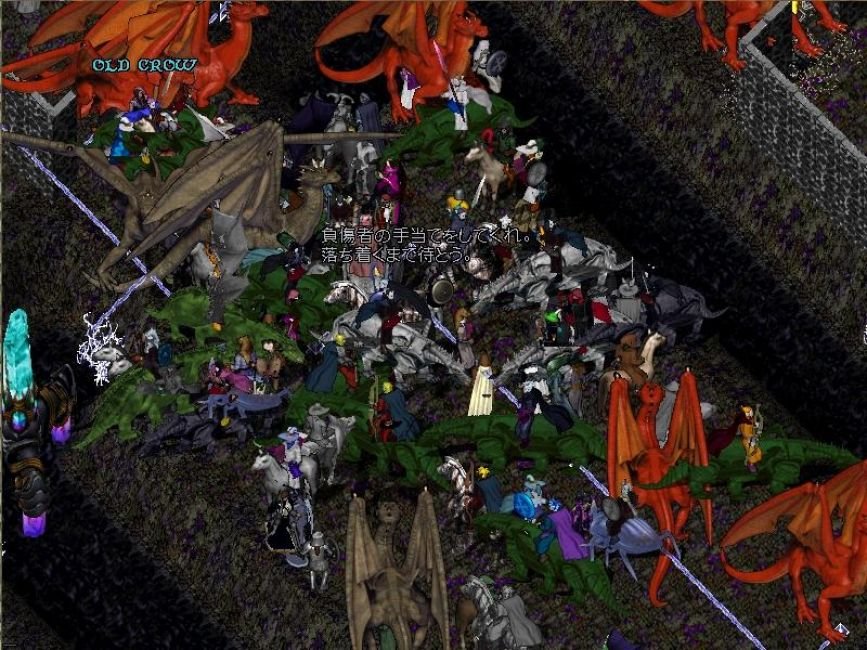
Before World of Warcraft made everything feel like a polished theme park, UO tried to build a literal virtual ecology. The developers had this ambitious idea that the world of Britannia would function like a real ecosystem. Wolves would eat rabbits, and if players killed too many rabbits, the wolves would get hungry and aggressive, venturing into town for a snack. It was a brilliant concept that lasted about five minutes in the real world. As soon as the servers opened, thousands of players swarmed the forests and murdered everything that moved. The ecosystem collapsed instantly because the developers underestimated the sheer bloodlust of the average gamer. We weren’t there to watch the circle of life; we were there to gain skills and loot gold.
The Day the King Died
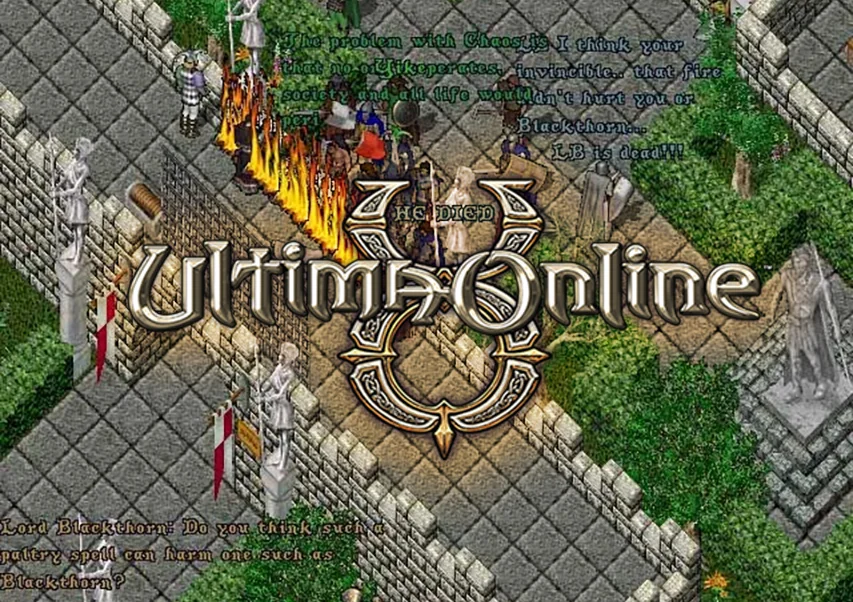
One of the most famous stories in all of gaming history happened during the UO beta. Lord British himself decided to address the masses from the battlements of his castle. He was supposed to be invulnerable, a literal god-king within the code. However, a player named Rainz noticed that after a server crash, the king’s “invulnerability flag” hadn’t been reset. Rainz did what any chaotic neutral player would do: he cast a Fire Field scroll under the king’s feet. To everyone’s absolute shock, the king of Britannia crumpled into a pile of ash. The developers panicked, summoned demons to slaughter the crowd in a fit of pique, and a legend was born. It set the tone for the entire game—in Britannia, absolutely anything could happen, and no one was truly safe.
Life as a Dread Lord
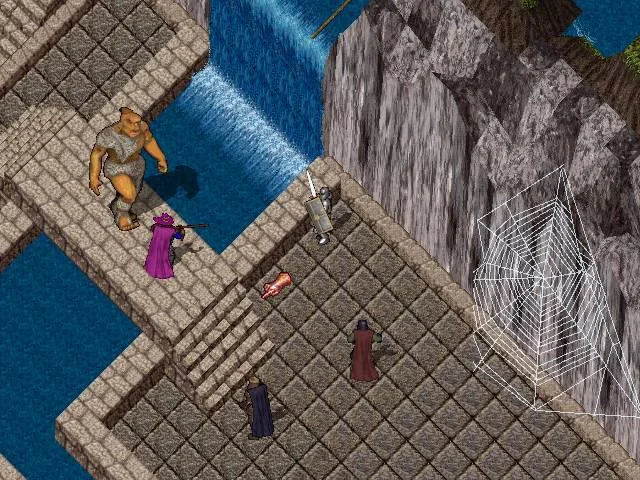
In the early days, UO was the Wild West. There were no “instances” or safe zones outside of the city guards’ reach. If you stepped past the town line, you were fair game. This gave birth to the infamous Player Killer (PK). Seeing a name in red text on the edge of your screen was enough to make your heart jump into your throat. If you died, you didn’t just lose some durability on your armor; you lost everything on your corpse. Your killer could take your sword, your gold, and even your fancy wizard hat. This created a level of tension and consequence that modern games rarely replicate. You had to form friendships, join guilds, and constantly watch your back. Being a Dread Lord was a status symbol of villainy, while being a “Blue” meant you were constantly navigating a world of high-stakes danger.
The Great Split and the Birth of Trammel
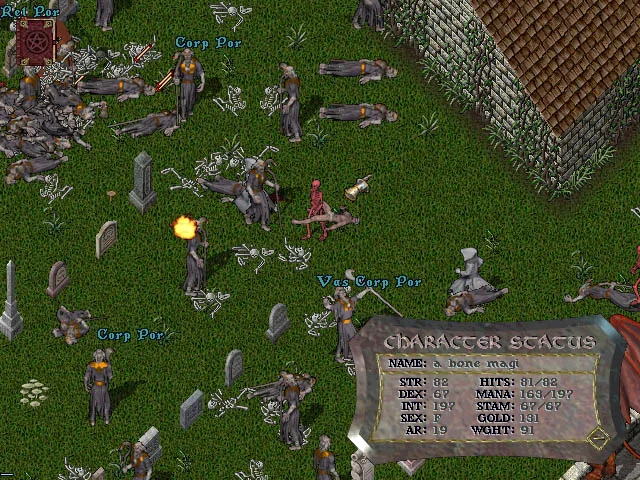
By the year 2000, the constant carnage became a bit much for some players who just wanted to craft chairs or tame dragons in peace. This led to the Ultima Online: Renaissance expansion, which made the most controversial move in the game’s history. The world was split into two “facets”: Felucca and Trammel. Felucca kept the old-school, hardcore, full-loot PvP rules, while Trammel was a safe haven where players couldn’t be attacked or robbed. While this saved the game’s subscriber numbers, it also changed the soul of the experience. The “danger” was gone for many, leading to the phrase “Trammelized” becoming a pejorative for making a game too easy. Yet, it allowed for the massive growth of the player-driven economy and the social side of the game.
The Art of Bank Sitting and House Decorating
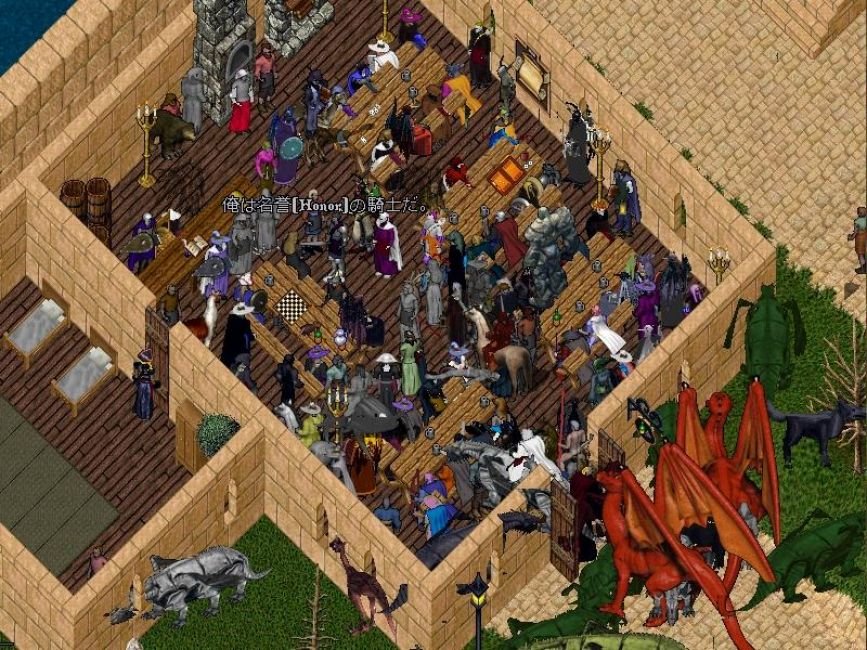
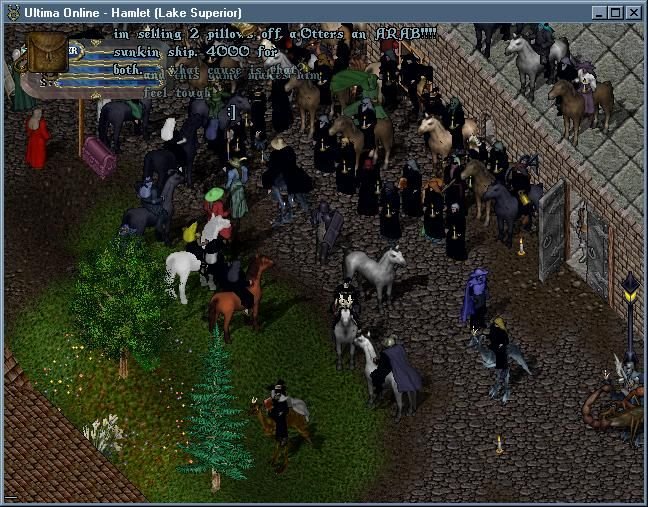
Long before social media, we had bank sitting. Players would congregate at the West Britain Bank, showing off their neon-colored dyed armor, their high-end mounts, or their ultra-rare items like “Server Birth Rares” (items that accidentally spawned once and were never seen again). UO also pioneered player housing. Unlike modern games where you might have a generic apartment in a menu, in UO, you actually placed your house in the open world. Finding a spot for a Small Forge or a Tower was like finding real estate in Manhattan. If you were lucky enough to own a Castle, you were basically royalty. You could customize every tile, set up vendors to sell your crafted goods, and host parties for your friends.
A Legacy That Never Truly Ends
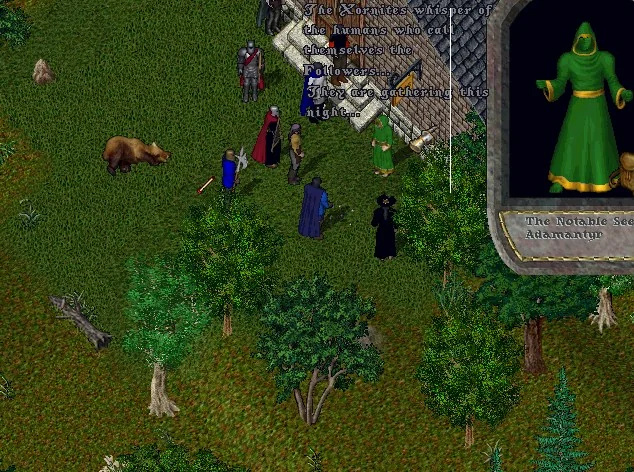
UO was unique because it was skill-based rather than level-based. You didn’t “hit level 60”; you became a Grandmaster in Swordsmanship or Magery by actually using those skills. This freedom allowed for weird “hybrid” builds that made your character feel personal. It was a game where you could be a legendary warrior, a humble fisherman, or a thief who specialized in stealing items right out of people’s backpacks while they were talking. This level of interactivity and freedom is why people are still talking about Britannia nearly thirty years later. It wasn’t just a game you played; it was a place you lived.
If this trip down memory lane has you itching to swing a halberd or cast In Vas Mani, you’ll be happy to know that Britannia is still very much alive. You can still play on the official servers through the Endless Journey free-to-play model, which gives you a taste of the modern experience. However, many veterans prefer the thriving world of freeshards like UO Outlands, which offers a completely custom map and updated mechanics that capture the old-school spirit. If you’re looking for something totally different, there is a fascinating project called Ruins & Riches. This is essentially a massive total-conversion mod that turns the UO engine into a single-player or small-group RPG experience. It’s packed with thousands of new items, monsters, and a much more structured questing system, making it perfect for those who want the nostalgia of the engine without the fear of being “corp por-ed” by a random PK.