
Remember the early 2000s? It was a time of baggy jeans, nu-metal, and the glorious realization that the original Xbox was basically a heavy-duty space heater that also played games. While everyone else was busy losing their minds over Master Chief, a smaller, darker, and significantly grittier cult classic was brewing in the kitchens of High Voltage Software. If you spent any Friday nights huddled around a CRT television with three friends and a mountain of pizza, chances are you spent some of that time cleansing the streets of the World of Darkness in the Hunter: The Reckoning series. These games didn’t just give us a chance to kill monsters; they gave us a chance to feel like the last line of defense in a world that had already gone to hell.
The Night the Penitentiary Cracked
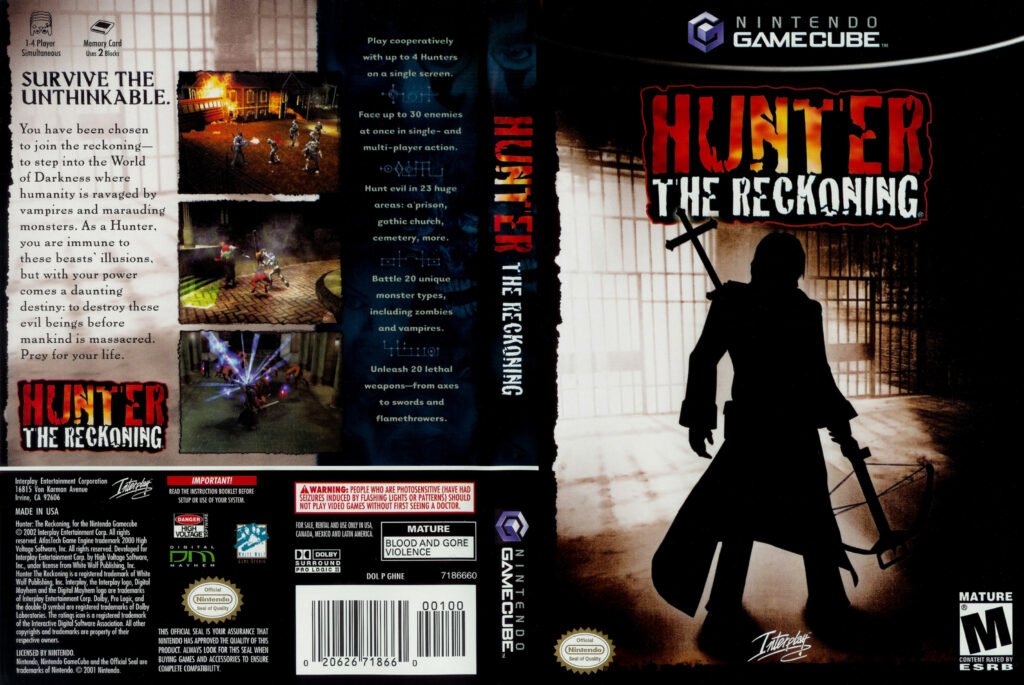
The first Hunter: The Reckoning, released in 2002, was a technical marvel for its time. High Voltage Software tapped into the White Wolf tabletop universe, but they didn’t try to make a slow-burn RPG. Instead, they handed us a chainsaw, a shotgun, and a prayer, then shoved us into the Ashcroft Penitentiary. The premise was simple yet effective: you play as the Imbued, ordinary people who suddenly “wake up” to the fact that monsters are real and currently running the local government. The game was a twin-stick shooter combined with a hack-and-slash brawler, a cocktail of genres that felt incredibly fresh when played with four people locally.
What made the original game stick in our brains wasn’t just the gore—though there was plenty of that—it was the atmosphere. High Voltage managed to capture that specific gothic-punk aesthetic that defined the early 2000s. Everything was wet, dark, and illuminated by the flickering neon of a dying city. You had a roster of four distinct hunters: Deuce the Avenger, Kassandra the Martyr, Samantha the Defender, and Father Cortez the Judge. Each character felt unique, not just because of their stats, but because of their Edge powers. Watching Father Cortez summon a pillar of divine fire to incinerate a pack of zombies was the kind of power trip that kept us coming back for more, even when the difficulty spikes felt like a kick in the teeth.
Expanding the Hunt with Wayward and Redeemer
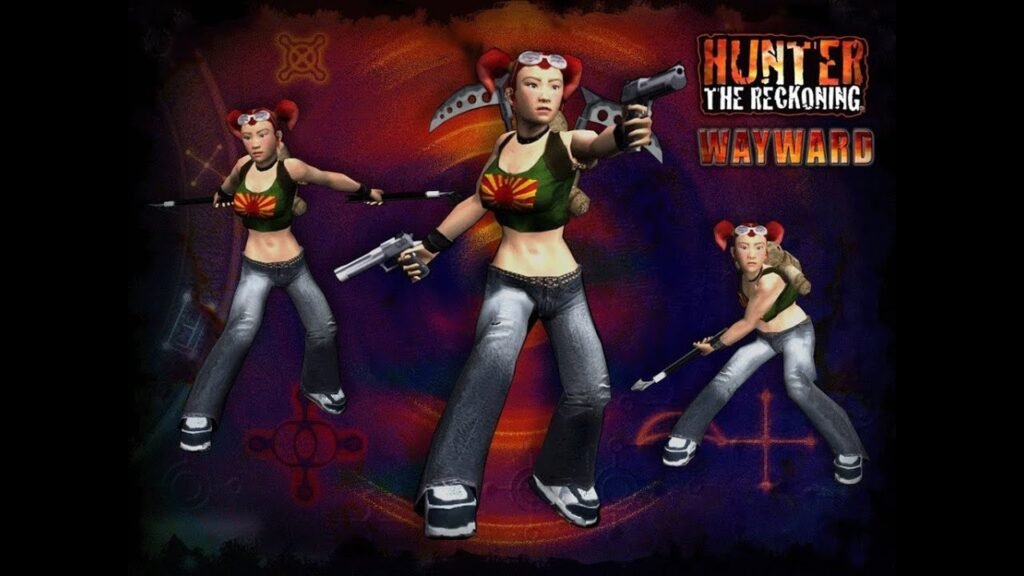
High Voltage didn’t stop at the gates of Ashcroft. They followed up with two sequels that expanded the lore and the carnage. First came Hunter: The Reckoning: Wayward for the PlayStation 2, which shifted the focus to the town of Ashbury. It introduced new hunters and leaned harder into the supernatural mystery of the setting. While the PS2 hardware meant a slight graphical trade-off compared to the Xbox original, the gameplay remained as frantic as ever. It felt like a gritty Saturday morning cartoon that had been dipped in blood and kerosene.
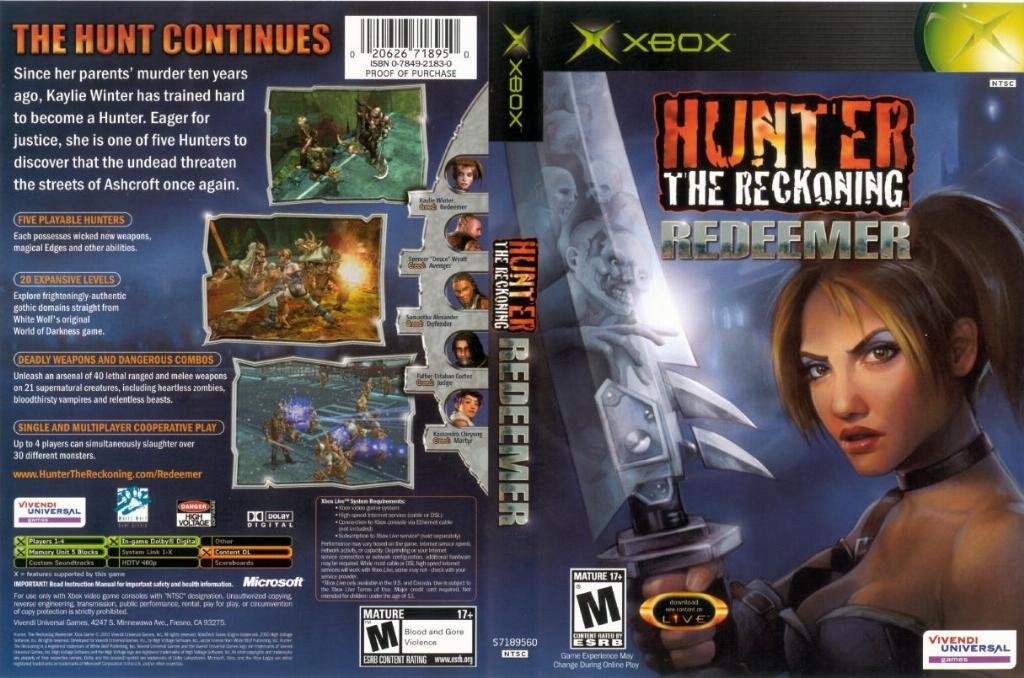
Then we got Hunter: The Reckoning: Redeemer back on the Xbox, which felt like the series reaching its final, most polished form. This entry introduced the Confessor as a playable character and pushed the poly-count and particle effects to the absolute limit. Redeemer was faster, louder, and even more chaotic. It leaned into the action-horror vibe, giving us bigger bosses and more complex environments. The core loop stayed the same: enter a room, scream at your friends because someone stole the health pickup, and use your Conviction to unleash hell on a werewolf. It was a cycle of beautiful, cooperative frustration that solidified the trilogy as a staple of the couch co-op era.
Why the Reckoning Still Matters
Looking back, it’s easy to see why these games have such a lasting legacy. Before we had Left 4 Dead or Warhammer: Vermintide, we had Hunter. It understood the visceral joy of horde-based combat and the importance of having a diverse team where everyone had a specific job to do. It also didn’t shy away from its tabletop roots. Even though it was an action game, the flavor text and the world-building felt authentic to the White Wolf source material. You weren’t just a generic soldier; you were a human being who had been “chosen” by mysterious entities to fight a losing war against the vampires and wraiths hiding in plain sight.
The soundtrack also deserves a shout-out. It was a heavy, industrial, and often eerie companion to the onscreen slaughter. It perfectly encapsulated that Turn-of-the-Millennium angst. When you were low on health, surrounded by rotting husks, and the music started to swell, the tension was palpable. High Voltage Software proved that you could take a complex, lore-heavy IP and turn it into an accessible, high-octane action experience without losing the soul of the original setting. They created a world where the shadows were actually dangerous, and the only thing scarier than the monsters was running out of ammo.
The New Awakening
For years, the Hunter: The Reckoning franchise has been dormant, relegated to the “hidden gems” sections of retro gaming forums and the dusty shelves of collectors. We’ve seen other World of Darkness properties like Vampire: The Masquerade get plenty of love, but the poor Hunters were left waiting in the wings. Fans have been clamoring for a revival, hoping that some developer would realize that the world is currently starving for a high-quality, atmospheric co-op brawler. We wanted to see those gritty streets in 4K, and we wanted to see if the Imbued still had what it takes to reclaim the night.
In a move that has absolutely blindsided the gaming community in the best way possible, the developers at Teyon—the team that recently proved they know exactly how to handle classic action IPs—have just announced Hunter: The Reckoning – Deathwish. This isn’t just a remaster or a simple port; it’s a full-blooded continuation of the legacy High Voltage Software started decades ago. If Teyon can bring the same level of reverence and “oomph” they brought to their recent hits, we are in for a serious treat. It’s time to dust off the leather trench coats and reload the magnums, because the hunt is officially back on.