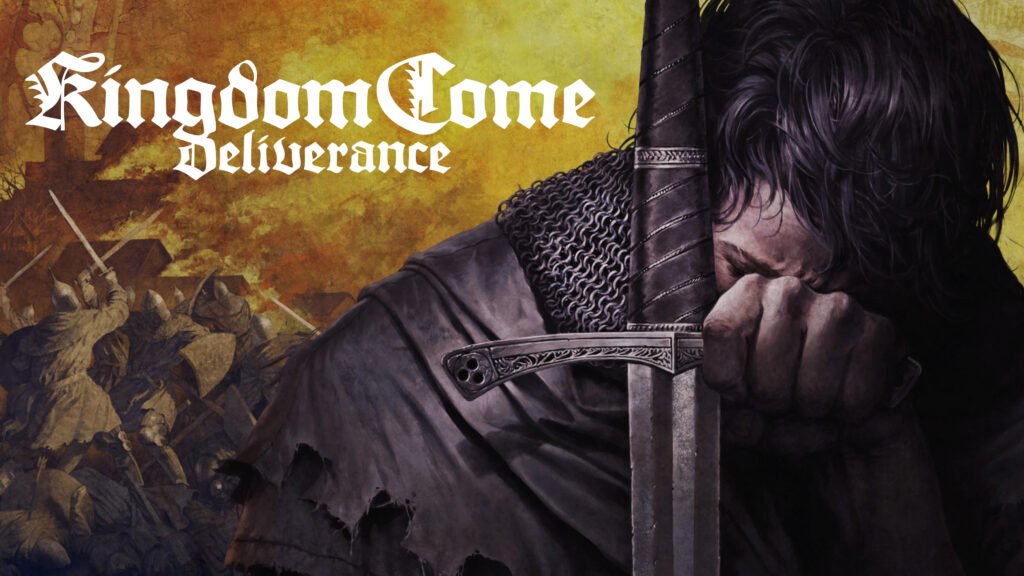

Most role-playing games are basically power fantasies where you start as a slightly capable warrior and end as a god-slayer who can breathe fire and teleport. We love those games, but there is something fundamentally different about Kingdom Come: Deliverance. Developed by the mad geniuses at Warhorse Studios, this game doesn’t want you to feel powerful—at least not for a very long time. In an industry obsessed with making the player the “Chosen One,” KCD decides to make you Henry, the son of a blacksmith who literally cannot read, cannot fight, and can barely swing a sword without falling over his own feet. It is a grueling, beautiful, and often hilarious simulation of 15th-century Bohemia that remains one of the most unique experiences in gaming history, even as we look back on it from the year 2026.
The Anti-Skyrim Experience
When you first boot up the game, you might expect the usual RPG tropes. You see a sword, you see some armor, and you think you’re ready to go out and save the world. But Kingdom Come: Deliverance isn’t interested in your expectations. It is a hardcore historical RPG that ditches the dragons and fireballs for something much more terrifying: realism. If you try to take on three bandits at once in the first ten hours of the game, you aren’t going to pull off a cinematic multi-kill. You are going to get poked to death by a rusty pitchfork while your stamina bar screams in agony. This isn’t just a game about combat; it is a game about survival and the slow, painful process of self-improvement.
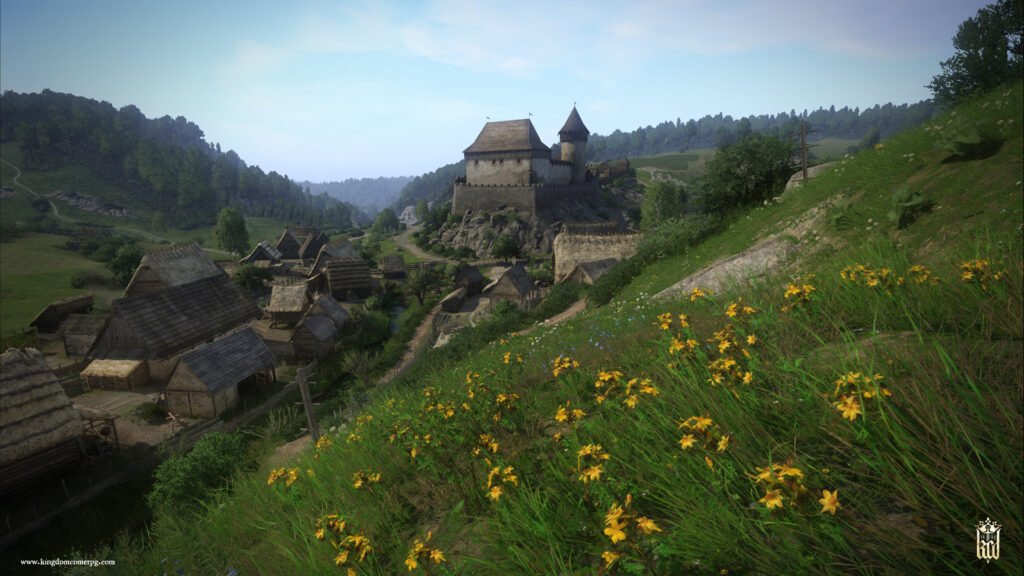
The setting itself is a masterpiece of historical accuracy. The map is a 1:1 recreation of a real-world area in the Holy Roman Empire, specifically the region of Bohemia during a time of civil war. There is no “magic” here, unless you count the magic of a well-brewed beer or the miracle of finding a bed after a three-day march through the mud. Every castle, every monastery, and every humble peasant hovel feels lived-in. The immersion is so thick you can almost smell the horse manure and the woodsmoke. It forces you to engage with the world on its own terms, which is a refreshing change of pace from the polished, user-friendly worlds of modern AAA titles.
The Legend of Henry of Skalitz
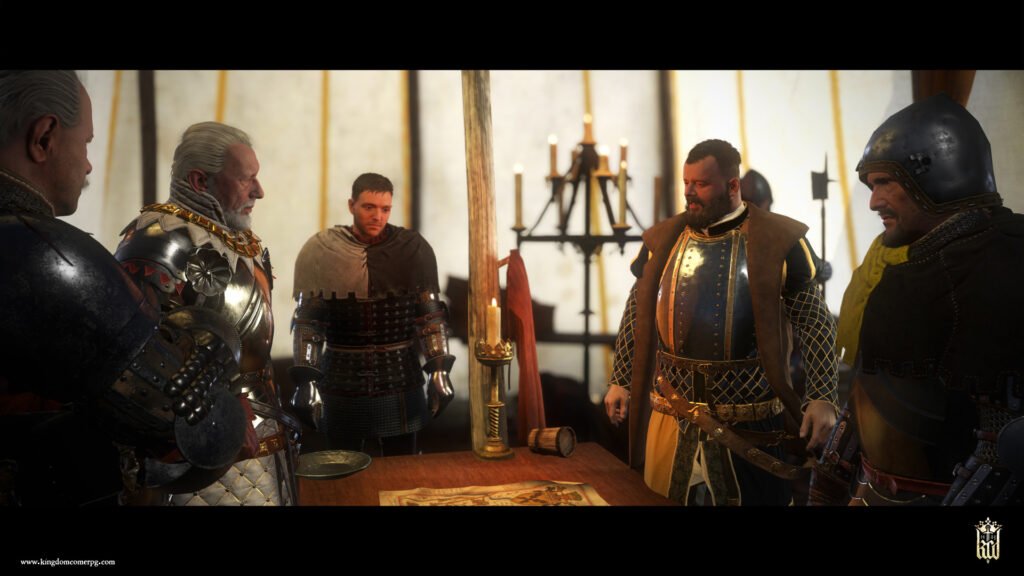
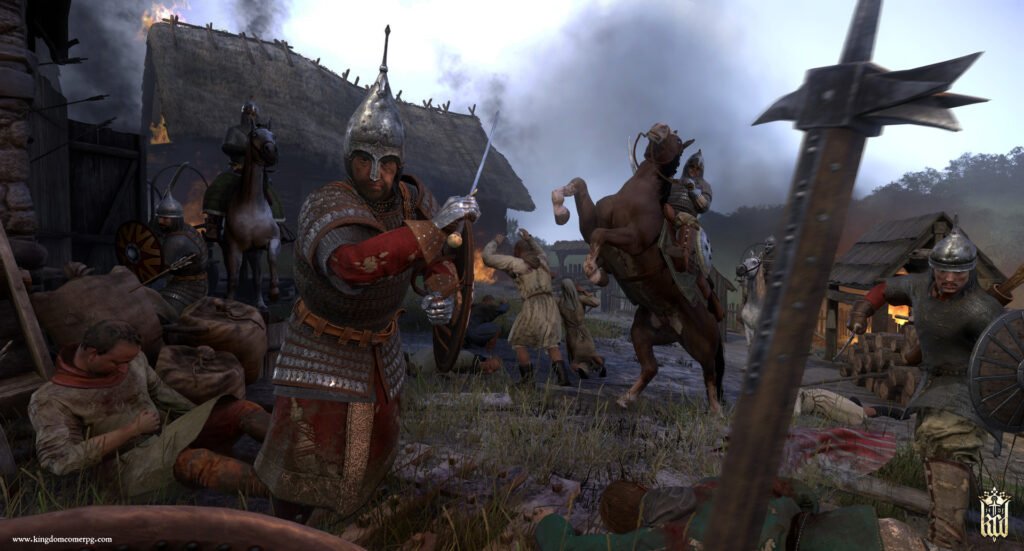
At the heart of this adventure is Henry. Unlike the blank-slate protagonists of other RPGs, Henry is a fully realized character with a voice, a personality, and a very relatable set of problems. After his home village of Skalitz is burned to the ground by a mercenary army, Henry is driven by a simple, human desire for revenge. But again, because this is KCD, he can’t just go out and kill the bad guys. He has to learn how to be a soldier first. This leads to some of the most rewarding character progression ever seen in a video game.
When you start, Henry’s hands shake when he tries to aim a bow. If you try to read a book, the letters are literally scrambled on the page because Henry is illiterate. You have to find a scribe and spend days learning how to decipher the alphabet. This turns mundane tasks into major milestones. The first time you successfully read a recipe or win a duel against a low-level guard, you feel a genuine sense of accomplishment. You didn’t just level up a stat; you, the player, actually learned how the systems work alongside Henry. It creates a bond between the player and the protagonist that few games manage to achieve.
The Art of the Clunky Blade
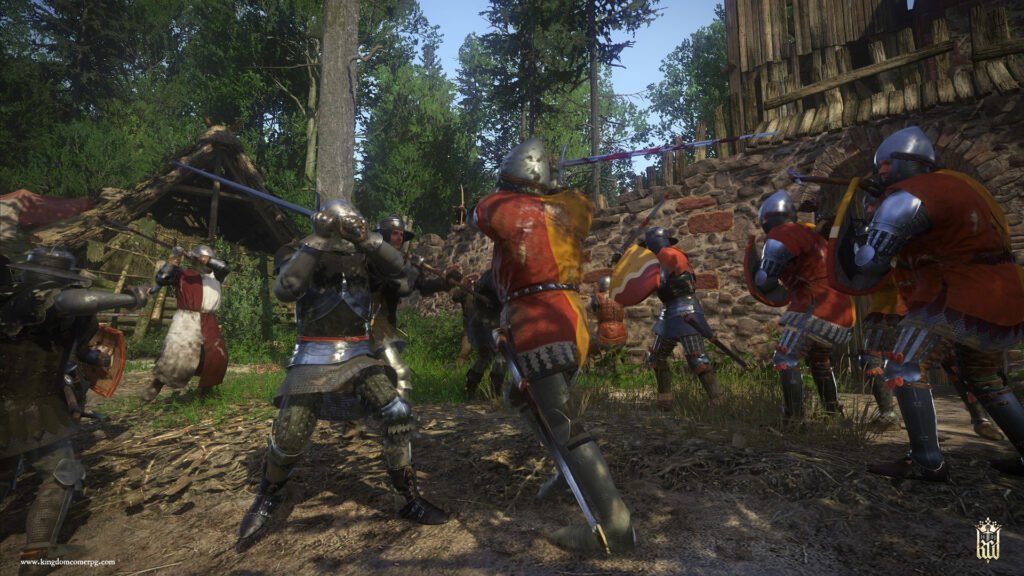
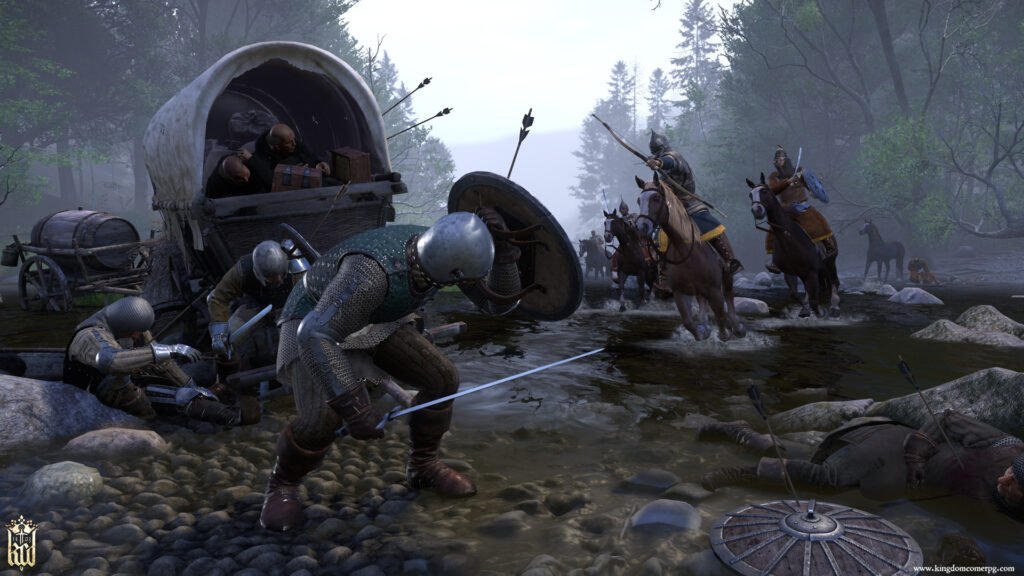
We need to talk about the directional combat system, because it is arguably the most controversial part of the game. Warhorse opted for a physics-based system where you have to manage your stance, your distance, and the direction of your swings across a five-point star. It feels heavy, it feels slow, and it feels incredibly deliberate. In the beginning, it feels like fighting underwater. You’ll swing your mace, miss wildly, and find yourself out of breath while a Cuman warrior laughs at you.
However, once the system clicks—and once you learn the Master Strikes from Captain Bernard—it becomes a dance of steel. You start to notice the gaps in your opponent’s armor. You realize that a sword is useless against a man in full plate armor, so you switch to a war hammer to crush his helmet. The tactical depth is insane. Combat is never something you take lightly because even a late-game Henry can be taken down by a group of peasants if he gets surrounded. It keeps the stakes high and makes every encounter feel like a genuine struggle for life and death.
Living the Bohemian Dream (and Nightmare)
The “sim” elements of Kingdom Come: Deliverance are what truly set it apart. You have to eat, and you have to sleep. If you eat rotten food, you get food poisoning. If you don’t wash yourself, people will comment on your smell and refuse to give you quests or better prices. If you walk into a noble’s court covered in blood and mud, they will treat you like the peasant you are. This creates a loop of maintenance that sounds tedious on paper but is actually incredibly engaging in practice. It forces you to live a “life” in this world.
There’s also the infamous save system. To save your game manually, you have to drink a potion called Saviour Schnapps. Not only is this potion expensive and hard to craft early on, but it also gets Henry drunk. This means you can’t just “save scum” your way through every difficult conversation or lockpick. Your decisions have weight. If you decide to steal from the local armorer and get caught, you have to deal with the jail time or the fine. You can’t just reload a save from thirty seconds ago. It adds a layer of tension to every crime and every risky dialogue choice that makes the world feel dangerous and reactive.
A World of Mud and Majesty
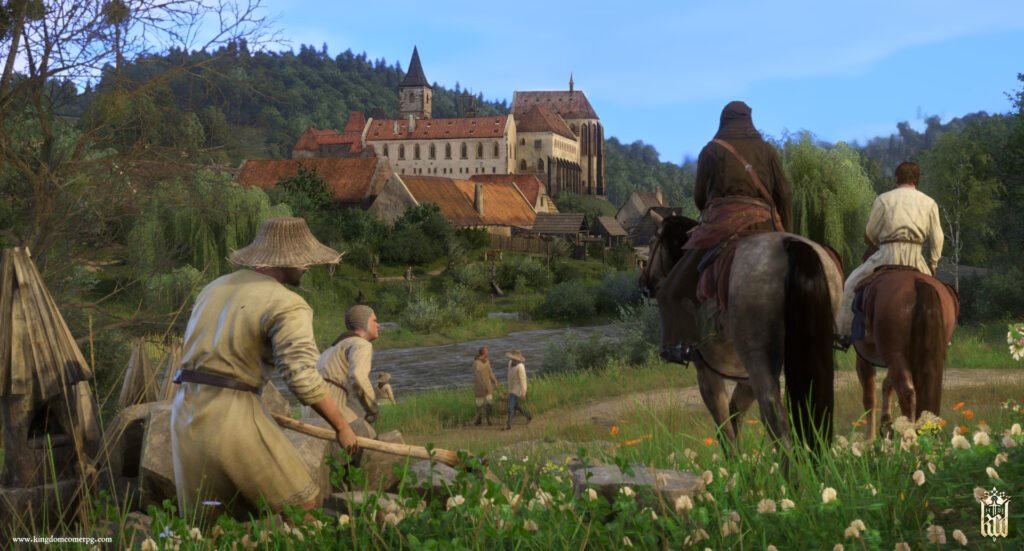
Visually, even years later, the game is a stunner. The way the CryEngine handles forests is still industry-leading. Walking through a Bohemian woods in KCD feels like walking through an actual forest, not a curated video game level. The lighting, the way the sunlight filters through the leaves, and the sound design—the chirping birds, the crunch of leaves under your boots—create an atmosphere that is unmatched.
Then there are the quests. KCD features some of the best writing in the genre. Who could forget the night out with Father Godwin? It starts as a simple investigation and turns into a legendary night of drinking, fighting, and accidentally delivering a sermon while hungover the next morning. It’s human, it’s funny, and it perfectly captures the earthy, grounded tone of the game. The quests often have multiple solutions that aren’t immediately obvious, rewarding players who think outside the box or pay attention to the environment.
The Beautiful Jank
Of course, we can’t talk about KCD without mentioning the jank. At launch, the game was a buggy mess, and even after years of patches, it still has its “Warhorse charms.” You might see a horse vibrating through a fence or a guard walking into a wall. But honestly? It only adds to the character of the game. It’s an ambitious, sprawling indie project that punches way above its weight class. The flaws are a byproduct of the game’s complexity and its refusal to compromise on its vision of a realistic medieval simulator.
Kingdom Come: Deliverance is a game that respects the player’s intelligence and patience. It doesn’t hold your hand, it doesn’t give you a mini-map cluttered with icons, and it doesn’t care if you fail. It invites you to inhabit a specific moment in history and tells a deeply personal story about a boy becoming a man in a world that is falling apart. It is a masterpiece of emergent gameplay and historical storytelling. If you haven’t sat down to enjoy a bowl of stew in a Rattay tavern while listening to the local lute player, you are missing out on one of the greatest RPG experiences ever made.