
Release Date: August 4, 2017 Developer Name: Golden Era Games (Cleveland Mark Blakemore)
Get It On: GOG
In the fast-moving world of gaming, we usually measure “long-term projects” in five or six years. If a game takes a decade, we call it vaporware and mourn its passing. But then there is Cleveland Mark Blakemore, an absolute titan of persistence (or perhaps just magnificent stubbornness), who spent nearly a quarter-century crafting his magnum opus. When Grimoire: Heralds of the Winged Exemplar finally emerged from the digital ether, it didn’t just arrive; it crashed into the modern RPG scene like a rusted, spiked mace from 1992. Now that we’ve had plenty of time to live with this behemoth—and with the V2 and V4 updates having polished the rougher edges—it’s time to ask: is this a genuine masterpiece or just the world’s most elaborate nostalgic prank?
The Myth of Hyperborea and the 25-Year Dev Cycle
To understand Grimoire, you first have to understand the mythos surrounding its creation. This isn’t just a game; it’s a testament to the “Golden Era” of CRPGs. Cleve Blakemore, a developer with a personality as colorful and combative as the monsters in his game, set out to create the true spiritual successor to Wizardry 7: Crusaders of the Dark Savant. For over 20 years, he tweaked, expanded, and refined a world that most people thought would never see the light of day. When it finally hit Steam, the gaming world didn’t know whether to applaud or run for cover. It’s a massive, sprawling blobber—a first-person, party-based dungeon crawler—that refuses to acknowledge that the last three decades of “user-friendly” design ever happened.
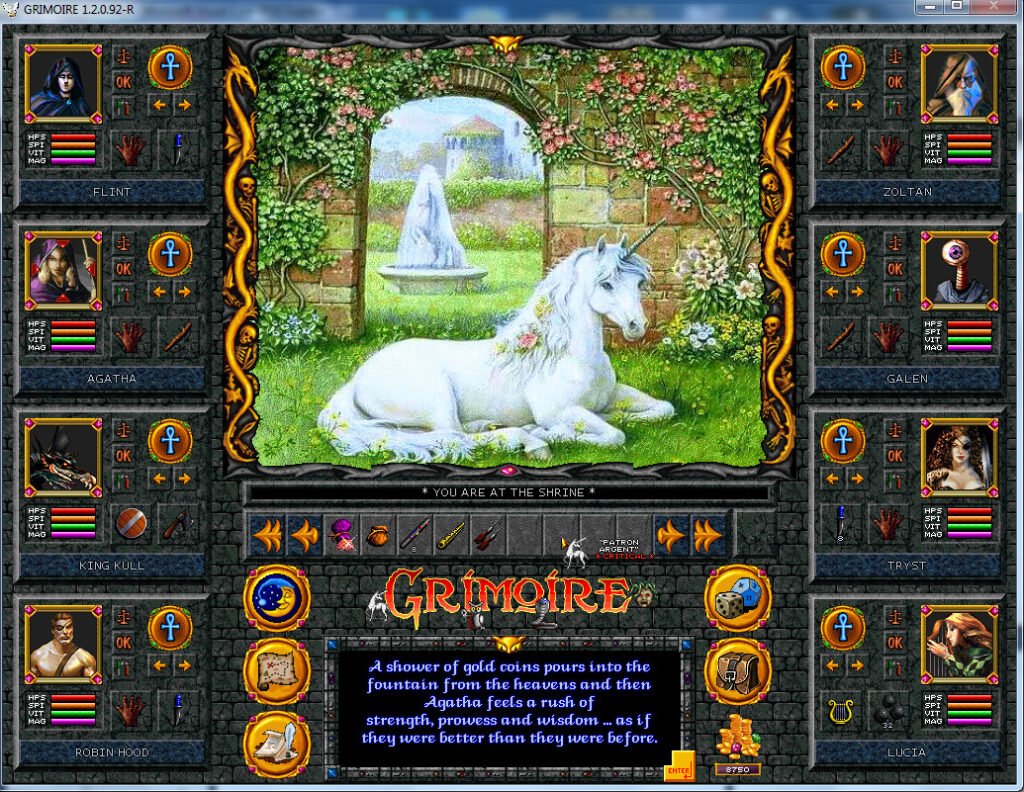
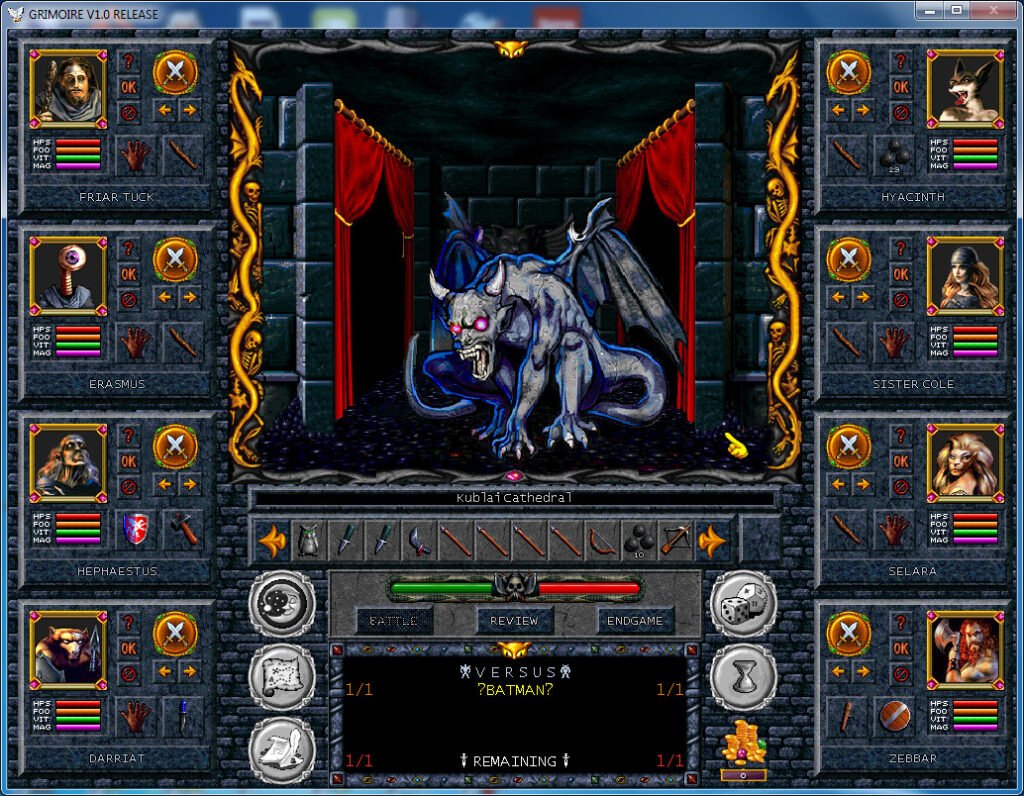
The first thing you’ll notice about Grimoire is the aesthetic. It is unapologetically, aggressively retro. We aren’t talking about “stylized pixel art” that you see in modern indie hits. This looks like a high-end Amiga or VGA-era DOS game that was found in a time capsule. The character portraits are hand-drawn with a specific kind of grit, and the environments are composed of tiles that repeat with a rhythmic, hypnotic quality. While some might call it “dated,” there is an undeniable handcrafted soul to the world of Hyperborea. Every monster sprite, from the lowly forest pests to the towering eldritch horrors, feels like it was drawn by someone who truly loves the genre. It’s a visual language that rewards the imagination rather than doing all the heavy lifting for you.
Dive Into the Deepest Character Creation Screen Ever Made
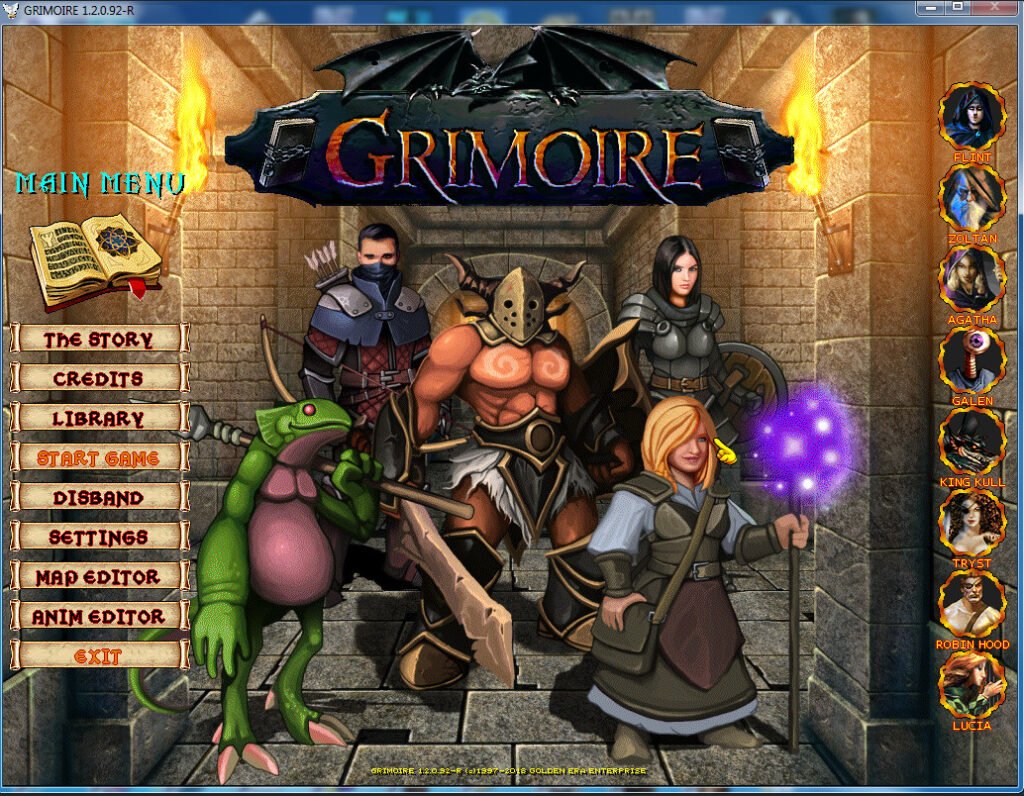
If you’re the type of player who likes to spend three hours in the character creator before actually seeing a single frame of gameplay, Grimoire is your personal heaven. You have 14 races and 15 professions to mix and match. We aren’t just talking about your standard Elves and Dwarves, either. You can play as a Saurian, a Vesper (bat-person), or even a Drow (though, fair warning, their magic regeneration is notoriously slow). The level of statistical depth is staggering. You have to roll for attributes, assign skill points across 50 different skills, and try to build a party of eight that won’t immediately perish the moment they step into the Briarpatch Woods. The game doesn’t hold your hand; it expects you to understand inter-class synergies and how to balance a frontline of tanks with a backline of fragile, high-DPS casters.
600 Hours of Content: Fact or Hyperbole?
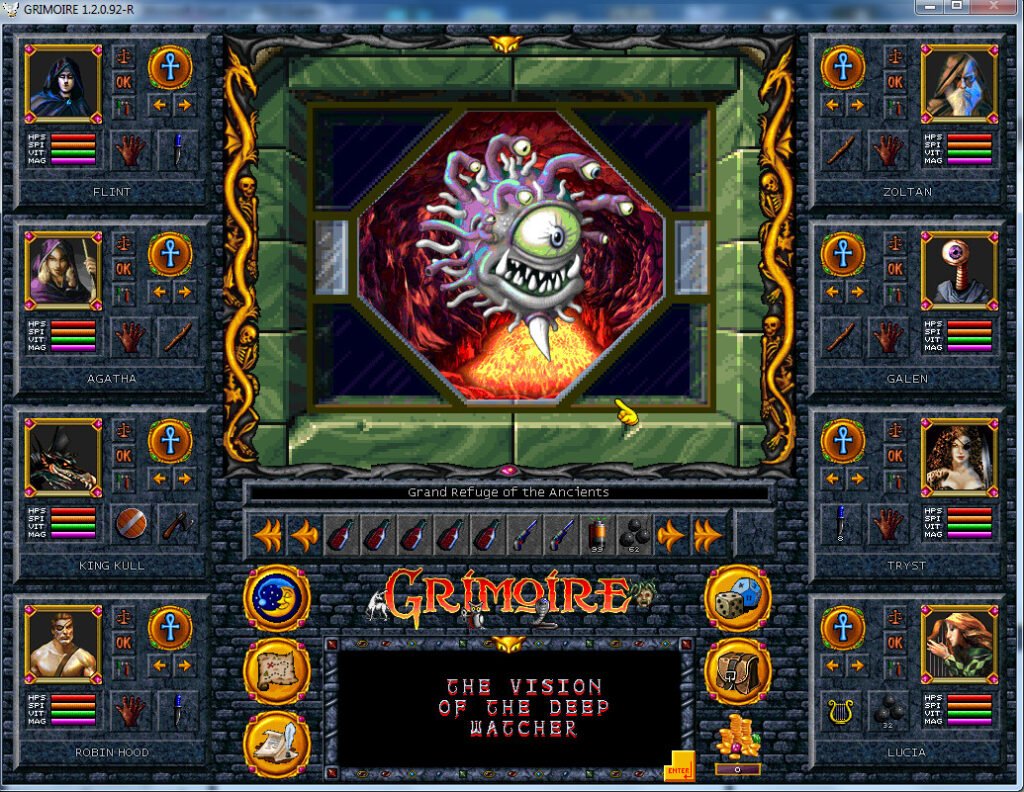
The marketing for Grimoire famously promised over 600 hours of gameplay. At first, that sounds like typical developer bravado, but once you start digging into the 244+ maps, you realize the scale is actually legitimate. The world of Hyperborea is vast, filled with secret buttons, hidden trapdoors, and complex environmental puzzles that would make a modern game designer sweat. The exploration is strictly grid-based, but the sense of discovery is unparalleled. You’ll find yourself taking actual physical notes or using the in-game automapping tool to track your progress through winding corridors and underwater tunnels. The game is packed with 8,000 words of NPC vocabulary, allowing you to interact with characters using a keyword-based dialogue system that feels remarkably responsive once you learn the “language” of the game.
Combat That Punishes the Unprepared
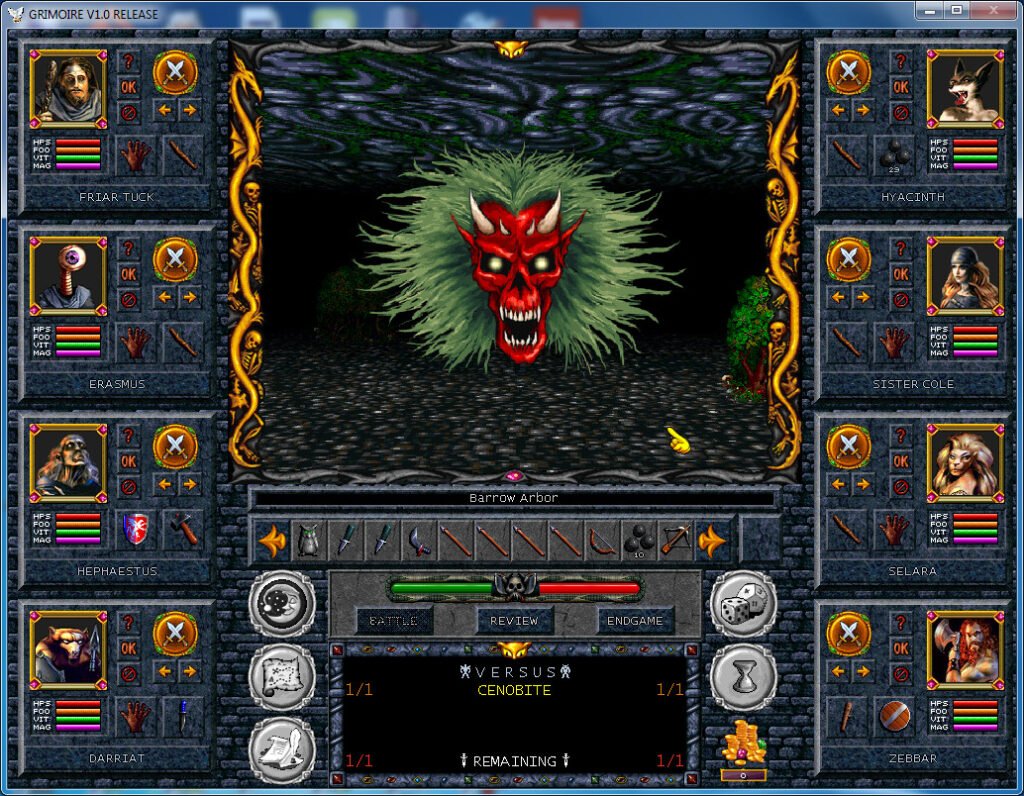
The heart of Grimoire is its turn-based tactical combat. It is brutal, frequent, and deeply rewarding. You’ll face off against over 240 types of monsters, each with their own resistances, special attacks, and AI behaviors. Managing your 144 context-sensitive spells is a game in itself. You have to worry about power levels, mana consumption, and the very real possibility of a spell fizzling and leaving your party vulnerable. One of the game’s most controversial features is its swinging difficulty. You might breeze through three encounters only to have a single “Deep Freeze” spell from an enemy caster wipe your entire squad in one turn. It’s a game of risk management where you constantly have to decide whether to push further into a dungeon or retreat to safety to rest and recover.
The Quirkiness of the “Cleve” Factor
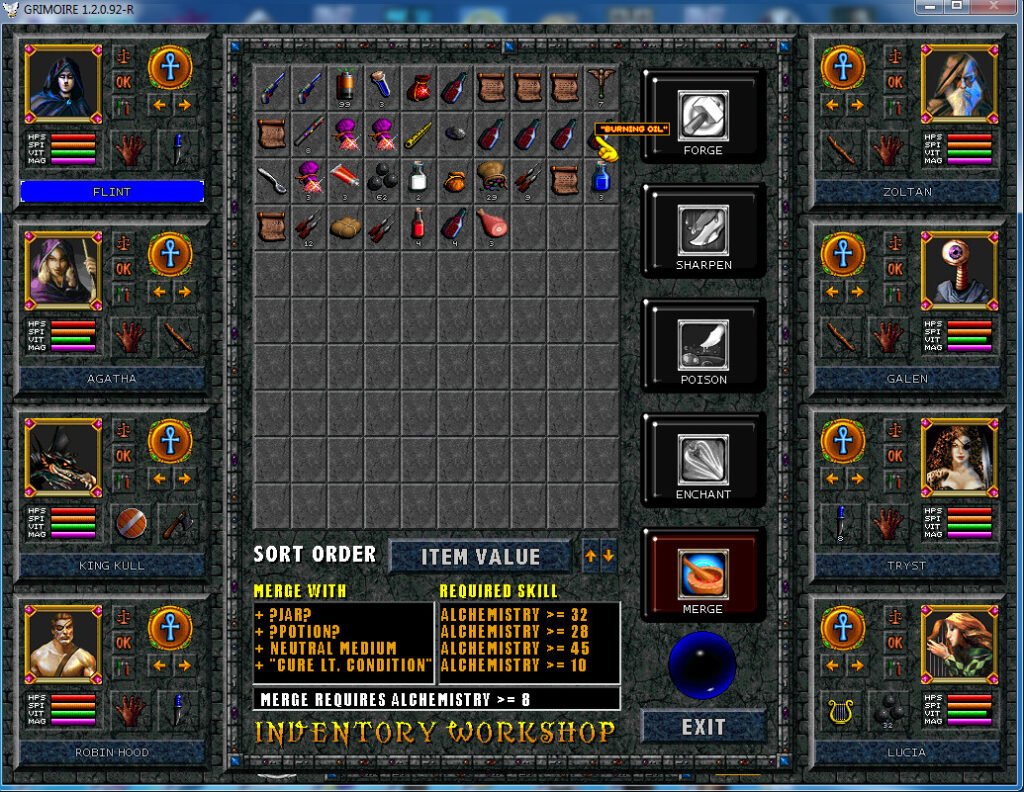
You can’t talk about Grimoire without mentioning the distinct, often bizarre sense of humor baked into the experience. Despite the “serious” fantasy setting, the game is littered with silly gags, Monty Python-esque references, and bits of dialogue that feel like they came from a different dimension. This idiosyncratic tone is what separates it from being a dry Wizardry clone. It feels like a world built by a single mind—a mind that is clearly obsessed with hyper-detailed mechanics and absurd world-building. There are complex lockpicking interfaces that require genuine skill and timing, and crafting systems that feel more like a science project than a menu option.
The Technical Hurdles and the V2 Redemption
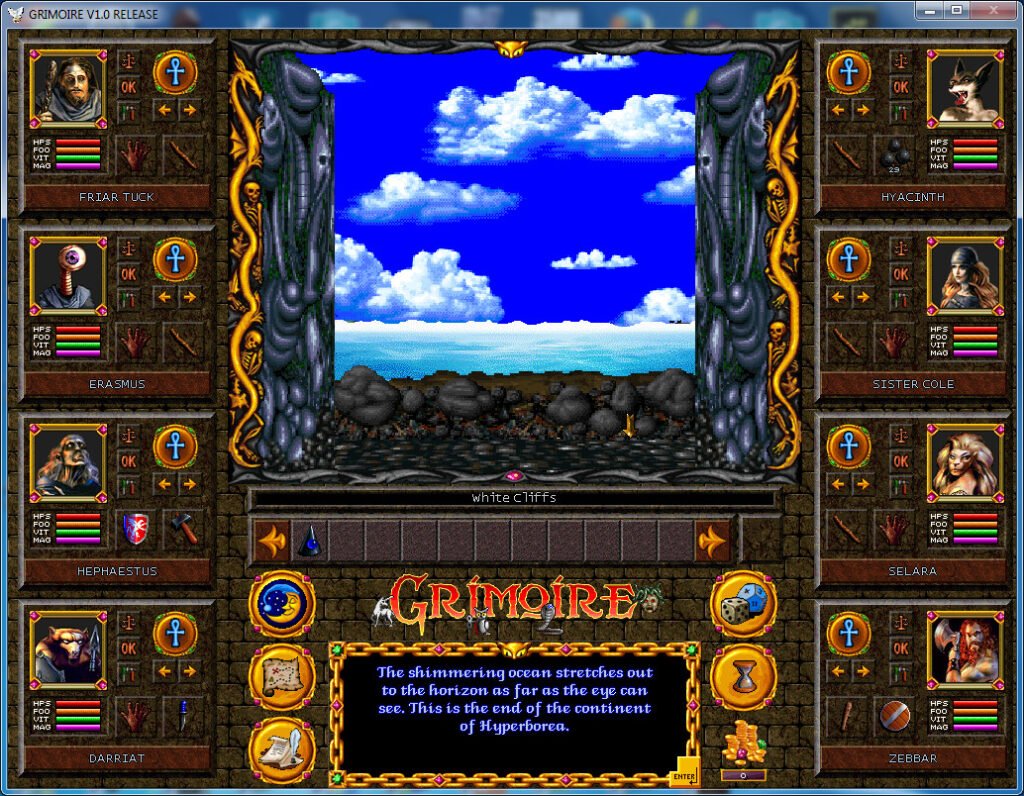
In its initial release, Grimoire was a mess of bugs and interface quirks. Trying to run it on a modern widescreen monitor was a quest in its own right. However, the current V2 version (and subsequent patches) has stabilized the experience significantly. While the UI is still cluttered and requires a lot of clicking, it’s now a functional, playable product. The addition of tooltips and better resolution support means you can actually enjoy the game without needing a computer science degree to get it running. That said, the learning curve is still an inverted cliff. If you aren’t prepared to read a manual (or at least a very long community guide), you’re going to have a bad time.
Final Verdict: A Relic Worth Mining
Grimoire: Heralds of the Winged Exemplar is not a game for everyone. In fact, it’s a game specifically designed for about 1% of the RPG-playing population. It is dense, difficult, ugly by modern standards, and occasionally infuriating. But for those of us who grew up on the crunchy, grid-based adventures of the early 90s, it is a miracle. It’s a massive, uncompromised vision that exists simply because one man refused to let a genre die. If you’re willing to look past the clunky interface and the steep difficulty, you’ll find a world with more depth, mystery, and raw content than almost any triple-A RPG of the last decade. It’s a 20-year labor of love that deserves to be played—just make sure you bring some graph paper and a lot of patience.