
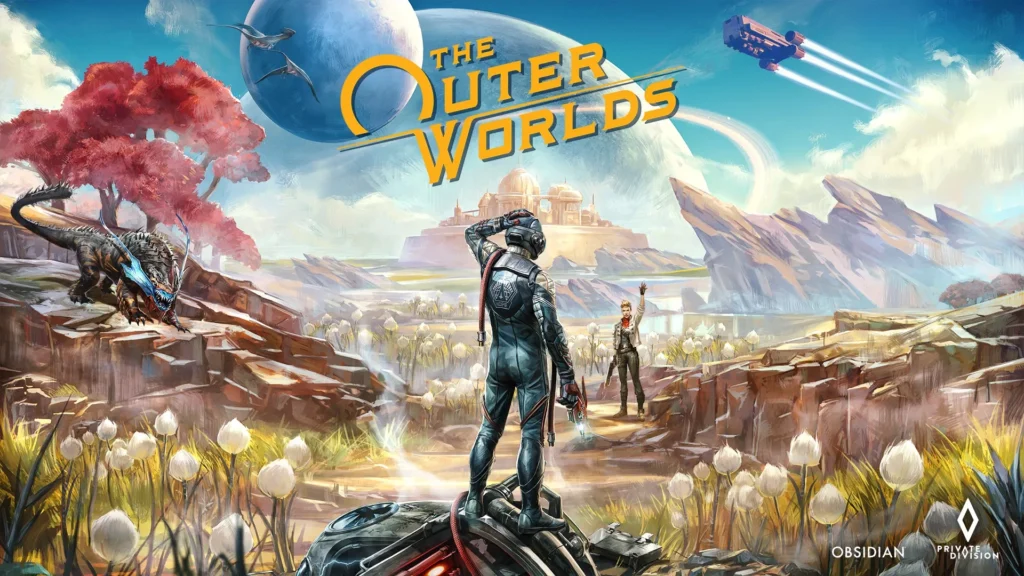

When Obsidian Entertainment first announced they were heading into deep space, the collective gaming world let out a sigh of relief. For years, fans of the first-person RPG genre had been chasing the high of Fallout: New Vegas, looking for that perfect blend of dark humor, meaningful choice, and world-building that didn’t feel like a series of fetch quests. In 2019, we finally got our answer in the form of The Outer Worlds. While it might not have the sprawling, endless map of a modern Bethesda title, it traded quantity for a razor-sharp focus on character and corporate satire that still feels incredibly relevant today. It’s a game that knows exactly what it wants to be: a colorful, cynical, and deeply charming space western where your mouth is often a more dangerous weapon than your plasma rifle.
A Galaxy Owned by the HR Department
The setting of The Outer Worlds is perhaps its greatest achievement. You wake up as a “colonist on ice” aboard the Hope, a lost colony ship that has been floating in the void for decades. You are revived by a frantic, possibly insane scientist named Phineas Welles, who informs you that the Halcyon colony is essentially a corporate dystopia gone wrong. In Halcyon, you don’t just work for a company; you are legally owned by one. Whether it’s Spacer’s Choice, Auntie Cleo’s, or Rizzo’s, every aspect of human life—from your birth to your burial—is managed by the Halcyon Holdings Corporation Board.
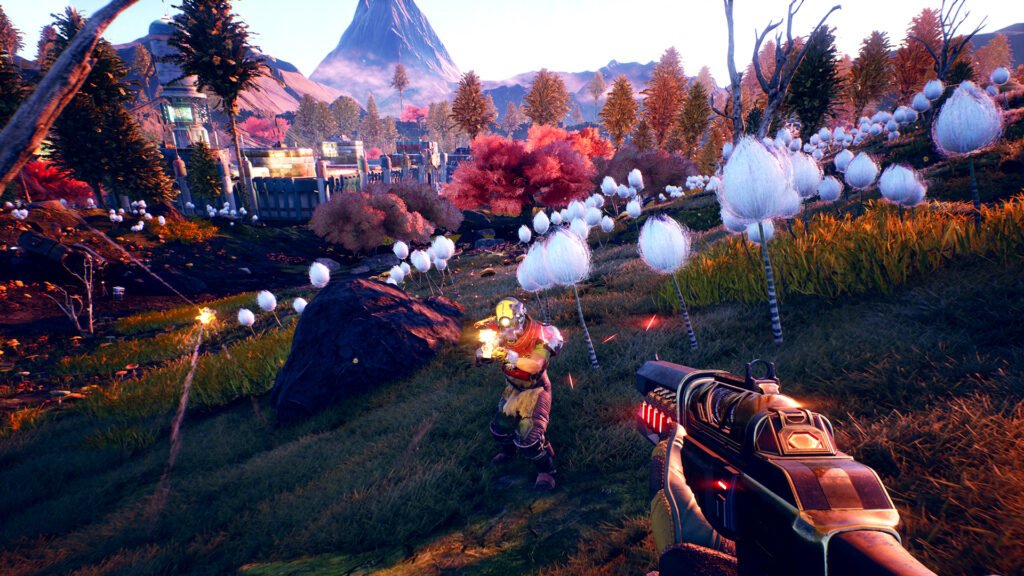
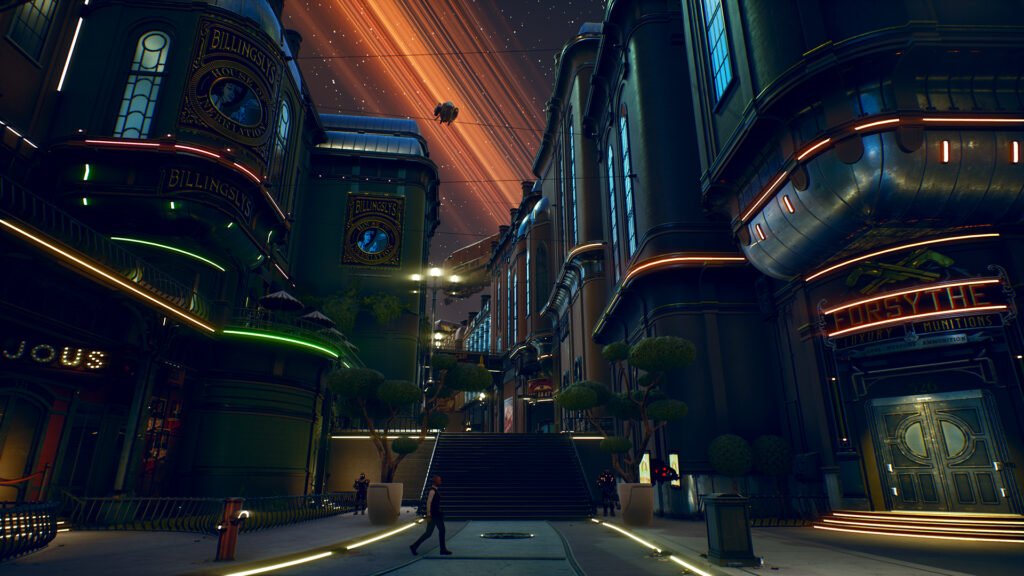
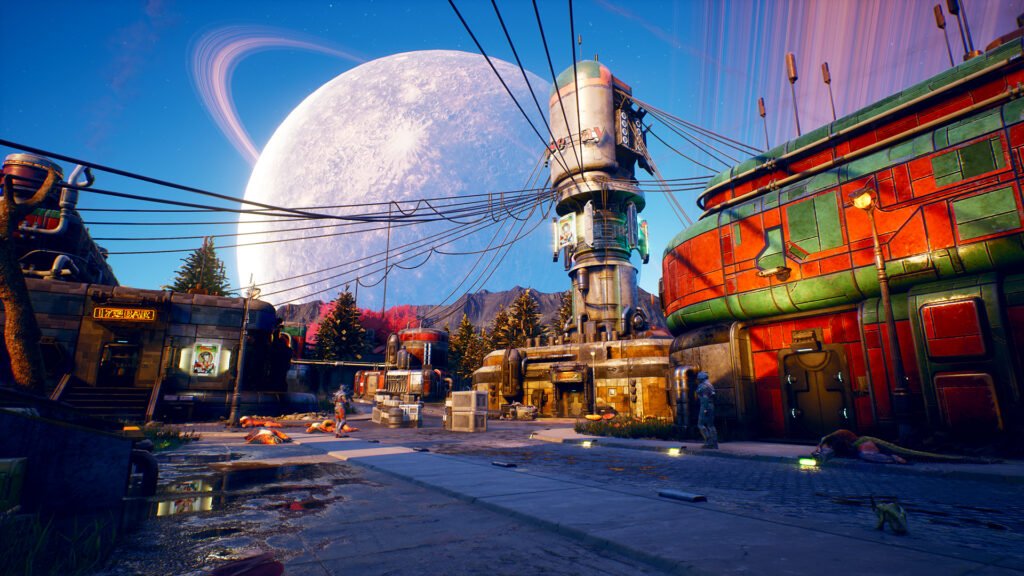
The visual design of these worlds is a neon-soaked, retro-futuristic dream. It feels like a 1950s pulp sci-fi magazine come to life, filled with vibrant alien flora and creatures that look like they were designed by someone who had only ever heard a vague description of a lizard. The satire is laid on thick, but it works because it’s consistent. Walking through a town like Edgewater, where the citizens are literally too poor to afford medicine because they haven’t met their productivity quotas, is a jarring yet hilarious introduction to the game’s dark heart. The writing manages to walk the fine line between being genuinely funny and deeply depressing, making the corporate propaganda you find on every terminal feel both absurd and strangely plausible.
The Misfits Aboard the Unreliable
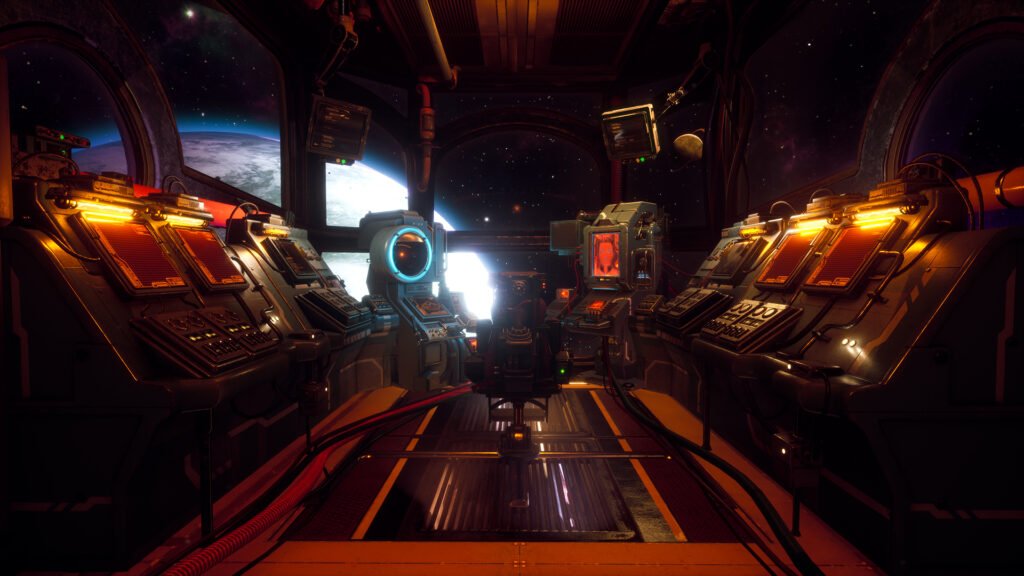
No great space adventure is complete without a ship and a crew of lovable weirdos, and The Outer Worlds delivers in spades. Your ship, The Unreliable, serves as your mobile home base, and it’s where the game’s heart truly resides. The companions you pick up along the way aren’t just combat drones; they are fully realized people with their own hang-outs, neuroses, and side quests. Take Parvati Holcomb, for instance. She is arguably one of the most well-written companions in RPG history. Her quest line isn’t about saving the galaxy; it’s about helping her navigate the anxieties of a first date. It’s small-scale, personal, and deeply humanizing in a world that tries to strip humanity away.
Then you have characters like Vicar Max, a man searching for spiritual enlightenment in a deterministic universe, or Nyoka, a booze-soaked monster hunter with a tragic past. The banter between these characters as you explore the various planets is top-tier. They react to your decisions, chime in during conversations with NPCs, and sometimes even get into arguments with each other in the galley of the ship. This level of character writing is where Obsidian truly flexes its muscles. You aren’t just playing a game; you’re managing a dysfunctional family that just happens to be carrying heavy weaponry.
Talking Your Way Through a Firefight
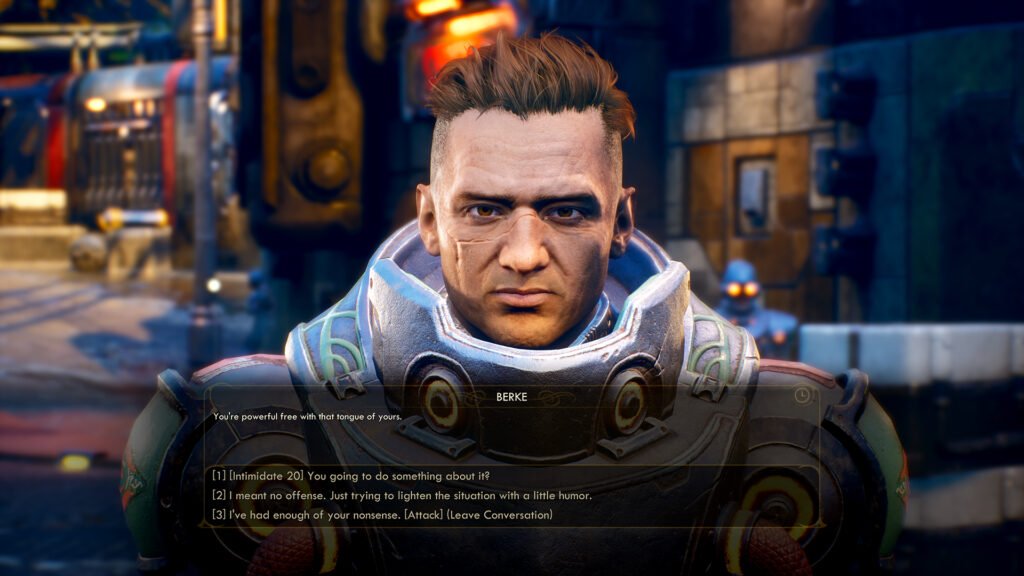
While many RPGs claim to offer “player choice,” The Outer Worlds actually delivers. The game’s dialogue system is the star of the show, allowing for a level of roleplaying that is rare in modern gaming. You can be the savior of the colony, a ruthless corporate shill, or a complete idiot. In fact, if you set your character’s intelligence to “Below Average” during creation, you unlock Dumb dialogue options that change the entire tone of the game, often leading to hilarious and unexpected outcomes.
The skill checks are integrated seamlessly into conversations, allowing you to use your Persuade, Lie, or Intimidate skills to bypass entire boss fights or convince enemies to turn on each other. It’s incredibly satisfying to talk a high-ranking Board official into giving you the keys to a high-security facility simply because you convinced them it was “company policy.” This focus on narrative agency means that your choices actually feel like they matter. Deciding the fate of a town like Edgewater isn’t a simple “Good vs. Evil” choice; it’s a choice between two flawed systems, and the game trusts you to deal with the fallout of your decision.
Science Weapons and Tactical Time Dilation
When the talking stops and the shooting starts, the gameplay remains solid, if a bit more traditional. The combat system utilizes Tactical Time Dilation (TTD), which is a lore-friendly way of slowing down time so you can aim for specific body parts—a clear nod to the V.A.T.S. system from Fallout. It adds a layer of strategy to the gunplay, allowing you to blind, maim, or stagger enemies with precise shots. While the gunplay doesn’t quite reach the heights of a dedicated first-person shooter, it’s snappy and responsive enough to keep the action engaging.
The real highlight of the arsenal, however, is the Science Weapons. These are unique, over-the-top gadgets hidden throughout the colony that do things like shrink enemies, mind-control them, or hit them with a “Gloop Gun” that makes them levitate. These weapons scale with your Science skill, encouraging players to lean into the more eccentric side of the RPG mechanics. Experimenting with different weapon types and modifications allows for a fair amount of build variety, whether you want to be a stealthy sniper or a hammer-swinging tank in Power Armor.
A Tight, Punchy Adventure
One of the most common criticisms of The Outer Worlds at launch was its length. Compared to the 100-hour behemoths that dominate the open-world genre, this game is relatively short, clocking in at around 30 to 40 hours for a thorough playthrough. However, in an era of “map bloat” and endless radiant quests, the compact scope of the game is actually one of its greatest strengths. Every location feels intentional, every quest feels handcrafted, and the pacing never slows down to a crawl. It’s a game that respects your time.
Ultimately, The Outer Worlds is a triumph of personality over scale. It doesn’t need a thousand planets to tell a compelling story. By focusing on a single solar system and a handful of incredibly well-developed characters, Obsidian created a world that feels more alive than many games twice its size. It’s a biting critique of unregulated capitalism wrapped in a fun, pulpy adventure, and it remains a must-play for anyone who values storytelling and player agency. It might be the “AA” spiritual successor to the RPGs of old, but it stands tall as a modern classic in its own right.