
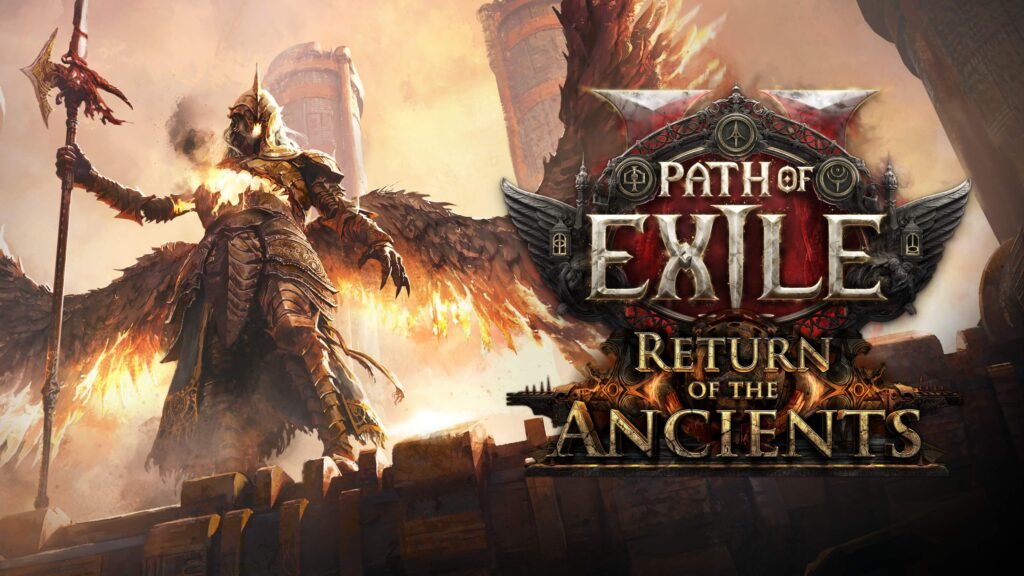

Wait, did you hear that? That’s the sound of thousands of mechanical keyboards weeping in anticipation and the collective “RIP” of our social lives for the month of June. Grinding Gear Games just pulled back the curtain on the Path of Exile 2: Return of the Ancients expansion. and it’s the massive 0.5.0 update, effectively serving as the final bridge before we hit the glorious 1.0 release later this year.
The Runes of Aldur and the Art of Not Dying
The big hook for this expansion is the Runes of Aldur league. We’re meeting a new face in the wilderness named Farrow, a young blacksmith who seems way too chill for someone living in a world where the furniture tries to eat you. He introduces us to Ezomyte Runesmithing, a system that feels like a beautiful, chaotic marriage between high-end crafting and a “choose your own death” adventure. You’ll find these things called Ezomyte Remnants scattered throughout the world. They’re basically ancient stone slabs with empty slots waiting for you to shove magical runes into them.
The catch—and there’s always a catch in Wraeclast—is that the runes you use to power up your gear also power up the undead enemies that guard the forge. If you want that sweet fire damage on your boots, you’re going to have to fight skeletons that are literally on fire. If you’re feeling spicy and go for Moon Runes, you’ll have to dodge celestial beams falling from the sky while trying to loot. It’s a classic risk-versus-reward loop that looks like it’s going to make every single encounter feel like a mini-boss fight.
Martial Arts and Spirit Walking
We finally got a look at the new Ascendancy classes, and they are absolute units. First up is the Martial Artist, an Ascendancy for the Monk. This class is all about turning your own body into a weapon. One of the wildest features they showed off was Runic Tattoos, which let you socket runes directly into your skin. I’m not sure about the long-term health implications for the character, but the gameplay looks incredible. The ultimate node, Way of the Stonefist, basically turns your gloves into high-impact artillery pieces, letting you shatter enemies with physical force that looks heavy enough to feel through the screen.
On the flip side, we have the Spirit Walker for the Huntress. If you ever wanted to lead a spectral zoo into battle, this is your moment. You’ll be using Wisps to command the spirits of the Stag, Owl, and Bear. It’s not just about having pets follow you around; it’s about tactical positioning. You can trigger a Spirit Stampede to clear a hallway or call down a feathered rain of projectiles from the owl. It gives the Huntress a sense of “commander” gameplay that feels distinct from the usual bow-and-arrow kiting we’re used to.
Rebuilding the Atlas from the Ground Up
The endgame in PoE has always been a bit like a second job—a fun one, but a job nonetheless. Return of the Ancients is trying to fix that by making the Atlas of Worlds feel more like a living, breathing story. They’re introducing five new storylines that guide you through the endgame so you aren’t just aimlessly clicking circles on a map. These stories, like The Hare and the Raven (which overhauls the Delirium mechanic), actually have narratives and final bosses that feel earned.
Speaking of the Atlas, the passive tree has been completely rebuilt. We’re looking at over 300 nodes, but before you panic about the complexity, GGG added a “Masters of the Atlas” system. You can align yourself with different masters like Jado of the Order of the Djinn or the monster hunter Hilda. Each one gives you asymmetric bonuses that change how you interact with the world. It’s less about “optimizing the fun out of the game” and more about choosing a playstyle that actually fits your build. Plus, there’s a new visible depth gauge for Delirium and timers for Breaches, which means no more guessing if you’re about to lose your progress.
Quality of Life that Actually Matters
Can we talk about the in-game Build Guides? Finally! We can stop alt-tabbing to a second monitor every five minutes. The game will now support .build files, allowing community creators to share their setups directly within the client. You’ll see the tree, the gems, and even notes from the creator right there while you’re playing. It’s a massive win for accessibility, especially for the newer players who feel like they need a PhD in mathematics just to get through Act 3.
They also added instant trade price fetching with a simple Shift-Alt click on an item. It’s such a small thing, but for anyone who has spent hours manually searching for the price of a mid-tier ring, it’s a life-saver. We’re also getting a Challenge system for the first time in PoE 2. Completing these tasks rewards you with the Knight of Aldur armor set, and you even get a statue for your hideout to flex on your friends. It’s the kind of polish that makes this feel like a finished game, even though we’re still in early access.
The Long Road to 1.0
It’s a bit bittersweet to realize this is the last “major” content update before the 1.0 launch. Grinding Gear Games confirmed that they’re aiming for a full release after ExileCon 2026 later this year. They want to spend the next few months polishing the balance and squashing bugs rather than throwing more massive systems at us. It’s a smart move. Path of Exile 2 has already proven it has the depth; now it just needs the stability to carry us for the next decade.
With 15 new bosses, including four Pinnacle Bosses that look genuinely terrifying, there’s plenty to keep us busy until then. Whether you’re excited about the Runes of Aldur, the new Martial Artist moves, or just the fact that the Atlas finally makes sense, May 29 can’t come soon enough. Get your stash tabs ready, stock up on snacks, and I’ll see you in the Ezomyte ruins. Just try not to get stepped on by a spirit bear on your way in.