

Alright, let’s talk about No Man’s Sky. Not the version that dropped in August 2016 and immediately became the internet’s favourite punching bag. I’m talking about the living, breathing, still-evolving monster of a game that exists in 2026. The one that just celebrated its tenth birthday with record player numbers, awards for being the best evolving game, and a cheeky tease for the next big free update called Cosmos. If you walked away after the launch mess (and a lot of people did), you missed one of the most unlikely redemption arcs in gaming history.
Hello Games is a tiny studio. Like, properly small. They set out to make a game with 18 quintillion planets, seamless flight from surface to space, and the promise of multiplayer adventures across an infinite universe. The marketing was pure magic. The reality at launch was… not. Missing features, technical issues, and a sense that the dream had been oversold left a lot of players feeling burned. Sean Murray and the team went quiet for a bit, and the internet did what the internet does. Then something strange happened. Instead of abandoning the project or charging for fixes, they just started updating it. For free. Over and over again. Forty major updates later (and counting), the game is almost unrecognisable from that 2016 release. It’s deeper, prettier, more social, and weirdly addictive in a way that keeps pulling people back years later.
The first real turning point came with the Foundation update late in 2016. Suddenly you could build bases. Proper ones. You could claim a freighter and start farming. Game modes arrived. It felt like the studio was listening. Pathfinder followed in 2017 and dropped land vehicles (the beloved Exocraft) so you could actually explore those massive planets without jetpacking yourself into exhaustion. Then Atlas Rises reworked the story, improved terrain, and introduced portals so you could jump across the galaxy without spending a lifetime warping. You could already feel the game starting to grow into something more substantial.
The real sea-change arrived in 2018 with NEXT. Full multiplayer finally landed. You could see other players in the universe, build together, fight together, or just wave awkwardly from your starship. Third-person view, character customisation, a proper graphical overhaul, and the Xbox launch all arrived in the same package. Steam numbers exploded overnight. People who had written the game off started filtering back in, and the reviews slowly turned around. From that point on, every major update felt less like damage control and more like genuine expansion.
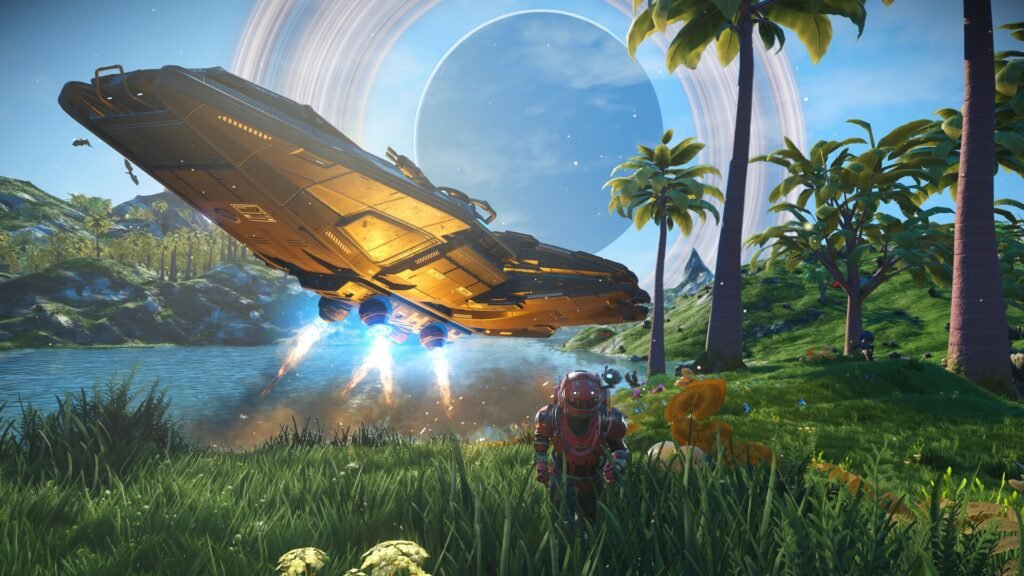
Beyond in 2019 was the next big leap. Full VR support turned the already impressive scale into something borderline spiritual. The Space Anomaly became the social hub where travellers from across platforms could hang out, trade, and pick up missions. Inventory systems got smarter. The game started feeling like a proper shared universe instead of a lonely procedural screensaver. Around the same time, living ships arrived – weird, organic vessels grown from void eggs that still feel special every time you hatch one.
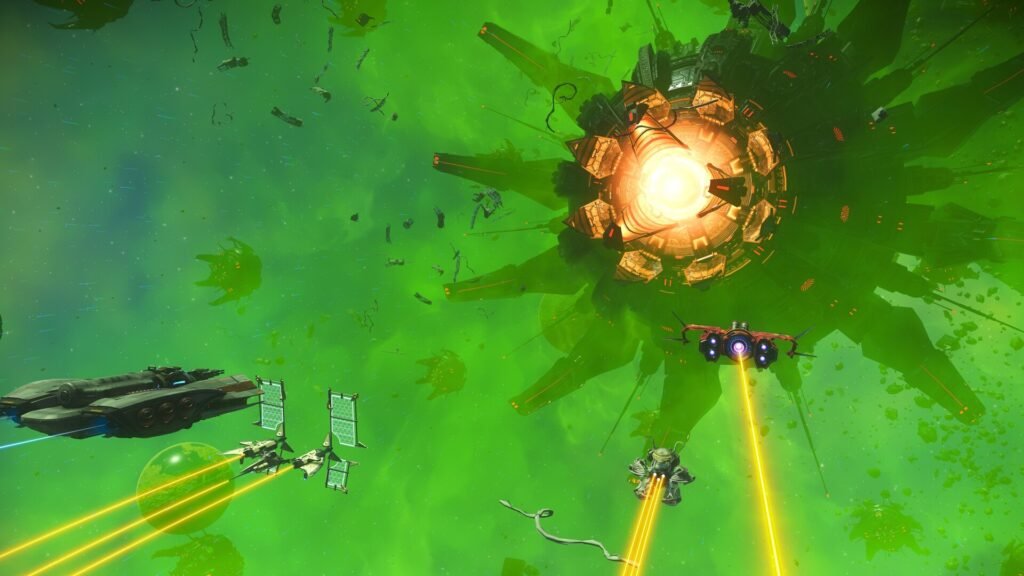
By 2020 the studio was on a roll. Origins completely overhauled planet generation. Mountains got taller, biomes more varied, sandworms showed up, and the universe suddenly felt less samey. Next-generation consoles got their own upgrade with higher frame rates, denser detail, and ray tracing. Companions let you adopt, name, and breed alien creatures. Expeditions arrived as limited-time community events that gave everyone a shared goal and exclusive rewards. It was the beginning of the game feeling truly alive with other people, even if you mostly preferred solo travel.
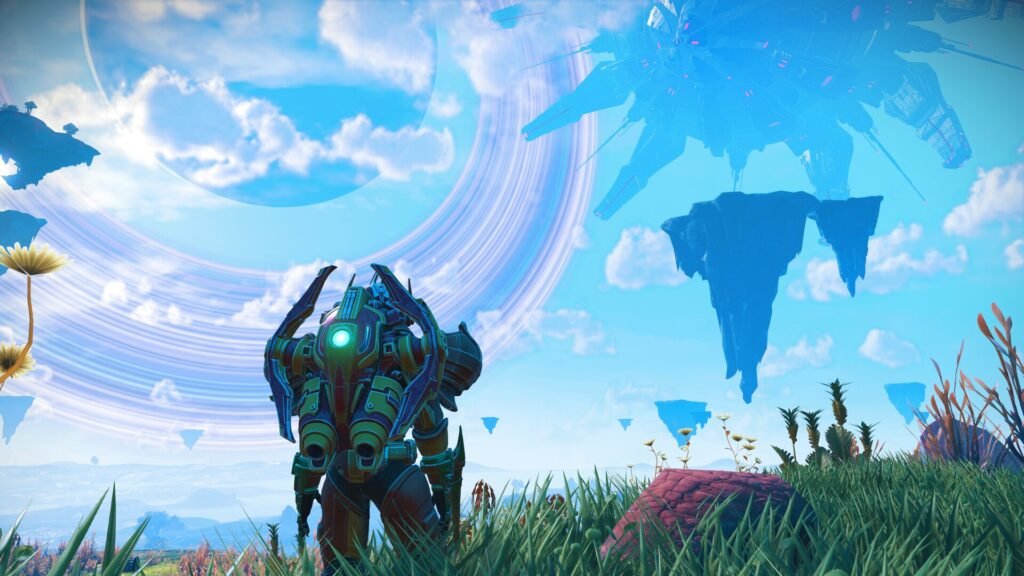
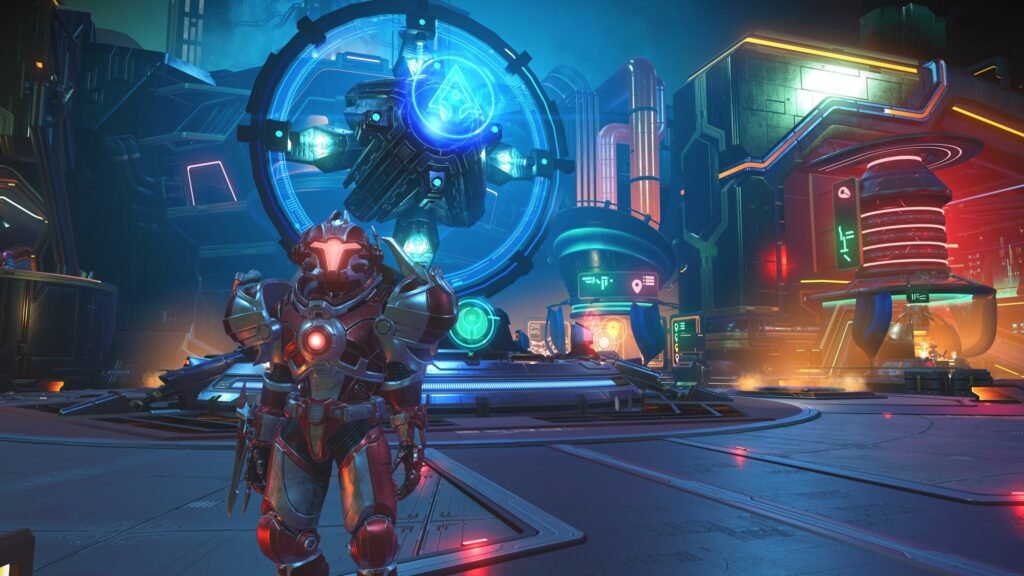
Frontiers in 2021 handed you an entire alien settlement to manage. You became Overseer, made decisions about buildings and citizens, and defended the place from Sentinels. Base building got a massive quality-of-life overhaul at the same time. Later updates kept stacking systems: better combat, pirate stations and solar ships in Outlaws, freighter interiors that actually felt like home in Endurance, and a complete inventory rethink plus Nintendo Switch support in Waypoint.
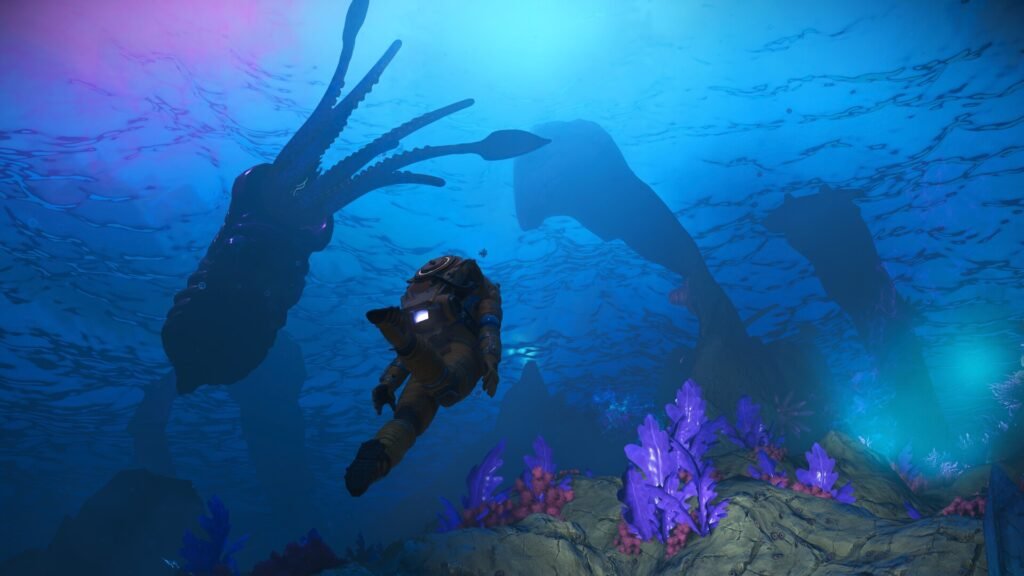
The Autophage storyline that arrived with Echoes in 2023 is still one of my favourite narrative beats. A whole new race of scrap-built robots with their own settlements, culture, and secrets about the Atlas. Pirate freighters became claimable. The universe got stranger and more personal at the same time. Then the Worlds updates in 2024 and early 2025 completely transformed how the game looks and feels. Water, clouds, lighting, and terrain all received serious love. Gas giants became explorable. Planets got dramatically larger. Purple star systems appeared. Suddenly the skyboxes and planetary approaches felt like they belonged in a big-budget sci-fi film instead of a procedural experiment.
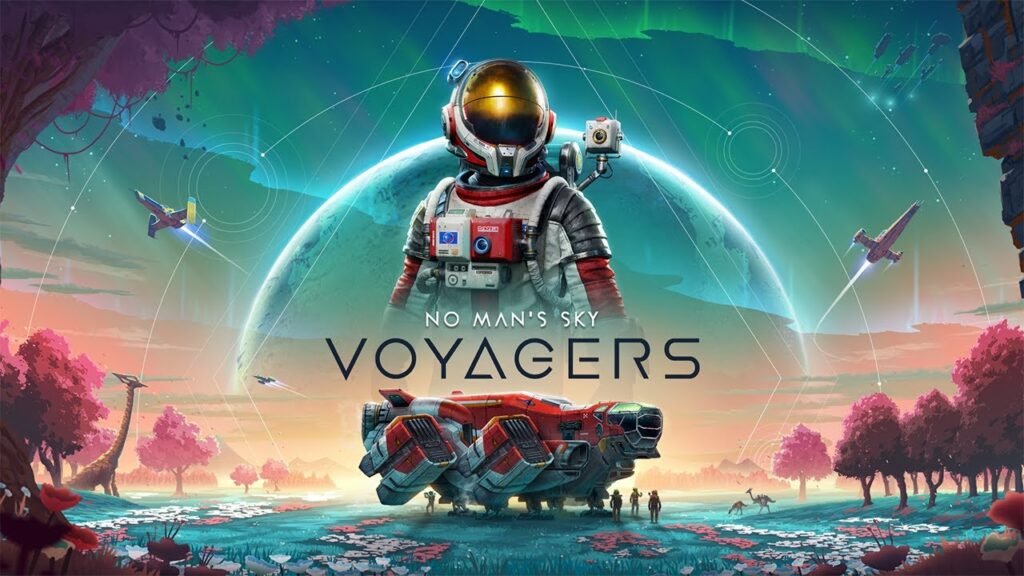
Voyagers in August 2025 might be the most player-fantasy-fulfilling update yet. You can now build your own Corvette-class starships from modular parts. These aren’t just bigger ships – they have walkable interiors, furniture, and room for a crew. You can spacewalk around them while they’re flying. It turns your starship into a proper mobile home and base at the same time. The technology behind that is shared with Hello Games’ next project, Light No Fire, which says a lot about how ambitious the studio remains.
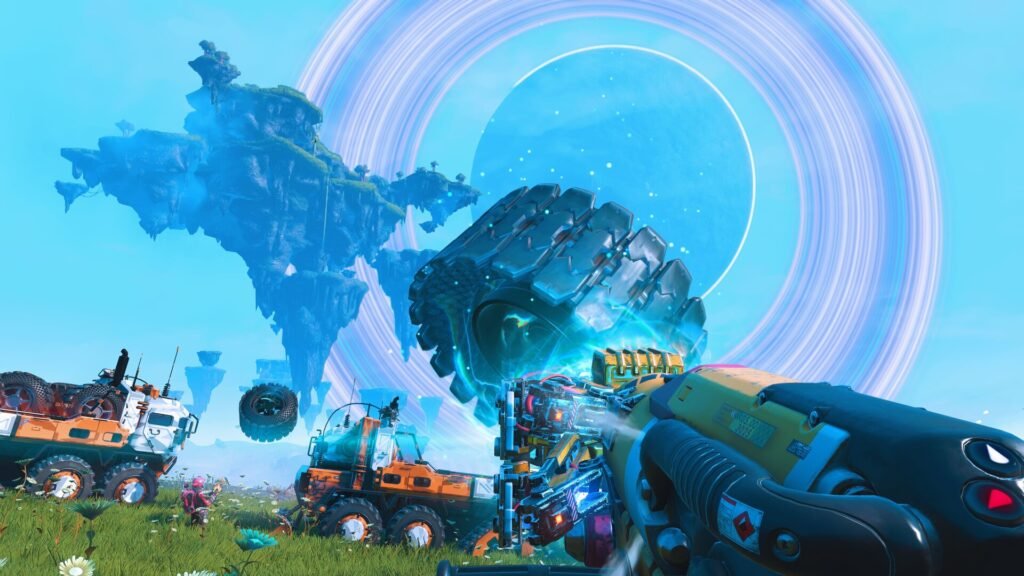
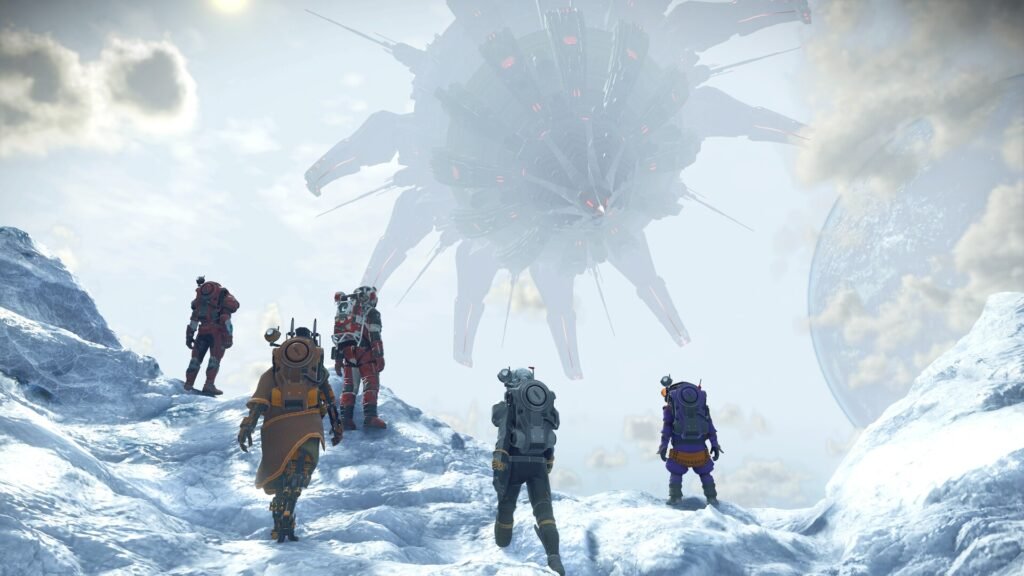
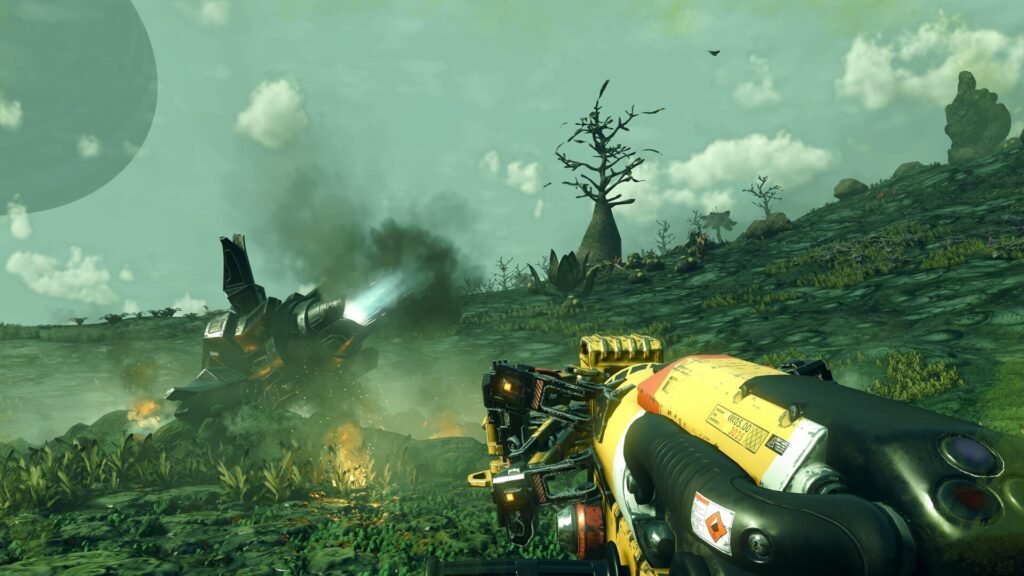
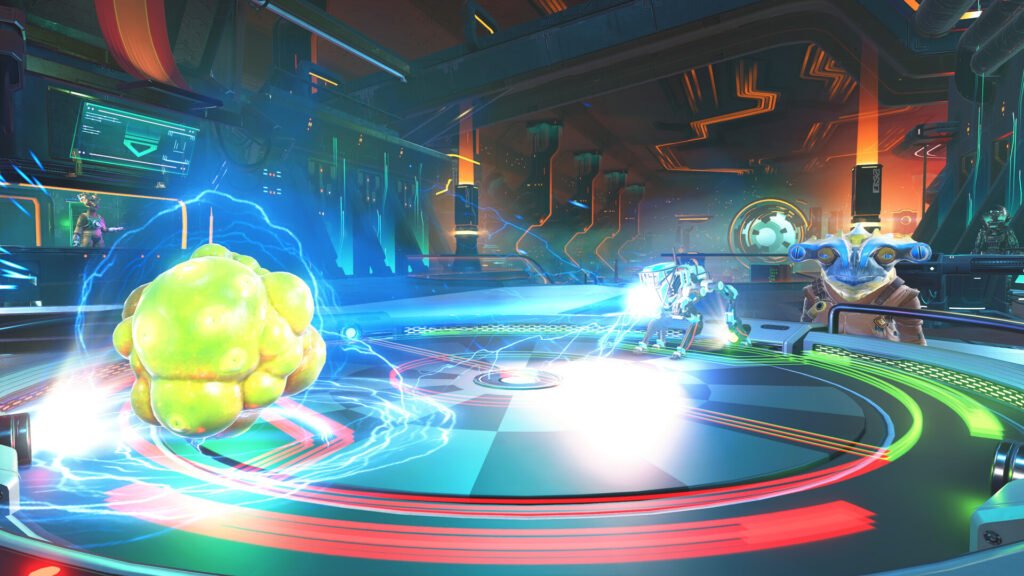
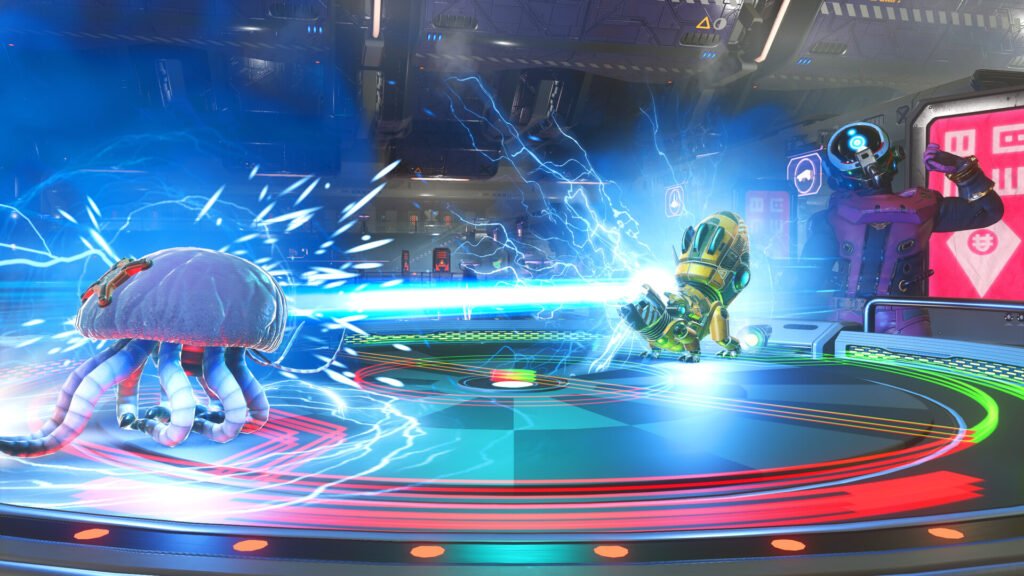
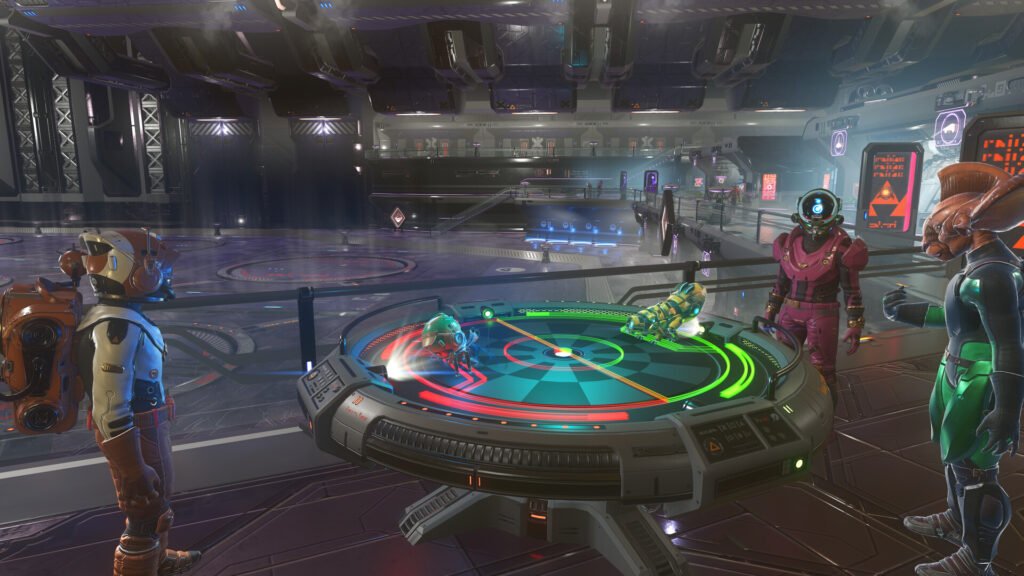
2026 has already been busy. Remnant gave everyone a gravity gun (the Gravitino Coil) so you can grab, fling, and haul objects around like a space-age Half-Life protagonist. Scrap worlds and a Colossus Exocraft overhaul turned industrial salvage into a proper activity. Xeno Arena added turn-based creature battles – think collecting and training alien fauna then throwing them into holographic arenas. It’s pure chaotic fun and raised the companion limit significantly. Then The Swarm dropped in May and turned the whole community into a temporary MMO. A massive threat called the Hive of Glass appeared, players got sorted into factions, and everyone worked together over eight weeks to build the tech needed to fight it. Space combat received permanent improvements at the same time. It felt like the game flexing its multiplayer muscles on a scale it had never quite attempted before.
And somehow, after all that, players have still only explored less than one percent of the planets. That number is almost comical. Ten years, tens of millions of travellers, hundreds of millions of hours, and the universe remains mostly untouched. That is the quiet magic of No Man’s Sky. It never runs out of places to go.
What makes the whole story remarkable is the consistency of the free updates. No season passes. No paid DLC. Every single major addition since launch has been free for anyone who owns the base game. Cross-play and cross-save work across basically every platform that matters – PC, PlayStation, Xbox, Switch, Switch 2, and full VR. You can start on one machine and pick up on another without drama. The community has built Galactic Hubs, shared bases, and created their own cultures across the stars. Expeditions keep giving casual and hardcore players a reason to log in together for a few weeks at a time.
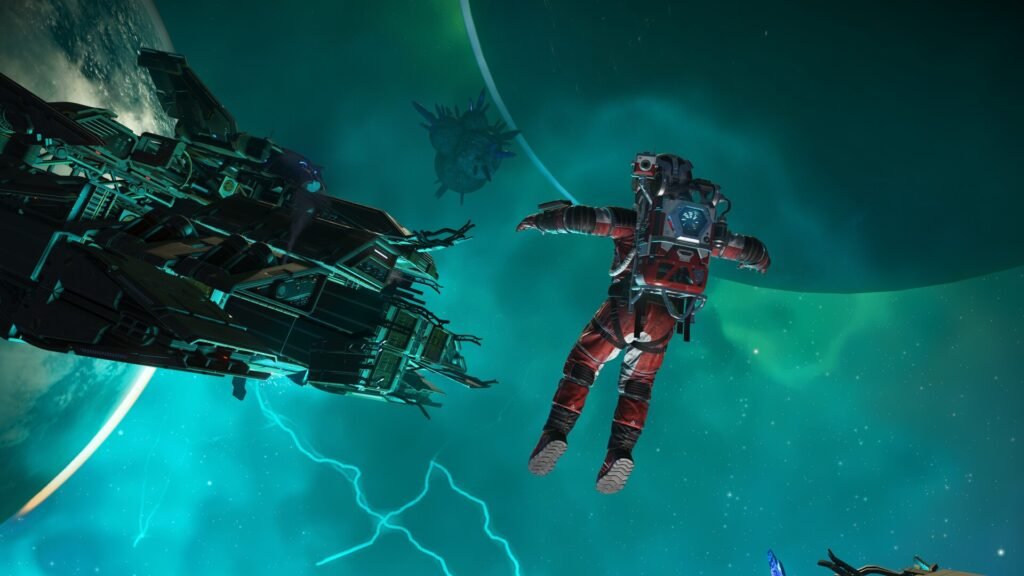
In 2026 the game is still receiving the kind of love most live-service titles can only dream of. It has won awards specifically for how it has evolved. Player counts hit highs not seen since launch during the tenth anniversary. Sean Murray’s open letter felt genuine – a small team that still loves what they are making, still exploring what the game can become, while also cooking the next big project in the background.
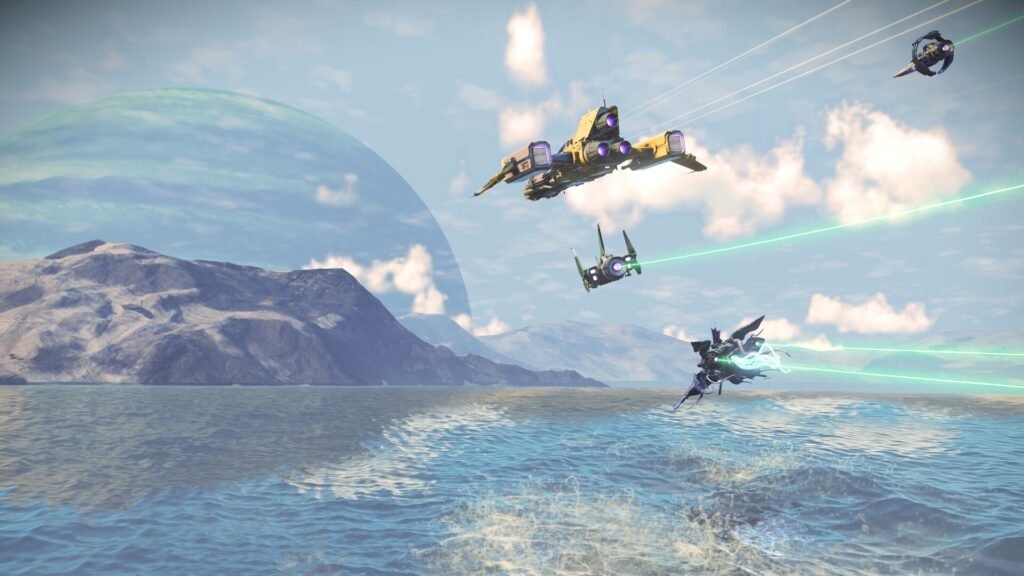
The next named update is Cosmos. We know almost nothing about it yet beyond the name and the fact that it is coming. Given the studio’s track record, it will probably arrive free, work with existing saves, and somehow make the already ridiculous universe feel bigger or stranger again. Whether it focuses on deeper multiplayer systems, new forms of exploration, or something completely unexpected, the one safe bet is that Hello Games is not finished.
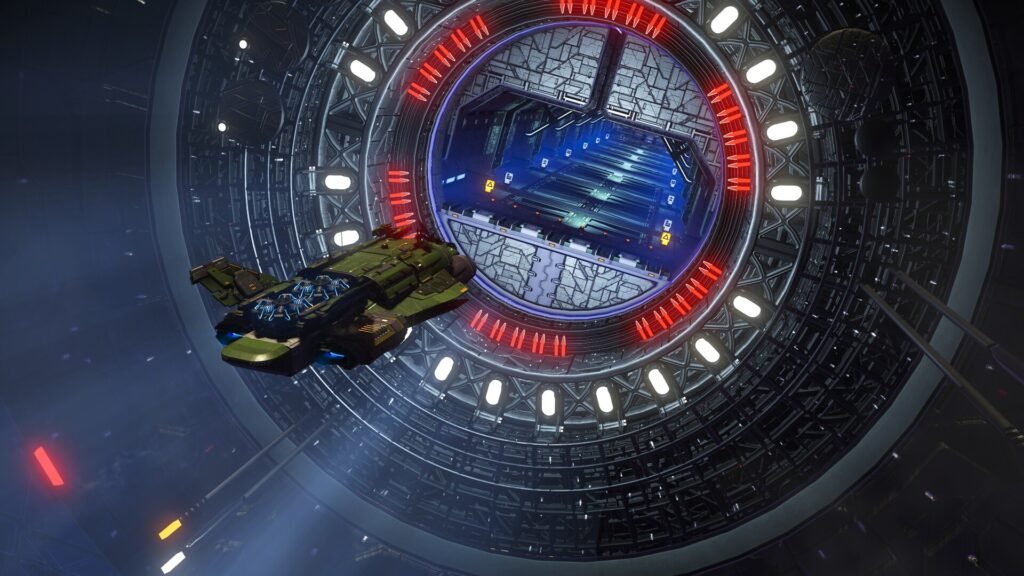
If you tried No Man’s Sky years ago and bounced off, the version that exists now is worth another look. The early frustration has been replaced by systems that actually reward curiosity. You can build sprawling bases, manage settlements, fly custom Corvettes with friends, battle creatures in arenas, fish in alien oceans, dig up fossils, fight community-wide threats, or just wander endlessly looking for the perfect planet. The procedural generation still creates moments of genuine wonder – that first glimpse of a new world after a long warp, the sudden appearance of a living ship, the quiet beauty of a gas giant’s storms. And because the updates keep coming, the game never quite settles into a finished state. It keeps growing with its players.
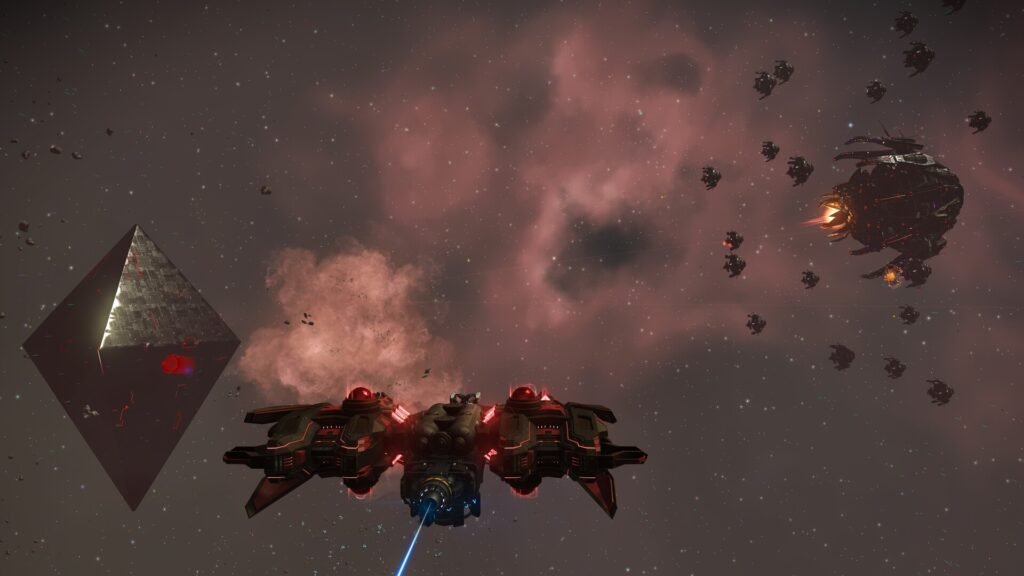
That is the real story of No Man’s Sky. Not the launch that went wrong, but the decade of quiet, consistent work that turned a broken promise into one of the most generous and imaginative games still being supported in 2026. The universe is still out there. Less than one percent of it has been seen. And somewhere in Guildford a small team is already working on whatever Cosmos turns out to be. For a game that once felt like it might disappear, that is a pretty special place to be.