
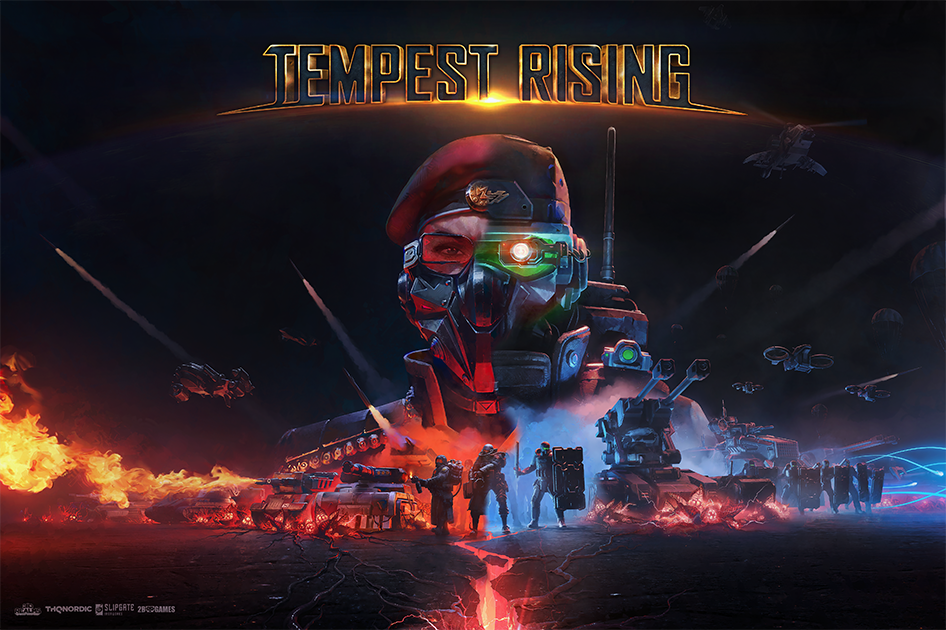

For a lot of us, the 90s were defined by the golden age of Real-Time Strategy games. We lived for the “Unit Ready” announcements and the thrill of dragging a massive selection box over a sea of tanks. But for the last decade, the RTS genre has felt like it’s been stuck in a weird limbo, caught between hyper-competitive MOBAs and niche indie projects. Enter Tempest Rising, a game that doesn’t just tip its hat to the classics—it kicks the door down and demands you start building power plants immediately. It is an unapologetic, high-octane love letter to the Command & Conquer formula, and honestly, it’s about time someone brought that energy back into the modern era.
The Ghost of Westwood Past
The first thing you notice when you boot up Tempest Rising is the vibe. It is thick with that specific brand of ninety-eight percent grit and two percent cheese that defined the Westwood Studios era. Developed by Slipgate Ironworks and 2B Games, the project clearly knows its audience. You aren’t here for grand, sweeping grand strategy or complex political simulators. You are here to harvest a glowing, dangerous resource and use it to fund a military machine capable of flattening a small country. The developers have managed to capture that elusive retro-modern aesthetic. Everything looks sharp and high-fidelity thanks to Unreal Engine, but the soul of the game feels like it was ripped straight out of 1996. The UI is chunky in the right ways, the portraits for units have that classic military-tech feel, and the music—oh man, the music—is a crunchy, industrial-rock feast that makes you want to drive a tank through a brick wall.
Factions, Firepower, and Future-Shock
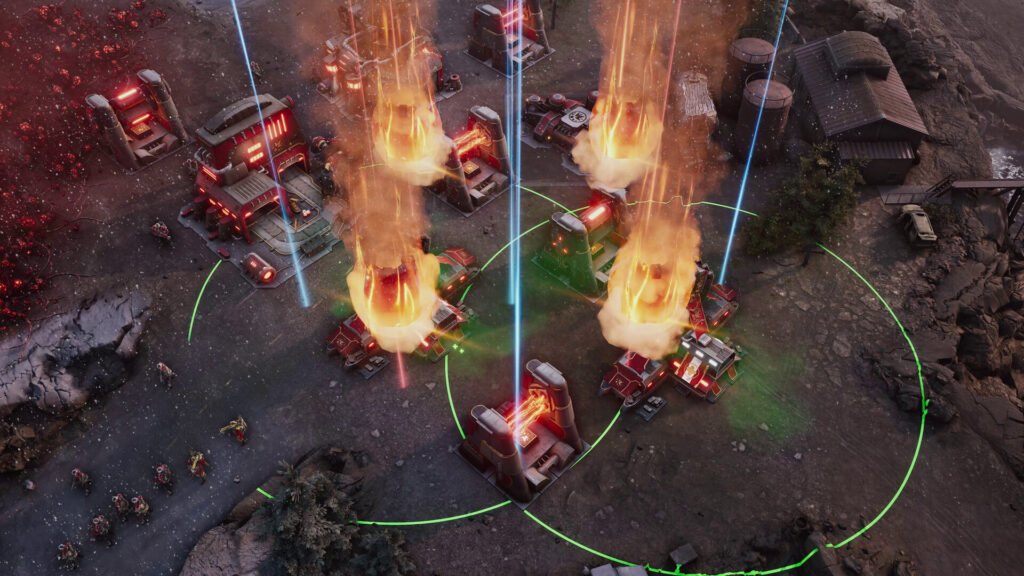
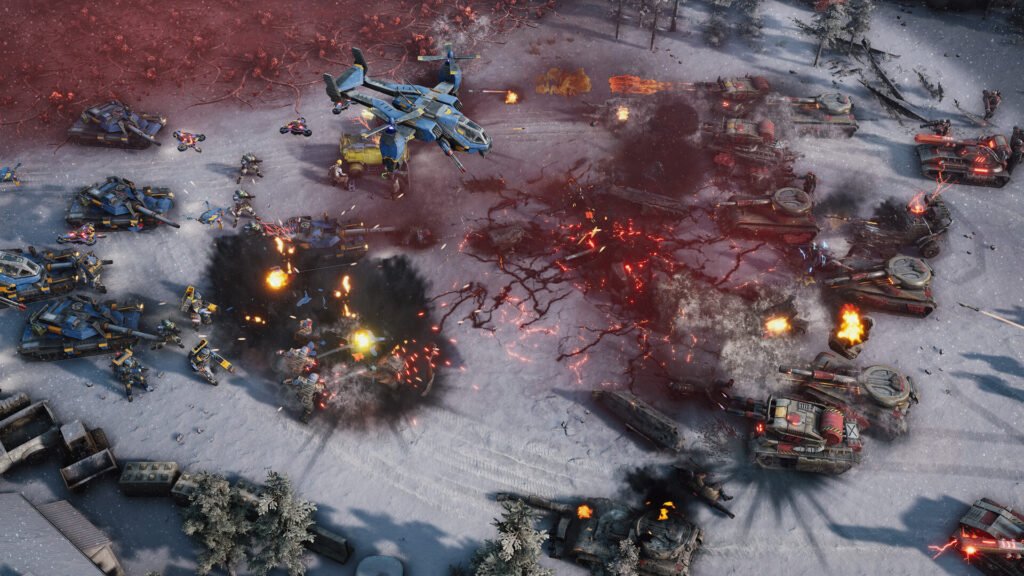
In any great RTS, the factions are the stars of the show, and Tempest Rising delivers a classic rivalry that feels both familiar and fresh. On one side, you have the Global Defense Force (GDF). They are your standard high-tech, organized, and morally “good” military faction. They rely on combined arms, air superiority, and units that feel like they were designed in a very expensive government lab. If you like playing with disciplined squads and heavy armor that can take a beating, the GDF is your bread and butter. Their playstyle is methodical and rewarding, focusing on maintaining a strong front line while utilizing specialized support units to pick apart the enemy.
On the other side of the fence, we have the Tempest Dynasty. These guys are the chaotic, flame-throwing antithesis to the GDF. If the GDF is a scalpel, the Dynasty is a Molotov cocktail. They are much more focused on area denial, fire-based weaponry, and aggressive expansion. Playing as the Dynasty feels faster and more frantic. Their units are designed to punish enemies who get too close, often leaving trails of burning Tempest in their wake. There is also a third, more mysterious faction waiting in the wings, which adds a layer of cosmic horror and sci-fi intrigue to the overarching plot. The dynamic between these groups creates a wonderful rock-paper-scissors balance that feels intuitive even if you haven’t played an RTS in five years.
Base Building Like It’s 1995
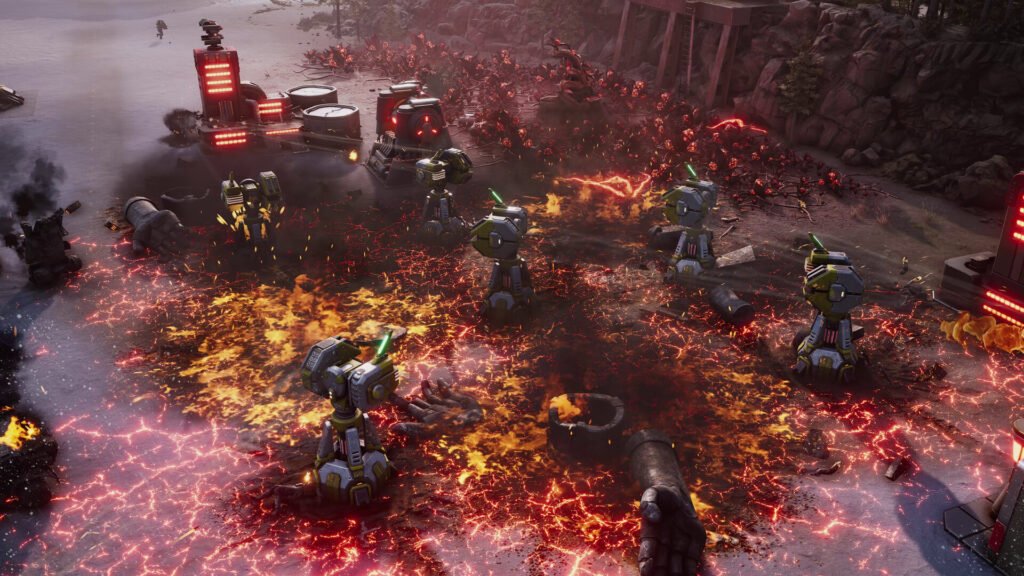
One of the biggest complaints about modern RTS games is that they often move away from the base building aspect in favor of “hero” units or simplified capture points. Tempest Rising says “no thank you” to that noise. Here, your base is your heart. You need to manage your power consumption, place your refineries strategically near Tempest patches, and ensure your production buildings are protected by a thick layer of walls and turrets. There is a genuine tactile joy in watching your base grow from a single Construction Yard into a sprawling industrial fortress. The resource management is centered around the eponymous Tempest, a volatile, crystal-like substance that has ravaged the Earth. Much like Tiberium, it is both your greatest asset and a constant environmental hazard. Managing your harvesters and protecting your supply lines becomes the core loop of every match, leading to those classic skirmishes over the last remaining patch of blue glow on the map.
Tactical Depth without the Degree
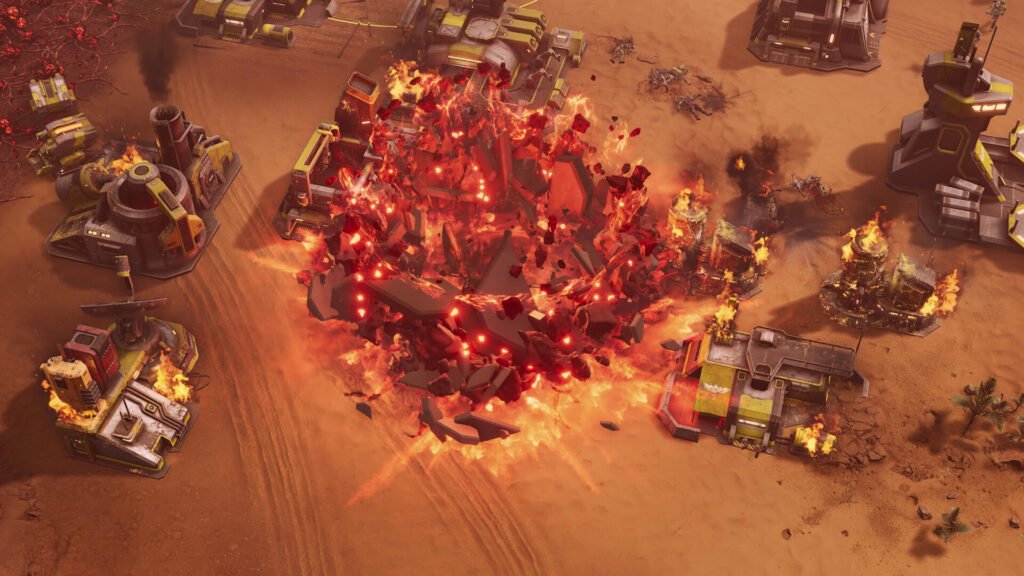
While the game is accessible, don’t mistake it for being shallow. Tempest Rising introduces a lot of modern quality-of-life features that the old-school games lacked. The pathfinding is significantly smarter, so you won’t lose half your army because a tank got stuck on a pebble. More importantly, the units themselves have activated abilities that require genuine tactical thought. A GDF medic isn’t just a passive heal bot; you have to time their deployments to save a squad under fire. The Dynasty’s specialists can trigger chain reactions with fire and chemicals. This adds a layer of micro-management that rewards players for being attentive without feeling like you need 400 actions per minute just to survive. The campaign also looks to be a meaty experience, featuring branching paths and persistent rewards that allow you to customize your army between missions. This sense of progression makes every skirmish feel like it’s contributing to a much larger global conflict.

The Visuals and the Vibe
Let’s talk about the “look” of the apocalypse. Tempest Rising avoids the overly clean, plastic look of some modern strategy games. The world feels lived-in, muddy, and dangerous. The lighting effects when a specialized Dynasty unit ignites a patch of Tempest are genuinely stunning, casting long shadows across the battlefield. The units are easily distinguishable from one another even when the screen is filled with explosions, which is a massive win for readability. The sound design also deserves a shout-out. The “thump” of artillery and the mechanical whir of a transitioning walker unit provide a satisfying weight to the combat. It’s clear that the team behind this are fans first and developers second; they’ve nailed the “feel” of a heavy tank division rolling over a bridge in a way that just makes your brain happy.
Final Verdict: To Build or Not to Build
Is Tempest Rising a revolutionary reimagining of the strategy genre? Probably not. But does it need to be? Absolutely not. We’ve had enough “innovative” RTS games that stripped away the fun parts of the genre. What we needed was a polished, high-budget realization of the classic RTS spirit, and that is exactly what this is. It’s a game built for the people who miss the thrill of a well-executed tank rush and the satisfaction of a perfectly placed Tesla coil. Whether you’re a veteran of the Great C&C Wars of the nineties or a newcomer who just wants to see some cool robots blow stuff up, this game is a breath of fresh, albeit slightly irradiated, air. It’s fast, it’s loud, and it’s a total blast to play. If you have any love for the genre, you owe it to yourself to jump into the cockpit and start harvesting.