
Release Date: March 21, 2000 Developer: Cyberlore Studios
Get It On: GOG
If you grew up gaming in the late nineties or early 2000s, you probably remember the stressful bliss of being a King. Not a “click and drag an army of 500 units” King, but a “please, I am begging you, stop gambling at the inn and go kill that dragon” King. Released in 2000 by Cyberlore Studios, Majesty: The Fantasy Kingdom Sim was—and still is—one of the most delightfully weird experiments in the strategy genre. It didn’t just give you a kingdom to manage; it gave you a kingdom full of ego-driven, gold-hungry, semi-autonomous jerks who called themselves heroes.
While most real-time strategy (RTS) games of that era were focused on “Actions Per Minute” and micromanaging every single foot soldier, Majesty took a step back. It asked a very simple, very funny question: what if you were the boss, but nobody actually had to listen to you?
The Art of the Indirect Nudge
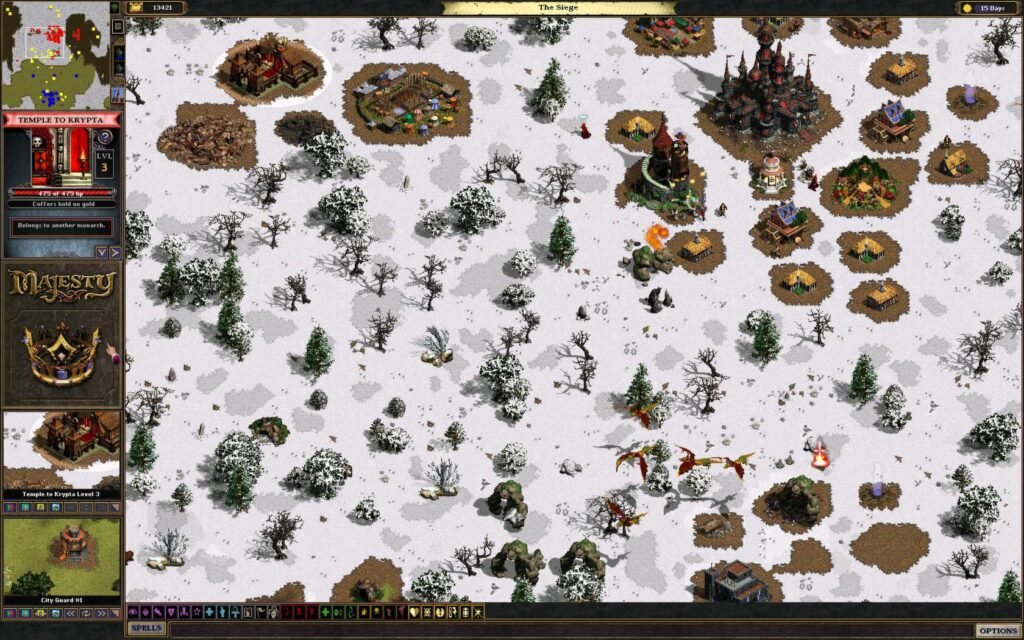
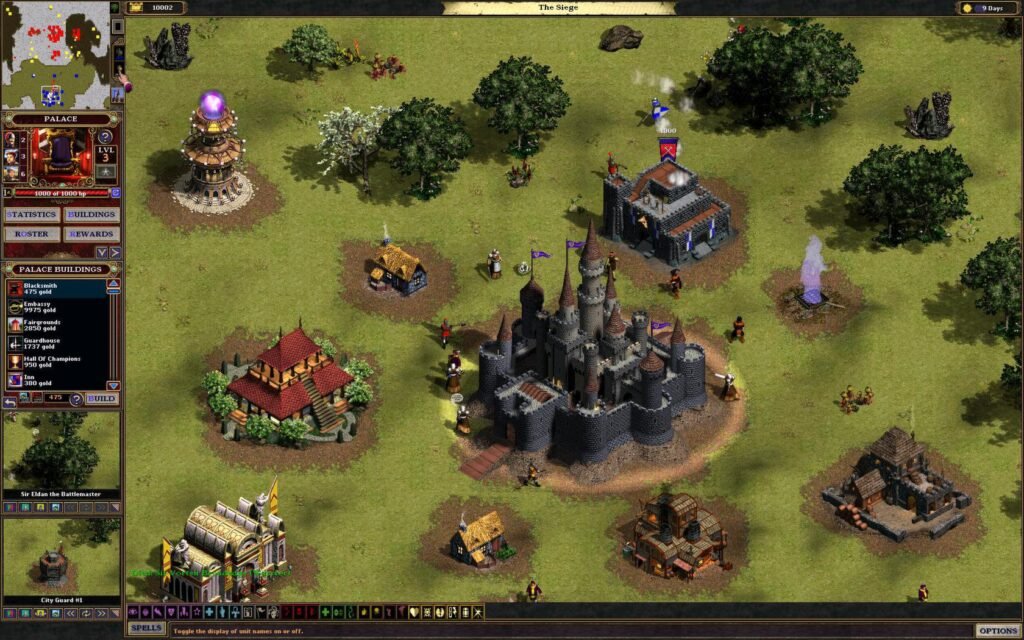
In Majesty, you don’t control your units. You can’t click a Paladin and tell her to go hit a Skeleton. If you try to right-click on the map, nothing happens. Instead, you are the Sovereign of Ardania, and your primary tool of influence is Cold, Hard Cash +2.
The core gameplay loop is built around the Reward Flag. If a giant spider is eating your tax collectors, you place an Attack Flag on it and set a bounty. If you want to see what’s in that scary black fog on the edge of the map, you drop an Exploration Flag. Then, you sit back and wait. You watch as a Rogue considers the 100-gold bounty, decides it’s not worth the risk of losing her favorite boots, and heads to the Marketplace to buy a health potion instead. Eventually, a group of brave (or just broke) Warriors might see the flag, realize they need the money for a new sword, and trudge off to do your dirty work.
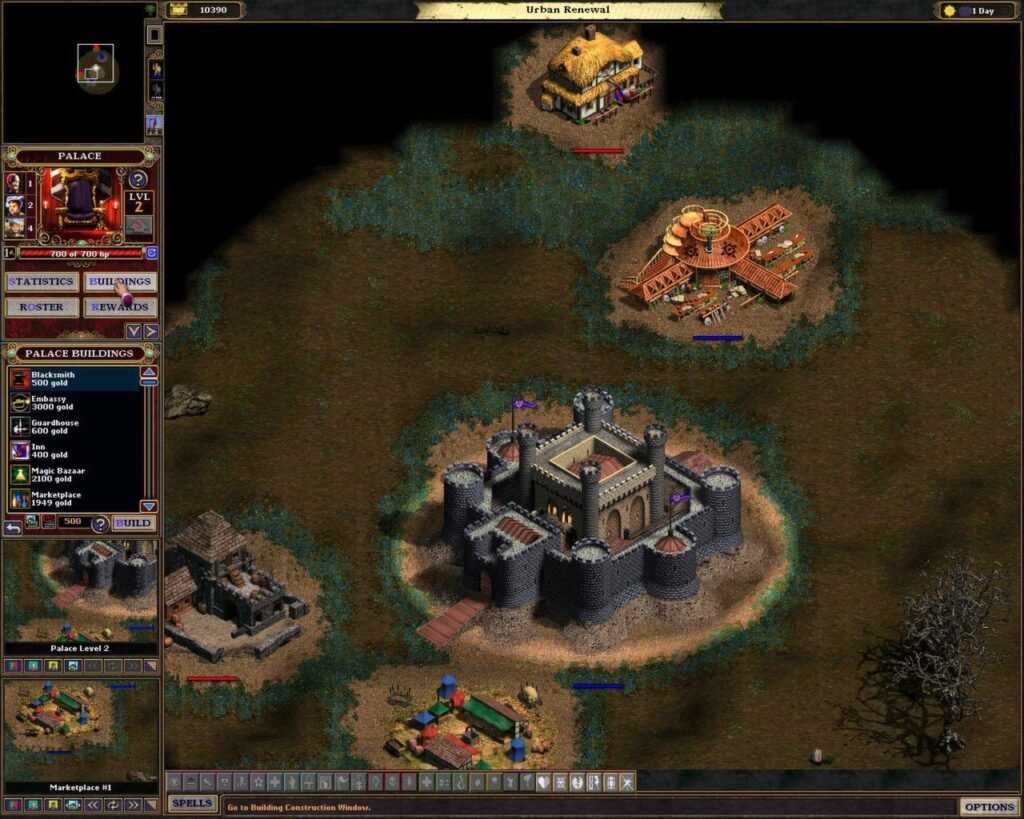
This indirect control is what makes Majesty a simulation rather than just another RTS. You aren’t a god; you’re a middle manager with a crown. You build the infrastructure—the guilds, the blacksmiths, the magical libraries—and you provide the incentives. The heroes decide if they feel like helping you today.
Personality in Every Sprite
The real magic of the game lies in how distinct the hero classes feel. They aren’t just different stats; they have personalities.
Rogues are absolute opportunists. They’ll be the first to jump on a high-paying bounty, but they’ll also be the first to run away the moment things get slightly dangerous. They spend their time stealing from your own monster-infested graveyards and spending that loot at your gambling halls. On the flip side, Paladins are righteous powerhouses who will often go out and hunt monsters for free just because it’s the “holy” thing to do. However, they are also incredibly expensive to recruit and tend to be a bit stuck-up about which other guilds they’ll tolerate in town.
Then you have the Wizards. In the early game, a level one Wizard is essentially a wet paper towel with a beard. They will die if a rat sneezes on them. But if you manage to keep them alive until they hit level ten, they become walking nukes, teleporting across the map and raining fire down on your enemies. Watching a hero grow from a fragile rookie to a legendary champion—all while they technically ignore your direct orders—creates a weirdly paternal bond that most strategy games can’t replicate.

The Sounds of a Dying Treasury
You cannot talk about Majesty without mentioning the sound design. For many of us, the voice of the Royal Advisor is permanently etched into our brains. Whether he’s dryly informing you that “The Royal Treasury is nearly empty!” or smugly noting that “A new building is complete,” his Sean Connery-esque delivery added a layer of charm that defined the game’s identity.
The heroes themselves are equally chatty. You’ll hear the “Huzzah!” of a victorious Warrior, the “I’m going!” of a reluctant Ranger, and the distinctive clink of gold coins being collected by a tax collector. These audio cues aren’t just flavor; they’re vital information. In a game where you can’t force units to move, hearing a hero scream in terror is your only warning that a localized apocalypse is happening behind your Blacksmith.
A Legacy of Chaos
Despite a sequel in 2009 and various HD re-releases, the original 2000 version of Majesty remains the gold standard for this specific sub-genre. It captures a specific Dungeons & Dragons vibe where the world feels alive and indifferent to the player’s whims. The maps are procedurally generated, meaning you never quite know if your Palace is going to be safely tucked in a corner or directly next to a den of ancient dragons.
The game is often difficult, occasionally unfair, and frequently hilarious. There is nothing quite like losing a forty-minute mission because your high-level Priestess decided she’d rather go buy a new robe than heal the king’s guards. But that’s the beauty of it. It’s a simulation of a fantasy world that actually feels like it functions when you aren’t looking.
If you’ve never played it, or if it’s been twenty years since you last stepped foot in Ardania, it’s worth a revisit. It’s a reminder that sometimes, the most fun you can have in a game is giving up a little bit of control and seeing what happens.