
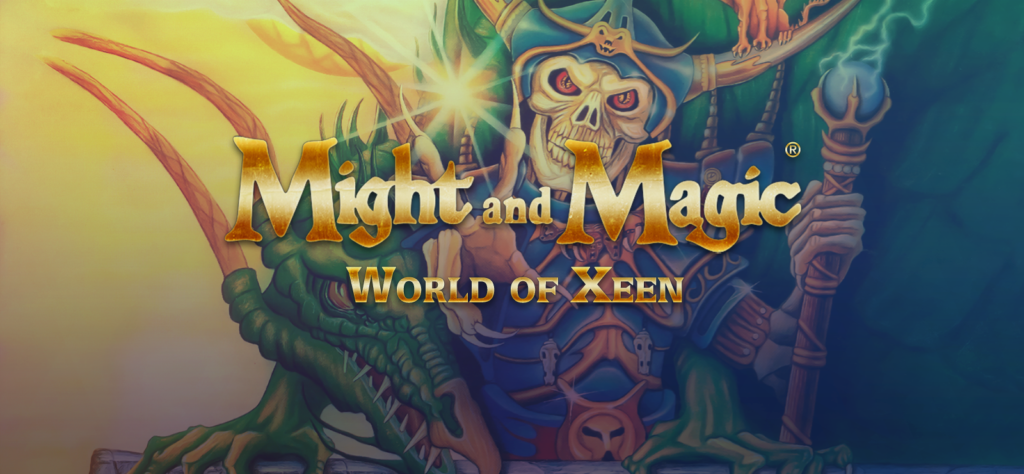

Release Date: 1992 (Clouds), 1993 (Darkside), 1994 (World of Xeen) Developer Name: New World Computing Get It On: GOG
If you’ve ever wanted a classic computer role-playing game that feels like two complete adventures duct-taped together in the coolest way possible, Might and Magic IV: Clouds of Xeen and Might and Magic V: Darkside of Xeen deliver exactly that. Released back-to-back in 1992 and 1993 by New World Computing, these games form one of the most unique packages in RPG history. Play them separately and you get two solid adventures. Install both on the same hard drive and the game engine magically stitches them into World of Xeen, a single massive campaign that still feels ahead of its time more than thirty years later. Let’s talk about why these two titles, and the clever merge that unites them, remain such a joy for fans of old-school party-based RPGs.
The Might and Magic series always mixed fantasy and science fiction in a way few other games dared. From the very first game you were exploring medieval-looking worlds that turned out to be experimental colony ships or artificial planets controlled by god-like beings called the Ancients. By the time Might and Magic IV arrived, the ongoing saga of the renegade guardian Sheltem and his pursuer Corak had already taken players through several worlds. Clouds of Xeen continues that story while introducing a brand-new setting that feels both familiar and delightfully strange.
Floating Through the Clouds of Xeen
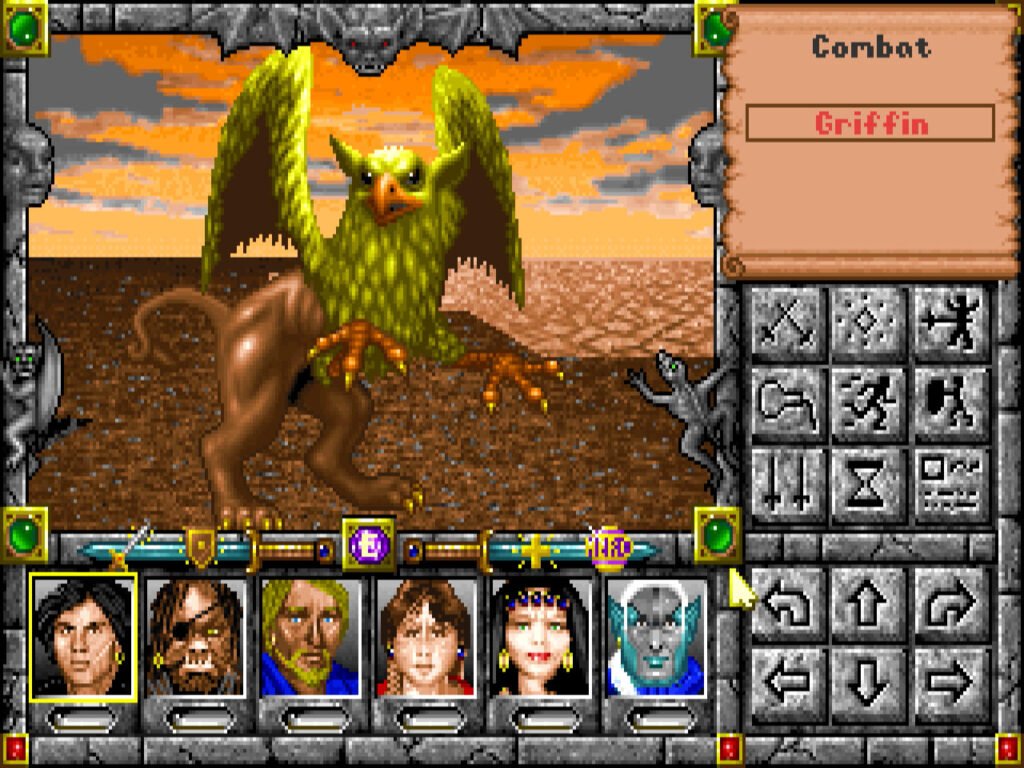
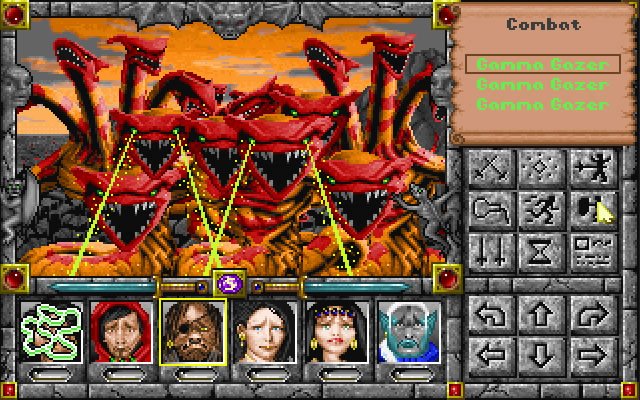
Clouds of Xeen drops you onto the “light” side of a flat, rectangular world called Xeen. The place looks like a classic fantasy land of castles, forests, deserts, and mountains, yet the underlying tech is pure science-fantasy. A villain calling himself Lord Xeen has seized power, imprisoned the overseer Crodo, and generally made life miserable for everyone. Your party of up to six adventurers—knights, archers, clerics, sorcerers, and the usual assortment of classes—must explore the map, clear dungeons, solve puzzles, and eventually confront the big bad. The game uses the same first-person, grid-based engine that powered Might and Magic III: Isles of Terra, so movement feels snappy and combat is fast-paced. You see the world from the party’s eyes, turn in ninety-degree increments, and fight monsters that appear right in front of you. Inventory management is straightforward, and the game keeps track of important notes, quest items, and coordinates so you don’t have to scribble everything on paper (though many of us still did).
What makes Clouds of Xeen special is the sheer amount of optional content. Side quests pop up constantly. Townsfolk hand out jobs that send you into dangerous caves or across the map for rare items. You can recruit new party members, train skills, buy better gear, and slowly become powerful enough to take on the tougher areas. The difficulty can be set to Adventurer or Warrior mode, giving a little extra challenge if you want it. Voice acting appears on the CD version—pretty ambitious for a 1992 PC game—and the cutscenes help sell the story even when the plot itself stays relatively light. Critics at the time noted that the world felt a bit empty of ordinary people compared to later RPGs, but the constant stream of monsters, treasures, and secrets kept most players happily grinding for hours.
Taking a Trip to the Darkside
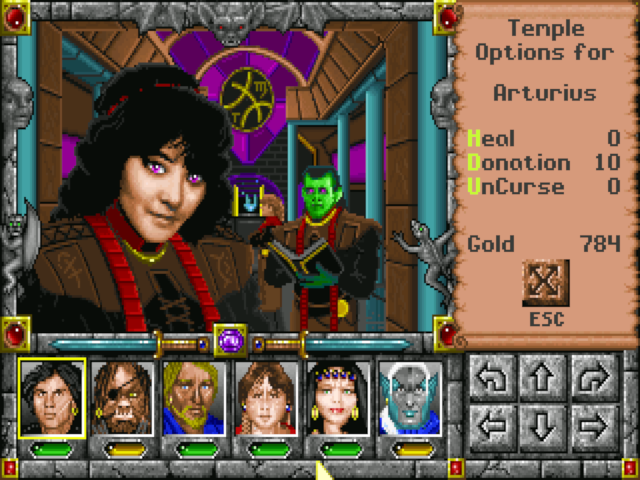
Then came Might and Magic V: Darkside of Xeen the following year. This is the “dark” side of the same flat world, and the tone shifts accordingly. The map is more dangerous, the monsters hit harder, and the story picks up the larger series arc in a big way. After dealing with Lord Xeen on the cloud side, your party follows Prince Roland’s trail through special pyramids that act as portals between the two faces of Xeen. On the dark side you discover that Sheltem, the series’ long-running antagonist, has been posing as a ruler named Alamar. He has conquered much of the land, imprisoned or corrupted key allies of the local guardian (the Dragon Pharaoh), and plans to use the world’s control device—the Cube of Power—to crash Xeen into the planet Terra so he can continue his rampage against the Ancients.
Gameplay remains almost identical to the previous game, which is perfect because the two titles were designed to work together. You still create or import a party, explore a large outdoor map dotted with towns, castles, and dungeons, and fight in the same real-time-with-pause style combat. Because Darkside expects players to arrive with a somewhat experienced group from Clouds, starting fresh here is tougher. The dark side features tougher enemies, more elaborate quests, and a stronger narrative payoff. You help restore Queen Kalindra, recover a command orb for the Dragon Pharaoh, free the ancient guardian Corak from a crashed escape pod, and ultimately arrange a showdown in which Corak and Sheltem destroy each other in a mutual self-destruct sequence. It’s a bittersweet but satisfying conclusion to a storyline that began all the way back in the first Might and Magic.
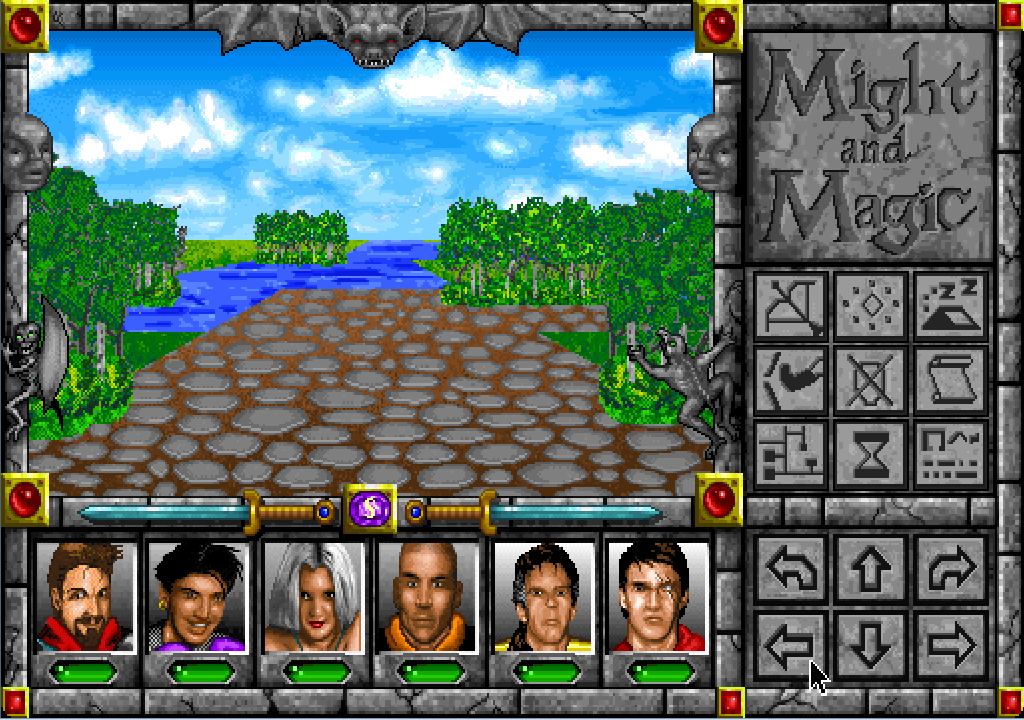
The real magic, though, happens when you install both games on the same system. The engine detects the presence of both data sets and merges them into World of Xeen. Suddenly the two maps become opposite sides of one continuous world. Special pyramids and other portals let your party travel freely between the cloud side and the dark side. Areas that were locked or incomplete in the standalone versions open up. Best of all, after you finish both main stories a new epilogue quest line appears. The Dragon Pharaoh summons the party and asks them to complete the ancient experiment that will transform the flat nacelle world into a proper spherical planet. You tackle eight additional dungeons, gather the necessary artifacts, and finally witness a unification ceremony in which Prince Roland and Queen Kalindra are married. Their union, powered by the Sceptre of Temporal Distortion and the Cube of Power, literally joins the two halves of Xeen into one whole world. That extra ending only exists in the combined game, and it gives the entire experience a sense of closure that neither title possesses alone.
Playing World of Xeen feels like exploring one enormous sandbox. You can bounce back and forth, tackle easier cloud-side content first to level up, then dive into the tougher dark-side challenges. The note system, auto-mapping, and quest log keep everything organized even as the to-do list grows huge. The CD-ROM versions added more digitized speech and smoother cutscenes, making the presentation feel surprisingly modern for the early nineties. Later compilations even included a fan-made expansion called Swords of Xeen, which used the same engine and added yet another set of adventures, though it never quite reached the same official status.
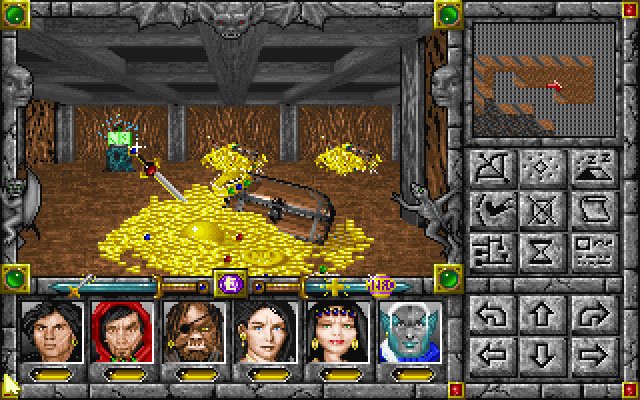
Looking back, the decision to release two separate games that could fuse into one bigger experience was both a clever marketing move and a genuine technical achievement. Hard-drive space and floppy-disk limitations in 1992–93 made shipping one gigantic game impractical for many players. By splitting the content, New World Computing let people buy one half, enjoy it, then pick up the sequel and instantly double the size of their adventure. The combined World of Xeen package later appeared on CD with enhanced audio, and it became the definitive way most fans experience the story today. Modern re-releases and abandonware sites still let you run the whole thing under DOSBox or ScummVM with almost no hassle.
The games aren’t perfect. Combat can get repetitive once your party becomes overpowered. Some puzzles feel arbitrary, and the plots of the individual titles are thinner than the overarching series mythology. Yet the pure joy of exploration, the constant drip of new equipment and spells, and the novelty of traveling between two complete worlds keep the experience engaging. Many players still rank World of Xeen among the high points of the entire Might and Magic series precisely because of that seamless integration.
Final Thoughts: Why You Need This in Your Library
If you’re new to these classics, the best approach is simple: create a balanced party, start on the cloud side, and take your time. Talk to every NPC, map every square, and don’t be afraid to retreat when a dungeon feels too tough. Once you have a few levels and better gear, hop through a pyramid and sample the dark side. The sense of discovery never really fades. Even after you finish the main quests and the special unification ending, there’s still plenty of optional content and hidden treasures to hunt down.
Might and Magic IV and V, especially when experienced as World of Xeen, capture a particular moment in RPG design when ambition and technical constraints produced something genuinely inventive. The flat double-sided world, the ongoing battle between ancient guardians, the endless list of side quests, and that final ceremony that literally reshapes the planet all add up to a memorable adventure. Decades later the games still reward curiosity and patience. Whether you’re a longtime fan revisiting old saves or a newcomer discovering the series for the first time, the combined World of Xeen remains one of the most satisfying ways to spend a few dozen hours in a classic computer role-playing game. Fire up the old engine, gather your party, and go explore both sides of that strange rectangular world. The clouds and the darkside are waiting, and together they make one hell of a journey.