
Let us be completely honest right out of the gate: Warhammer: Chaosbane is not perfect. Developed by Eko Software, this isometric action-RPG stands squarely in the massive, intimidating shadow of genre definitions like Diablo III and Path of Exile. When you look closely at its rougher edges—the completely uninspired voice acting, the occasionally repetitive level design, and a narrative that delivers a fairly paint-by-numbers fantasy plot—it would be very easy to write it off.
But if you judge an ARPG solely by its cover, you are going to miss out on an absolute blast of a game. Despite its visible flaws, Chaosbane nails the most critical element of the entire genre: the moment-to-moment combat flow. It is a game that values raw, chaotic fun over hyper-polished presentation, offering a pure, unadulterated power fantasy that makes clearing screens of screaming cultists feel incredibly satisfying. It understands exactly what makes a hack-and-slash game work, cutting out the fluff to keep your fingers moving and the loot dropping.
A Grimdark Playground in the Old World
The narrative kicks off in the immediate aftermath of a massive, devastating war against the forces of Chaos. Magnus the Pious has successfully united the fractured Empire of Man, but the dark gods are never truly defeated; they simply retreat to the shadows to lick their wounds and plot their next insidious move. When Magnus is struck down by a mysterious, warp-tainted curse, it falls upon a select group of legendary heroes to hunt down the cultists responsible and find a cure before the Empire crumbles from within.
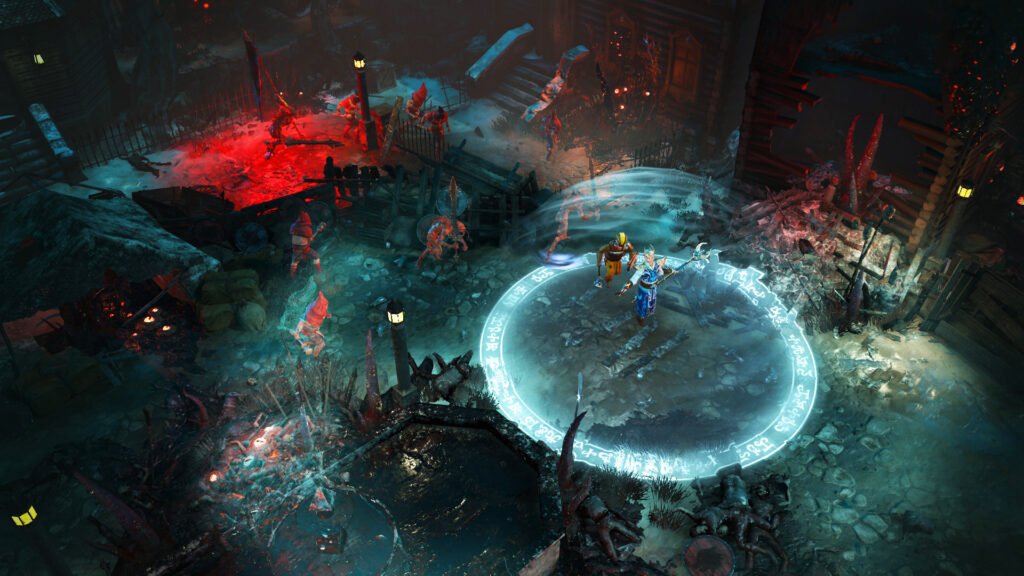
While the story itself will not win any awards for literary innovation, it serves as a fantastic excuse to send you hurtling through some of the most iconic locations in Warhammer Fantasy lore. You will find yourself fighting through the plague-infested, claustrophobic sewers of Nuln, navigating the war-torn streets of Praag, and wandering into the ancient, magical forests of the Wood Elves. For fans of the classic setting, seeing these cities brought to life with such a heavy emphasis on atmospheric grimdark dread is a massive treat, even if the actual room layouts can start to feel a bit familiar after a few hours of aggressive crawling.
Finding the Rhythm in the Carnage
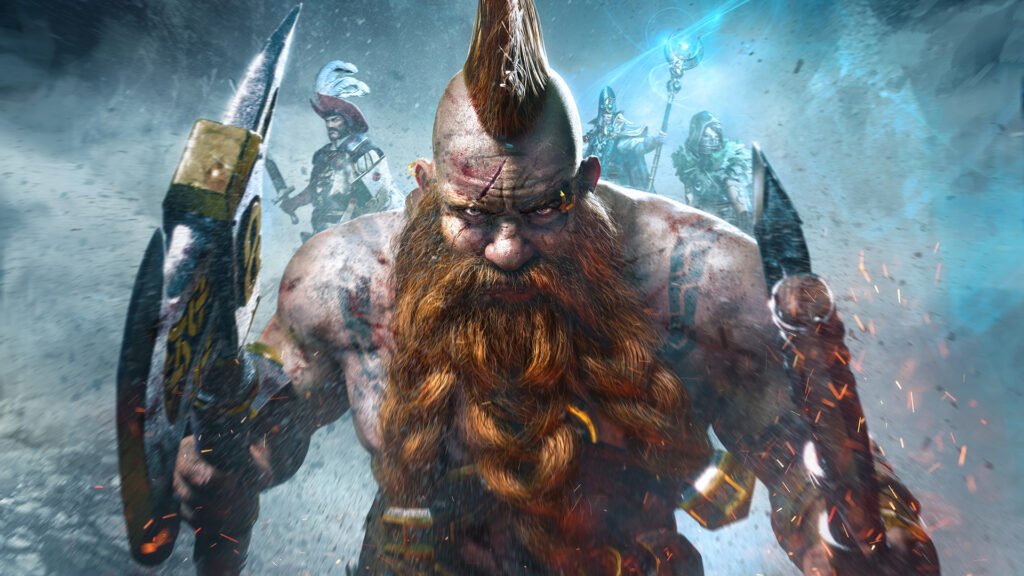
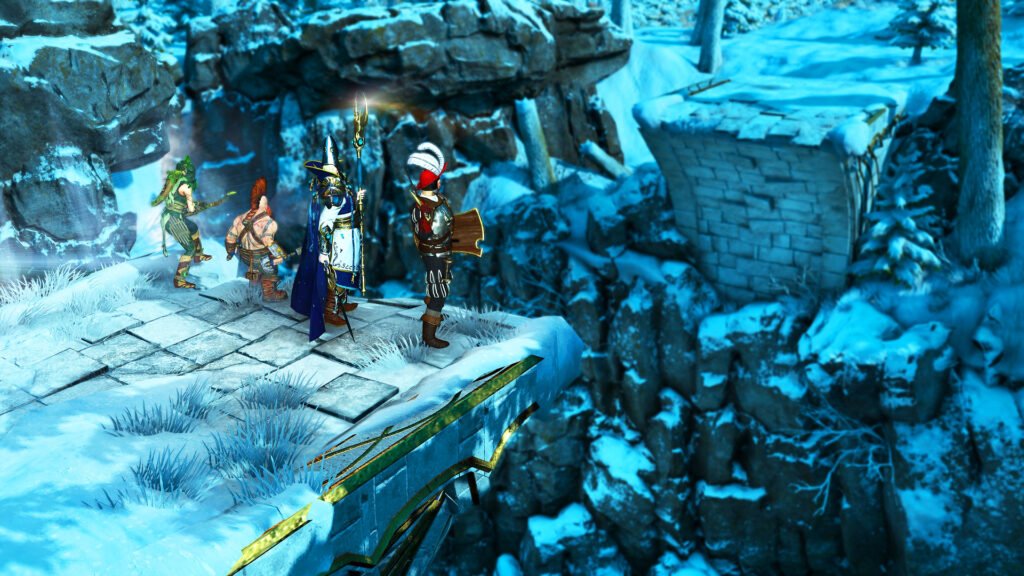
The biggest compliment you can pay to Chaosbane is just how good it feels to smash things. Whether you are using a controller or a keyboard, the character movement is precise, fluid, and highly responsive. You control one of several highly distinct classes—like the tanky Imperial Captain Konrad Vollen, a high-mobility High Elf Mage, a dual-wielding Dwarf Slayer, or a stealthy Wood Elf Waywatcher—and each one brings a completely unique flavor to the battlefield.
The game handles character progression beautifully and with a refreshing amount of modern respect for the player’s time. Instead of locking you into a rigid, unforgiving skill tree where a single misallocated point ruins your character for the end-game, Chaosbane uses a highly flexible skill point pool. Every time you level up, your maximum pool increases, allowing you to equip higher-tier versions of your active and passive skills.
You can hot-swap your abilities on the fly to experiment with entirely different playstyles whenever you want. Want to turn your Wood Elf into a rapid-fire archer who kites enemies across the room? Go for it. Want to pivot five minutes later and turn her into a summoner who relies on a horde of angry Dryads to choke out a narrow hallway? Just adjust your points in the menu and keep pushing forward. This lack of friction encourages constant experimentation, keeping the gameplay from feeling stagnant during longer sessions.
Blood for the Blood God, Loot for the Player
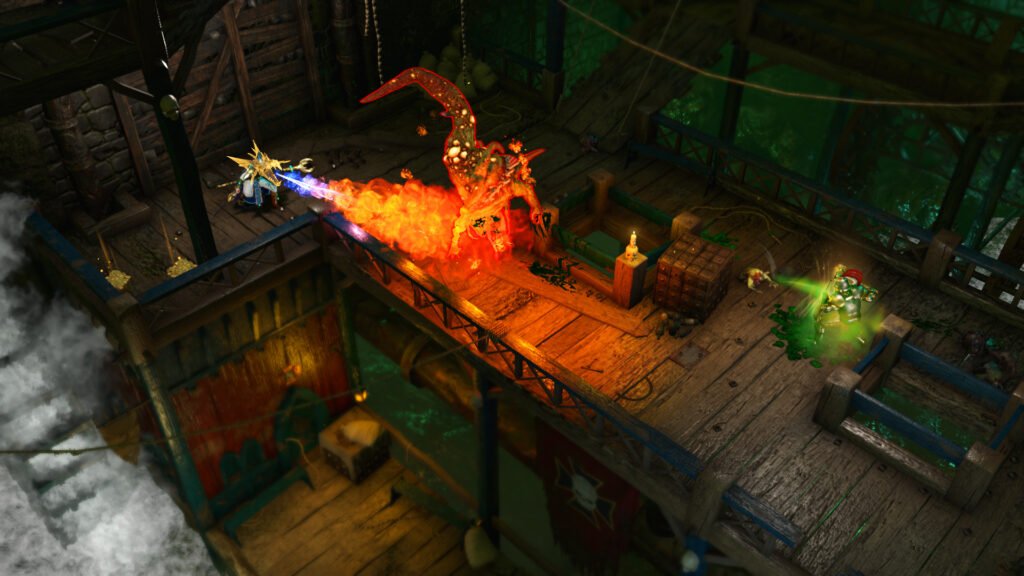
This fluid skill system pairs naturally with the game’s lenient, dopamine-heavy loot drop system. You are constantly showered with rare, glowing gear pieces that dynamically change your character’s physical aesthetic, making you look like an absolute legendary warrior by the time you reach the end-game loop. The satisfaction of finally completing a matching set of high-tier armor that grants massive set bonuses to your favorite skills is a feeling that never truly gets old.
To add even more flavor to the combat mechanics, Eko Software introduced the Bloodlust System. As you slaughter enemies, they drop glowing red energy orbs. Vacuuming up enough of these orbs fills a dedicated meter that, when activated, unleashes a devastating state of near-invincibility. Your screen fills with cinematic filters, your speed skyrockets, and you gain access to unique, room-clearing abilities that can turn the tide of a desperate fight in seconds. It is a brilliant mechanic that rewards aggressive, forward-momentum gameplay.
Standing Tall in the Face of Greater Daemons
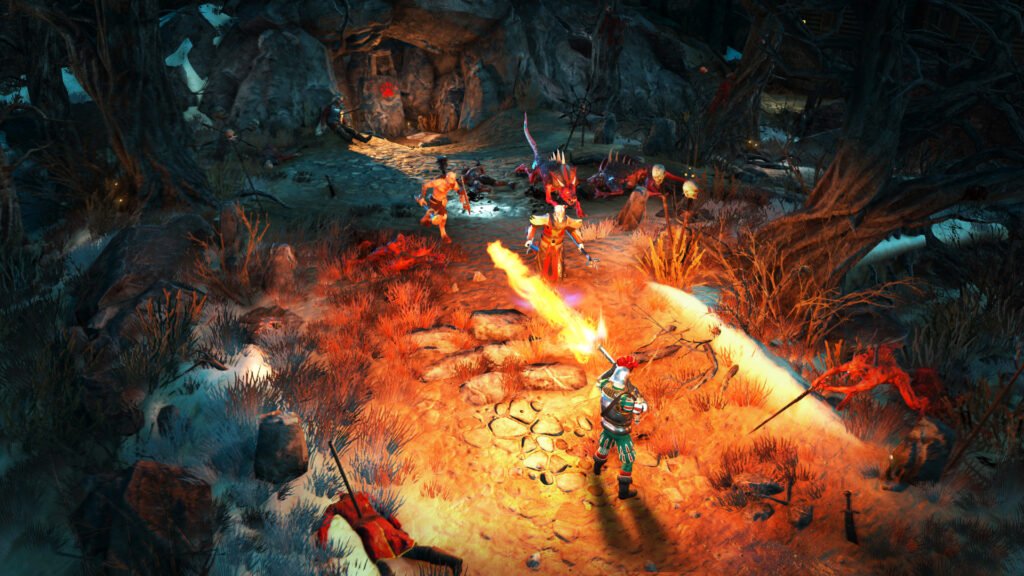
While the standard dungeon hallways can occasionally bleed together visually, the game completely redeems itself when it comes to the jaw-dropping boss encounters. Chaosbane features spectacular, multi-phase showdowns against iconic Greater Daemons representing the major Chaos gods, including the Lord of Change and the Great Unclean One.
These fights are not just standard “bullet sponge” encounters where you stand completely still and click until the health bar drops. They introduce highly creative mechanical puzzles, forcing you to think on your feet, avoid massive environmental hazards, read telegraph patterns, and coordinate your defensive cooldowns to survive. They feel more like miniature MMO raid bosses than typical ARPG encounters, providing some of the absolute highest peaks of excitement in the entire campaign.
The action hits an entirely new level when you jump into the drop-in/drop-out cooperative multiplayer, which supports up to four players both online and locally via couch co-op. Running through these campaigns with a full group of friends while combining crowd-control spells with heavy melee engagement is an absolute joy. The classes complement each other beautifully; having a Captain hold the front line with his shield while a Mage rains down fire from the back turns the combat into a chaotic, highly tactical dance. Even when the screen is completely flooded with neon spell effects, massive damage numbers, and hundreds of enemies, the game’s performance stays incredibly smooth without breaking a sweat.
The Final Verdict
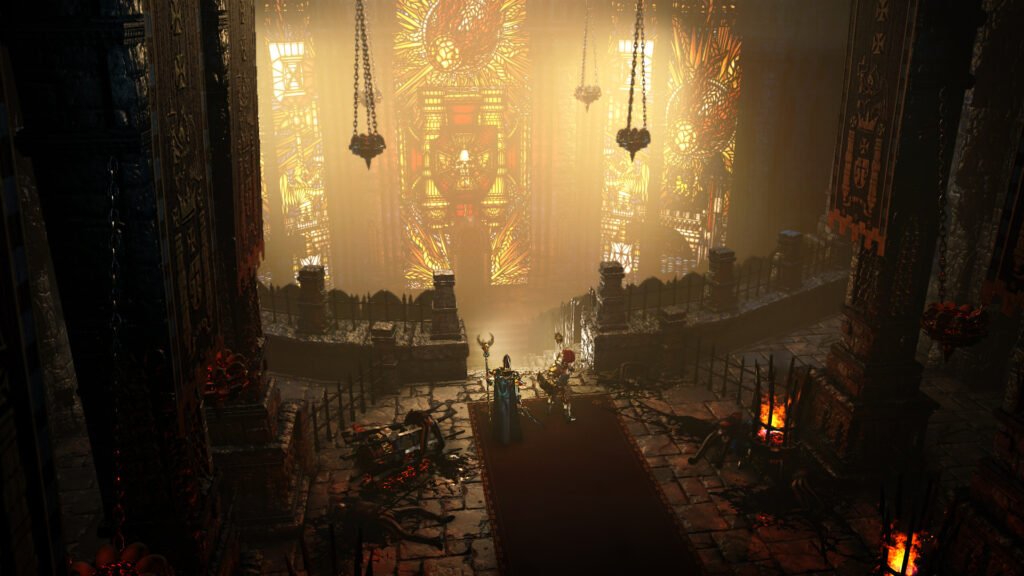
Warhammer: Chaosbane is a classic example of a game that is ultimately greater than the sum of its weaker parts. It might lack the sheer depth, infinite budget, and endless randomized variety of its biggest genre competitors, but it makes up for it with sheer heart, exceptional mechanical feedback, and a deep appreciation for the grimdark setting. It is a bit rough around the edges, absolutely, but it is also an undeniably good time for anyone who loves the simple pleasure of turning monsters into fine crimson dust.