
Release Date: November 13, 1997 Developer: Westwood Studios
Get It On: GOG
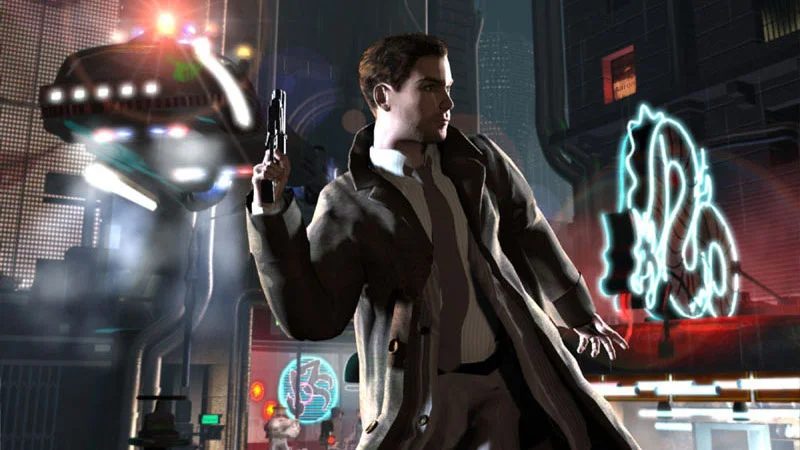
Stepping into the neon-soaked rain of 2019 Los Angeles as Ray McCoy feels less like loading up a video game and more like slipping through a side door into Ridley Scott’s masterpiece. Westwood Studios didn’t just license the Blade Runner name in 1997 and slap it on a cash-grab adventure. They built an entire living, breathing companion piece that runs parallel to the film, brushing up against its events without ever forcing you to replay Deckard’s greatest hits. The result remains one of the purest examples of how a movie license can become something richer than the source material while still smelling exactly like that wet asphalt and cigarette smoke.
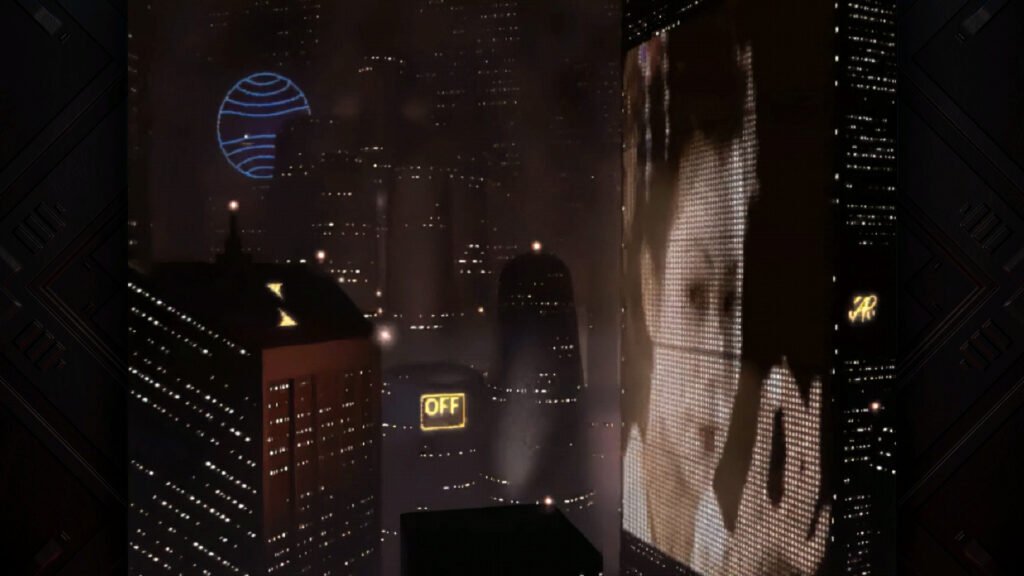
You play as Ray McCoy, a relatively green Blade Runner who starts the game answering a call about slaughtered animals at a pet shop on Animoid Row. In a world where real animals are rarer than honest cops, that crime lands almost as heavy as murder. What begins as a routine investigation quickly spirals into a hunt for a band of rogue replicants who have their own agenda, their own poetry, and their own reasons for staying alive past their four-year shelf life. The story unfolds across the same rainy, overcrowded, endlessly night-time Los Angeles that Scott painted in 1982. You wander through locations that feel ripped straight from the film—the White Dragon Noodle Bar, the labyrinthine corridors of DNA Row, the looming Tyrell Corporation pyramid—yet the narrative stays firmly McCoy’s.
Westwood’s cleverest trick was treating the game as a sidequel. Deckard is out there somewhere doing his thing. You might catch echoes of his investigation, run into characters who appear in the movie, or even cross paths with the same supporting cast. Several actors from the original film returned to voice their roles, including Sean Young, James Hong, Joe Turkel, Brion James, and William Sanderson. Hearing those familiar voices in new contexts still lands with a quiet thrill. The game never pretends you are Deckard. You are the other guy working the same beat on the same miserable night, and that distance gives the whole experience room to breathe.
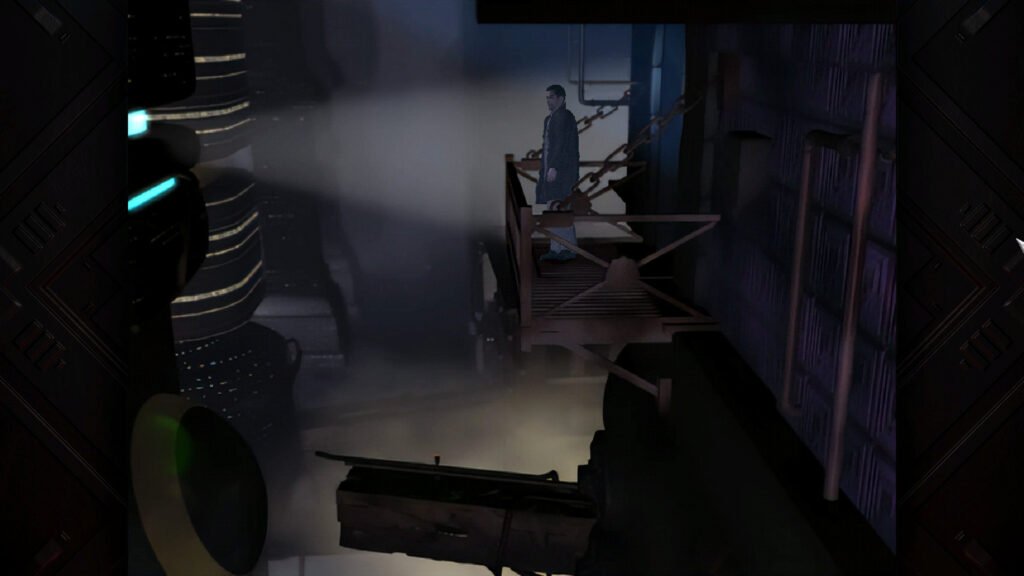
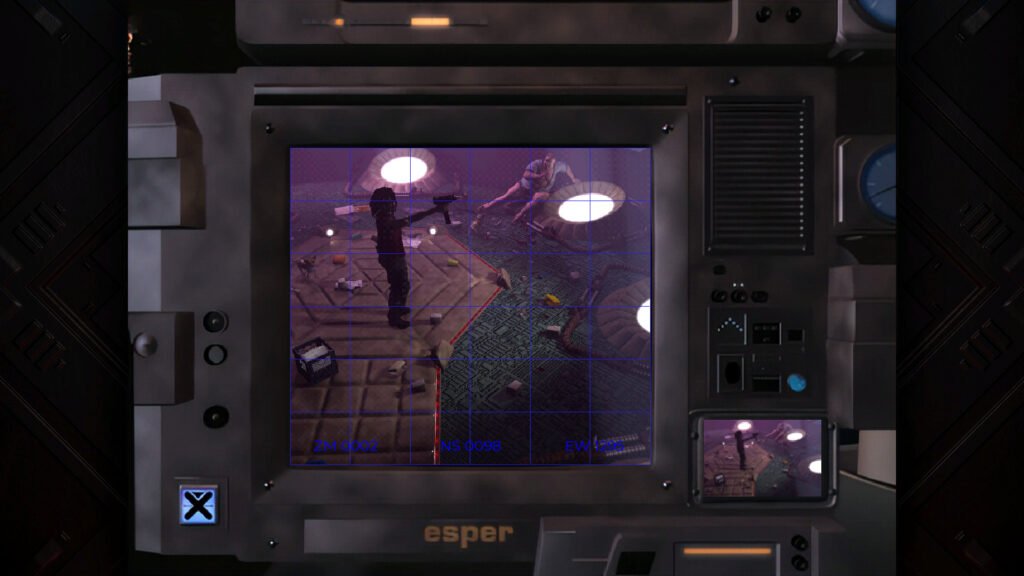
Gameplay sits comfortably in classic point-and-click territory, but Westwood injected a sense of urgency that most adventure games of the era lacked. Characters move around the city with their own schedules and agendas. Clues can go cold if you dilly-dally. Conversations shift depending on what you already know and how you present yourself. The interface revolves around the Knowledge Integration Assistant, or KIA, a digital dossier that stores every scrap of evidence, photo, and interview you collect. You also get access to the ESPER photo analysis machine and the infamous Voight-Kampff test, both lovingly recreated. These tools feel practical rather than gimmicky; they actually help you separate the humans from the skinjobs in a world where the difference is never as clean as the law pretends.
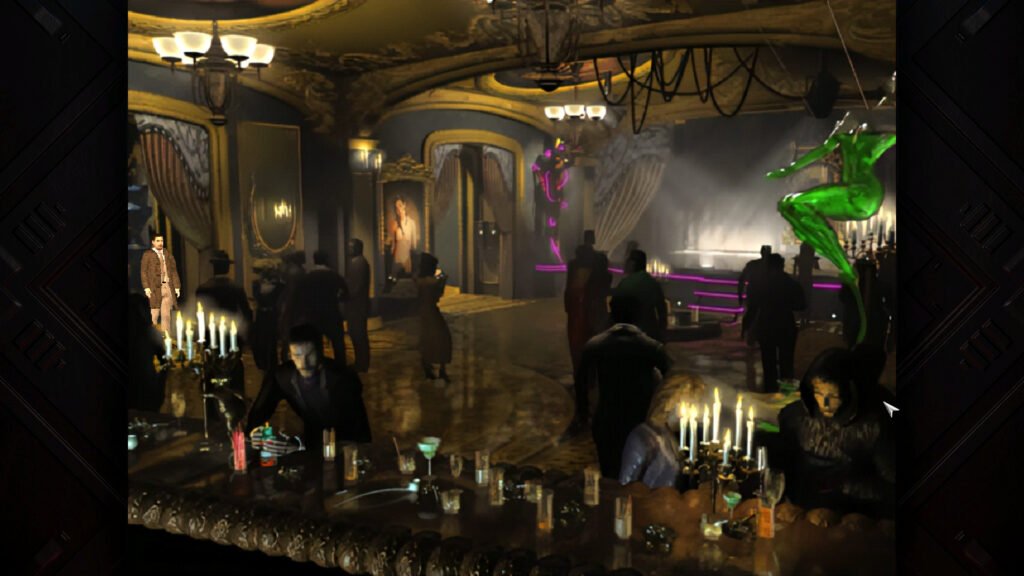
One of the boldest design decisions was the randomization of certain characters’ natures. At the start of each playthrough the game quietly decides which of several key figures are replicants. That single choice cascades through dialogue, alliances, and possible endings. Combined with the branching paths created by your own decisions—whether you lean toward empathy, cold efficiency, or pure survival—the game offers more than a dozen distinct conclusions. Some feel tragic, some defiant, some quietly hopeful. Replay value is unusually high for an adventure title from 1997, and the sense that the city is reacting to you rather than following a rigid script keeps the mystery alive across multiple runs.
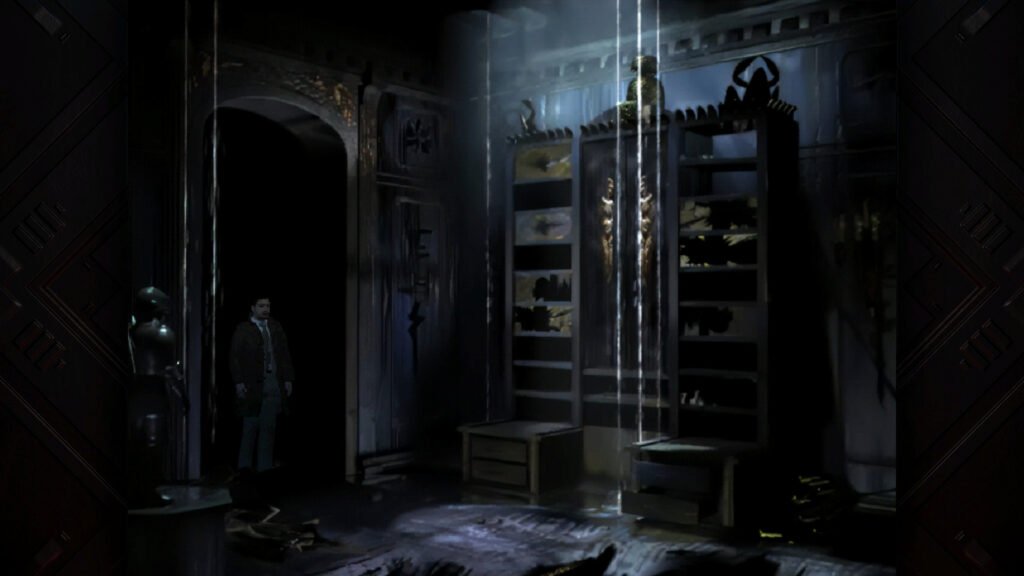
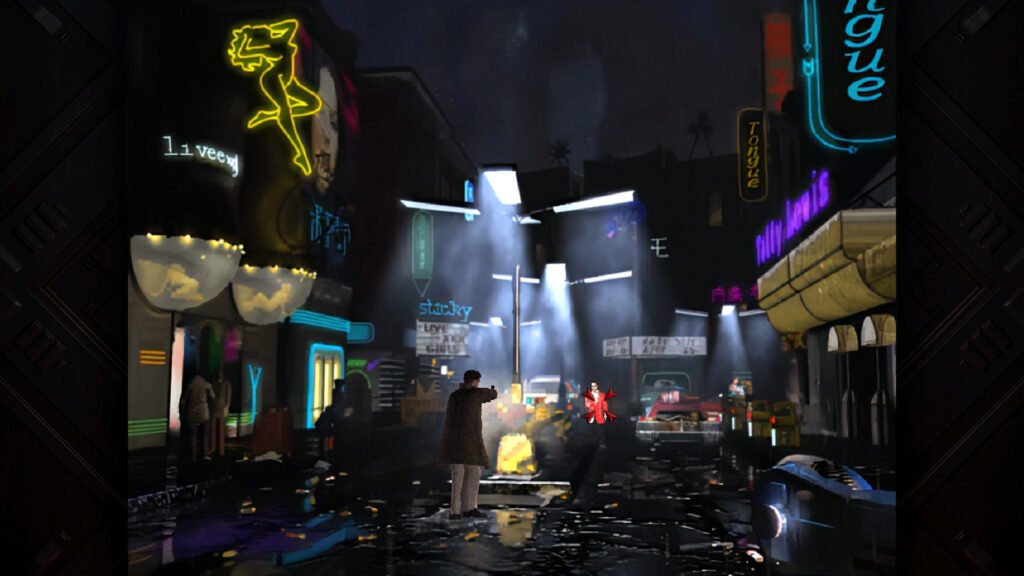
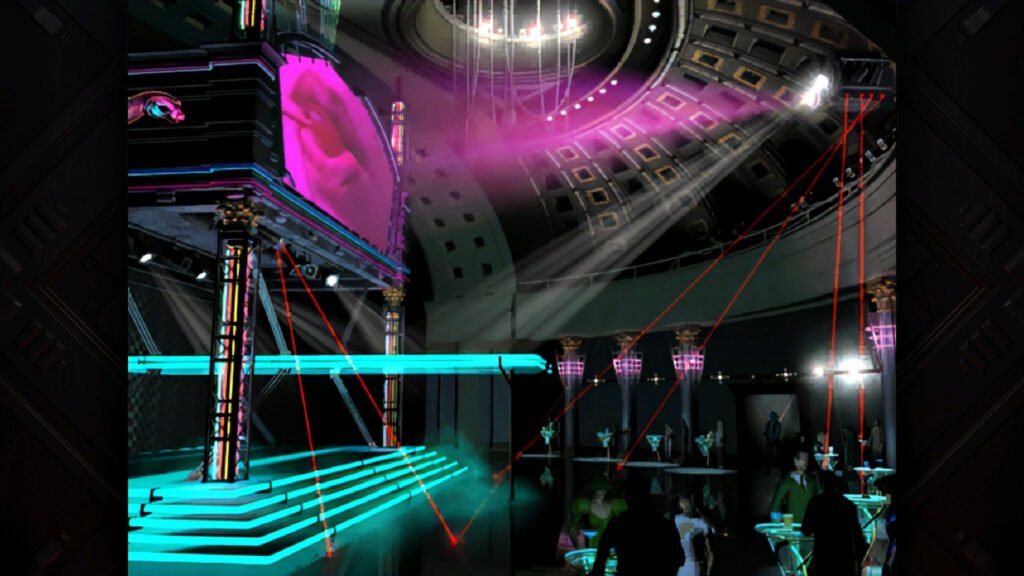
Visually the game still looks like nothing else. Westwood rejected the emerging 3D-accelerated polygon approach in favor of their own software renderer built around voxels. Characters are three-dimensional volumes of pixels that catch light and cast shadows in ways sprites never could. The backgrounds are meticulously pre-rendered, dripping with the film’s signature atmosphere of constant rain, neon reflections, and industrial haze. Real-time lighting effects—volumetric fog, flickering signs, the glow of flying cars overhead—were ambitious as hell for the mid-nineties and still hold up better than many games that chased higher polygon counts. The whole package feels cinematic without ever becoming a passive cutscene delivery system.
Sound design seals the deal. Frank Klepacki, the same composer who gave Command & Conquer its iconic energy, recreated the spirit of Vangelis’s legendary score by ear because the original masters were unavailable. The result is a soundtrack that sits perfectly alongside the film’s music while still feeling native to the game. Ambient rain, distant traffic, the low hum of the city, and sudden bursts of tension all work together to make Los Angeles feel oppressively alive.
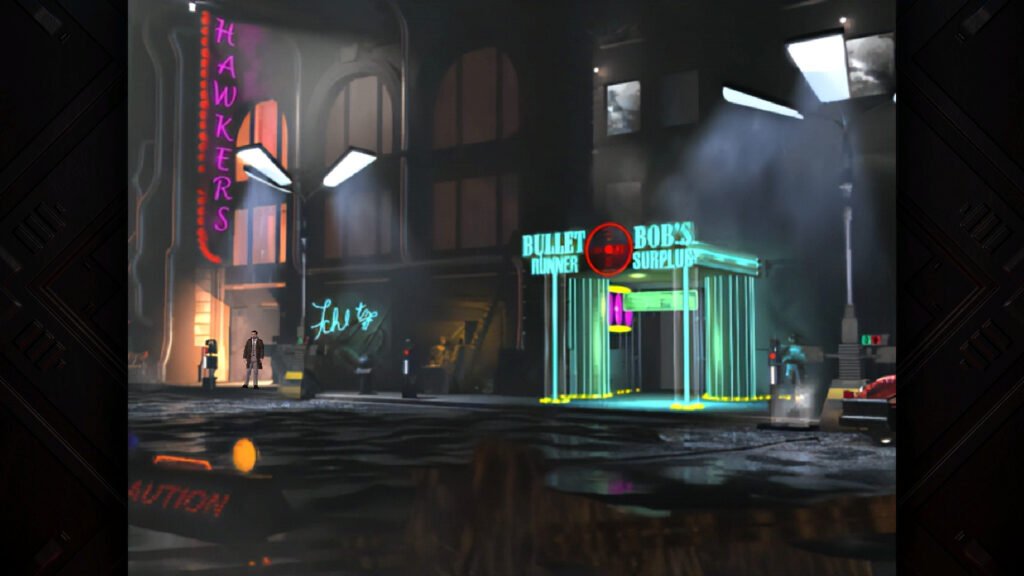
Commercially the game was a quiet giant. It sold over a million copies worldwide, outperforming several more hyped adventure titles of the same year, and walked away with the Interactive Achievement Award for PC Adventure Game of the Year. Critics praised its fidelity to the source material, its technical ambition, and the way it expanded the Blade Runner universe without cheapening it. For a brief moment it looked like Westwood might deliver a sequel. Licensing costs and the sheer expense of matching the original production values killed that dream. The studio was soon absorbed into Electronic Arts, and the source code for the game itself was lost during a move. For years the title became increasingly difficult to play on modern machines, a cult classic trapped in the amber of late-nineties PC hardware.
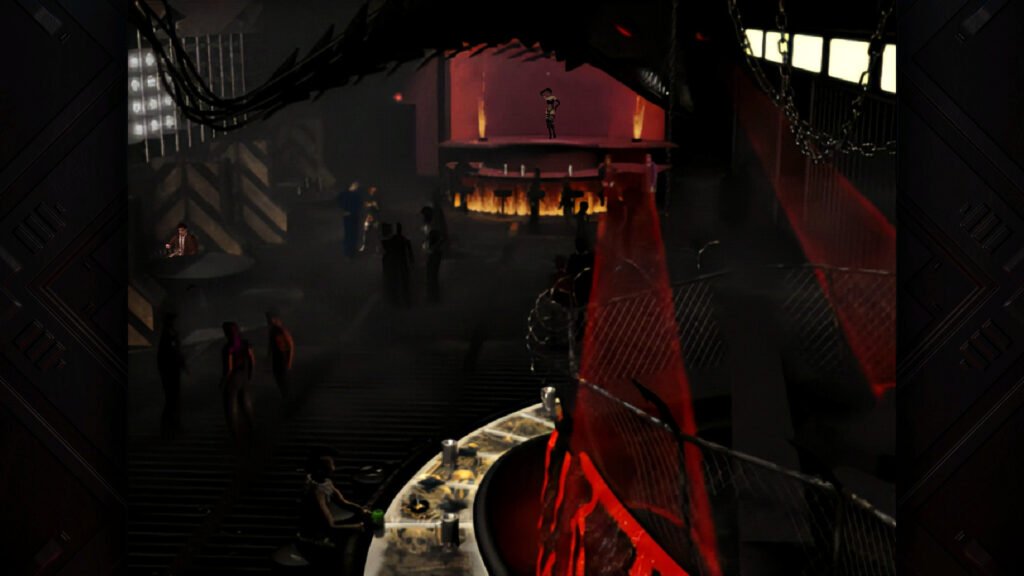
That isolation only burnished its reputation among people who managed to keep their old CDs working or who later benefited from the ScummVM team’s painstaking reverse-engineering efforts. The game’s themes—memory, identity, the thin line between human and manufactured life—land with even more force today. Playing as McCoy forces you to confront the same questions the film leaves hanging. Are you hunting monsters or people who simply want more time? Does the law’s definition of “retirement” feel any cleaner when you are the one pulling the trigger? The game never lectures. It simply lets the rain keep falling while you decide.
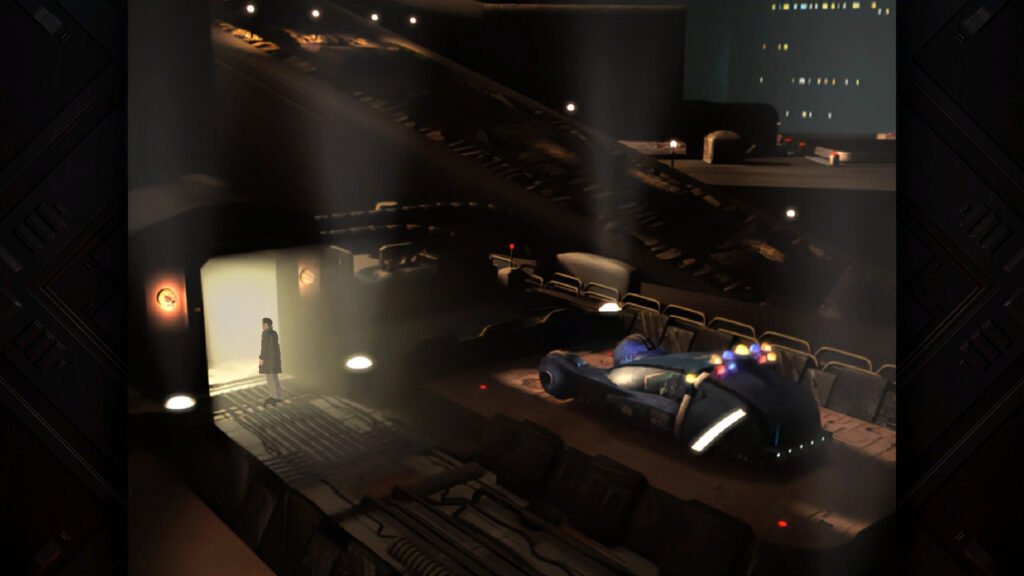
What makes the experience endure is how completely it trusts the player. There is no constant hand-holding, no glowing quest markers, no modern accessibility layer that softens the noir edges. You have to pay attention. You have to care about the small details—an offhand comment from a street vendor, a photo that looks slightly wrong under ESPER magnification, the way a suspect’s eyes flicker when the Voight-Kampff questions dig too deep. The city rewards curiosity and punishes carelessness in equal measure. That respect for the audience’s intelligence is rare even now.
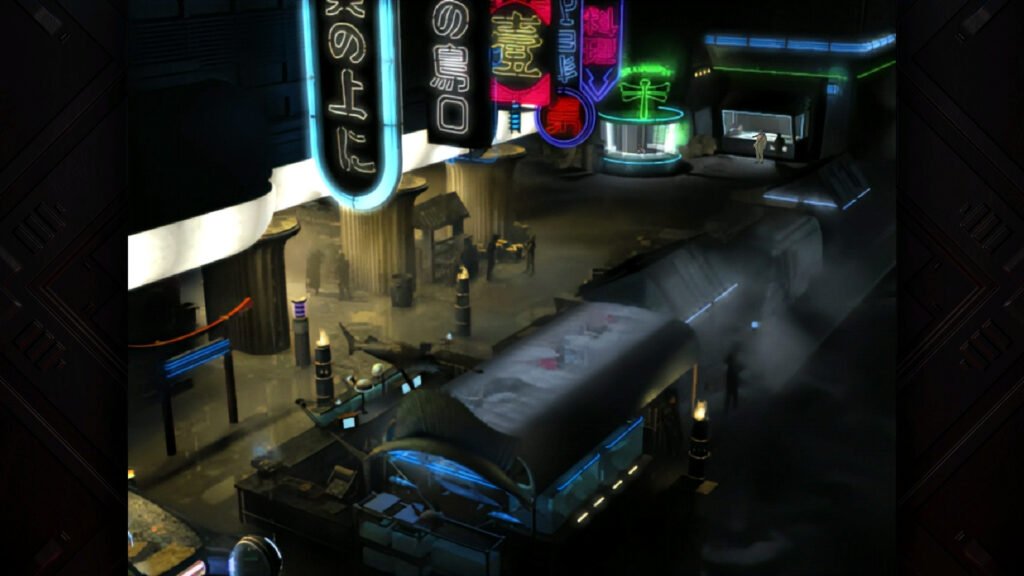
Westwood’s Blade Runner stands as proof that licensed games do not have to be cynical. When a development team actually loves the material, understands its themes, and is willing to invent new technology to serve the atmosphere, the result can feel like a genuine expansion of the world rather than a merchandising exercise. The game captures the melancholy grandeur of the film while carving out its own emotional space. McCoy is not Deckard. He is the guy still learning how heavy the job really is, still capable of surprise, still wondering whether the rain will ever stop. Twenty-nine years later that uncertainty still feels electric.
Blade Runner: Enhanced Edition, released by Nightdive Studios in June 2022, finally brought the classic to modern platforms including PC, PlayStation 4, Xbox One, and Nintendo Switch. The remaster features upscaled and reconstructed original video sequences running at higher frame rates, widescreen support, improved interface options, controller compatibility, and various quality-of-life tweaks while attempting to preserve the original’s distinctive look and feel. Although the launch drew criticism for certain visual artifacts, bugs, and an aggressive release schedule timed to the film’s fortieth anniversary, subsequent patches addressed many issues, and the package includes access to the classic version as well. For a new generation of players it remains the most convenient way to experience Westwood’s rain-soaked masterpiece.