
Release Date: October 19, 2010 Developer: Obsidian Entertainment
Get It On: GOG
Whether you’re a veteran of the desert who knows every cactus along Interstate 15 or a newcomer who just watched the television show and wondered why everyone keeps shouting about a delivery person, Fallout: New Vegas is widely considered the gold standard of post-apocalyptic role-playing. Released in 2010 by Obsidian Entertainment, it was a spiritual homecoming to the original isometric games, bringing back the grit, the pitch-black humor, and the complex political maneuvering that defined the series. This isn’t just a game about shooting mutants in a ruined city; it’s a brilliant exploration of ideology, consequence, and the messy reality of trying to rebuild a civilization when the world has already burned itself down once. The glittering lights of the strip loom large over a vast, dangerous desert, acting as a beacon of hope and a trap for the unwary.
The Courier and the Platinum Chip
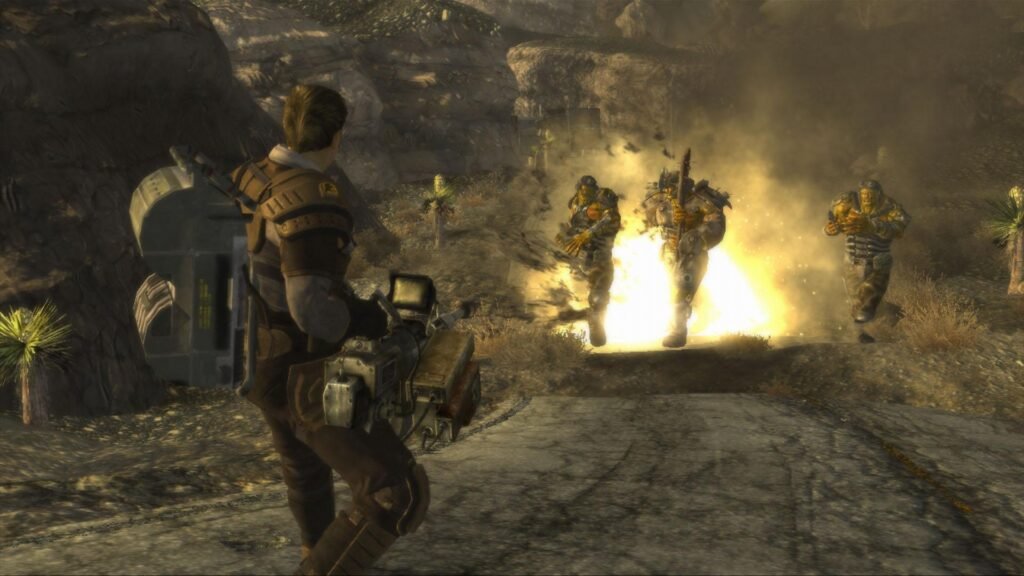
The setup is legendary in its simplicity. You aren’t a Vault Dweller looking for a missing family member or a chosen one destined by prophecy to save the world. You are the Courier, a simple delivery person carrying a package through the harsh wastes to the New Vegas Strip. Things go sideways in the opening cinematic when a high-rolling mobster named Benny shoots you in the head and leaves you in a shallow grave outside the sleepy town of Goodsprings. Most games would end there, but in the Mojave, death is just a temporary setback. After being dug out by a friendly robot named Victor and patched up by a local doctor named Doc Mitchell, you set out into the desert. While the initial hook is revenge, you quickly realize that the package you were carrying, a mysterious Platinum Chip, is the key to controlling the entire region. The brilliance of this opening is how it scales; what starts as a personal grudge eventually forces you to decide the fate of millions of people.
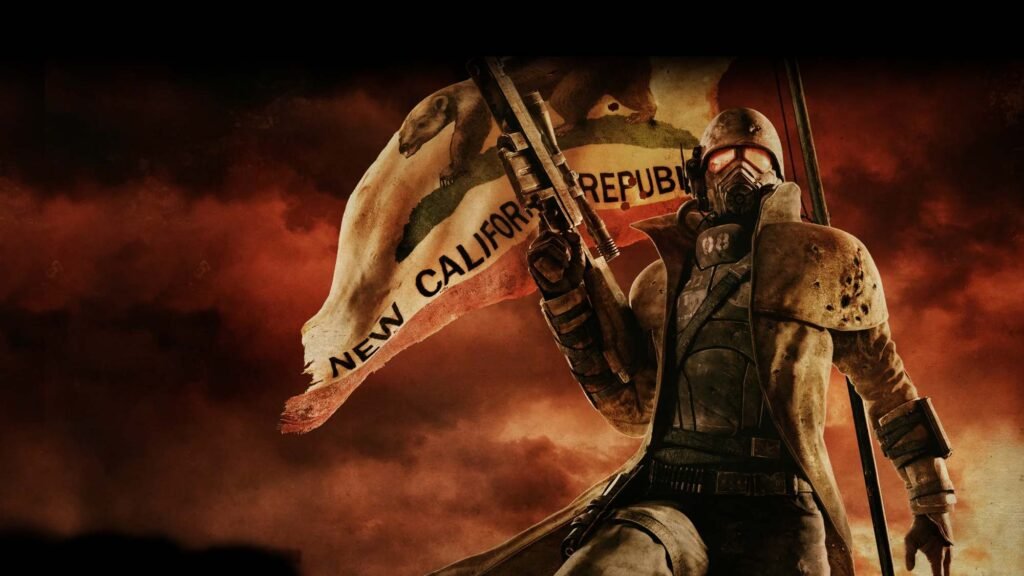
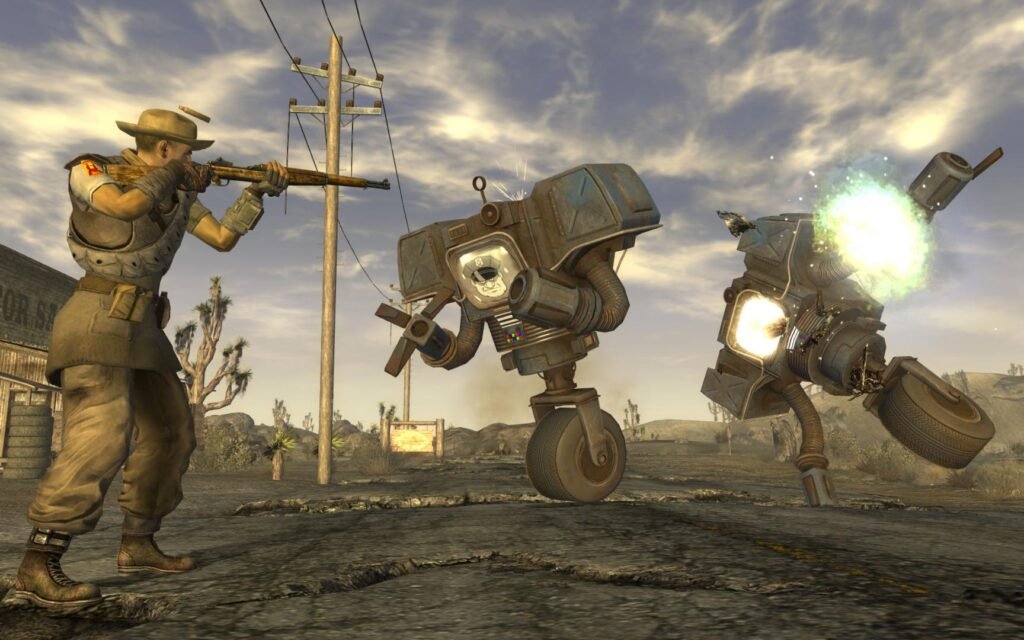
What makes New Vegas feel alive is its faction system. You aren’t just picking between “good” and “evil” like in many other RPGs. Instead, you’re navigating the interests of three massive powers. There is the New California Republic (NCR), a democratic government trying to restore old-world values but failing under its own bureaucracy and corruption. Then there is Caesar’s Legion, a brutal, slave-owning army modeled after ancient Rome that offers total security at the cost of total freedom. Finally, there is Mr. House, the enigmatic, immortal CEO of New Vegas who wants to lead humanity into a high-tech future through cold, calculated autocracy. Interacting with these groups—and the smaller tribes like the Boomers or the Great Khans—creates a web of reputation where every quest you finish makes you a hero to some and a villain to others. The game refuses to hold your hand or tell you who the “right” choice is, leaving the moral burden entirely on your shoulders.
The Art of the RPG
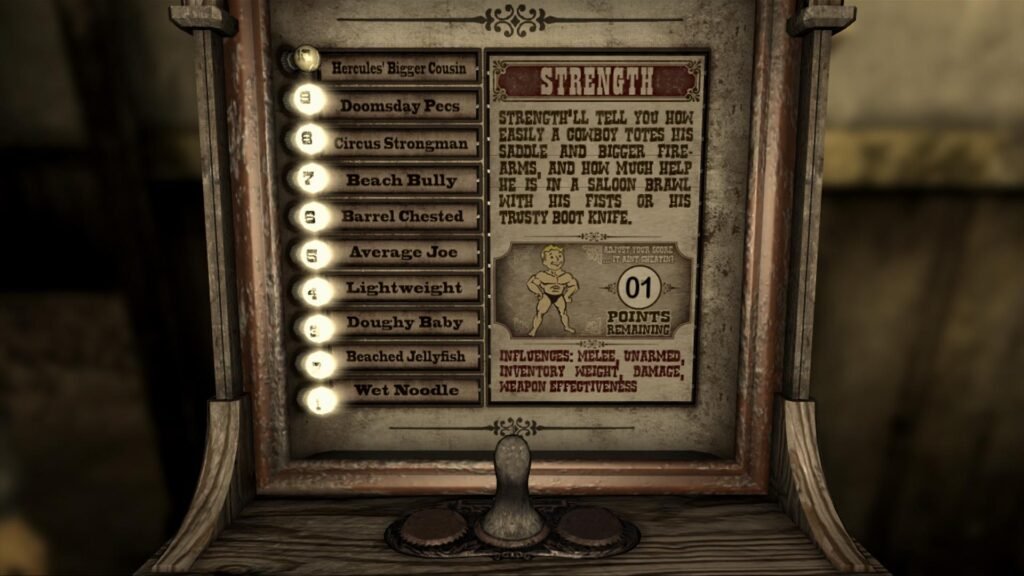
Obsidian leaned heavily into the “role-playing” part of the genre. Unlike many modern games where your character’s stats only affect how hard you hit things, New Vegas uses your skills to unlock entirely different ways to play. High Speech can let you talk a final boss into committing suicide or convince a gang to walk away from a fight. High Science or Repair might allow you to fix a robot to fight for you or hack into a terminal to skip a dangerous combat encounter entirely. This player agency is the secret sauce. Every encounter feels like a puzzle with multiple solutions, ensuring that no two playthroughs are ever the same. Whether you’re a pacifist diplomat or a low-intelligence brawler, the game acknowledges your choices and reacts accordingly. Your character’s personality is shaped by the attributes you pick, making the journey feel deeply personal.
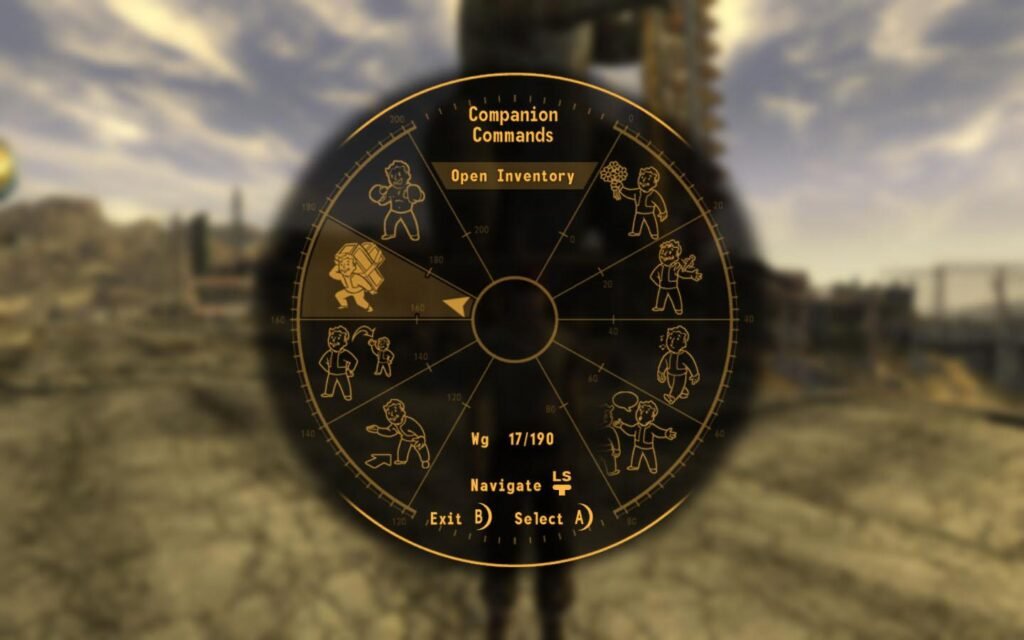
You don’t have to walk the dangerous roads of the Mojave alone. The game features a roster of eight distinct companions, each with their own complex backstories, personal quests, and deep ties to the overarching political conflict. From Craig Boone, a broken NCR sniper haunted by his past actions, to Veronica Santangelo, a cynical scribe disillusioned with her isolationist tech-worshipping faction, these characters feel like real people rather than simple pack mules. Traveling with them unlocks unique perks and triggers dialogue that adds immense flavor to the world. Their reactions to your choices force you to view the wasteland through their eyes, creating moments of genuine emotional resonance.
The Micro-Societies of the Mojave
Beyond the major factions vying for control, the Mojave is populated by a fascinating array of smaller micro-societies. In the town of Novac, residents live inside a motel guarded by a giant dinosaur statue. On the outskirts of the Strip, the Kings model themselves after a pre-war cultural icon they mistakenly view as a religious figure. Inside the casinos of Vegas itself, tribes like the White Glove Society struggle to suppress their dark, cannibalistic histories beneath a veneer of high-society elegance. These groups ground the world, showing how ordinary people adapt, survive, and invent new cultures in the ruins of the old world.
Your journey begins in the humble settlement of Goodsprings, a town that serves as a masterclass in tutorial design. Instead of trapping you in a linear sequence, the game immediately introduces you to the concept of choice. You are quickly caught in a dispute between the townspeople and a gang of ruthless criminals known as the Powder Gang. Do you side with the settlers who saved your life, or do you betray them to gain favor with a powerful gang of raiders? This early conflict sets the tone for the entire game, teaching you that resources are scarce, alliances are fragile, and your actions have immediate, visible consequences for the communities you visit.
The Iron Grip of the New Vegas Strip
When you finally arrive at the New Vegas Strip, the atmosphere shifts dramatically. The neon lights and roaring casinos stand in stark contrast to the desolate, radiation-scarred wasteland surrounding them. Controlled by the ruthless security robots of Mr. House, the Strip is a playground for the wealthy and a dream for the desperate. Entering this zone requires a massive amount of money or a specialized passport, emphasizing the extreme inequality of the post-war world. Here, the game transitions from a simple western revenge story into a high-stakes political thriller where you are granted an audience with the major power players of the waste.
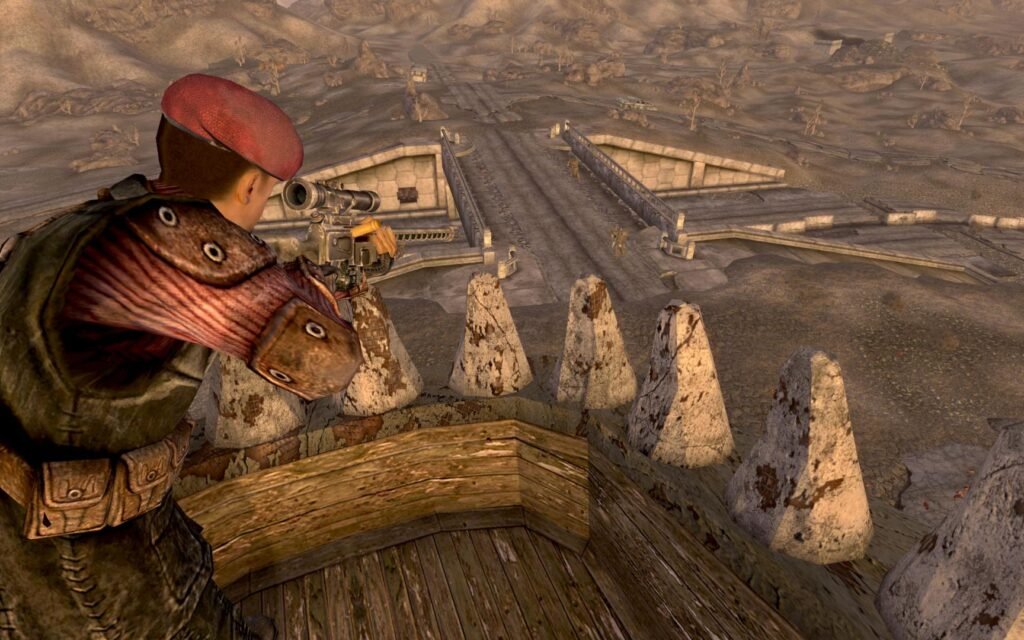
Everything in the game builds toward the inevitable clash at Hoover Dam. This massive architectural marvel is the lifeblood of the southwest, controlling the flow of water and electricity to the entire region. The faction that holds the dam holds the key to the future of the Mojave. As the game nears its climax, your choices culminate in a massive battle across the concrete walls of the dam. Whether you choose to back the NCR, fight for the Legion, assist Mr. House, or use a friendly robot named Yes Man to claim the independent territory for yourself, the final battle feels like the natural destination of the long road you have walked.
Gambling Life and Limb at the Sierra Madre
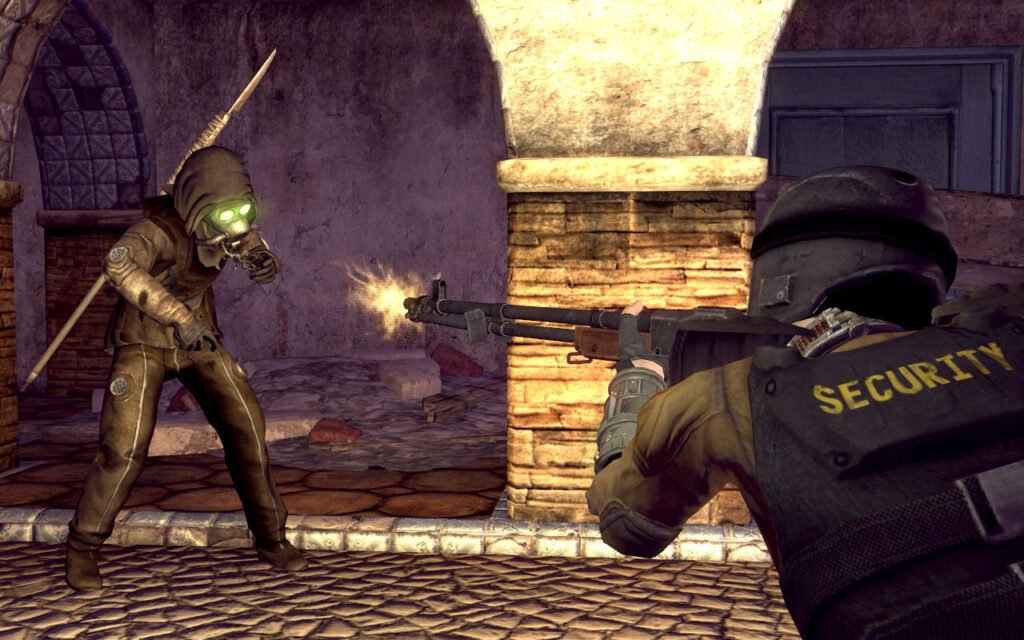
The first expansion released for the game, Dead Money, is a jarring, brilliant shift into survival horror. Stripped of all your endgame gear and forced into a toxic, trap-laden villa surrounding the legendary Sierra Madre Casino, you have to work with three other deeply broken captives to pull off a heist. A bomb collar locked around your neck ensures compliance, and the unkillable “Ghost People” hunting you make every corner terrifying. It is an expansion built entirely around the concept of greed, famously challenging players at the final curtain to see if they can truly let go of the casino’s wealth or if they will die trying to carry it all out.
Tribal Warfare and Redemption in Zion
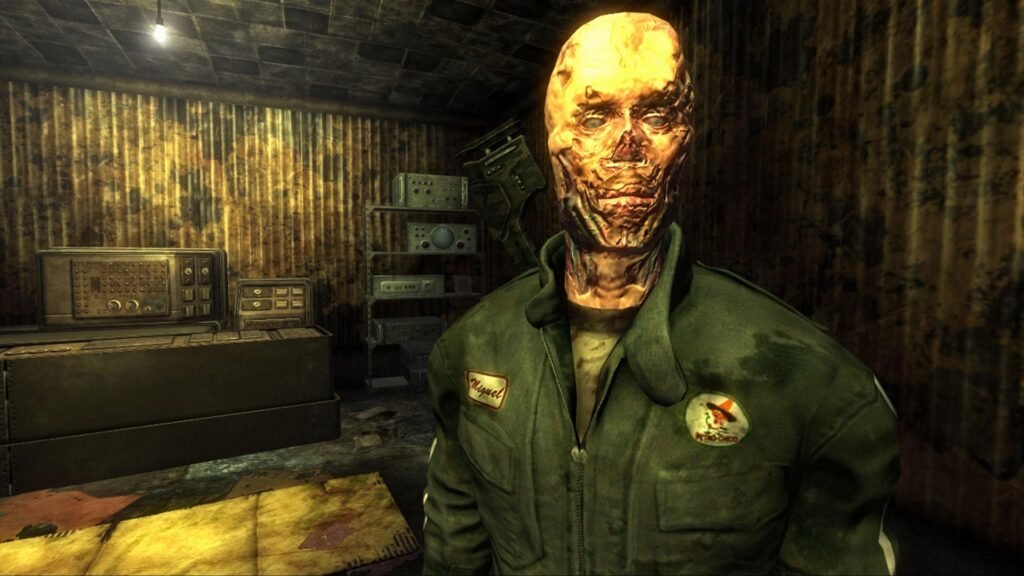
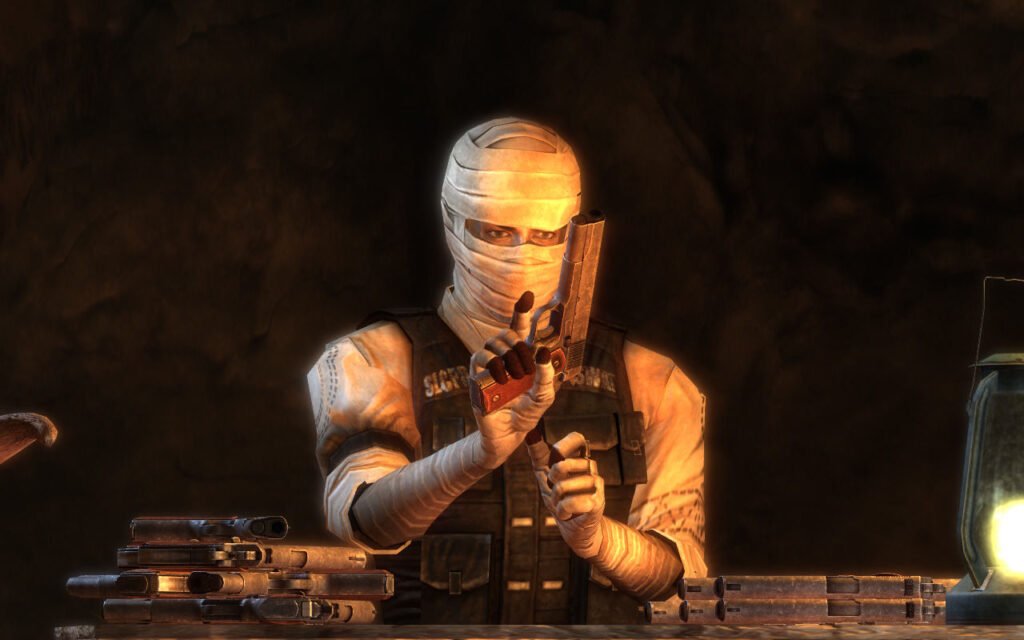
Moving away from the suffocating dread of the villa, Honest Hearts takes you on an expedition into the beautiful, vertical red rock cliffs of Utah’s Zion National Park. The central figure of this story is Joshua Graham, the mythic “Burned Man” who was once Caesar’s top general before being set on fire and thrown into the Grand Canyon for failing at Hoover Dam. Now leading a tribal community, Graham struggles between his desire for bloody vengeance and his search for spiritual redemption. It offers a more open, exploration-focused pace than the other expansions, combined with some of the best environmental storytelling in the entire Fallout franchise.
B-Movie Madness in the Crater of Science
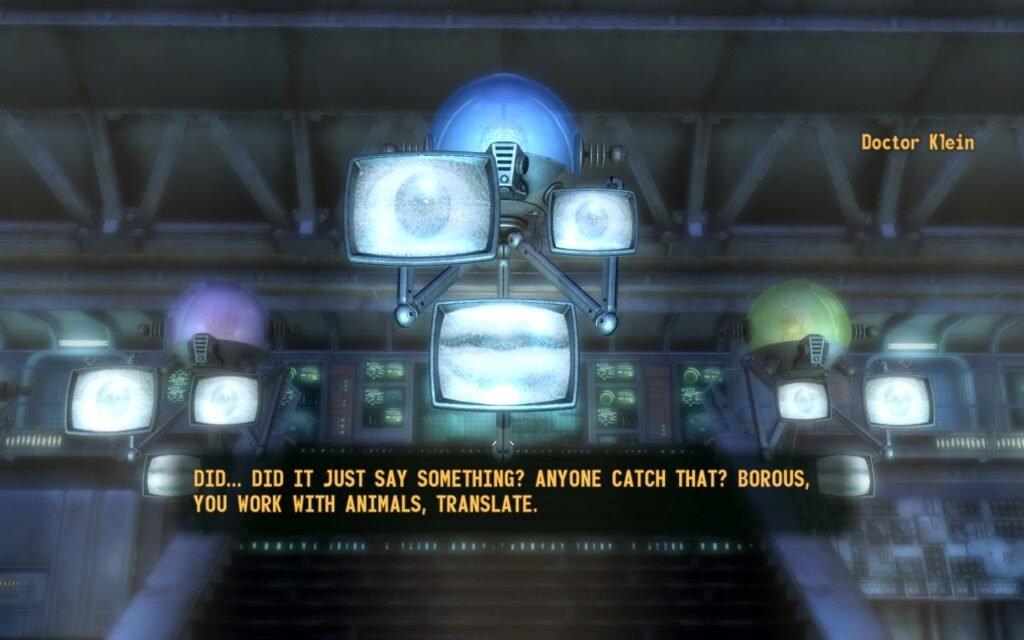
If you prefer the wildly eccentric, vintage sci-fi side of the universe, Old World Blues is widely considered an absolute masterpiece of writing. You find yourself transported to the Big MT research crater, an isolated facility where a group of pre-war scientists—now living as disembodied brains inside floating robotic vessels called the Think Tank—accidentally lobotomize you. What follows is a hilariously dark, fast-paced adventure filled with retro-futuristic gadgets, mutated experiments, and exceptional dialogue. Beneath the non-stop comedy and talking appliances lies a deeper, tragic look into what happens when brilliant minds lose their connection to human empathy.
The Final Reckoning Along the Divide
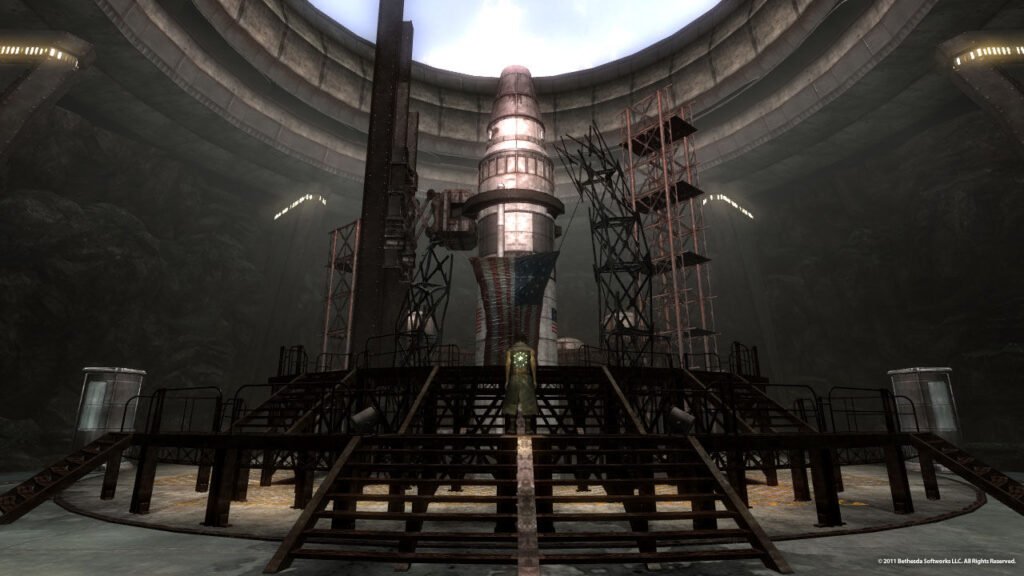
The overarching narrative of the mailman comes to an absolute, dramatic conclusion in Lonesome Road. Throughout the base game, you catch whispers of Ulysses, another courier who saw your name on a delivery manifest and walked away, setting the entire story in motion. He finally calls you out to The Divide, a brutal canyon landscape completely torn apart by nuclear storms, tremors, and high-tier horrors. This is a tough, linear, highly cinematic gauntlet where Ulysses forces you to confront the unintended fallout of your past deliveries, culminating in a heavy choice that lets you determine whether or not to launch functional nuclear warheads at the major civilizations of the world.
A Legacy That Never Fades
Even years later, Fallout: New Vegas remains the gold standard for many because of its unparalleled world-building and writing. It treats the player like an adult, presenting difficult moral dilemmas without easy answers. It acknowledges that in a wasteland, there are no “good guys,” only people with different ideas of how to survive. While it was notorious for bugs at launch, the community has spent over a decade patching and modding it into a masterpiece. It’s a game about how “war never changes,” but also about how a single person—even a mailman with a hole in their head—can change the course of history.