


Release Date: May 1996 Developer: Rogue Entertainment
Get It On: GOG
The Game That Missed the Party
Imagine it is 1996. The gaming world is vibrating with the hype of Quake and its true 3D polygons. Everyone is obsessed with the next big leap in graphical fidelity, and then quietly, out of the shadows, comes Strife: Quest for the Sigil. It was built on the id Tech 1 engine—the same engine that powered Doom—which at the time made it look like a bit of a relic before it even hit the shelves. People saw the sprites and the pseudo-3D environments and assumed they were getting another “Doom clone” to throw on the pile. But man, were they wrong. Strife wasn’t just another shooter; it was a glimpse into a future that wouldn’t fully arrive until Deus Ex changed the world four years later. It was an immersive sim trapped in the body of a 1993 engine, and it remains one of the most underrated gems in the history of the genre.
A World of Virus and Violence
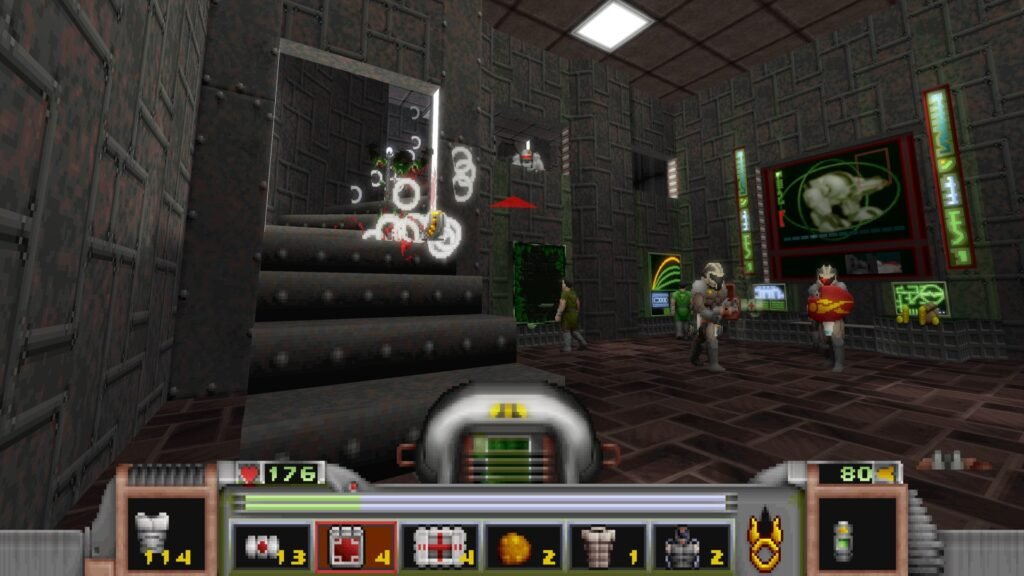
The story kicks off in a world that feels like a grim cocktail of medieval dread and high-tech nightmare. A mysterious comet struck the planet, bringing with it a plague that wiped out millions and left the survivors mutated or under the thumb of a cult-like dictatorship known as The Order. You play as a nameless mercenary—a wanderer who gets caught up with The Front, a resistance movement trying to topple the religious zealots and their robot armies. What makes Strife feel so different from its peers is that you aren’t just dropped into a level to kill everything that moves. You start in a town. You can talk to NPCs. You can visit a tavern. If you pull your gun out in the middle of the street, the Acolytes will open fire, but if you keep it holstered, you can actually walk around and soak in the atmosphere. This kind of non-linear world building was practically unheard of for a game using the Doom engine.
Talking Your Way Through the Apocalypse
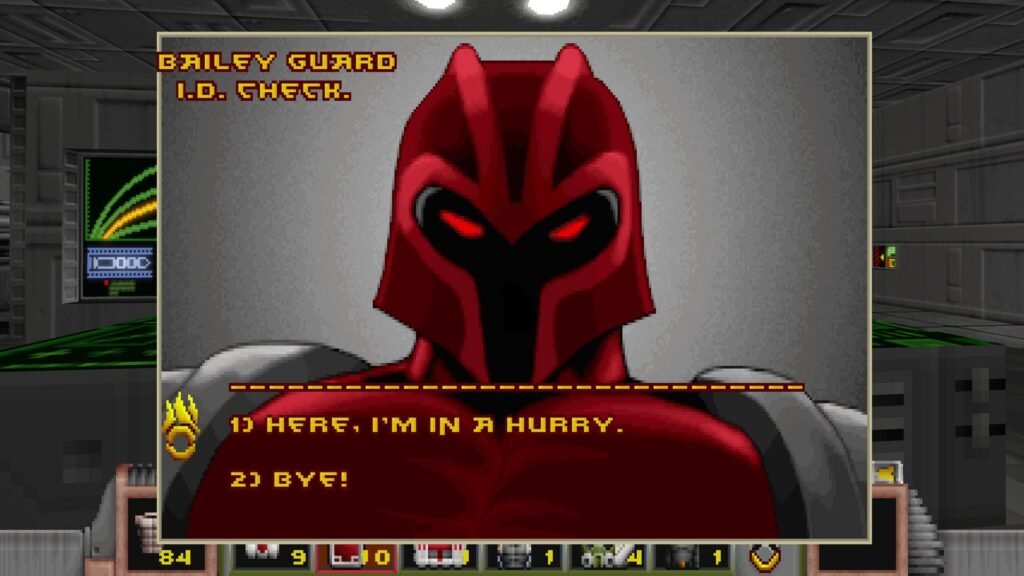
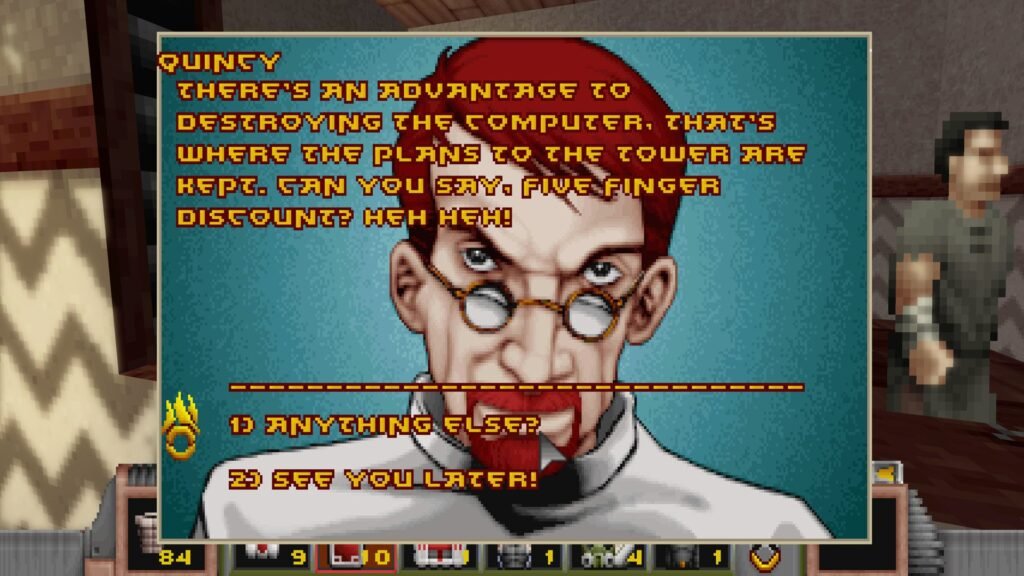
Let’s talk about the voice acting, because for 1996, it was surprisingly high quality. While other games were still using text boxes or grainy, poorly acted FMV sequences, Strife featured a fully voiced cast that gave the world a sense of weight. Your primary contact, Blackbird, chirps in your ear throughout the missions, providing a mix of objective updates and sarcastic commentary that makes the lonely corridors feel a lot less empty. The game also introduced branching dialogue trees and multiple endings. Your choices actually mattered. Do you trust the guy offering you a suspicious deal, or do you stick to the plan? These decisions dictated which bosses you fought and how the final act of the game played out, pushing the RPG elements far beyond the “find the red keycard” loop we were all used to.
The Power of the Sigil
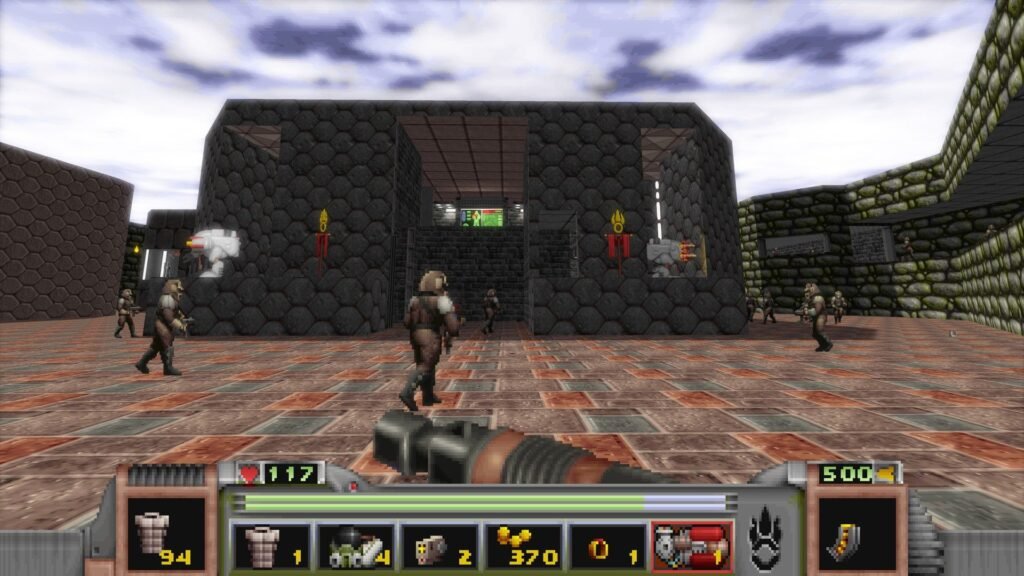
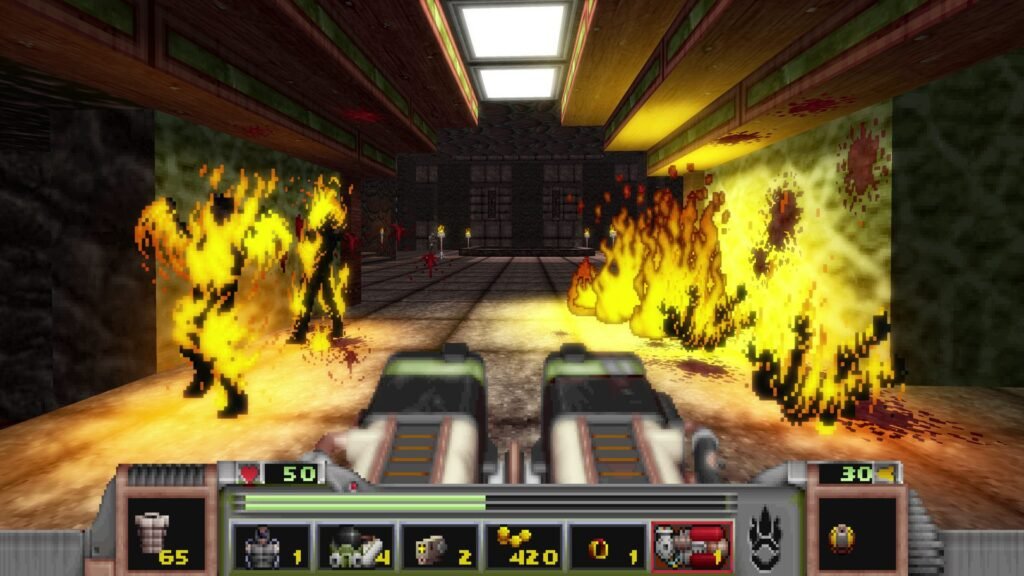
Of course, it’s still a shooter at heart, and the combat in Strife is punchy and satisfying. You start with a simple dagger and a crossbow that fires electric or poison bolts—perfect for the game’s surprisingly functional stealth mechanics. Eventually, you graduate to assault rifles, flamethrowers, and the legendary Sigil. The Sigil is a multi-part artifact that serves as the ultimate weapon, but it’s a double-edged sword; using it drains your own permanent health. It creates a fascinating risk-reward dynamic that makes you feel like you’re wielding a god-like power that is slowly eating you alive. The weapon progression feels earned because many of these items are tied to the story rather than just being picked up in a secret closet. You aren’t just collecting guns; you are building an arsenal to kill a false god.
A Tech Marvel in Disguise
Rogue Entertainment did things with the Doom engine that arguably shouldn’t have been possible. They implemented a hub-based level design that allowed players to travel back and forth between areas, with the world state changing based on their actions. They added an inventory system where you could manage gold, health kits, and quest items. They even managed to create a sense of verticality and complex architecture that pushed the limits of what 2.5D sprites could achieve. While the rest of the industry was moving toward polygons, Strife was perfecting the art of the sprite-based shooter, proving that depth of gameplay and world-building could be just as immersive as a high polygon count. It was a dense, moody, and mechanically rich experience that dared to ask for more from the player than just a fast trigger finger.
Why You Should Play It Today
If you missed out on Strife back in the day, you really owe it to yourself to check out the Veteran Edition by Nightdive Studios, available now. It’s the definitive way to play, offering widescreen support, improved lighting, and a few “lost” pieces of content that were cut from the original release. It’s a fascinating historical bridge between the mindless carnage of early 90s shooters and the deep, narrative-driven experiences of the 2000s. It’s atmospheric, it’s challenging, and it has a personality that is entirely its own. In an era where we are seeing a massive resurgence of boomer shooters, Strife stands out because it doesn’t just want to be a retro throwback—it feels like a modern game that just happened to be released thirty years too early.