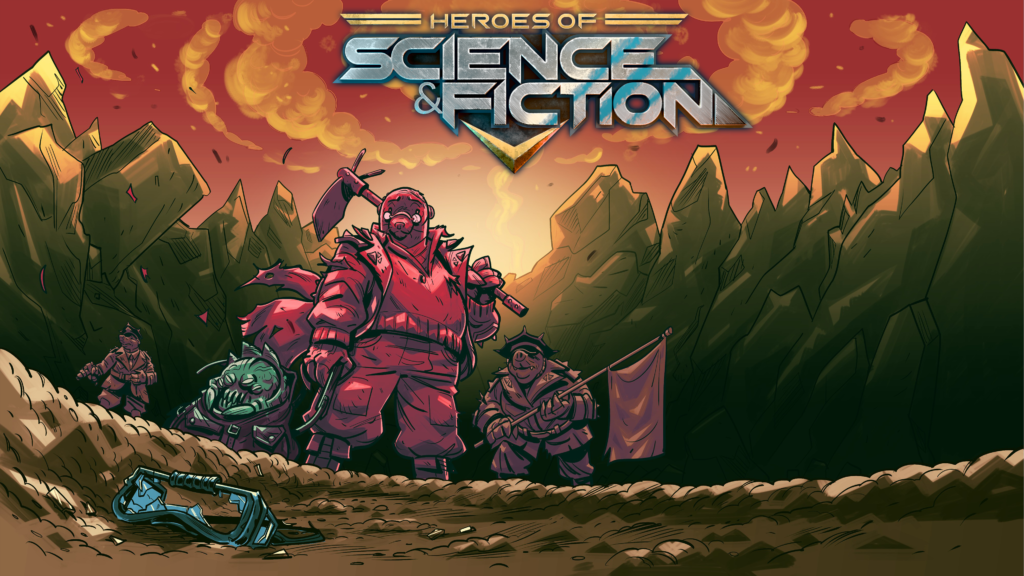

If you’ve ever sat in front of your computer at three in the morning, bleary-eyed and clutching a lukewarm energy drink while whispering “just one more turn” to the void, you probably know the legendary formula of the Heroes of Might and Magic series. For decades, we’ve been capturing castles and recruiting dragons, but there’s always been a nagging question in the back of our minds: why can’t we do this with laser beams and starships? Well, the wait is finally over because Oxymoron Games, the brilliant minds that gave us the hyper-detailed Project Hospital, have stepped into the arena with Heroes of Science and Fiction. It is exactly what it sounds like, and honestly, it’s a bit of a miracle that it took this long for someone to get the Sci-Fi Strategy vibe this right.
The Spiritual Successor We Actually Wanted
For years, fans of the Turn-Based Strategy genre have been looking for a game that captures the soul of the classics without just being a carbon copy of the past. Heroes of Science and Fiction manages to pull off a difficult balancing act by paying homage to the greats while forging its own identity in a galaxy far, far away. You aren’t just moving a knight across a grassy field anymore; you’re navigating a Commander through asteroid belts, alien ruins, and neon-drenched planetary surfaces. The transition from fantasy to science fiction feels incredibly natural here, mostly because Oxymoron Games understands that the “Heroes” formula is less about the aesthetic and more about the loop of Exploration, Expansion, and Exploitation.
What makes this title stand out immediately is its pedigree. When you look at the developer’s history, you know you’re getting a game built on deep systems and a clean User Interface. In a genre that can often feel cluttered and overwhelming, the UI in Heroes of Science and Fiction is a breath of fresh air. It’s sleek, responsive, and manages to give you all the data you need without making you feel like you’re trying to pilot an actual space shuttle. This accessibility is key because, underneath that polished exterior, there is a staggering amount of Strategic Depth waiting to ruin your sleep schedule.
Mapping Out the Final Frontier
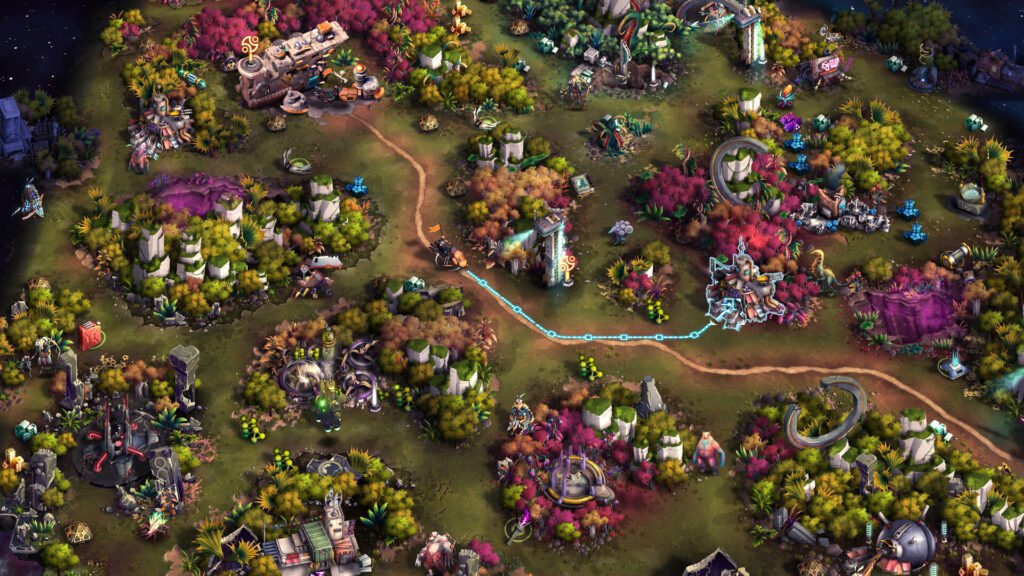
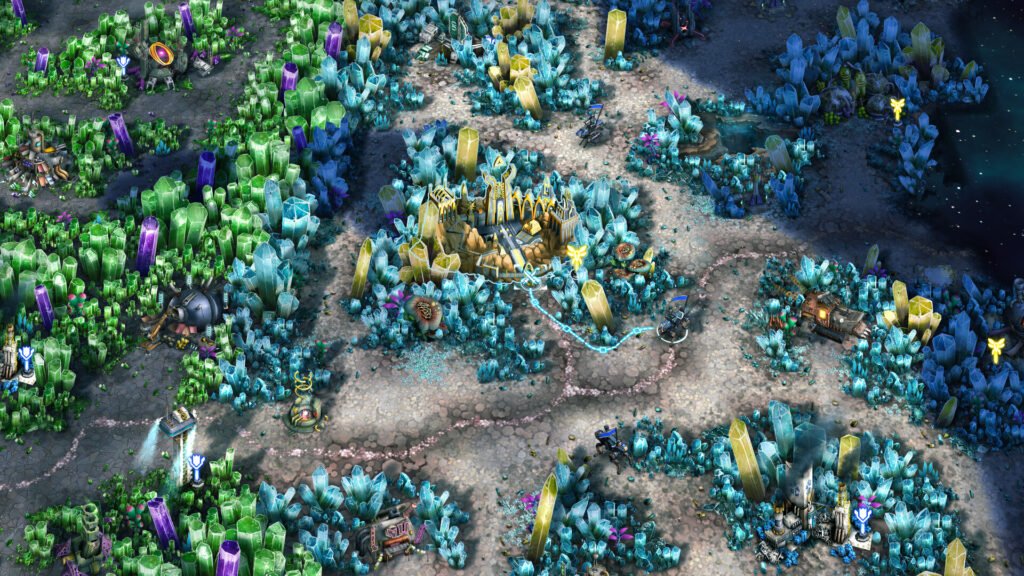
The meat of the game takes place on the World Map, or rather, the planetary maps that serve as your playground. Just like in the old days, you start with a single Capital City and a dream. You send your Commanders out into the Fog of War to gather resources, claim mines, and discover ancient Tech Remnants that provide powerful bonuses. The sense of discovery is palpable. Instead of finding a magical ring in a stump, you might find a Hyper-Drive Core in a crashed freighter or a Neural Link in a forgotten laboratory.
The resource management side of things is where the Oxymoron Games touch really shines. You aren’t just collecting gold and wood; you’re managing Plasma, Nanites, and Isotopes. Each faction requires a different mix of these resources to grow, which forces you to make tough decisions about which directions to expand. Do you push toward the Energy Hub guarded by a swarm of robotic sentries, or do you play it safe and secure the Nanite Refineries to your south? Every move matters, especially when you realize your movement points are a precious currency that you never seem to have enough of.
Tactical Combat with a High-Tech Twist
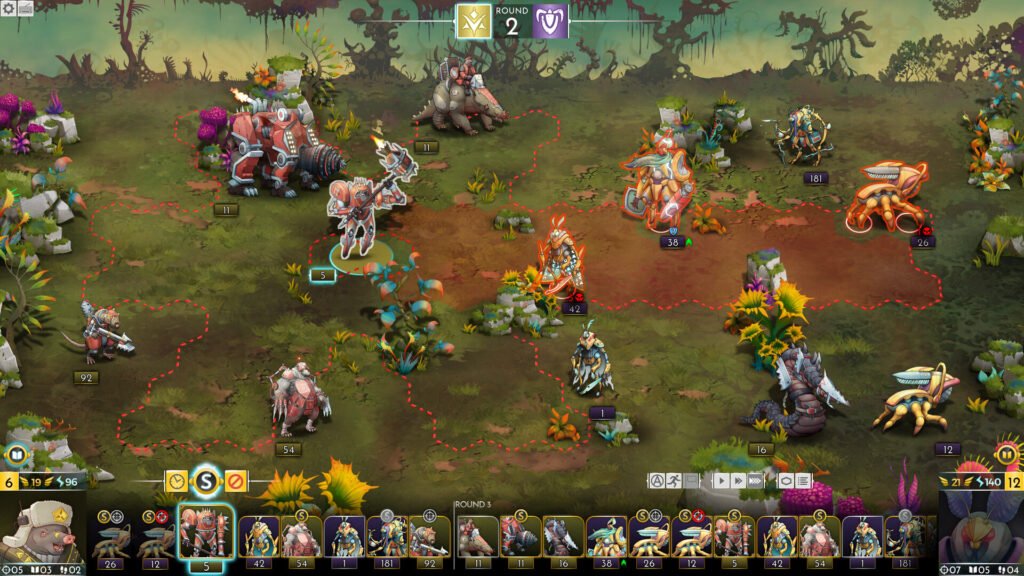
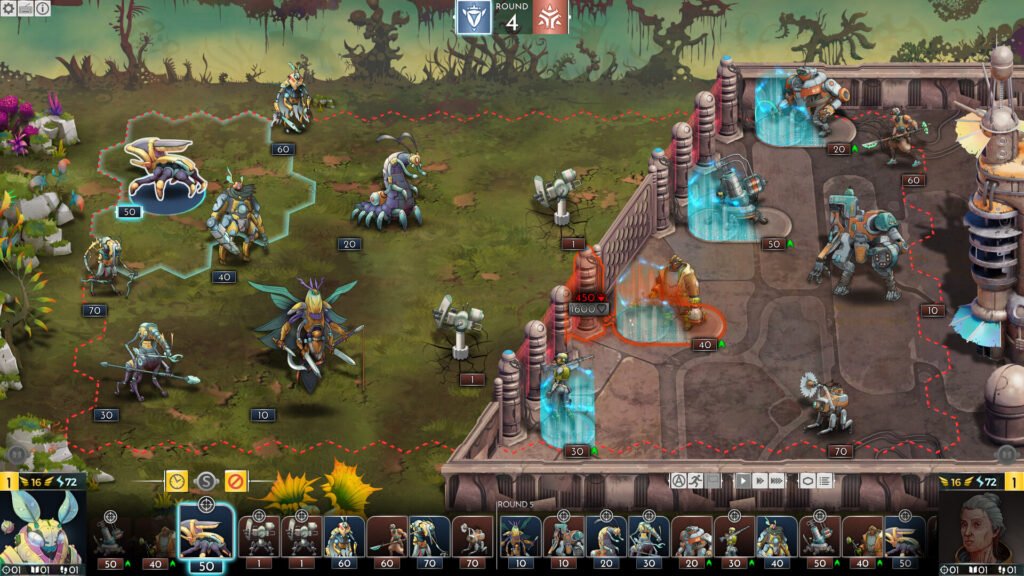
When the diplomacy fails—which, let’s be honest, it always does—you’re thrust into the Tactical Combat screen. This is where the game truly earns its keep. The combat takes place on a Hex-Grid, and if you’ve played a “Heroes” game before, you’ll feel right at home. However, the introduction of Sci-Fi Weaponry changes the math significantly. You have to account for Line of Sight, Cover Mechanics, and Energy Shields. It’s not just about who has the biggest stack of units; it’s about how you use your Commander’s Abilities to swing the tide of battle.
The unit variety is frankly wild. Depending on which of the Asymmetric Factions you choose, you could be commanding a legion of Cybernetic Infantry, a swarm of Bio-Organic Monsters, or a fleet of Drones. Each unit has distinct strengths and weaknesses that make the Tactical Layer feel like a high-stakes game of chess. For instance, the Techno-Cultists might rely on hacking enemy units to turn them against each other, while the Mercenary Union focuses on overwhelming firepower and long-range Railgun strikes. Seeing these diverse forces clash on a hex-grid is a visual treat, thanks to the game’s vibrant Art Style that pops with color and personality.
Building the Perfect Galactic Empire
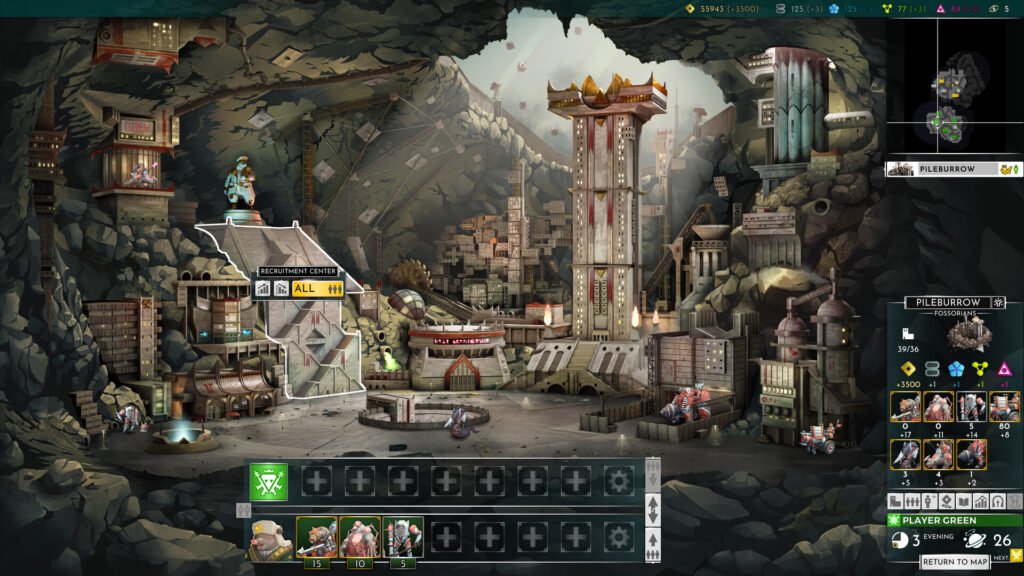
Let’s talk about your Base Operations. Your main hub is more than just a place to buy units; it’s the heart of your Technological Progression. As you upgrade your buildings, you unlock new tiers of soldiers and powerful Global Enhancements. The city-building screen is beautiful, showing your base grow from a small landing pad into a sprawling Megacity as the weeks go by. It’s incredibly satisfying to look back at your starting point and see how far your Empire has come.
Oxymoron Games also leaned heavily into the RPG Elements of your Commanders. Each time they level up, you get to choose from a variety of Skills and Perks. You can turn your leader into a Tactical Genius who buffs every unit on the field, or a Logistics Expert who can travel twice as far in a single turn. You can even find Artifacts—pardon me, High-Tech Relics—to equip, giving your Commander specialized gear like Power Armor or Orbital Strike Controllers. This customization ensures that no two playthroughs feel the same, as your strategy will shift based on the specific strengths of your leaders.
The One More Turn Addiction is Real
There is a specific kind of magic that happens in Heroes of Science and Fiction during the mid-game. You’ve secured your borders, your Commanders are high-level powerhouses, and you’re starting to clash with the other Major Factions. The tension is incredible. You know that somewhere in the Fog of War, an AI or another player is building up a massive army just like you are. The race to capture the Neutral Objectives scattered across the map becomes a frantic scramble, and every battle feels like a pivotal moment in your Galactic History.
What really ties the whole thing together is the Atmosphere. The soundtrack is a synth-heavy masterpiece that perfectly captures the lonely but exciting feeling of exploring an alien world. The Lore is also surprisingly deep, with flavor text and quest descriptions that hint at a larger universe full of mystery and political intrigue. It’s clear that the developers didn’t just want to make a game about numbers and stats; they wanted to build a world that felt worth conquering.
Final Briefing for the New Commanders
In a market saturated with clones and low-effort sequels, Heroes of Science and Fiction stands out as a genuine labor of love. It takes the Turn-Based Strategy fundamentals that we all know and love and blasts them into the future with confidence and style. Whether you’re a veteran of the HoMM days or a newcomer who just likes the idea of leading a squad of space marines against a giant telepathic brain, this game has something for you. It’s addictive, challenging, and most importantly, it’s fun.
Oxymoron Games has proven once again that they are masters of System-Driven Gameplay, and by applying that expertise to the Sci-Fi genre, they’ve created a potential new classic. So, if you’ve got a weekend to kill—and let’s be real, probably the following week as well—grab your Neural Link and get ready to deploy. The galaxy isn’t going to conquer itself, and those Nanites aren’t going to mine themselves either.