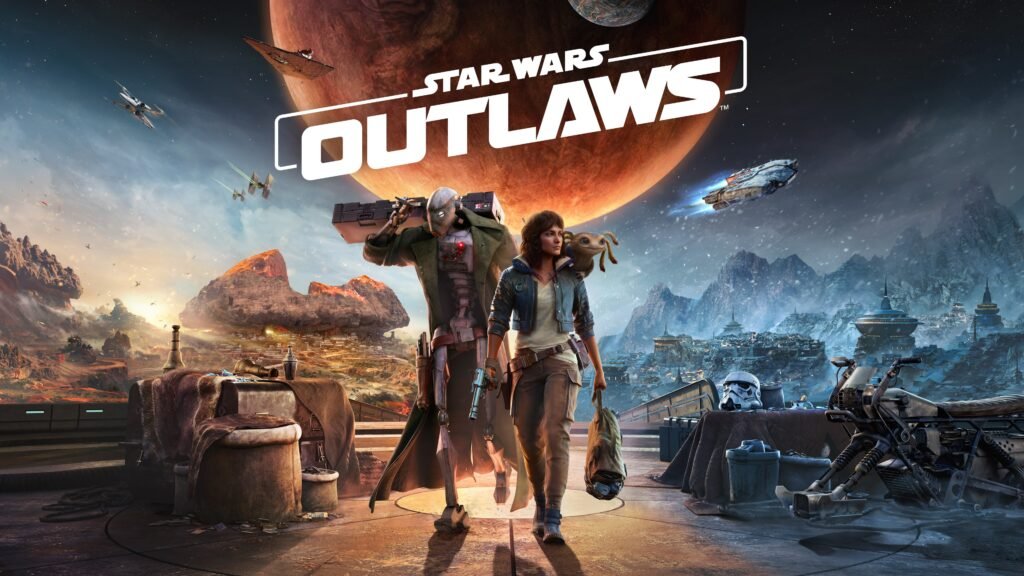

We’ve all spent enough time swinging glowing baseball bats and moving rocks with our minds. While the Jedi fantasy is undeniably great, there’s always been a gritty, grease-stained corner of the galaxy that felt a little neglected by the big-budget gaming space. Star Wars: Outlaws finally lets us trade in the heavy robes for a scuffed leather jacket, and honestly, the view from the underworld is spectacular. It’s a refreshing break from destiny and prophecy, focusing instead on the simple, frantic joy of pulling off a heist and trying not to get shot in the process. This isn’t a story about saving the galaxy; it’s a story about surviving it, and that shift in perspective makes all the difference.
A Hero Who Actually Fumbles
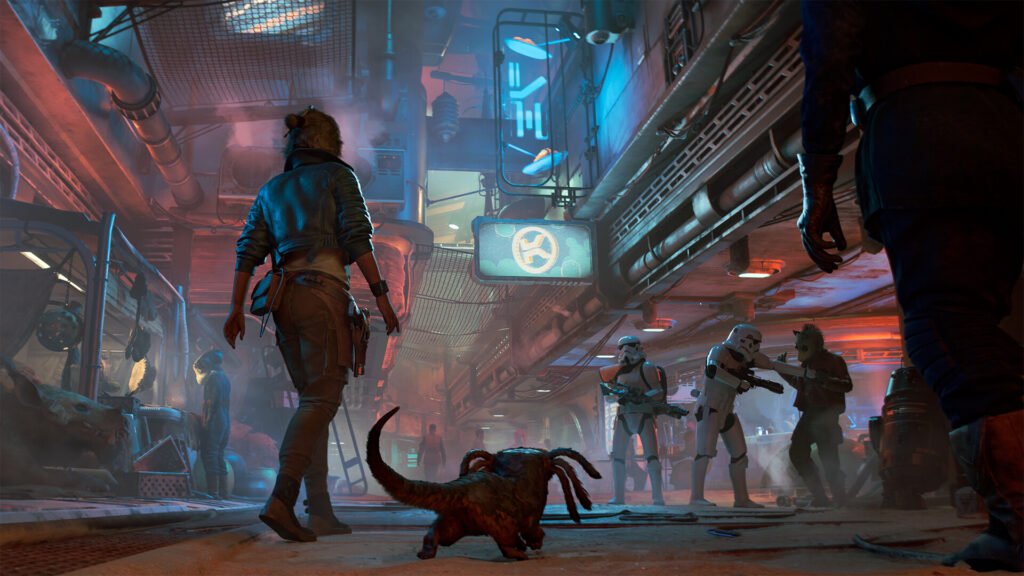
We follow the journey of Kay Vess, a small-time thief from Canto Bight who is way out of her league but has just enough charm and desperation to make it work. Unlike the stoic, all-powerful heroes we usually get in this franchise, Kay feels refreshingly human. She’s nervous, she makes mistakes, and she’s reactive in a way that feels grounded. She isn’t a chosen one; she’s a person who owes the wrong people a lot of credits. This vulnerability is the secret sauce of the game’s narrative. When you’re staring down an elite squad of Imperial Stormtroopers, you don’t feel like an invincible warrior—you feel like a scavenger who needs to find an exit, fast.
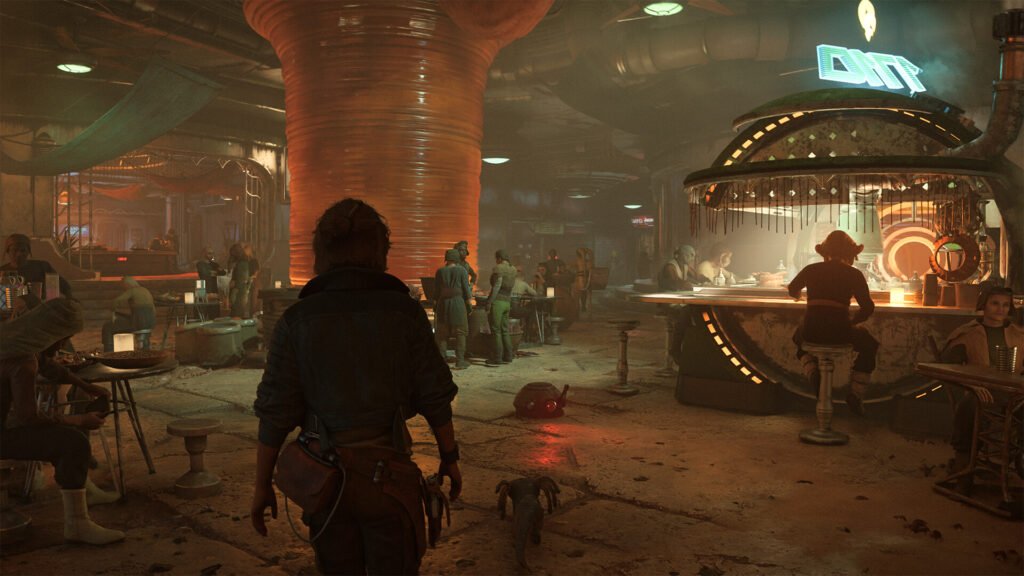
The open-world design across planets like Toshara, Akiva, and the snowy streets of Kijimi captures that “used future” aesthetic perfectly. The developers at Massive Entertainment clearly did their homework, because every corner of this game feels like it was filmed on a set from 1977. Walking into a crowded cantina isn’t just a quest objective; it’s an atmospheric experience where the air is thick with the smell of cheap fuel, alien spices, and bad intentions. You can sit down, play a round of Sabacc, listen to the local band, and just soak in the fact that you’re finally living out that Han Solo fantasy without a lightsaber in sight.
The Nix Factor
While Kay is the face of the operation, the real star of the show—and let’s be real, the character you’ll grow most attached to—is Nix. Your adorable Merqaal companion is easily the best mechanical hook in the game. He isn’t just a cute mascot designed to sell plushies; he is your primary utility tool and your greatest tactical advantage. In a genre where “companion” often means an NPC who gets stuck behind a crate, Nix is a revelation.
You can send him to distract guards, sabotage alarm panels, fetch a heavy blaster from a fallen enemy while you’re pinned behind cover, or even pickpocket a high-ranking officer. The stealth mechanics revolve entirely around your coordination with Nix. There is a genuine sense of partnership here that makes the gameplay loop feel unique. You aren’t just playing as a solo protagonist; you’re playing as a duo. Whether he’s feigning death to lure a guard closer or opening a vent for you, Nix adds a layer of puzzle-action depth that keeps the stealth sections from feeling like a chore.
Navigating the Criminal Underworld
The heart of the experience is the deep and often stressful Reputation System. Set between the events of The Empire Strikes Back and Return of the Jedi, the galaxy is in a state of chaos, and the criminal syndicates are thriving. You’re constantly juggling jobs for different factions like the Pyke Syndicate, Crimson Dawn, the Hutt Cartel, and the Ashiga Clan. What’s brilliant here is that the game doesn’t let you be a friend to everyone. It forces you to make choices that have tangible consequences on your gameplay experience.
If you have a high reputation with the Pykes, you might be able to stroll through their territory unchallenged, access exclusive vendors, and get tipped off about lucrative scores. But that usually means you’ve had to screw over Crimson Dawn to get there. Suddenly, Crimson Dawn hit squads are chasing you through the dunes of Tatooine, and their merchants won’t even look at you. This creates a wonderful layer of emergent storytelling. You aren’t just checking boxes on a map; you’re managing relationships in a dangerous social ecosystem. The tension of deciding whether to betray your employer for a bigger payday or stay loyal to secure your standing is where the “Outlaw” title truly earns its keep.
From the Dirt to the Stars
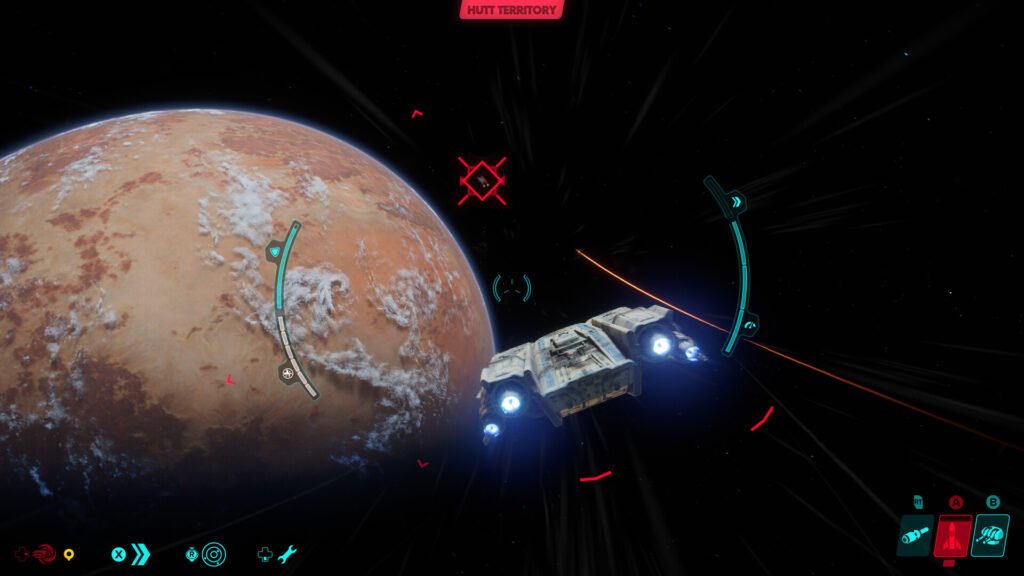
One of the most impressive feats in Star Wars: Outlaws is the sense of scale. Moving from the surface of a planet into the atmosphere is a seamless thrill that never really gets old. Your ship, the Trailblazer, isn’t just a fast-travel menu; it’s your mobile home and a formidable weapon. The space combat is arcade-like and accessible, focusing on dogfights and dodging debris fields rather than complex flight simulation. It feels fast, kinetic, and cinematic.
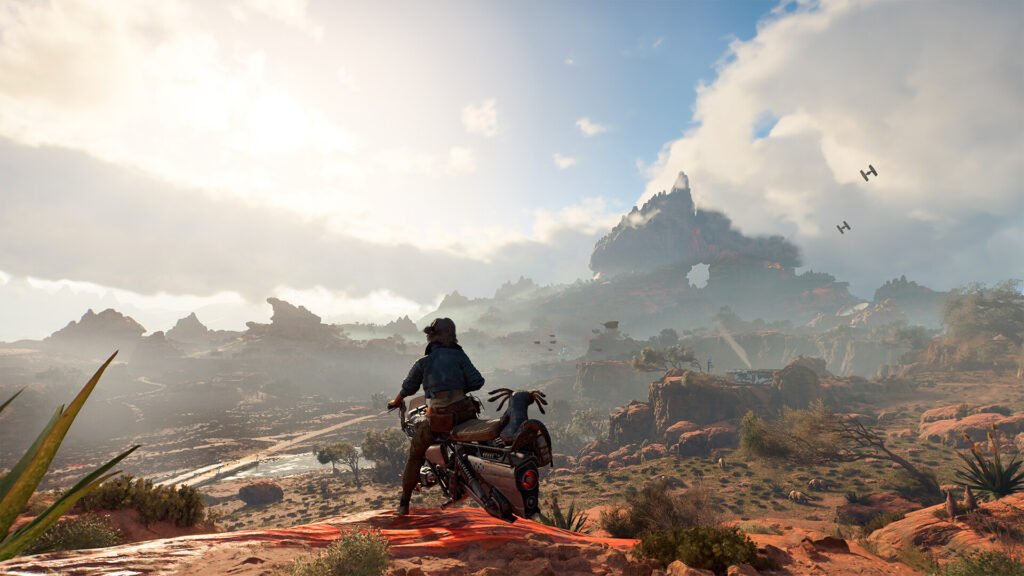
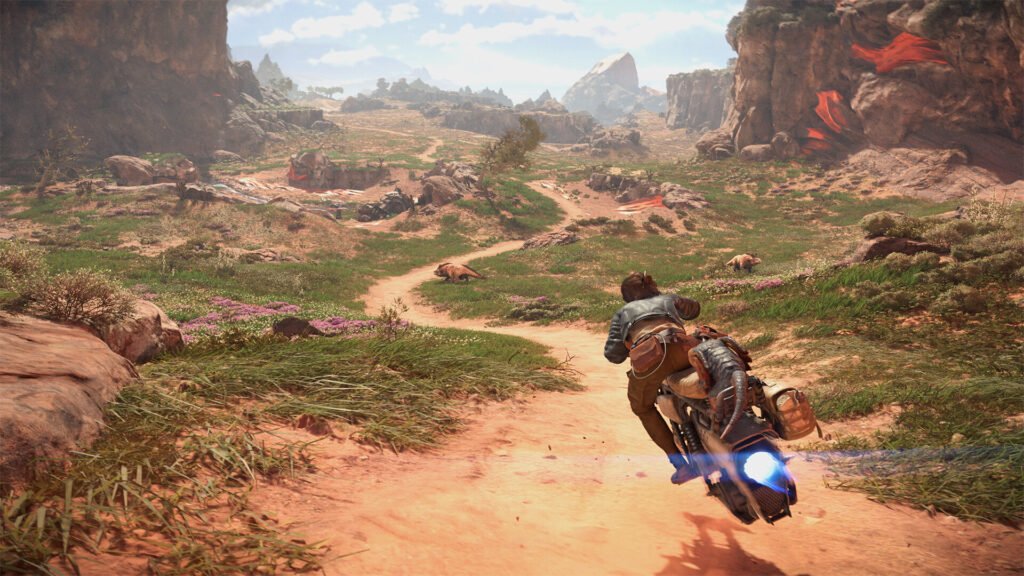
On the ground, your Speeder is your lifeline. Exploring the vast plains of Toshara or the jungles of Akiva on a customizable bike is pure joy. The handling feels heavy and physical, and the ability to perform jumps or use Nix to mess with chasing pirates makes travel feel like an active part of the game rather than just downtime between missions. The game encourages exploration not through map markers, but through visual cues—a plume of smoke in the distance or an abandoned comms tower usually leads to a meaningful upgrade or a piece of world-building lore.
Honesty About the Rough Edges
Look, I love this game, but I’m going to be straight with you: it’s not without its quirks. Being a scoundrel means dealing with some rough edges. The combat is solid, but it can occasionally feel a bit floaty compared to “pure” third-person shooters. Kay’s movement is designed to feel a bit frantic, which is great for characterization but can sometimes lead to awkward platforming moments.
Additionally, the AI can be a bit hit-or-miss. Sometimes the Stormtroopers are tactical geniuses who flank you effectively, and other times they seem to forget you’re hiding behind a very obvious crate. You might also encounter some visual bugs or minor performance stutters, especially in the more densely populated city centers. However, in a game of this scale and ambition, these feel like small prices to pay for the level of immersion on offer. They’re the kind of “Star Wars jank” that longtime fans have come to expect and, in a weird way, almost find charming.
A Solid Win for the Galaxy
When you put it all together, Star Wars: Outlaws is a vibey, atmospheric masterpiece for fans who have been craving a different perspective on the franchise. It nails the feeling of being a small fish in a very dangerous pond. It’s a game that values immersion and character over power fantasies. It doesn’t try to reinvent the open-world wheel, but it polishes that wheel with so much heart and “Star Wars soul” that it’s impossible not to get swept up in the adventure.
Massive Entertainment has delivered a game that feels like a love letter to the original trilogy’s aesthetic while carving out its own identity. It’s confident, it’s sprawling, and it’s a whole lot of fun. If you’ve ever wanted to lean against a bar in a wretched hive of scum and villainy while plotting your next big score, this is the game you’ve been waiting for. It proves once and for all that you don’t need a Force connection or a family legacy to leave a mark on the galaxy—all you need is a good blaster, a fast speeder, and a loyal friend by your side.