
Release Date: August 1, 2008 Developer: Radon Labs
Get It On: GOG
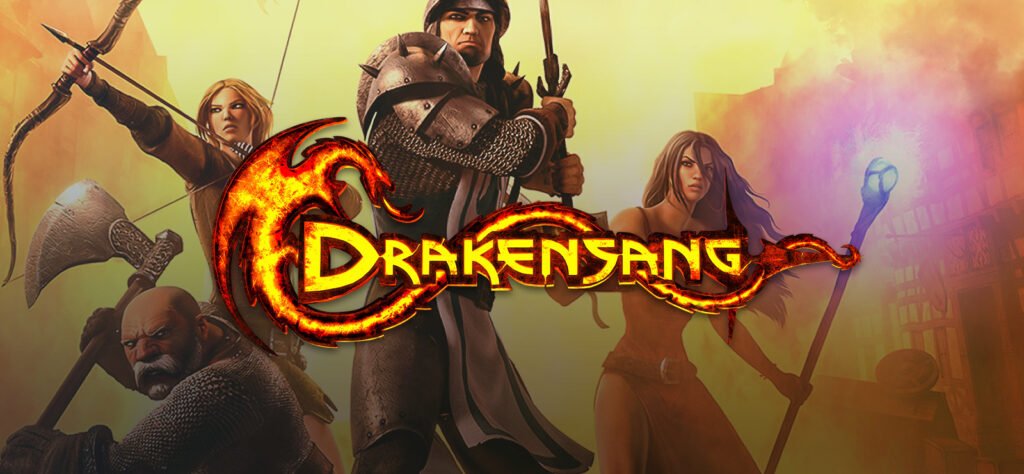
If you grew up playing Western computer role-playing games in the late 2000s, your radar was probably dominated by massive titles like Dragon Age: Origins or Oblivion. But tucked away in the scenic development studios of Berlin, a team named Radon Labs was cooking up something fiercely traditional, unapologetically complex, and utterly charming. Released in 2008, The Dark Eye: Drakensang arrived on the PC gaming scene like a beautiful time capsule. It offered gamers a richly realized, tactical fantasy world that felt entirely distinct from the high-fantasy tropes dominant in North American design. Instead of making you the immediate, prophecy-chosen savior of the universe, Drakensang invited you to step into a meticulously detailed world where even a simple mud rat could ruin your day if you forgot to bring a shield.
Drakensang did not try to reinvent the wheel, but it did something much cooler: it gave international audiences a front-row seat to Germany’s most beloved tabletop role-playing franchise. The game serves as a brilliant digital translation of a system that has captured the imaginations of European tabletop gamers for decades. It is an old-school, party-based RPG that blends real-time-with-pause combat, heavy statistical management, and a grounded, cozy low-fantasy atmosphere. Let us dive into what makes this title, and the staggering tabletop engine underneath its hood, a fascinating chapter in gaming history.
Understanding the Beast: The Das Schwarze Auge Heritage
To understand why Drakensang breathes and acts the way it does, you first have to understand Das Schwarze Auge, known to English speakers as The Dark Eye. While Dungeons and Dragons was dominating kitchen tables across North America in the 1980s, German gamers were forging their own tabletop destiny. Launched in 1984 by Ulrich Kiesow, The Dark Eye quickly grew to become the undisputed king of role-playing games in Germany, frequently outselling its American counterpart by massive margins.
The core philosophy of the tabletop system differs radically from the power-fantasy trajectories of other mainstream games. The Dark Eye is set primarily on the continent of Aventuria, a deeply mapped world that favors historical realism, gritty low-fantasy elements, and cultural depth over world-shattering magical apocalypses. In Aventuria, magic is rare, dangerous, and scientifically codified. Knights look like actual medieval warriors rather than walking tanks covered in glowing spikes. The lore is so densely interconnected that the fictional history of the continent progresses in real-time alongside official modules published for players.
Mechanically, the system is famous, or perhaps infamous, for its uncompromising complexity. Unlike the streamlined d20 system used by modern fantasy games, The Dark Eye relies heavily on a unique three-dice check system for skill resolution. When your character wants to pick a lock, climb a wall, or convince a guard, you do not just roll one die and add a modifier. Instead, you roll three separate twenty-sided dice against three specific attributes tied to that skill. If your character wants to use herbalism, you might roll against Cleverness, Courage, and Dexterity. Your actual skill points act as a pool to mitigate bad rolls. It is a brilliant math engine that simulates the reality of human error, making character progression feel intensely rewarding because every single point earned is hard-won.
Welcome to Ferdok: The Setup of Drakensang
When Radon Labs set out to build a modern video game using this massive ruleset, they wisely chose the Fourth Edition of the tabletop game as their foundation. Drakensang starts exactly how a classic pen-and-paper campaign should. You receive a letter from an old friend named Ardo of Boarstock, inviting you to the bustling trading city of Ferdok. He hints at urgent matters, but by the time you navigate the bureaucratic red tape to enter the city gates, you discover that Ardo has been brutally murdered. What begins as a localized murder mystery slowly unfurls into an epic quest involving ancient dragon cults, corrupt politicians, and a sprawling journey across the principality of Kosh.
The narrative pace of Drakensang is delightfully deliberate. You are not rushing from one exploding set piece to another. Instead, you spend hours exploring the cobblestone streets of Ferdok, interacting with highly regionalized subcultures, solving neighborhood disputes, and building your reputation. This slow-burn approach allows the atmosphere of Aventuria to sink into your bones. The world feels lived-in, safe, and comforting, yet punctuated by dangerous wilds where old ruins hide genuine horrors. It feels like a genuine fairytale neighborhood rather than a generic dark-fantasy wasteland.
Rolling the Digital Dice: Mechanics and Character Building
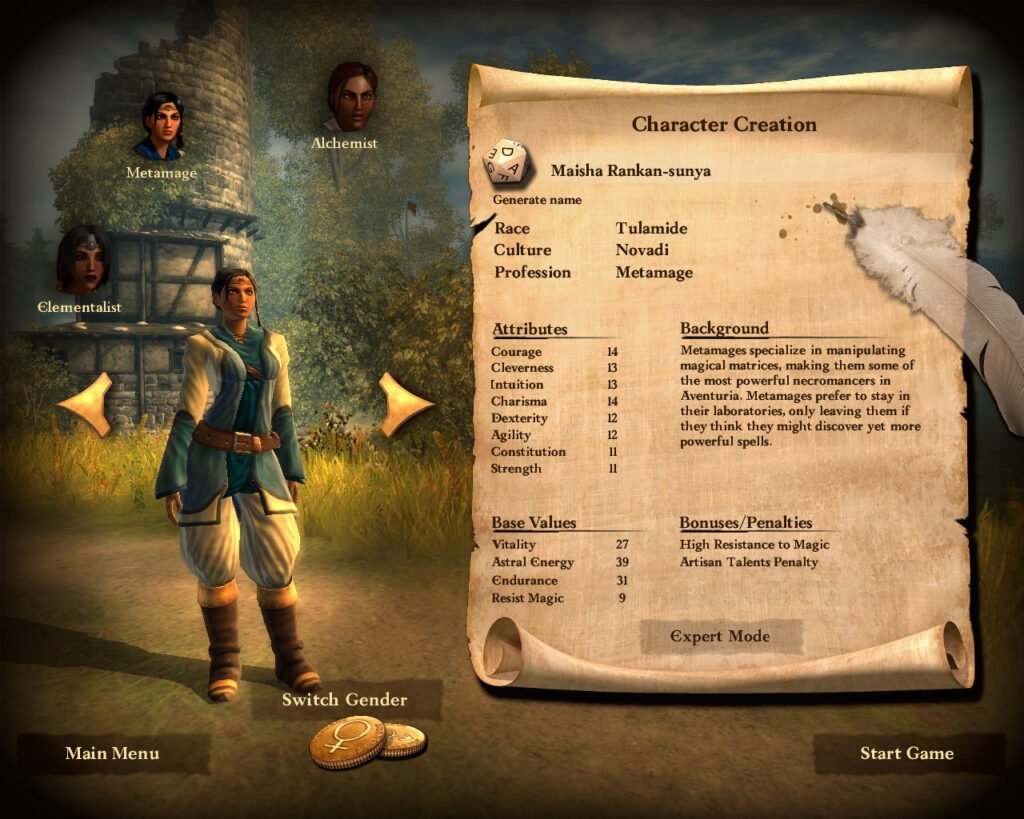
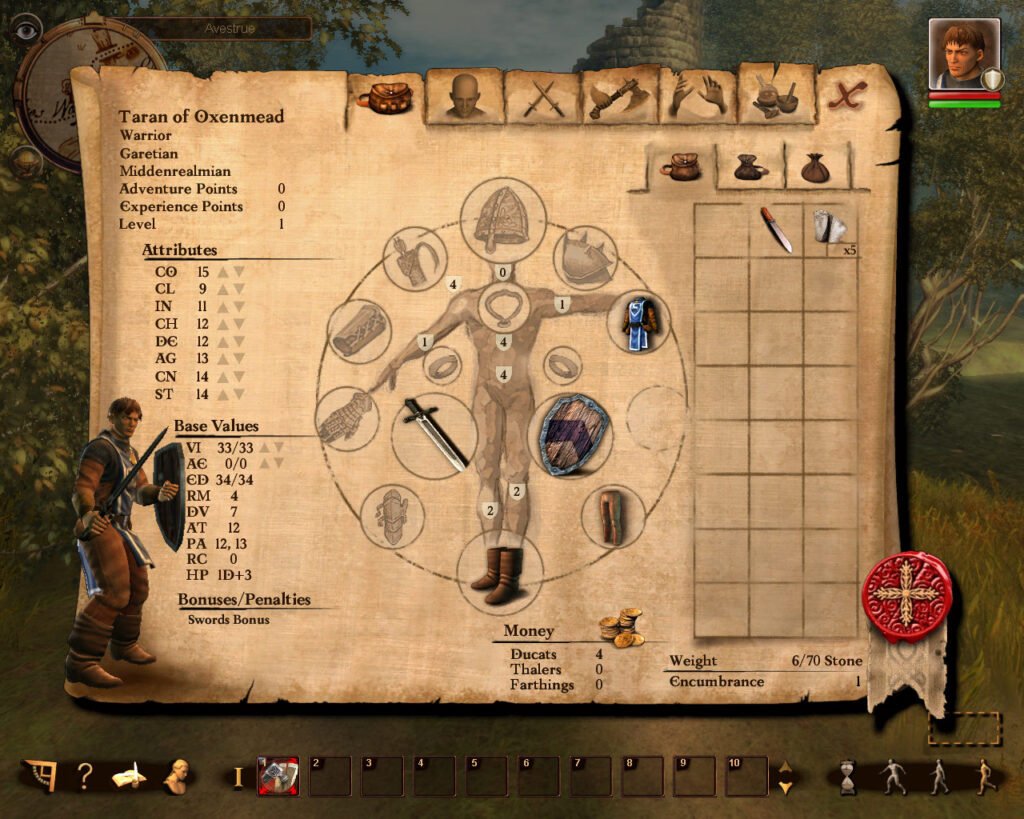
Character creation in Drakensang is a dream for micromanagers and a beautifully daunting wall of text for newcomers. You can select from archetypal fantasy classes like the Amazon, the Mages of various academies, sneaky rogues, or stalwart dwarven mercenaries. However, because the game faithfully translates the tabletop rules, your choice of class is merely a starting package of attributes and talents.
The game entirely discards traditional leveling frameworks where your character suddenly gets better at everything overnight. Instead, you earn Adventure Points from quests and combat, which act as a direct currency. You spend these points manually to increase individual attributes, level up specific weapon talents, learn specialized combat maneuvers, or boost your civilian skills. If you want your heavy-armor warrior to spend their weekend learning how to skin wolves and pick pocket-knives, you can absolutely do that, provided you have the points to invest.
This granular control extends directly to the civilian talents, which are just as vital as your sword-swinging capabilities. Drakensang treats non-combat skills with immense respect. You will need a dedicated character for Haggle to avoid being ripped off by merchants. You will need someone skilled in Treat Wounds because injuries sustained in battle do not magically heal themselves after the music stops; they fester and apply massive attribute penalties until properly bandaged. Even the Seduction and Etiquette talents open up entirely unique dialogue paths and quest resolutions, making your non-combat specialists feel like indispensable members of the squad.
Tactical Pausable Mayhem: The Combat System
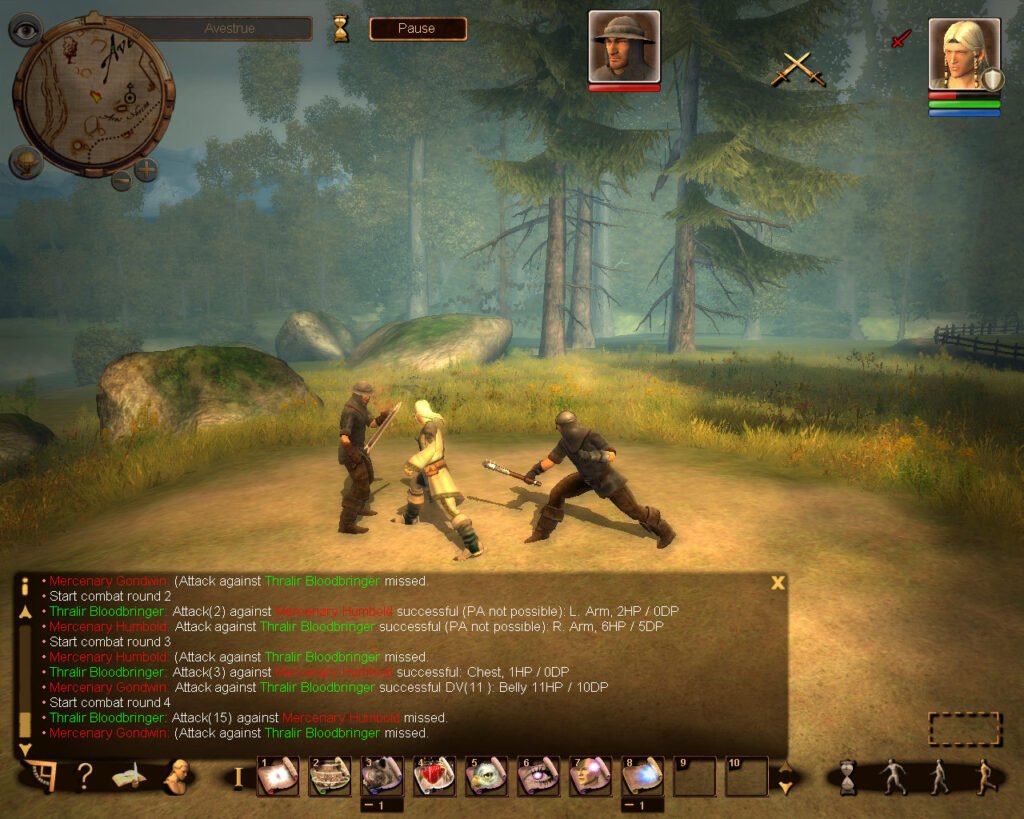
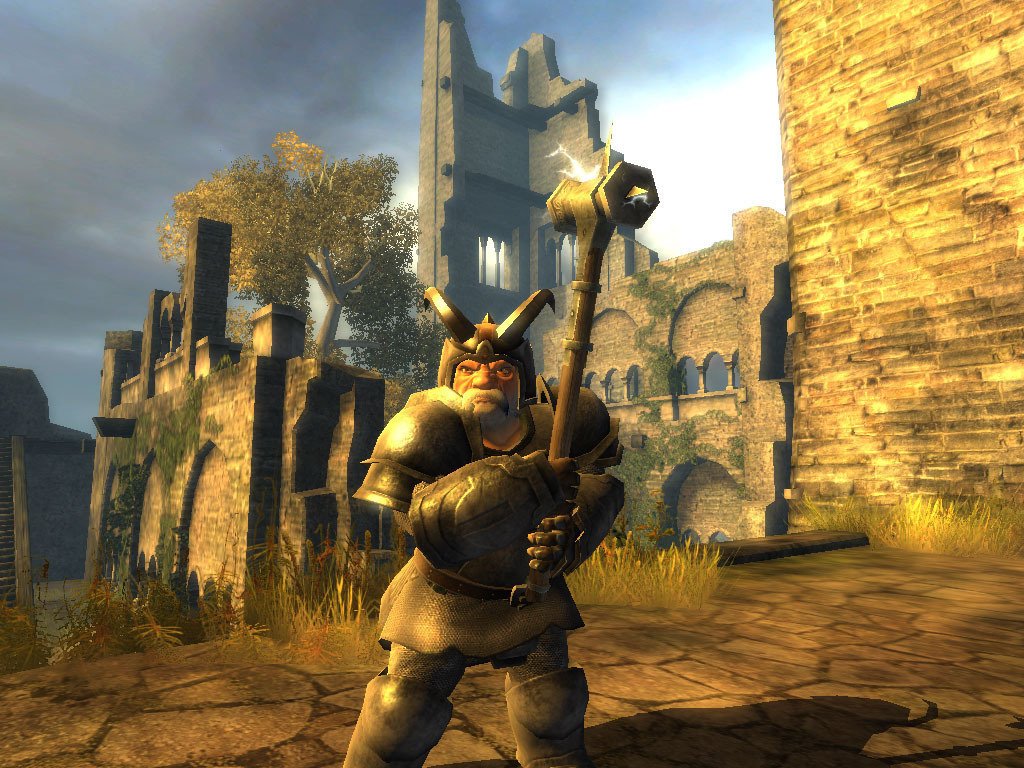
When diplomacy fails and the steel comes out, Drakensang transforms into a highly strategic battle simulator. The game utilizes a real-time-with-pause combat loop that operates strictly on the background turns of the tabletop game. Every strike, parry, and spellcast is the result of invisible digital dice being rolled behind the scenes, and the tactical depth on display is magnificent.
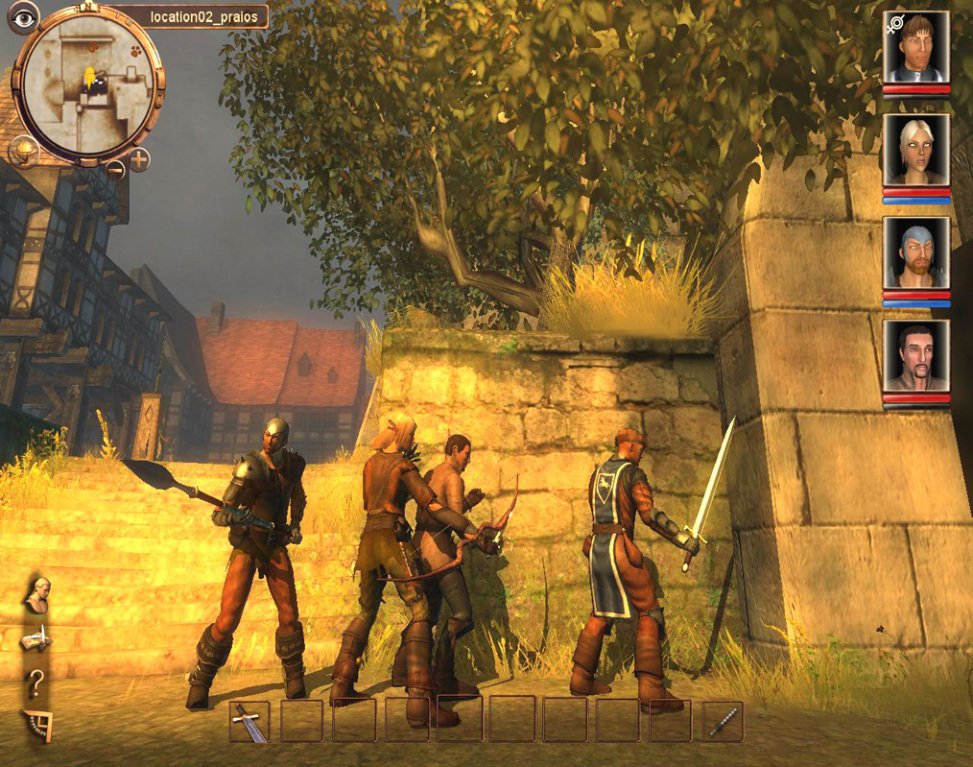
Positioning and party composition mean everything here. You can control a party of up to four characters, and you will need to actively manage their behaviors. Shields are not just passive armor-rating boosters; they actively grant extra parry attempts per combat round. Archers must maintain physical distance because firing a bow while an orc is chewing on your kneecap is a recipe for a swift death. Spells require actual concentration time, meaning your squishy spellcasters must be fiercely protected by frontline tanks utilizing taunts and defensive stances.
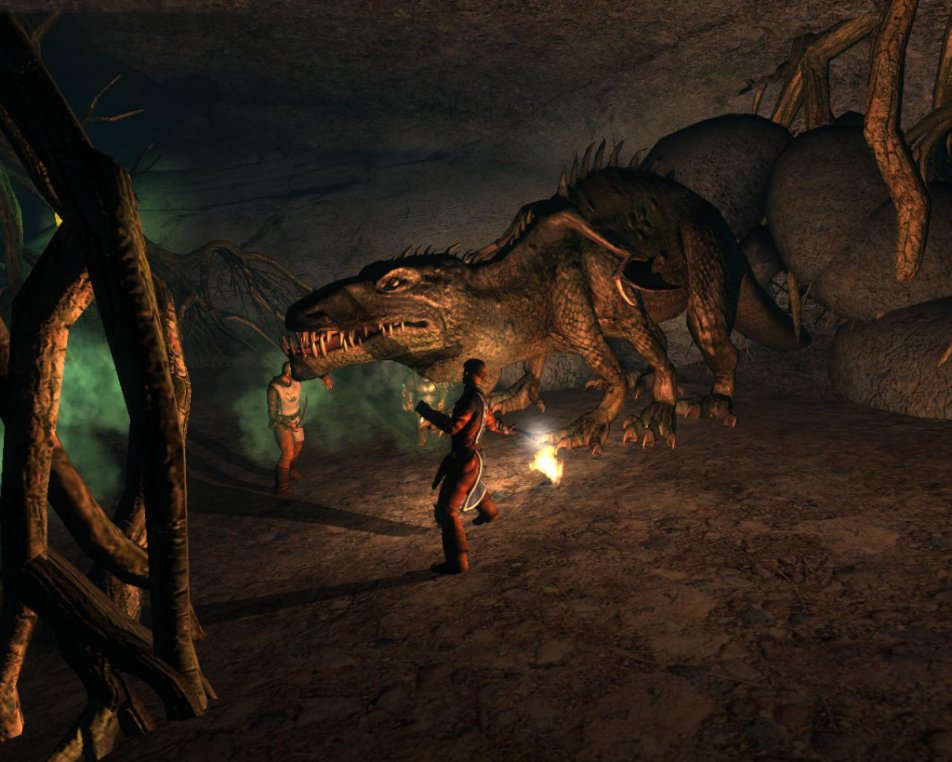
Furthermore, combat introduces the concept of wounds. A heavy blow can inflict a physical wound that drastically cripples a character’s efficiency, regardless of how much health they have left. Accumulating five wounds results in instant death. This mechanic ensures that even late-game combat against lower-level grunts requires your full attention. You cannot simply queue up basic attacks and watch the screen; you must actively pause, micromanage your combat maneuvers, apply healing salves mid-fight, and exploit enemy weaknesses.
A Vibrant World of Companions and Atmosphere
A great party-based RPG lives or dies by its cast, and Drakensang delivers a wonderfully quirky roster of companions. You will cross paths with Forgrimm, a fiercely loyal, beer-loving dwarven warrior carrying immense guilt over Ardo’s death. You will recruit Gladys Shandra, a charmingly deceptive rogue who can talk her way out of any situation she cannot actively pickpocket her way out of. There is also Ancoron, a proud elf whose worldview is vastly detached from human society.
Your companion hub is a beautiful manor house located right in the heart of Ferdok, which you inherit during the main story. This estate acts as your base of operations where benched companions hang out, chat with one another, and assist you with crafting. The crafting system itself is incredibly robust, allowing you to forge your own specialized ammunition, brew potent alchemical potions, and blacksmith rare weaponry using schematics found throughout the world.
Visually, the game utilizes the Nebula Device 3 engine, which bathes the world in a warm, vibrant color palette. While contemporary games of the late 2000s were leaning into muddy browns and desaturated grays, Drakensang embraced brilliant greens, bright blue skies, and wonderfully detailed architectural designs that mirrored late-medieval European towns. Combined with a soaring, orchestral soundtrack that captures the pastoral majesty of Kosh, the game creates an intoxicatingly cozy atmosphere that makes you want to linger in its world for as long as possible.
The Enduring Legacy of an Underdog
While The Dark Eye: Drakensang did not break mainstream sales records worldwide, it achieved massive success in its homeland and earned a passionate global cult following. It spawned a fantastic prequel, Drakensang: The River of Time, which refined many of the mechanical rough edges of the first game.
Looking back, the game remains an absolute triumph of tabletop translation. It proved that a game developer could take one of the most infamously complex, rule-heavy pen-and-paper systems in existence and transform it into an accessible, deeply engaging digital adventure without stripping away its soul. If you are a fan of tactical depth, meticulous character progression, and world-building that prioritizes charm and lore over flashiness, tracking down a copy of Drakensang is a journey well worth taking.