
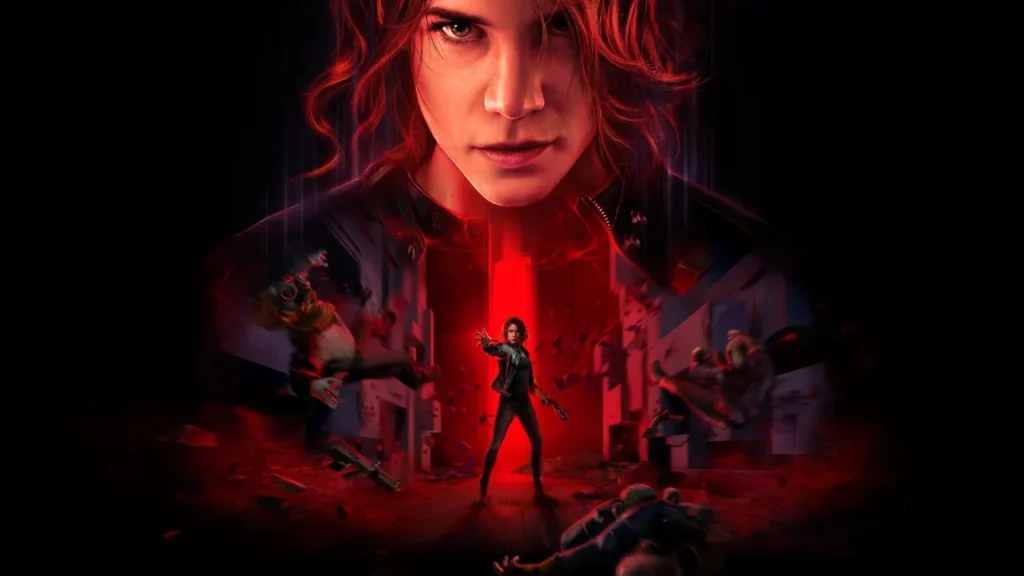

Every once in a while, a video game comes along that feels like it was engineered in a secret subterranean laboratory by a mad scientist who has spent way too much time reading eerie internet forum threads and watching surrealist cinema. That is exactly the vibe radiating from Control, the mind-bending action-adventure game developed by the absolute geniuses over at Remedy Entertainment. If you have ever wanted to walk into a mundane government building, pick up a stapler with your mind, and hurl it at an interdimensional corrupted entity at eighty miles an hour, then congratulations, your highly specific dream has finally come true.
At its absolute core, this experience is a love letter to a very specific subgenre of fiction known as the New Weird. It sits right at the intersection of the X-Files, Twin Peaks, and the collaborative internet creepypasta phenomenon known as the SCP Foundation. The narrative kicks off with a simple yet deeply unsettling premise. You step into the combat boots of Jesse Faden, a young woman with a troubled past and a mysterious entity hitching a ride inside her consciousness. Jesse wanders off the streets of Manhattan and into the Federal Bureau of Control, a clandestine government agency tasked with investigating, containing, and studying paranormal phenomena that defy the laws of conventional science.
The moment Jesse crosses the threshold, things go sideways in the best possible way. The bureau’s headquarters, a massive, shifting concrete skyscraper hidden in plain sight known as the Oldest House, has been completely compromised. A hostile, corrupting resonance called The Hiss has infiltrated the building, turning the office workers into floating, chanting husks and warping the very architecture into a surreal nightmare. To make matters even more intense, the previous director has just met a grim end, and through a bizarre series of supernatural technicalities involving a shape-shifting firearm, Jesse is instantly appointed as the new Director of the entire bureau. Talk about a rough first day on the job.
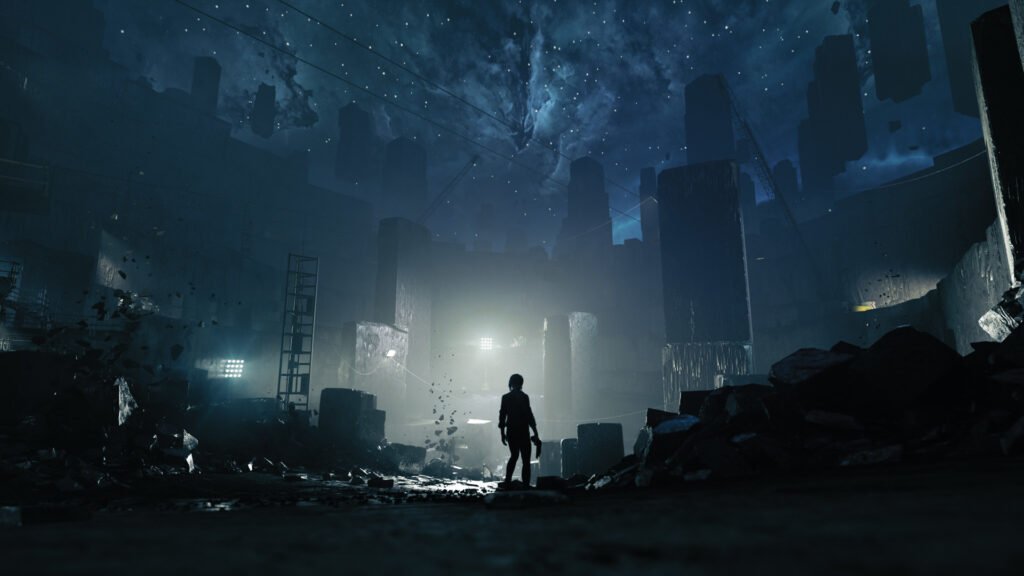
What follows is an unforgettable descent into architectural and psychological madness. The Oldest House itself is easily one of the greatest settings ever designed in video game history. Built entirely in a stark, intimidating style of architecture known as brutalism, the environment is a mesmerizing labyrinth of giant concrete pillars, sterile office cubicles, and impossibly vast, shifting voids. It is a place where a regular breakroom can suddenly stretch out into an infinite, shadowy abyss, or a simple janitor’s closet can lead you to a supernatural motel that exists outside of linear time. The game masterfully contrasts the boring, paper-pushing reality of a government bureaucracy with the terrifying, incomprehensible nature of the cosmos. You will constantly find collectible memos detailing the mundane workplace safety procedures for handling items that can accidentally alter reality, which provides a brilliant sense of dark, dry humor amidst the cosmic dread.
Of course, a setting this incredible needs a gameplay loop that can match its energy, and Remedy absolutely delivered on the combat front. The moment-to-moment action is a spectacular, chaotic dance of destruction. Jesse’s primary weapon is the Service Weapon, an artifact that can shift its form on the fly, transforming from a traditional pistol into a devastating shotgun blast, a long-range sniper rifle, or a rapid-fire submachine gun.
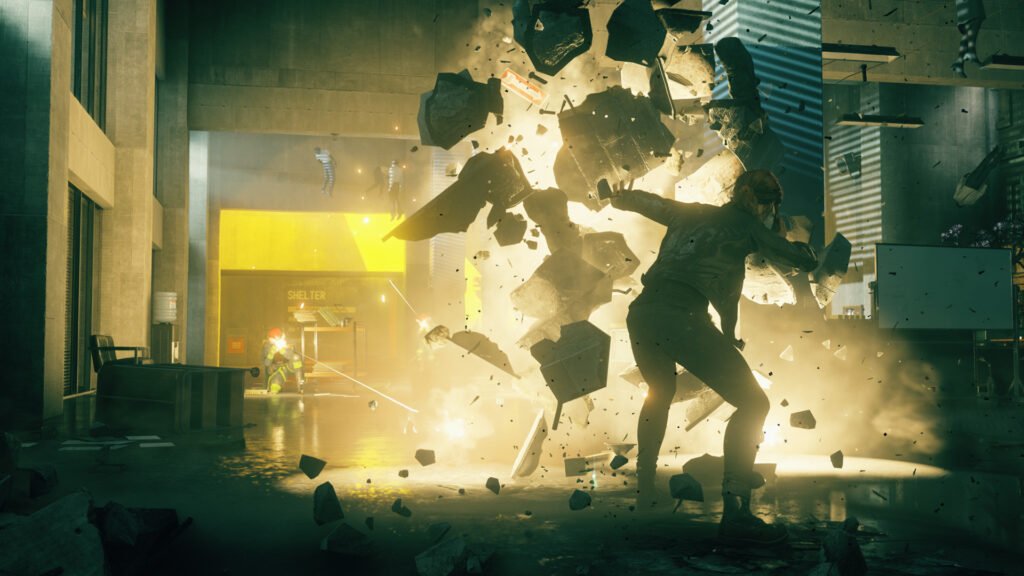
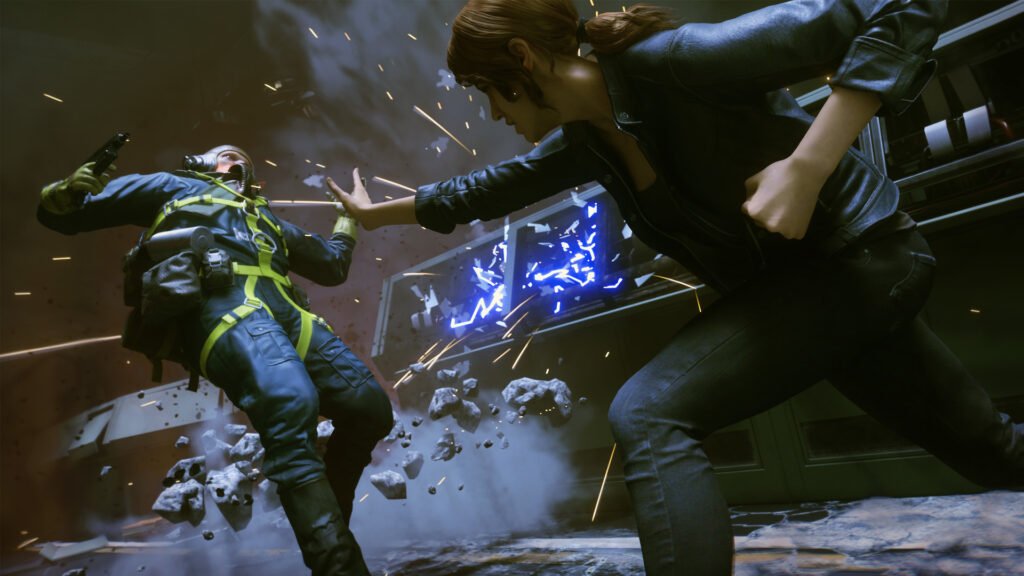
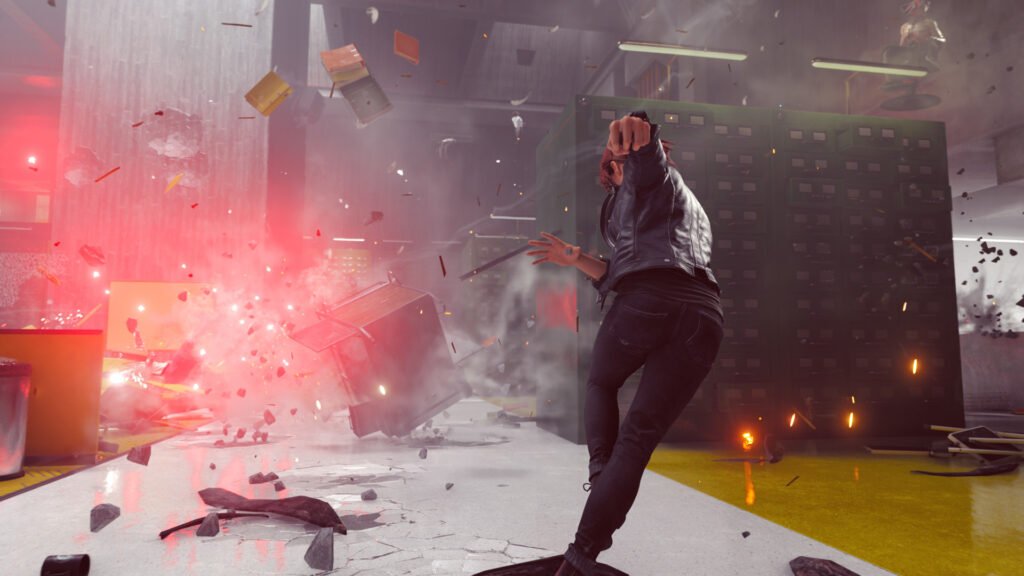
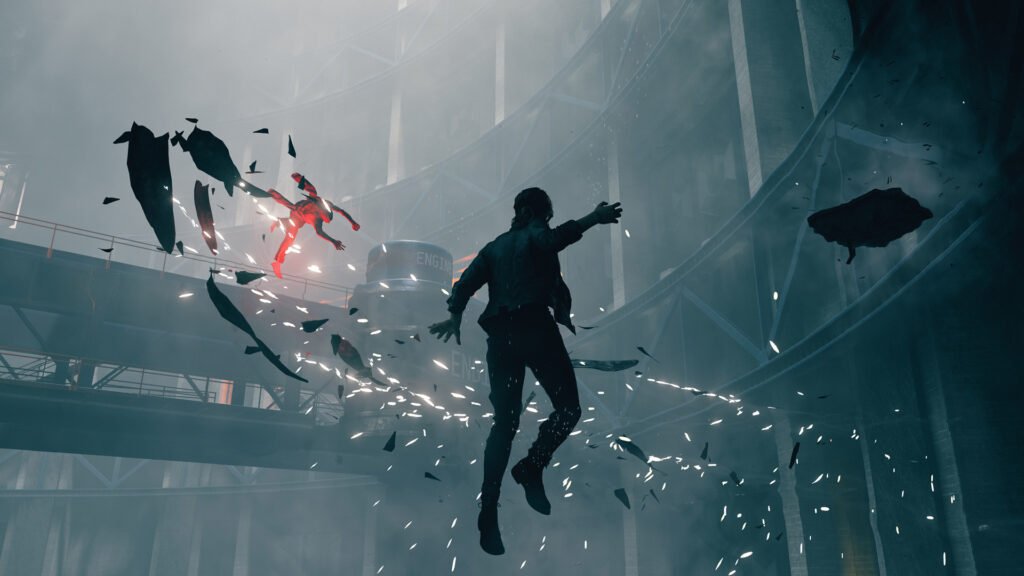
But the real magic happens when you start unlocking Jesse’s supernatural abilities. The absolute star of the show is Launch, a telekinetic ability that lets you rip chunks of concrete straight out of the walls, grab nearby desks, or intercept incoming missiles mid-air to hurl them back at your enemies with devastating force. The game features a highly reactive, completely destructible physics engine, meaning that every single firefight leaves the room looking absolutely demolished. Papers fly through the air, concrete pillars shatter into dust, and computer monitors explode into a million tiny shards. It creates an incredible feeling of momentum, encouraging you to aggressively levitate above the battlefield, dash through the air, and alternate between shooting your gun and throwing pieces of the environment like a sci-fi superhero.
Beneath the explosive combat lies a structure that draws heavy inspiration from classical Metroidvania design principles. The Oldest House is not a linear set of hallways; it is an interconnected, massive ecosystem. As you gain higher security clearances and acquire new traversal abilities like levitation, you are encouraged to backtrack to previously visited sectors to unlock hidden rooms, discover mysterious side quests, and hunt down elusive entities known as Altered Items. These items are everyday objects—like a retro television set, a plastic flamingo, or a creepy mannequin—that have been permanently warped by supernatural forces. Tracking them down and figuring out how to contain them forms some of the most creative, puzzle-heavy, and thrilling segments of the entire journey.
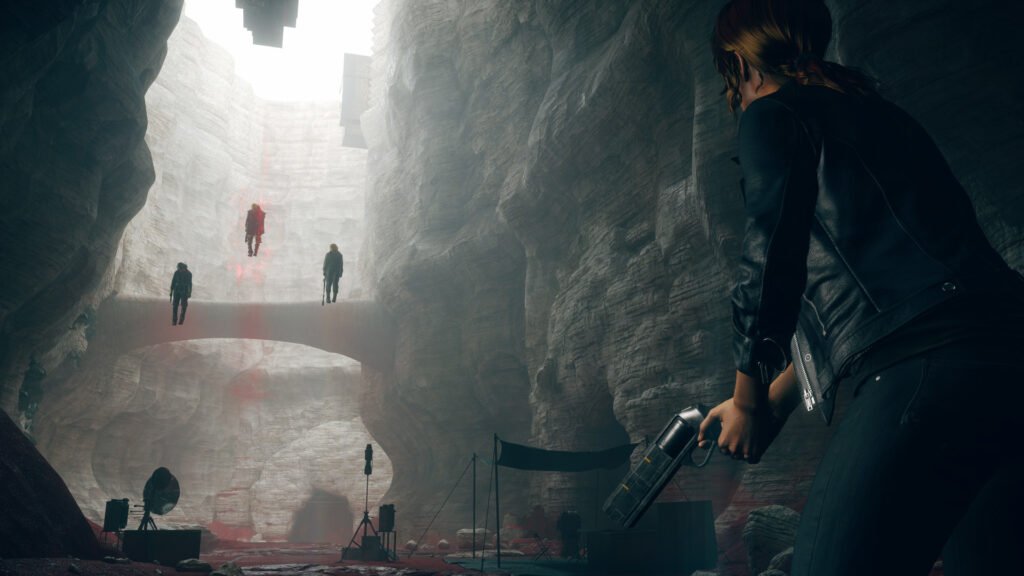
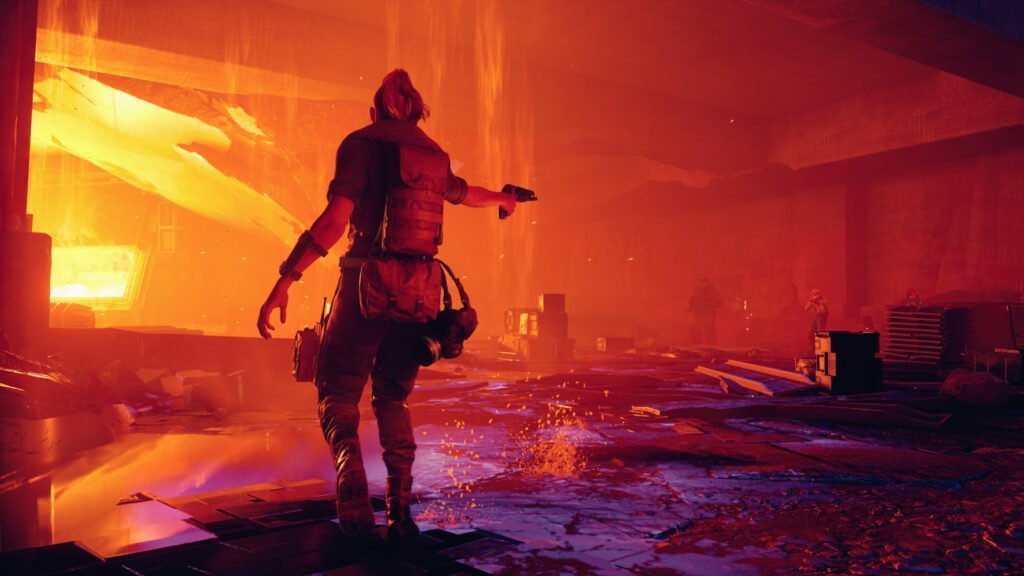
Once you wrap up the rollercoaster ride of the main campaign, you absolutely cannot sleep on the game’s stellar story DLC expansions. Remedy dropped two massive narrative add-ons that do not just act as fluff, but fundamentally expand the lore and the gameplay mechanics. The first expansion, The Foundation, takes Jesse deep beneath the skyscraper into a massive, subterranean network of crimson sand and crystalline caves to repair an ancient monument called the Nail. This DLC leans heavily into the strange relationship between the FBC and the otherworldly Board, even handing you an awesome new Shape ability that lets you telekinetically grow sharp crystal spikes out of the walls or shatter the ground beneath enemies.
Following that is AWE, the definitive holy grail for fans of the wider Remedy universe. This second expansion acts as a massive crossover event that opens up the sealed Investigations Sector and brings the legendary writer Alan Wake directly into Jesse’s story. Here, you are forced to hunt down a horrifying, mutated creature that is a dark hybrid of the Hiss and the Shadow. Mechanically, it forces you to use pools of light to burn away shadows to weaken the monster, brilliantly blending the survival horror roots of Bright Falls with Control’s fast-paced power fantasy. Both expansions are essential playing, giving you extra weapon forms like the sticky-bomb launching Surge and delivering the perfect narrative bridge for the studio’s broader connected universe.
For a comprehensive video breakdown of how these expansions fit into the broader narrative, check out this Control complete story explained video. This video essay does a brilliant job of untangling the deep lore of both the base game and its two major DLCs, helping you piece together the overarching universe before diving into the sequels.
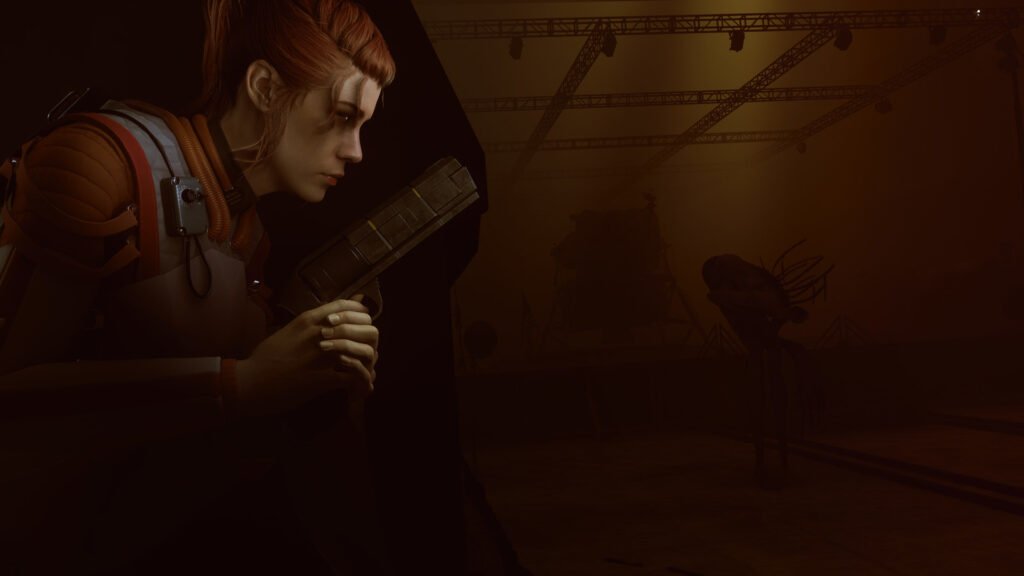
It is also impossible to talk about this title without mentioning how it permanently changed the trajectory of the studio’s storytelling. This is the official birthplace of the Remedy Connected Universe. For long-time fans of the developers, exploring the deep lore hidden in the audio logs and redacted files scattered around the offices will trigger massive waves of excitement. The narrative directly ties the paranormal events of this bureau to the tragic, shadowy mystery of Alan Wake, weaving a grand, interconnected web that makes the entire world feel incredibly alive, mysterious, and intentional. The way the studio blends live-action video footage of quirky scientists with the atmospheric in-game engine creates a signature narrative style that nobody else in the industry is even attempting to replicate.
When you put all these elements together, you get an absolute masterclass in artistic direction, mechanical satisfying combat, and world-building. It is a rare example of a big-budget action title that refuses to play it safe, opting instead to be weird, artistic, and completely uncompromising in its vision. It takes the corporate monotony of office life, mashes it together with mind-bending cosmic horror, and hands you the keys to an absolute telekinetic power fantasy. If you have somehow let this modern classic pass you by, it is time to walk through the doors of the Oldest House, claim the Director’s chair, and take back control. This is doubly true, now that an official sequel to the game, Control: Resonance, has recently been announced as well.