

Release Date: 24 November 1997 Developer: EA Canada
If you ask a modern football gamer to name the best entry in EA Sports’ flagship franchise, you will probably trigger a fierce debate about the fluid passing mechanics of FIFA 12, the tactical defensive shift of FIFA 17, or the ultimate team card trading loops of the early 2020s. But if you ask anyone who survived the late-nineties transition from flat pixels to glorious, chunky 3D polygons, there is only one correct answer. Released in late 1997, FIFA: Road to World Cup 98 represents the absolute zenith of virtual football. It is an intersection of licensing audacity, gameplay experimentation, and sheer cultural swagger that the franchise has never quite managed to replicate in the nearly three decades since.
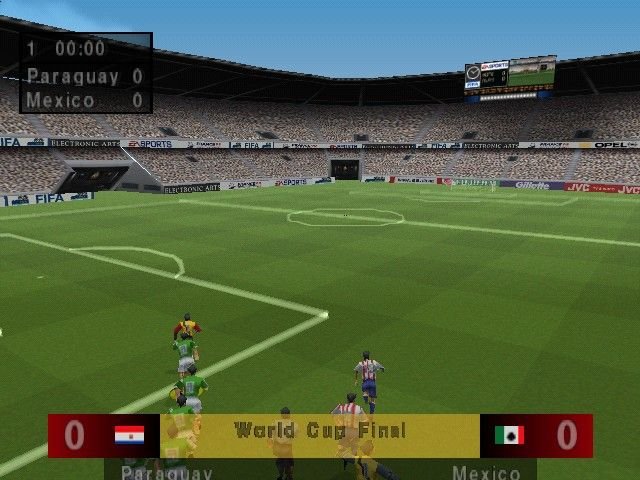
To truly appreciate why FIFA 98 remains undefeated, you have to look at the sheer, unadulterated madness of its ambition. The game did not just give you the standard handful of top-tier European leagues and a token international mode. EA Sports looked at the upcoming 1998 tournament in France and decided to include every single national team that was registered with FIFA at the time. We are talking about 172 international squads, allowing players to guide tiny footballing minnows like San Marino or the Cayman Islands through the brutal, multi-year qualifying stages all the way to lifting the trophy in Paris. It was an epic, globe-trotting journey that gave the game an unprecedented sense of scale. You could spend weeks fighting through regional qualifiers, dealing with away-game atmospheres, and slowly building your squad. Modern football games feel sterile and corporate by comparison, focusing entirely on microtransaction menus rather than the romantic, sweeping narrative of global qualification.
Then, of course, there is the audio-visual presentation, which slapped players in the face the second they booted up the console or PC. Before FIFA 98, sports game soundtracks were mostly generic, synthesized stadium rock or upbeat elevator jazz. EA changed the entire landscape of gaming culture by licensing Blur’s “Song 2” as the intro track. The moment those distorted guitar riffs and Damon Albarn’s explosive “Woo-hoo!” blasted through your television speakers, you knew you were playing something cool. It was a cultural touchstone that perfectly captured the high-energy, lad-culture aesthetic of late-nineties football. Combine that iconic intro with a legendary commentary team featuring John Motson, Andy Gray, and Des Lynam, and the atmosphere was unmatched. The commentary felt dynamic and enthusiastic, a massive leap forward from the repetitive, stilted soundbites of earlier 16-bit generations.
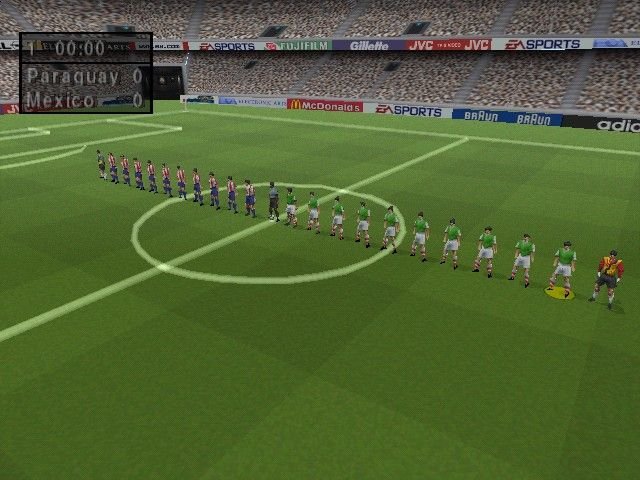
From a technical standpoint, FIFA 98 was the moment the series finally figured out how to utilize the power of the 3D graphics card. Running the game with a 3Dfx Voodoo card back then felt like stepping into the future. Players had distinct facial features, the stadiums looked massive and architectural, and the real-time lighting added a layer of broadcast realism that felt genuinely revolutionary. The game also introduced a legitimate implementation of the offside rule and refined tactical AI, meaning players actually made intelligent runs into space instead of just wandering around aimlessly.
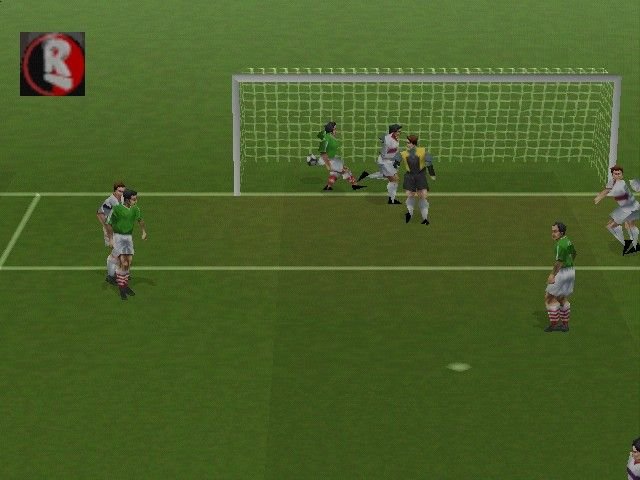
But what truly cements FIFA 98 as the greatest of all time is its chaotic, incredibly fun gameplay. It struck the perfect, elusive balance between simulation and pure arcade joy. This was the game that introduced the flick-trick mechanic, letting you embarrass defenders with a quick step-over or a sudden turn at the push of a button. It was also the era of the gloriously broken, intentionally satisfying intentional foul button. If an opposing striker skipped past your last defender, you could deliberately execute a flying, waist-high tackle to take them out of commission. Sure, it almost always resulted in an immediate red card, but the visceral satisfaction of completely wiping out a rival player was worth the tactical disadvantage. It injected a sense of backyard playground rivalry into a officially licensed product.
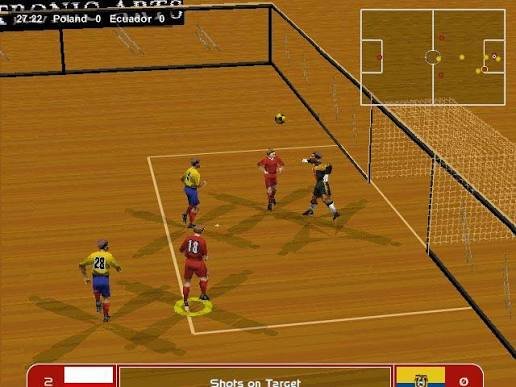
We also cannot talk about FIFA 98 without mentioning the legendary indoor football mode. For reasons that remain a tragic mystery, EA Sports eventually abandoned the indoor arenas in later entries, but in 1997, it was the absolute peak of local multiplayer entertainment. Playing five-a-side on a polished wooden floor with a heavy ball and walls that kept the ball constantly in play turned the game into a high-speed, frantic bouncing simulator. The pace was relentless, the scores were astronomical, and it provided a completely different flavor of gameplay without needing to load up a separate title. It was the ultimate party mode, causing countless broken controllers and ruined friendships during late-night weekend sessions.
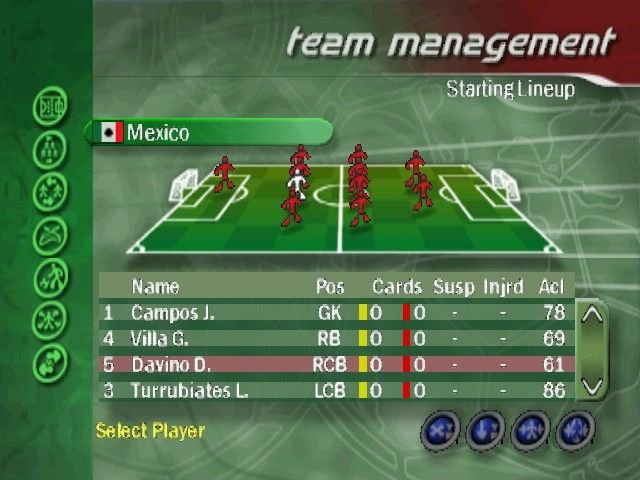
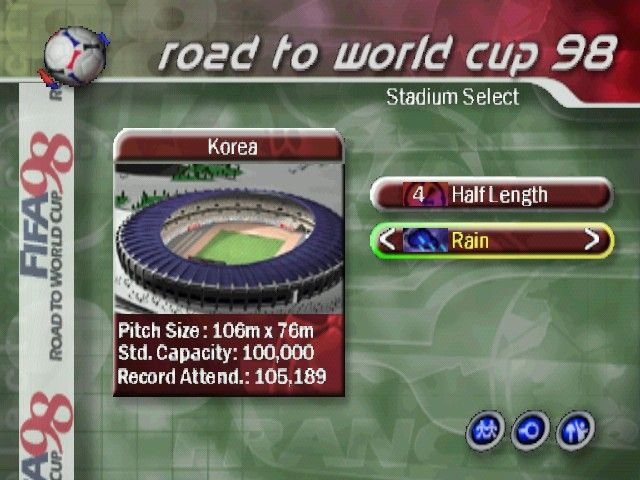
When you look at the current landscape of football simulators, they often feel burdened by their own obsession with hyper-realism and monetization. Modern iterations are hyper-focused on ultimate team modes, where the goal is to grind out menu challenges and buy digital packs rather than actually enjoying the sport on the pitch. FIFA 98 was created in an era before live-service models and patches. The developers had one shot to deliver a complete, feature-rich package that would keep players hooked for an entire year, and they over-delivered in every single category. It gave us a customized team builder, variable pitch conditions, actual tactical depth, and a historical records section that tracked your achievements across multiple tournament runs.
FIFA: Road to World Cup 98 was a beautiful anomaly. It captured a specific snapshot of football history—an era of iconic kits, legendary players like Zinedine Zidane and Ronaldo at the peak of their youthful powers, and a sport that still felt accessible and grounded. By giving players the entire planet to play with, introducing a soundtrack that defined a generation, and delivering an indoor mode that remains legendary to this day, it created a blueprint for what a sports game should be. It didn’t just simulate the sport of football; it celebrated the global culture surrounding it. Nearly thirty years later, despite all the graphical advancements and physics engines that have come since, the throne still belongs to the class of ninety-eight.