
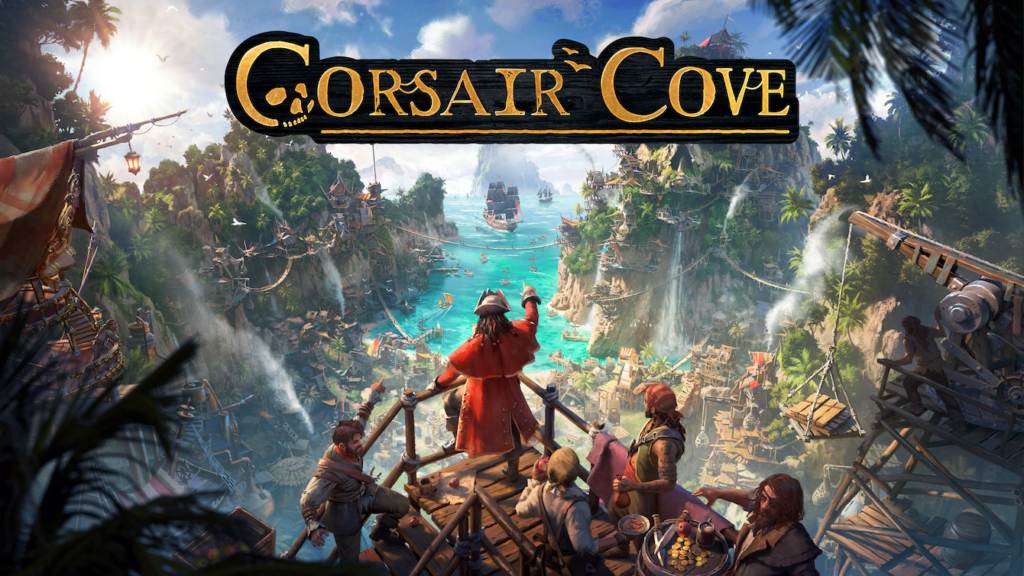

Corsair Cove by Limbic Entertainment is the pirate city-builder I didn’t know I needed until I spent way too many hours watching my cliffside shantytown grow into a chaotic, rum-soaked empire.
Corsair Cove dropped on July 31, 2026 for PC. Published by the always-reliable Hooded Horse crew (the same folks who brought us Against the Storm and Manor Lords), this is a vertical-building, production-chain-heavy strategy game set in the dying days of the Golden Age of Piracy. You start with a handful of shipwrecked scallywags on a rocky island and somehow end up running a full-blown pirate haven that the Crown desperately wants to wipe off the map.
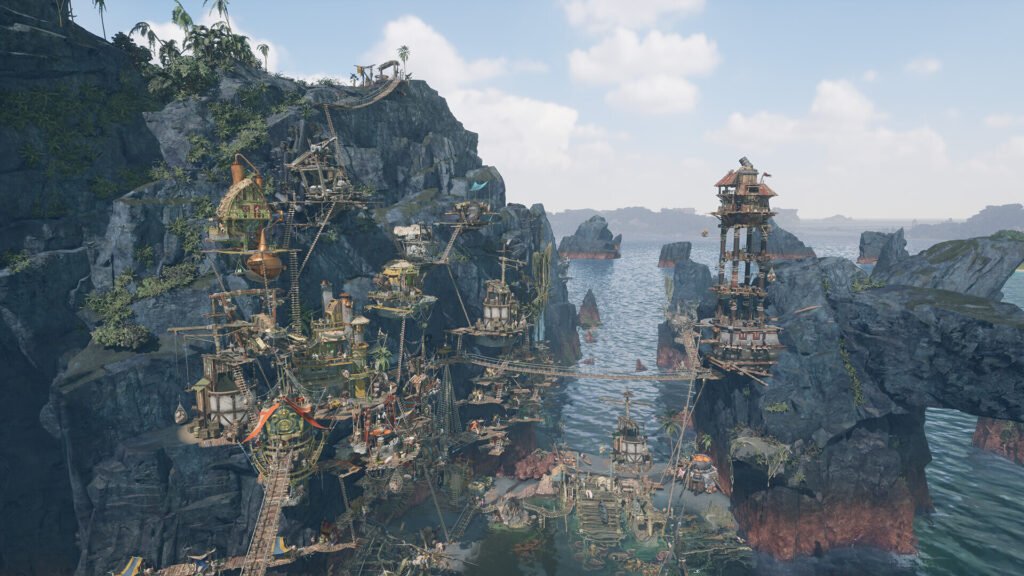
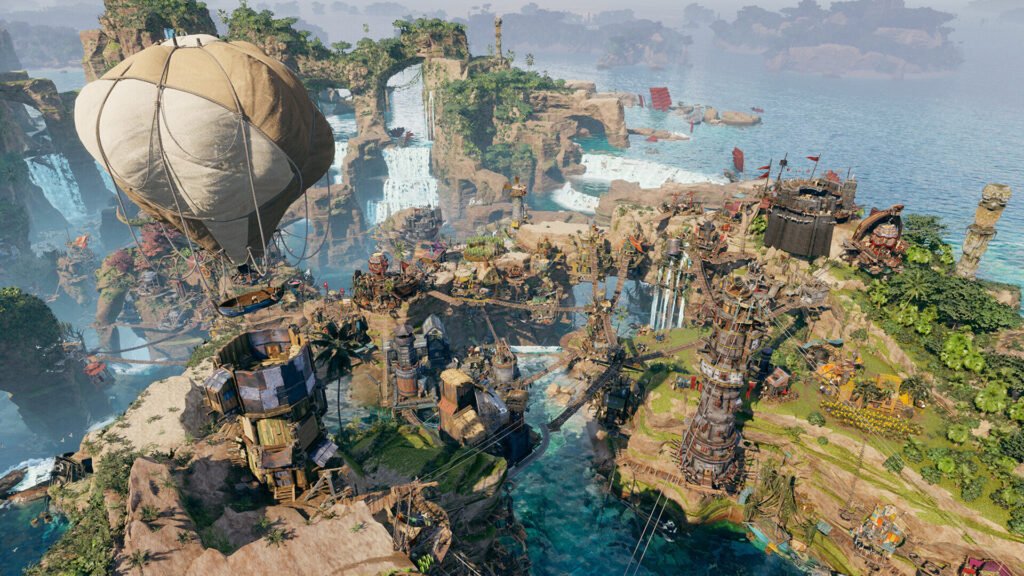
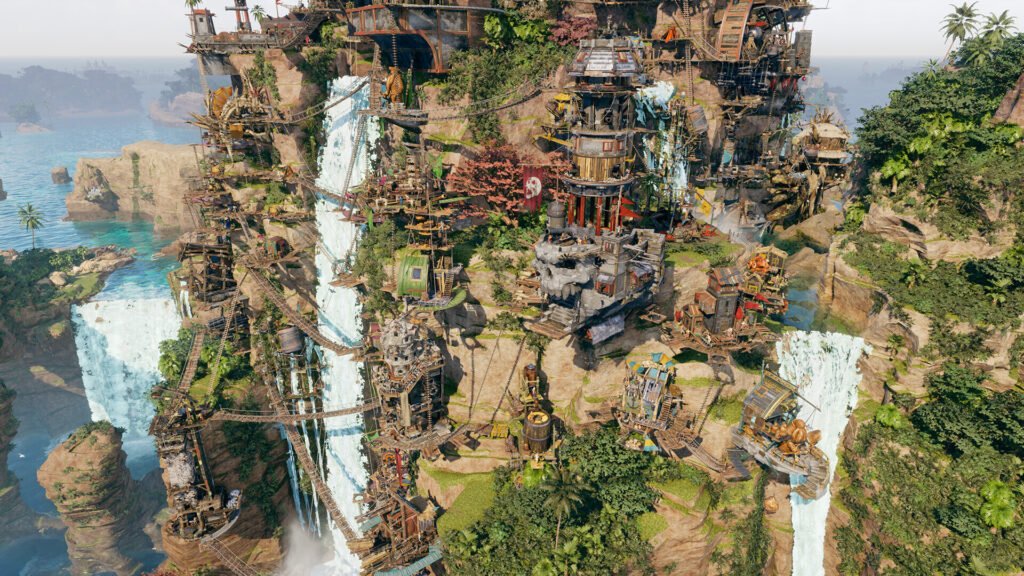
From the first moments, Corsair Cove feels different. Most city-builders hand you a flat plain and say “go wild.” This one hands you sheer cliffs, narrow ledges, and a skull-shaped mountain and dares you to make it work. Buildings cling to rock faces. Rope bridges swing over chasms. Ziplines and elevators become your best friends. Watching your settlement sprawl upward and outward across the island is genuinely satisfying in a way grid-based builders rarely manage. It looks like a pirate fever dream designed by someone who had a little too much grog and a lot of good ideas.
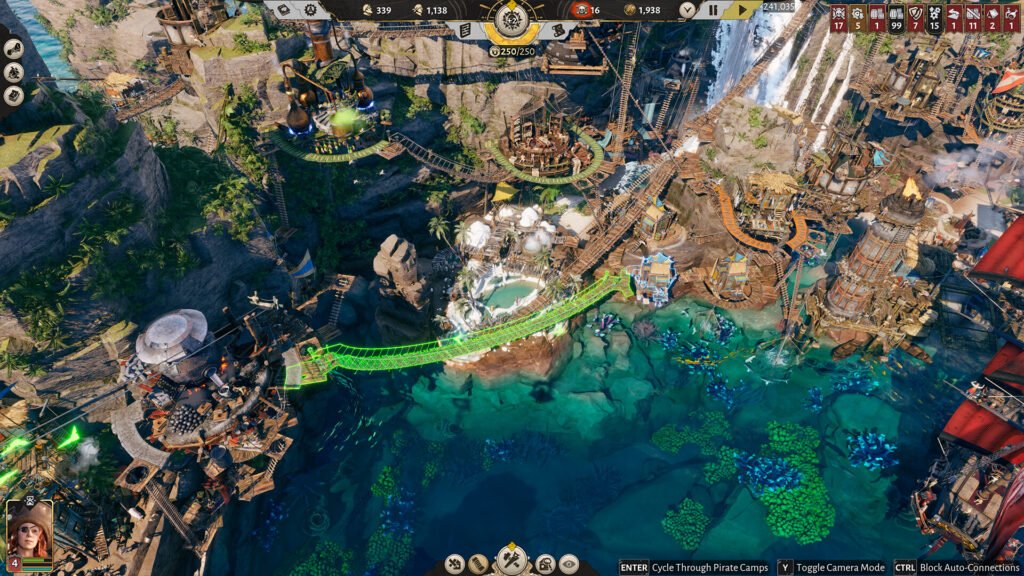
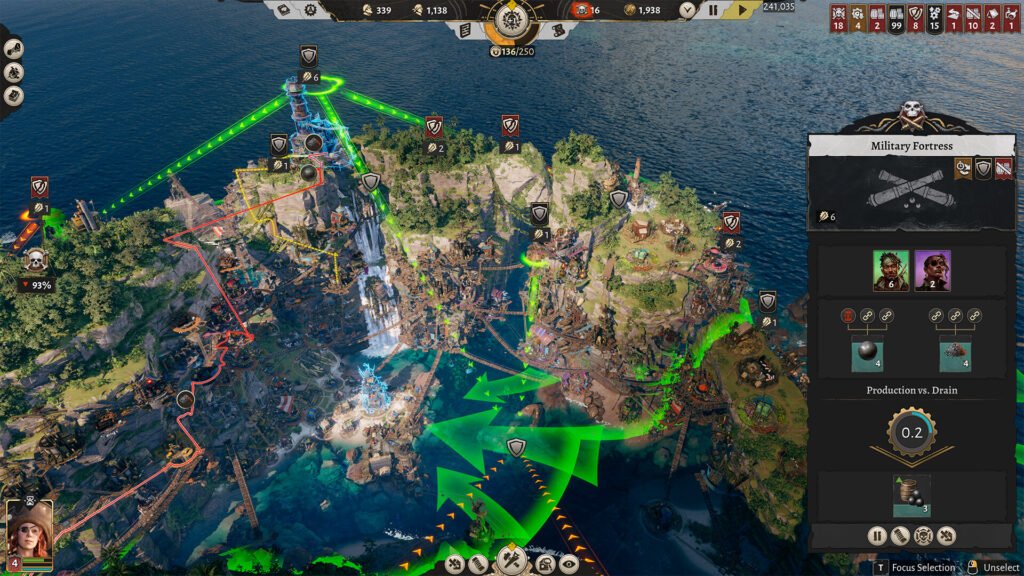
The core gameplay will feel familiar if you’ve ever played an Anno or Tropico game, but the execution has its own flavor. You harvest wood, stone, and food. You turn those into more advanced goods—hard tack, turtle soup, peg legs, flintlock pistols, fancy hats, barrels of booze. Your pirates get pickier as they climb the social ladder. A basic swabbie is fine with stew and a hammock. A veteran corsair wants tobacco, jewelry, and proper footwear or they’re going to start causing trouble. Managing those escalating demands across a multi-level island is the real puzzle. Distance matters. Inefficient routes create bottlenecks that can tank your whole economy if you’re not paying attention. The game does a solid job of showing you those paths in color so you can diagnose the problem, then gives you tools—extra warehouses, direct links, better transport—to fix it. Solving a messy logistics snarl by stringing a zipline across a canyon never gets old.
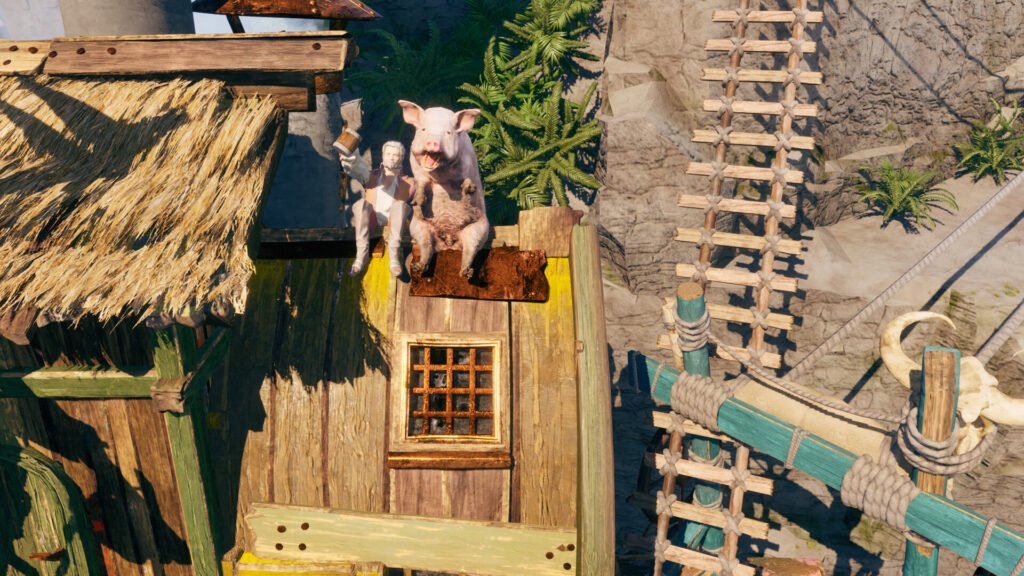
Limbic Entertainment clearly leaned into the pirate fantasy without going full grimdark. The world is colorful and lively. Pigs get spun around in taverns. Shanties break out. Random events throw curveballs like illness outbreaks or unexpected visitors. The islands themselves are gorgeous. Skull Rock feels iconic with its dramatic cliffs. Devil’s Basin has that giant red-leaved tree and waterfall that somehow makes you want to build a tavern right underneath it. Even the gloomier Ship Graveyard map has personality. The audio team (including some Black Flag-style shanty work) sells the atmosphere hard. Zooming in on your settlement just to watch the little details is half the fun.
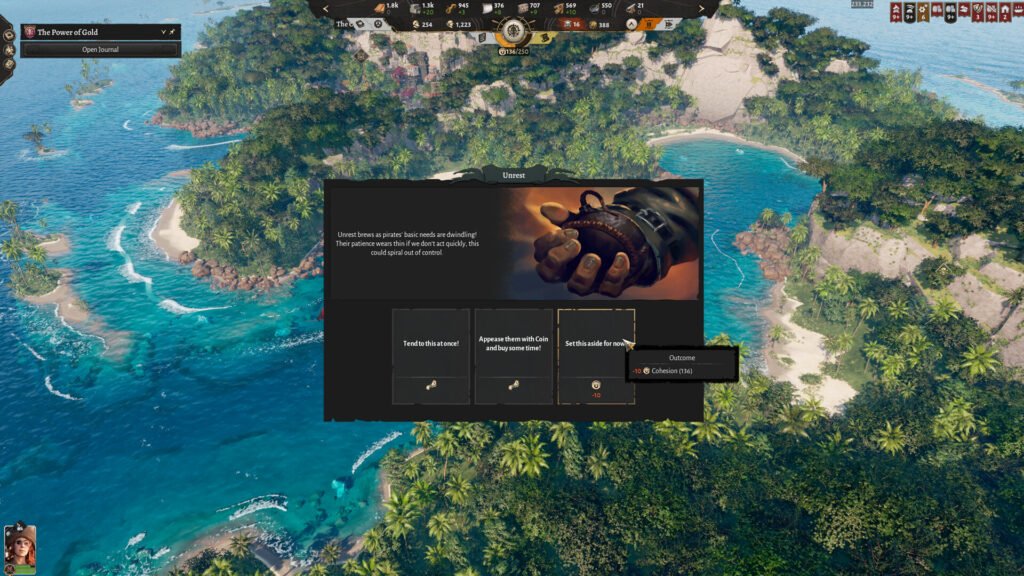
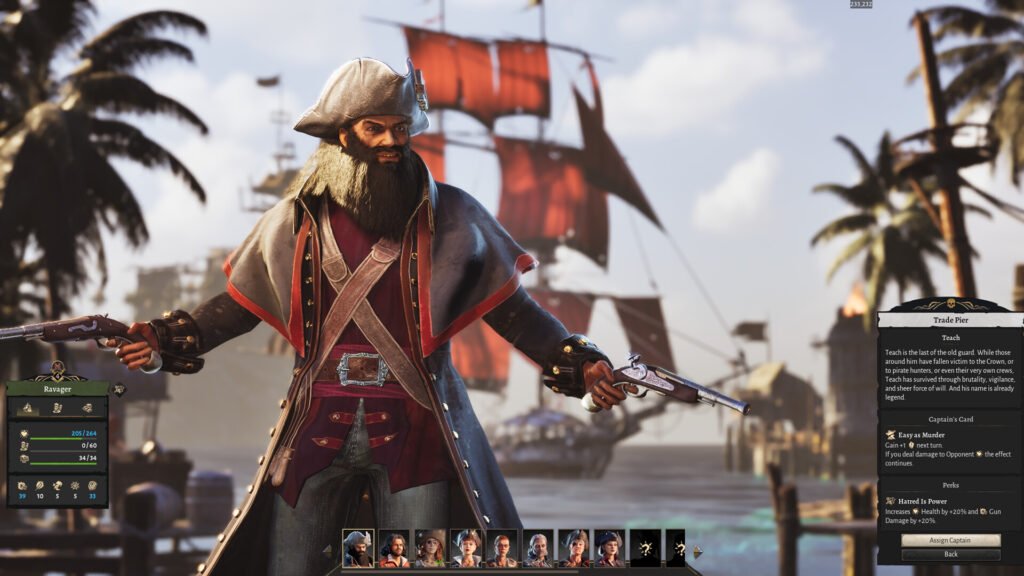
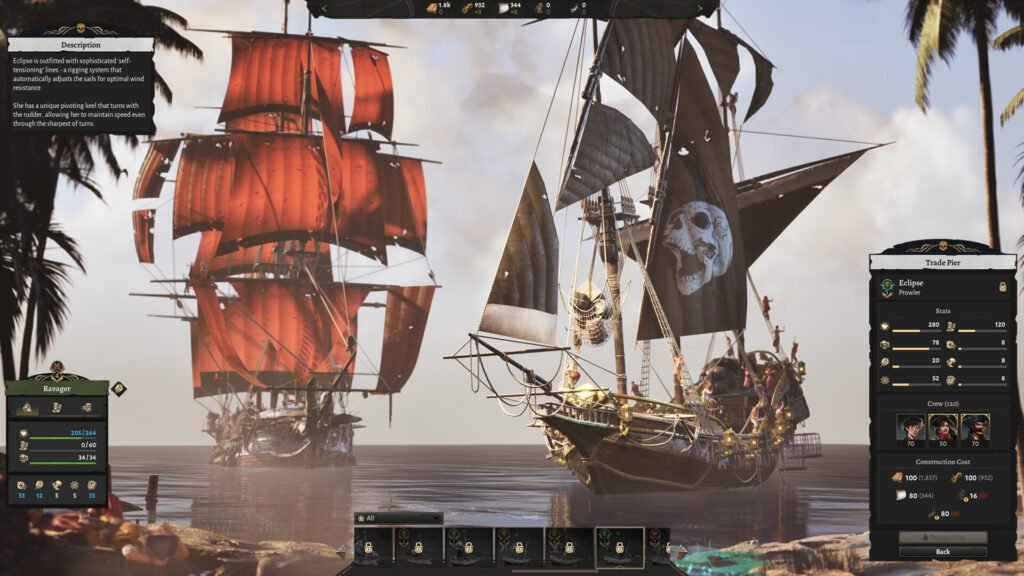
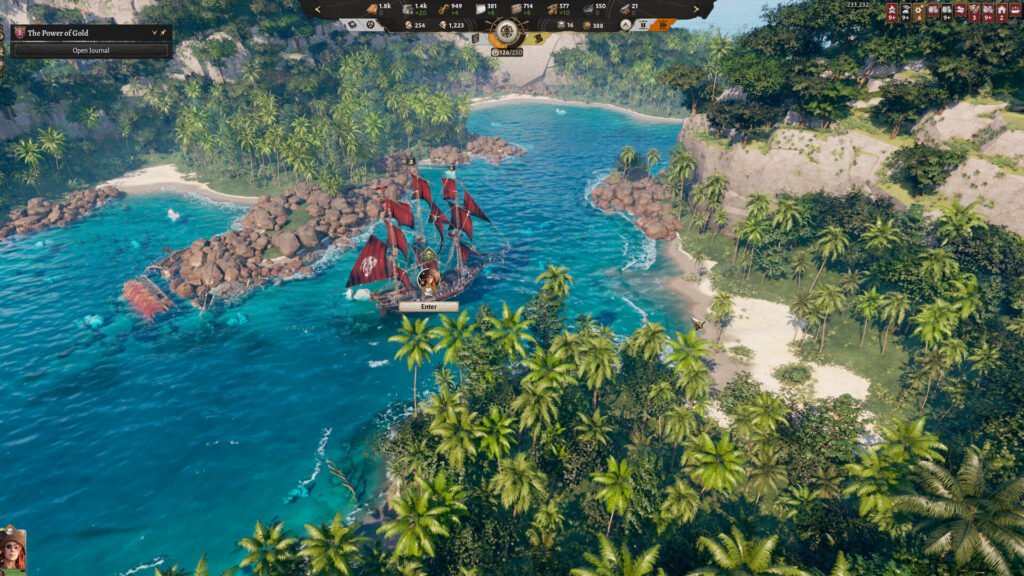
Then there’s the seafaring side. Once you build ships and appoint captains, you start sending crews out to raid, explore, recruit, and generally cause problems for the Crown. These missions use a turn-based card-and-dice system. You play actions that cost supplies, roll dice, try to complete objectives without losing your crew or ship. Captains have unique abilities. Different ship classes specialize in boarding, speed, guns, or durability. Mixing and matching them for specific jobs is engaging early on. The missions themselves feed back into the city-builder side by bringing home rare resources, new pirates, and progress toward the four main principles: Wealth, Empire, Seafaring, and Notoriety. Completing Deeds in those areas unlocks new buildings, ships, and upgrades through a Compass system instead of a traditional tech tree. It feels more thematic than most progression systems.
The mid-game is where things get a little rocky. Production chains grow more complex. Higher-tier pirates demand goods that are scattered all over the island. Exploration starts feeling mandatory because certain resources and population growth are tied to it. The card-and-dice encounters, which felt fresh at first, begin to blur together. A chase mission and a boarding mission can end up using very similar actions dressed up in different language. Dice luck sometimes decides outcomes more than smart preparation. You’ll hit stretches where you’re sailing around completing checklist-style Deeds just to unlock the next set of tools, and the pure joy of expanding your cliffside paradise takes a back seat to administrative work. Large late-game settlements can also become visually messy. Overlapping paths and stacked buildings make it harder to read what’s going on at a glance.
Still, the late game pulls it back together. Better transport options, elite crews, and more powerful ships give you the tools to stabilize the chaos. Watching a carefully tuned production empire finally hum while your fleet sails out to thumb its nose at the Crown feels rewarding. The game offers Story Mode on the main island and Uncharted Mode with extra maps and customizable difficulty, so there’s replay value if you want to try different focuses or harsher starting conditions.
Corsair Cove doesn’t reinvent the city-builder genre, and it doesn’t need to. What it does is take solid logistics gameplay, wrap it in a strong pirate theme, and force you to think vertically in a way that feels fresh. The presentation is charming as hell. The early hours are some of the most immediately enjoyable I’ve had in a management game recently. The vertical construction system is the real star—once you get used to building tall instead of wide, going back to flat maps feels strangely limiting. The connection between your island economy and your seafaring adventures is tighter than it first appears. Success on one side fuels the other.
There are rough patches. Mid-game pacing can drag. The naval encounters lean too hard on repetition and RNG. Managing a massive settlement isn’t always as smooth as the early game suggests. A few more quality-of-life tools for late-game logistics and a bit more variety in the mission system would have pushed this from “really good” to “must-play.” Even with those caveats, the overall package is generous for the price and polished enough that the rough edges don’t sink the ship.
If you like watching complex production chains come together, if the idea of a pirate settlement clinging to cliffs makes you smile, or if you’ve ever wanted a management game that feels more like living in a chaotic Caribbean adventure than running a spreadsheet, Corsair Cove is worth your time. Limbic Entertainment took the experience they built on Tropico 6 and Park Beyond and pointed it in a more focused, vertical, pirate-flavored direction. The result is a city-builder with real personality. You’ll curse the occasional bottleneck and the unlucky dice roll, but you’ll also spend long stretches just staring at your growing haven, listening to the shanties, and feeling pretty damn pleased with the mess you’ve made.
In a year full of big strategy releases, this one quietly sails in, drops anchor, and reminds you why the genre is still fun. Hoist the black flag, keep the rum flowing, and try not to let your production chains collapse. The Crown is coming, and your cliffside paradise isn’t going to defend itself.