
Release Date: May 25, 2004 Developer: Ion Storm
Get It On: GOG
There are few feelings quite like the moment the lights dim and the city starts breathing around you. That low, constant hum of distant conversations, the clank of armored boots on wet cobblestones, the soft scrape of your own footsteps when you remember to stay quiet. Thief: Deadly Shadows delivers that feeling better than almost anything else from its era. Released in 2004 for PC and Xbox, this third entry in the legendary Thief series hands you the cloak and blackjack of Garrett, the cynical master thief who has been plundering the rich and dodging the law since the late nineties. Developed by Ion Storm after the tragic collapse of Looking Glass Studios, the game managed to close out the original trilogy with style, even if it never quite matched the pure brilliance of its predecessors for some longtime fans.
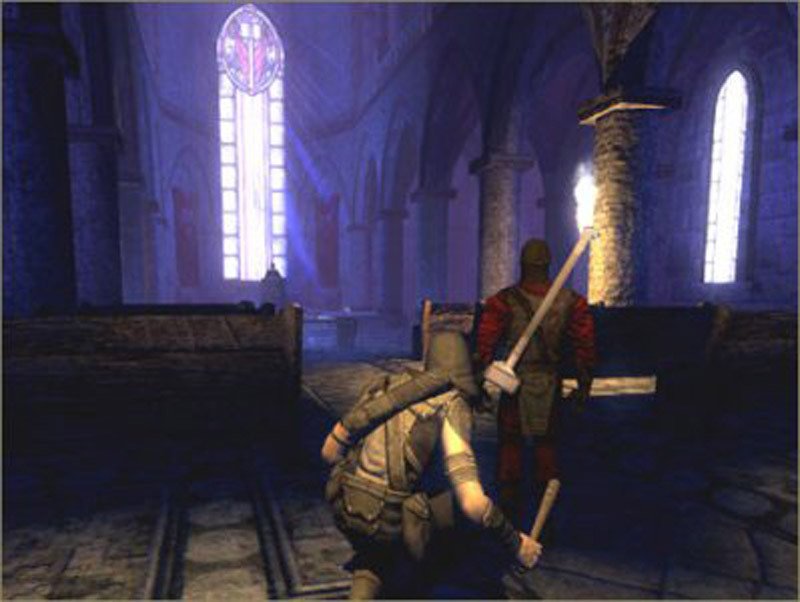
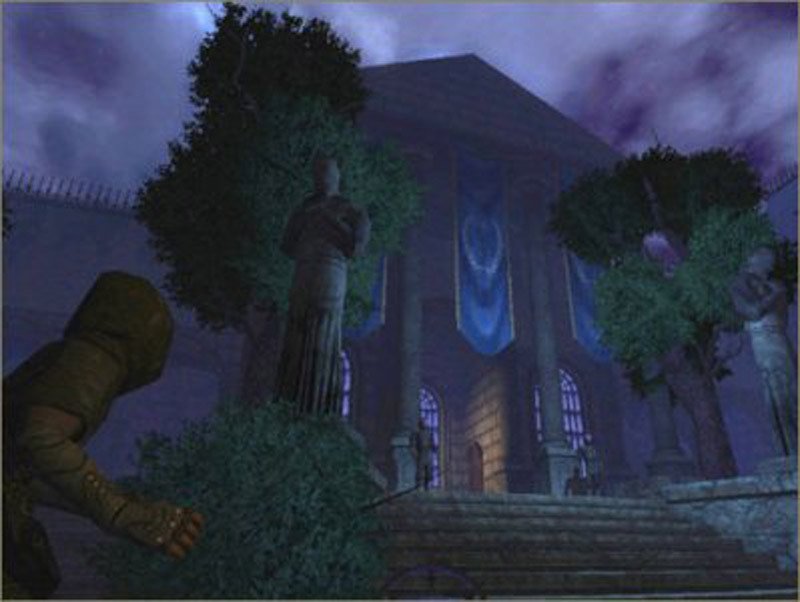
What makes Deadly Shadows stand out immediately is the simple fact that you can finally walk the streets. Previous games dropped Garrett into carefully crafted missions and then yanked him back out when the job was done. Here, The City becomes a living, breathing hub. Between story missions you can wander the districts, overhear gossip, snatch purses from distracted nobles, break into houses for extra loot, and fence your ill-gotten gains at shady shops. The world reacts. Guards patrol with actual routines. Civilians chat about the latest murders and rumors of the Keepers. The sense of being a predator moving through an ecosystem is stronger than ever. You are not just completing levels. You are living as a thief in a place that feels genuinely dangerous and full of opportunity.
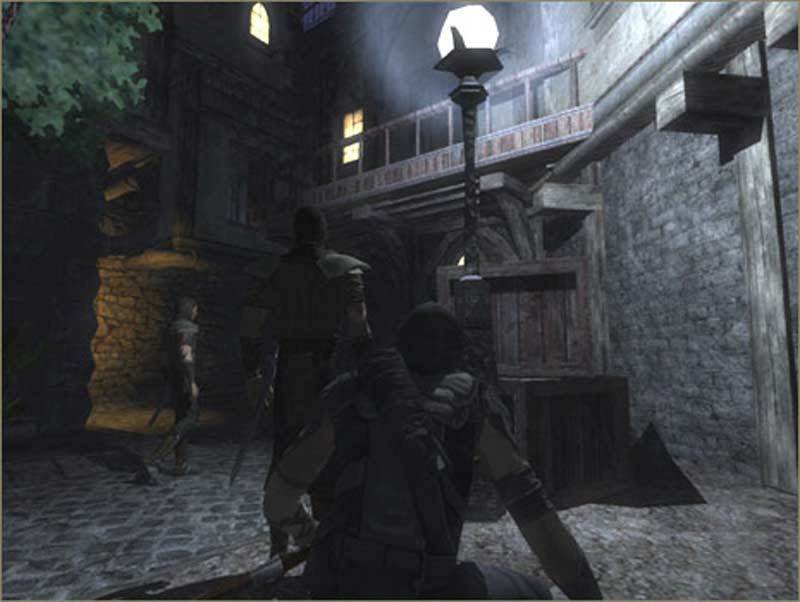
The core stealth gameplay remains gloriously pure. Light and sound are your constant companions and your greatest enemies. Stick to the shadows and you become nearly invisible. Make noise on a hard surface and every nearby guard suddenly develops a personal interest in your exact location. The toolbox is classic Thief: water arrows to douse torches, moss arrows to silence your steps, flashbombs, gas arrows, and the trusty blackjack for quiet takedowns. Lockpicking returns as a tense little mini-game that feels more tactile than before, especially on the original Xbox where the controller rumble actually helped you feel the pins. One of the bigger technical changes was the ability to switch freely between first-person and third-person views, plus the new wall-flattening move that let you press yourself against surfaces like a proper shadow. The lighting system was also a big step up for its time, with dynamic shadows that could actually move as light sources shifted.
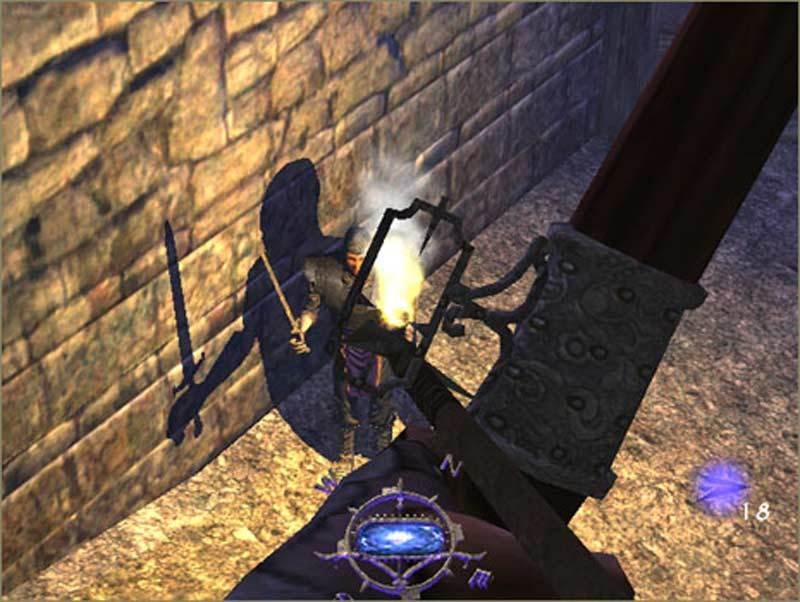
The story digs deep into the mythology that Looking Glass had been building. Garrett is pulled back into the orbit of the secretive Keepers, the mysterious order that once trained him. Ancient prophecies speak of a coming Dark Age. Artifacts must be stolen from both the rigid Hammerites and the chaotic Pagans. As the plot thickens, questions of identity, betrayal, and the very nature of the Glyph magic that powers the Keepers’ knowledge come to the forefront. The game takes you to some truly memorable locations, none more unsettling than the Shalebridge Cradle, a burned-out orphanage and asylum that ranks among the most effectively creepy levels ever put in a stealth game. The atmosphere there is thick enough to choke on. Every creak and distant sob feels personal.
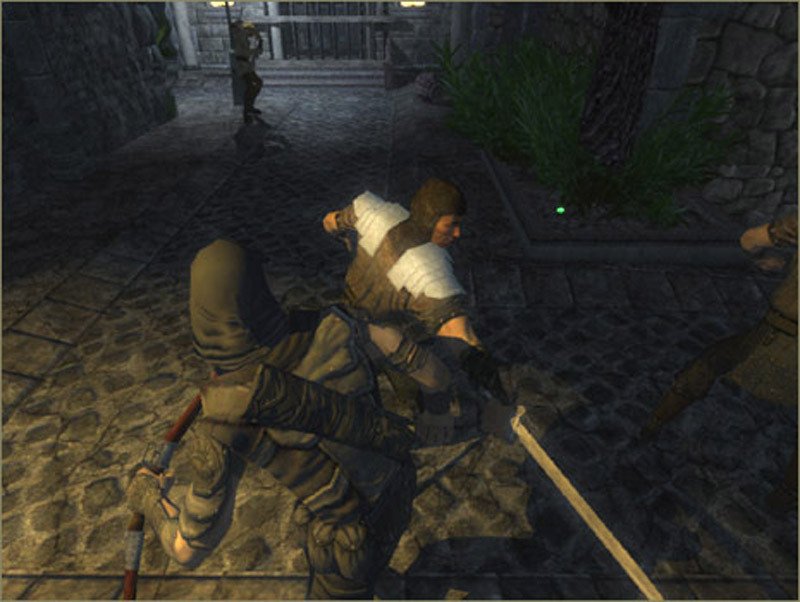
Development of the game was complicated from the start. Looking Glass had already been working on concepts for a third game when the studio folded in 2000. Eidos handed the project to Ion Storm Austin, the same team that had just delivered Deus Ex. Several former Looking Glass staff joined the effort, including key designers and writers. The team switched to a heavily modified Unreal Engine 2, which brought better lighting and sound propagation but also forced some compromises. Memory limitations meant the city had to be broken into load zones, and the overall level design felt a bit more constrained than the sprawling mansions of the earlier games. Still, the audio design remained exceptional. The voice work, ambient soundscapes, and the ever-present sense of being watched all combined to create that signature Thief tension.
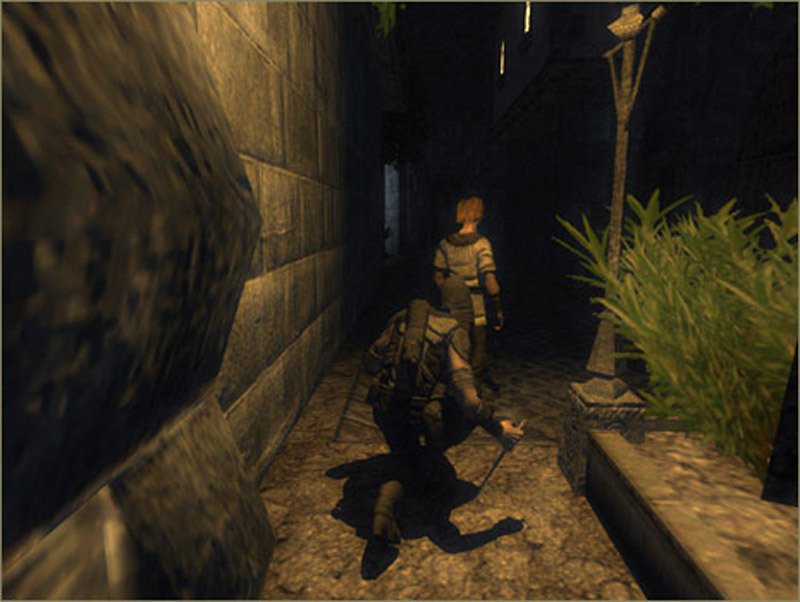
Reception at the time was solid but not ecstatic. Critics praised the atmosphere, the improved freedom of the city, and the strong writing, while some noted that the AI could be inconsistent and that the game felt slightly smaller in scope than the first two entries. Scores hovered in the mid-to-high eighties on most outlets. For many players it still landed as a very good stealth experience, just not the absolute peak of the series. Looking back more than twenty years later, the game has aged in interesting ways. The graphics are obviously dated, but the lighting still works its magic, and the pure gameplay loop of planning routes, reading guard patterns, and slipping away with the loot remains deeply satisfying. Modern stealth games have gotten flashier and more cinematic, yet few capture the same patient, methodical dread that Deadly Shadows does when you are crouched in a dark corner listening to two guards argue about whether they really heard something.
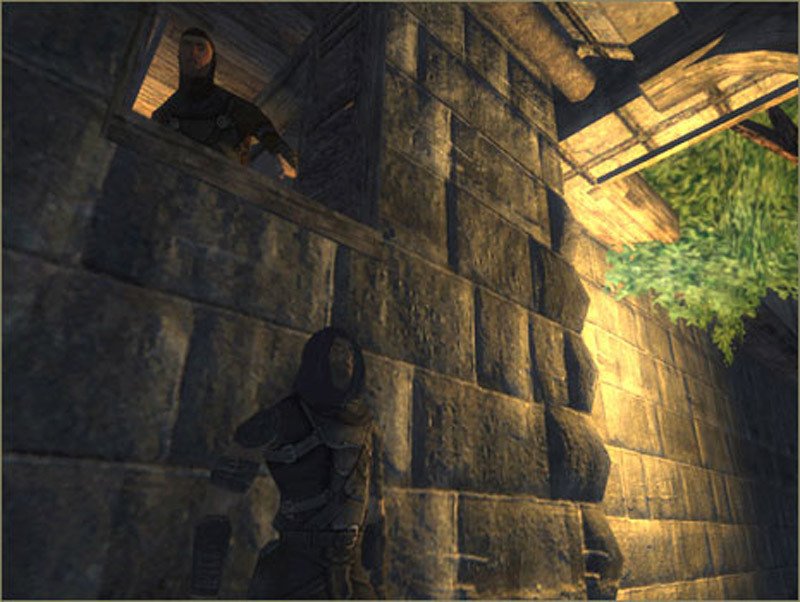
What lingers most is the personality of Garrett himself. Stephen Russell’s dry, world-weary performance remains perfect. He is not a hero. He is a professional who would rather stay out of prophecies and cosmic nonsense, yet keeps getting dragged into them anyway. The closing moments of the game carry a quiet, circular weight that feels earned after three full adventures. The original Thief trilogy ended here, and while the 2014 reboot tried to start something new, it never quite recaptured the same strange, medieval-steampunk soul that defined these games.
If you have never played Thief: Deadly Shadows, or if it has been years since you last crept through The City, it is still worth seeking out. The game rewards patience and observation more than twitch reflexes. It asks you to slow down, listen carefully, and treat every shadow as a potential ally. In an age of loud, constant action, that kind of quiet confidence feels almost radical. Garrett would probably just shrug and say the rich still have more than they need, and the night is still long enough to take some of it. The rest is just noise.