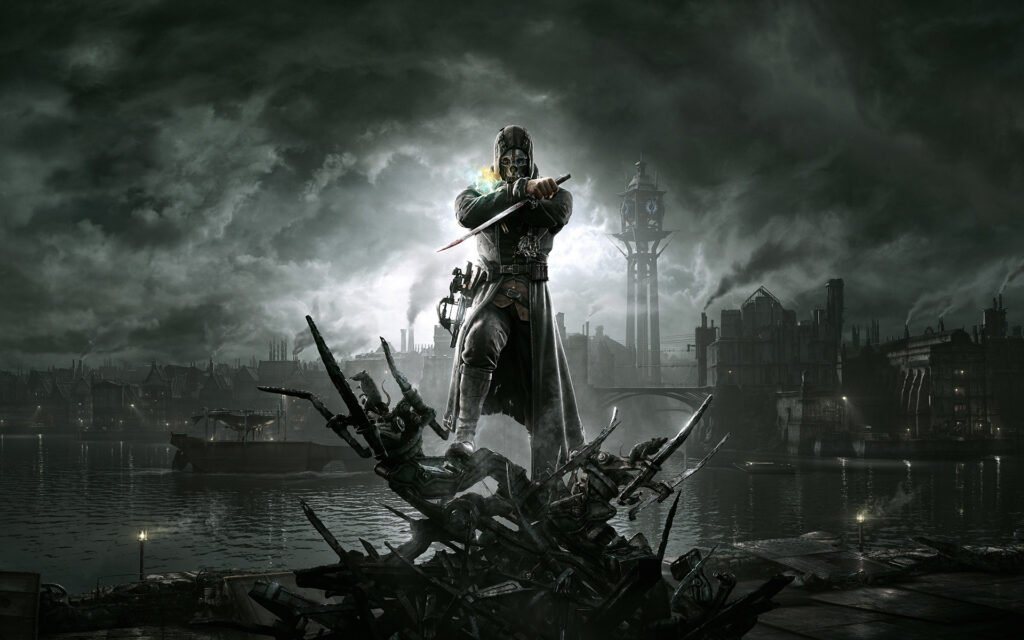

There’s a special kind of satisfaction that comes from standing on a rooftop in the middle of a plague-ridden city, watching a group of guards pass underneath while rats swarm a corpse in the alley below, and knowing you could end this entire encounter in about five different ways before any of them even look up. That feeling sits at the heart of Dishonored, the 2012 masterpiece from Arkane Studios that still feels like a breath of fresh (if slightly rat-scented) air more than a decade later.
Published by Bethesda Softworks and released in October 2012 for PC, PlayStation 3, and Xbox 360, Dishonored drops you into the boots of Corvo Attano, the loyal bodyguard to Empress Jessamine Kaldwin. One terrible night everything falls apart. Assassins strike. The Empress is murdered. Her young daughter Emily is kidnapped. And Corvo, the man sworn to protect them both, gets framed for the crime. After months rotting in prison and facing the executioner’s blade, he escapes with help from a group of Loyalists who want the true conspirators brought down and the rightful heir restored. Along the way he receives a visit from a mysterious being known only as the Outsider, who marks Corvo’s hand and gifts him a suite of supernatural powers that turn a skilled swordsman into something far more dangerous.
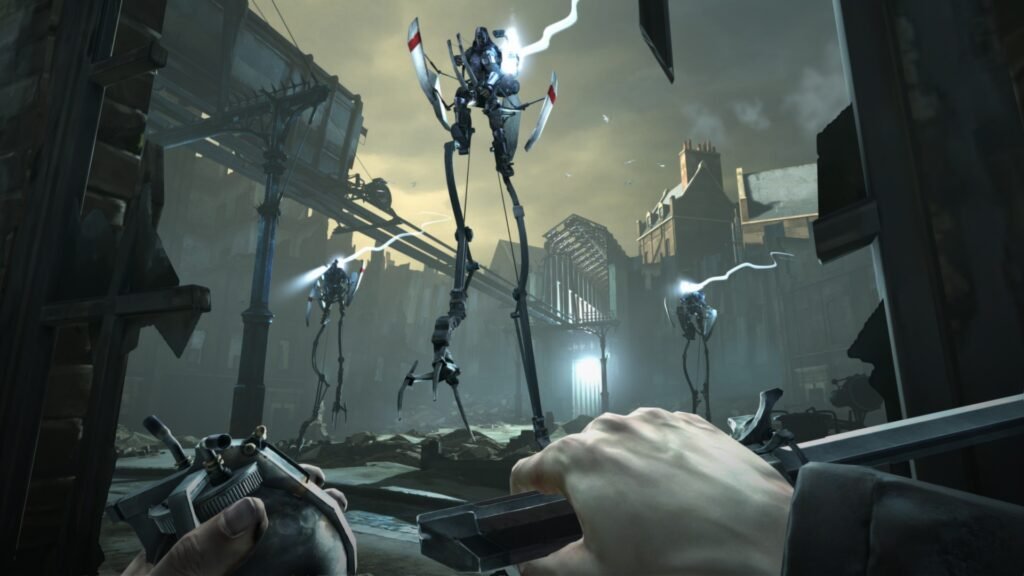
The setting is the industrial city of Dunwall, capital of the Empire of the Isles. Think late-Victorian London and Edinburgh filtered through a grimy steampunk nightmare. Whale oil powers everything from streetlights to the deadly Walls of Light that slice unauthorized people into ash. A rat plague is devouring the poor while the rich throw masked parties behind high walls. Tallboys—guards on mechanical stilts—patrol the streets with explosive arrows. Propaganda blares from speakers. The whole place feels alive, oppressive, and strangely beautiful. Art director Viktor Antonov (the same mind behind City 17 in Half-Life 2) and the team at Arkane poured incredible care into making Dunwall feel like a real, rotting place you could almost smell.
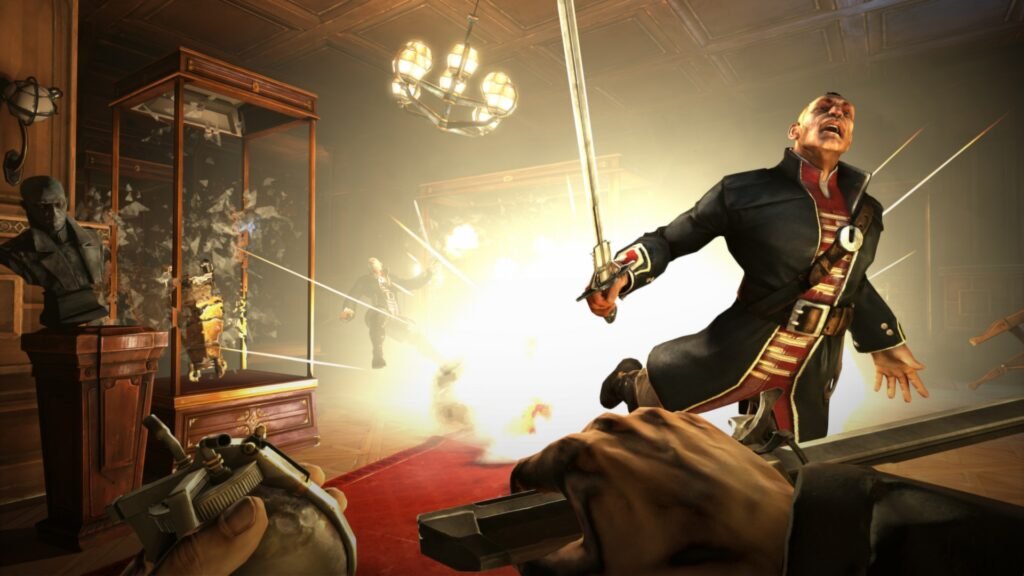
What makes Dishonored special is how little it cares about the “right” way to play. You can ghost through missions like a shadow, never raising an alarm and leaving every target alive but neutralized in creative non-lethal ways. You can go full assassin and leave trails of corpses that the rats will happily clean up for you. Or you can mix the two approaches until the city itself starts reacting. That’s where the chaos system comes in. Kill a lot of people, and the plague gets worse, more weepers (infected citizens who cry blood) appear, guards become more aggressive, and the story takes a darker turn. Play with restraint and the world feels a little less hopeless. The game never lectures you. It just watches and adjusts.
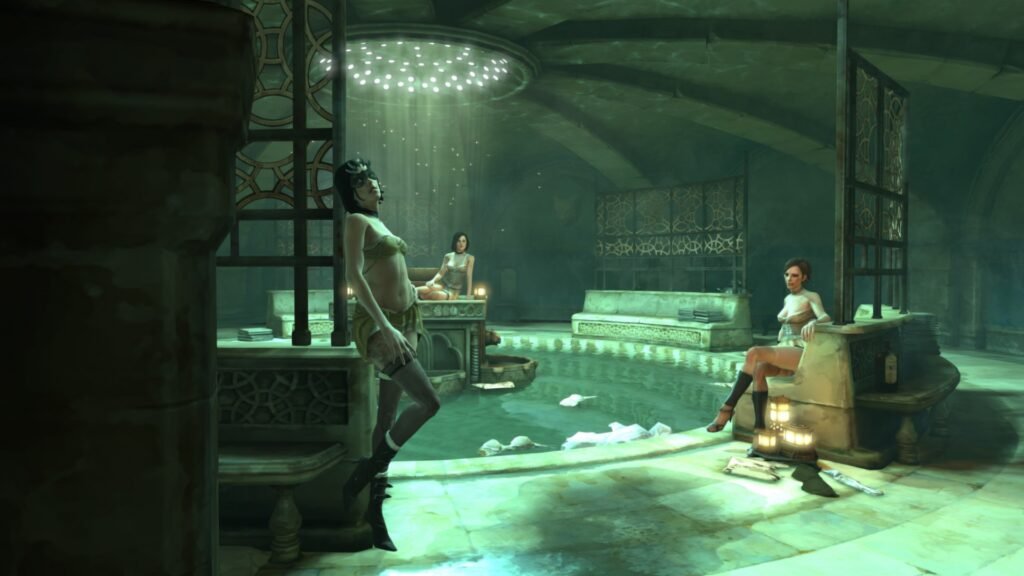
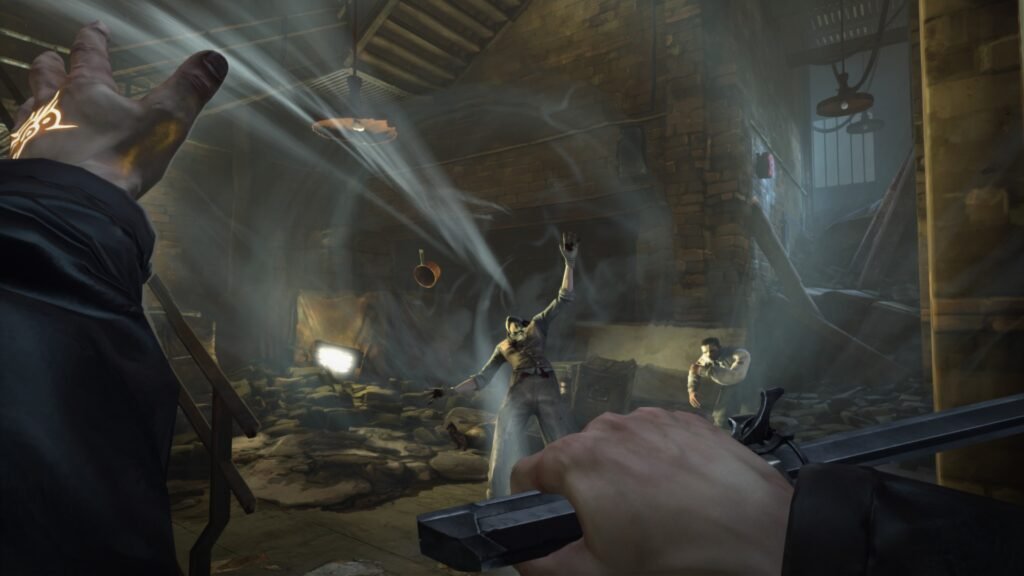
The powers are pure joy to experiment with. Blink lets you teleport short distances—onto ledges, behind enemies, or across gaps that look impossible. Possession lets you take control of rats, fish, or even humans for a short time. Bend Time slows or freezes the world so you can stroll past guards or set up the perfect ambush. Devouring Swarm summons a pack of ravenous rats. Windblast knocks enemies off ledges or into your waiting blade. Combine them and the game becomes a playground. Possess a rat, crawl through a pipe, emerge behind a target, freeze time, and walk away while the body hits the floor. The systems are deep enough that players kept discovering new tricks years after launch.
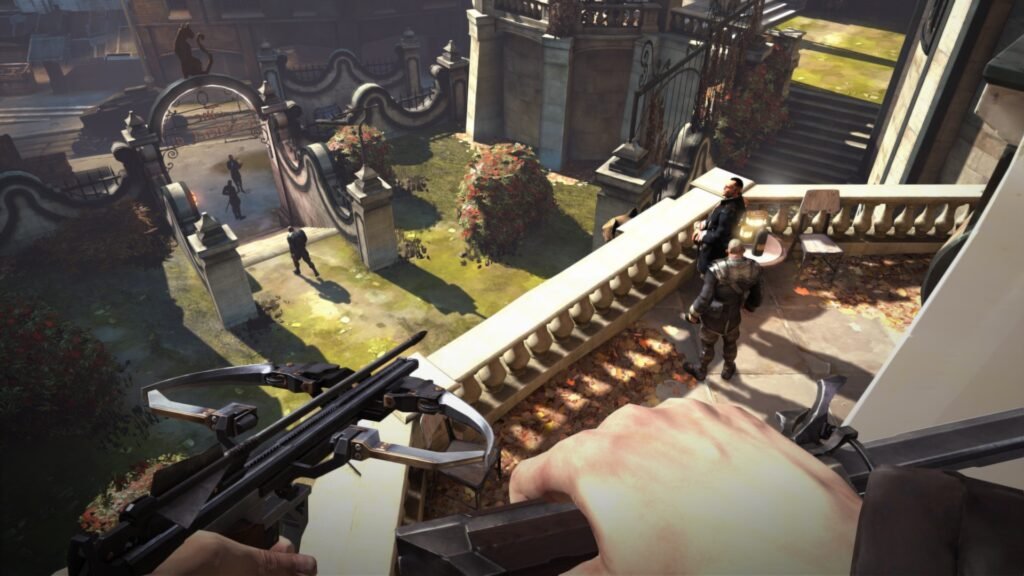
Combat is sharp when you choose it. Corvo’s sword feels weighty, the crossbow is perfect for silent takedowns, and the gadgets—spring razors, sticky grenades, sleep darts—encourage creativity. But the real star is the level design. Every mission is a dense, vertical sandbox full of alternate routes, secrets, and environmental storytelling. You can go through the front door, climb the rooftops, swim through the sewers, or possess a fish and take the waterway. Side objectives and optional conversations reward curiosity. The hub area at the Hound Pits Pub gives the story breathing room between missions, letting you talk to the eccentric cast of Loyalists, upgrade your gear, and check in on young Emily.
The writing and voice work help sell the world. Corvo himself is silent, which lets you project onto him, but the supporting cast is full of personality. The Outsider, voiced with perfect detached amusement, feels like a cosmic observer who’s genuinely curious what you’ll do with his gifts. Susan Sarandon, Brad Dourif, Carrie Fisher, Michael Madsen, Lena Headey, and Chloë Grace Moretz all lend their voices. The story of revenge and political intrigue is solid enough, but the real narrative is the one you write with your actions.
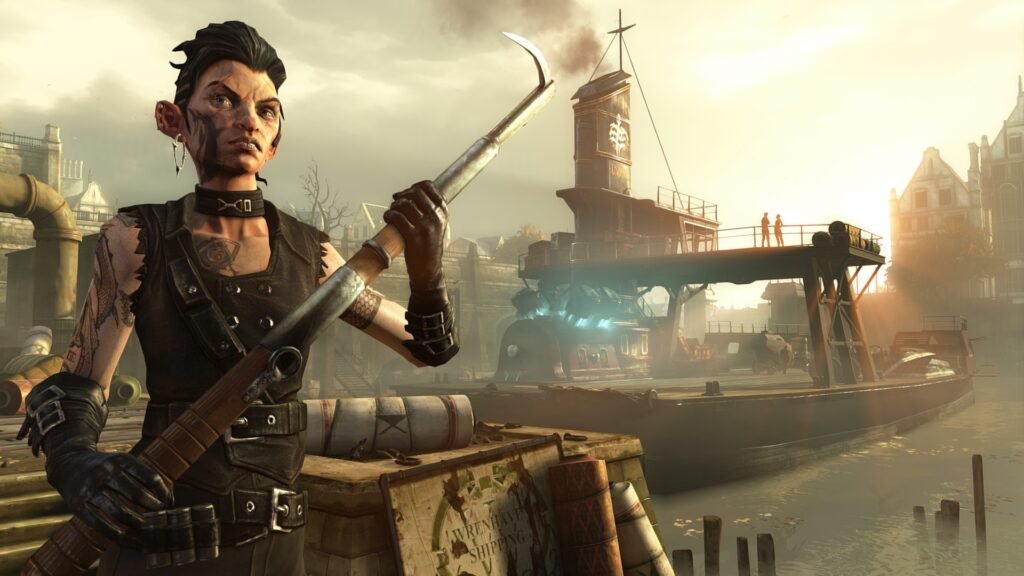
The game’s story didn’t end with the main campaign. In 2013 Arkane released two excellent story DLCs that shift the spotlight to Daud, the legendary assassin who actually killed the Empress and set the whole tragedy in motion. The Knife of Dunwall puts you in Daud’s boots six months after that fateful night. Haunted by what he did and visited once again by the Outsider, Daud is given a cryptic lead: the name Delilah. What follows is a tight, atmospheric three-mission arc that takes him through new corners of Dunwall, including the brutal Rothwild Slaughterhouse and the Legal District. Daud plays differently from Corvo. His version of Blink freezes time when he stands still, he can summon his fellow Whaler assassins for backup, and he gets unique gadgets like chokedust and arc mines. The missions retain the same dense, multi-path design that made the base game great, and the chaos system still tracks every choice. By the end of The Knife of Dunwall, Daud has learned enough about the mysterious Delilah to realize she’s a far bigger threat than he first imagined, and one of his own lieutenants has already turned against him.
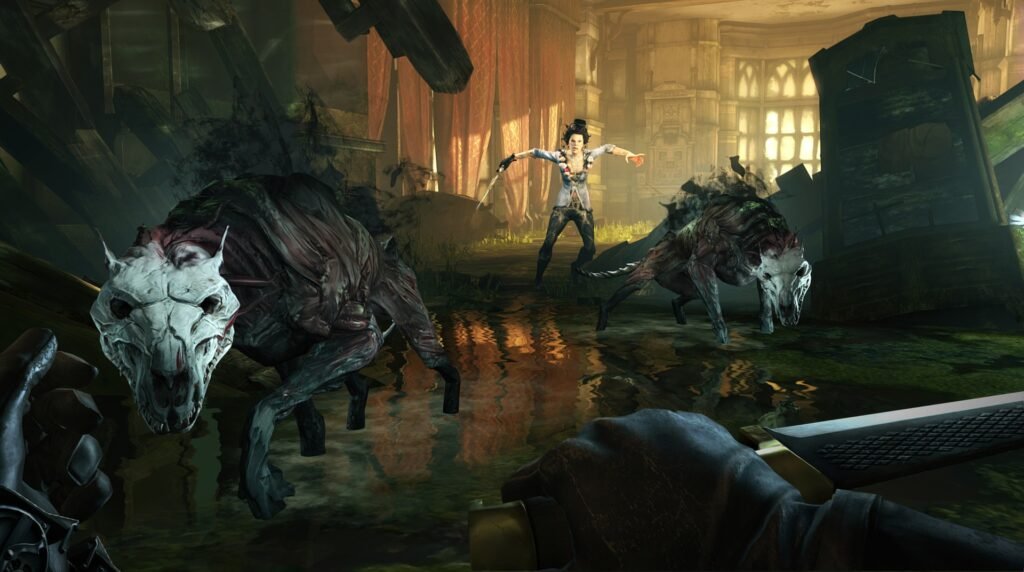
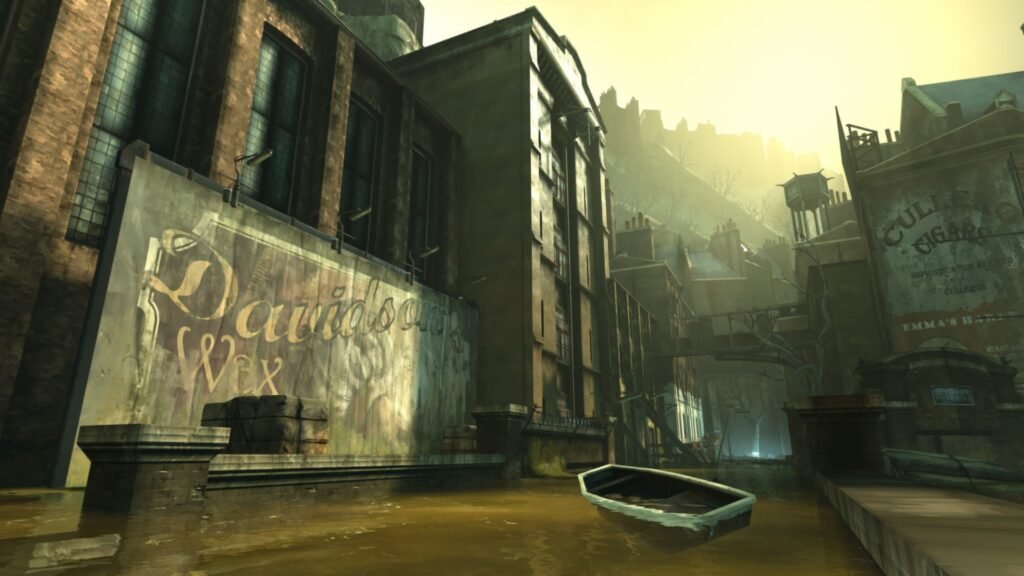
The Brigmore Witches picks up right where the previous DLC left off and brings Daud’s story to a close. Now fully aware of Delilah Copperspoon and her coven of witches, Daud has to stop a ritual that could seal his fate and rewrite the future of the Empire. The three new missions send him into Coldridge Prison (now even more fortified after Corvo’s escape), the gang-war-torn Drapers Ward, and finally the eerie Brigmore Manor itself. Along the way he deals with rival gangs, the Dead Eels and the Hatters, and has to navigate shifting alliances just to reach Delilah’s stronghold. The DLC introduces a new power called Pull and a handful of corrupted bone charms that offer strong benefits with real drawbacks. The final confrontation with Delilah is one of the most memorable set pieces in the entire series, and the way the story ties back into the main campaign’s Flooded District mission still feels elegant. Together the two DLCs give Daud a complete, satisfying arc of regret, investigation, and hard choices that many players consider essential to the full Dishonored experience.
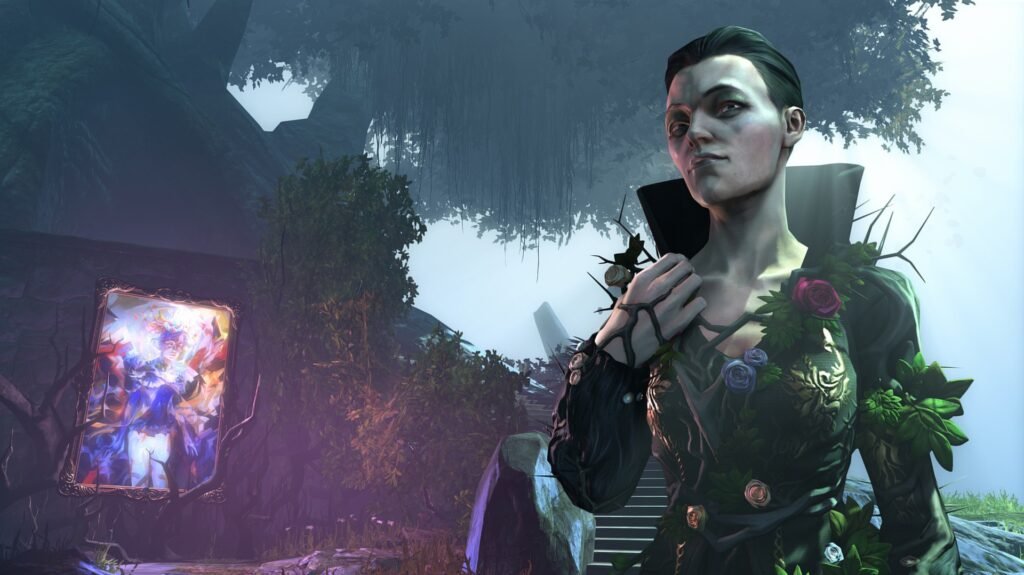
Arkane Studios, led by creative directors Harvey Smith and Raphaël Colantonio, spent years refining the game. Early versions were set in different places and times before they settled on the industrial-fantasy Dunwall we know. The team came from the immersive sim tradition—Deus Ex, Arx Fatalis, Dark Messiah—and it shows. They designed systems that could interact in unexpected ways and then refused to lock them down when testers found clever exploits. That philosophy of trusting the player is rare in big-budget games and remains one of Dishonored’s greatest strengths.
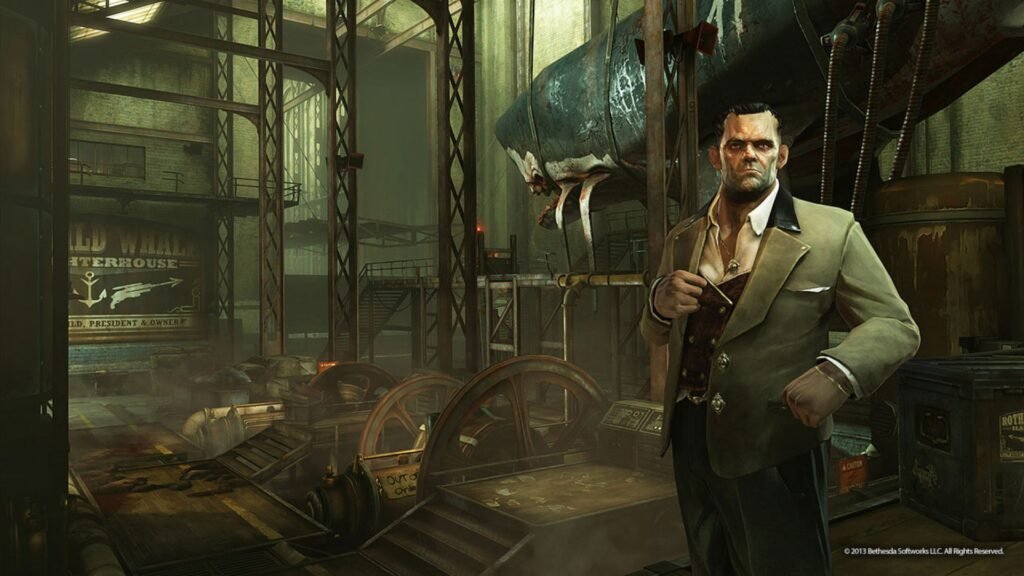
What lingers after the credits is the feeling that the game respected you. It gave you a rich world, a toolkit full of interesting options, and then stepped back. Whether you became a spectral legend who never spilled blood or a nightmare that made the entire city fear the dark, Dishonored made the journey feel personal. In an industry that often prefers scripted spectacle, that kind of trust is still rare and still precious.
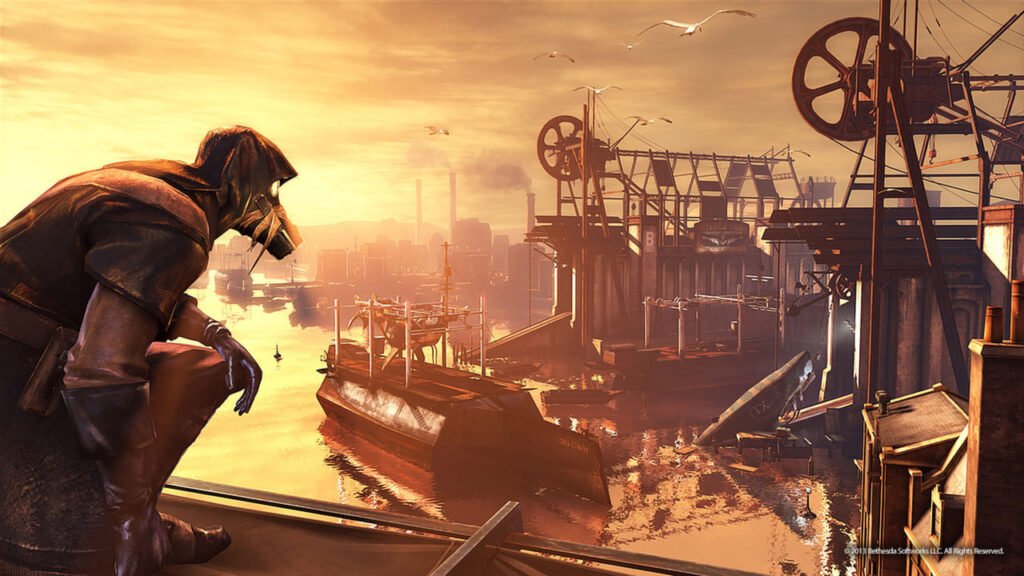
If you’ve never walked the rain-slick streets of Dunwall with the Outsider’s mark burning on your hand, the game is easy to find and frequently on sale. Put it on a higher difficulty, take your time, and experiment. Climb everything. Possess the rats. Listen to the conversations. Decide for yourself how much chaos the city can take. And once you’ve finished Corvo’s story, step into Daud’s boots for The Knife of Dunwall and The Brigmore Witches. The shadows are waiting, and they still feel electric.