
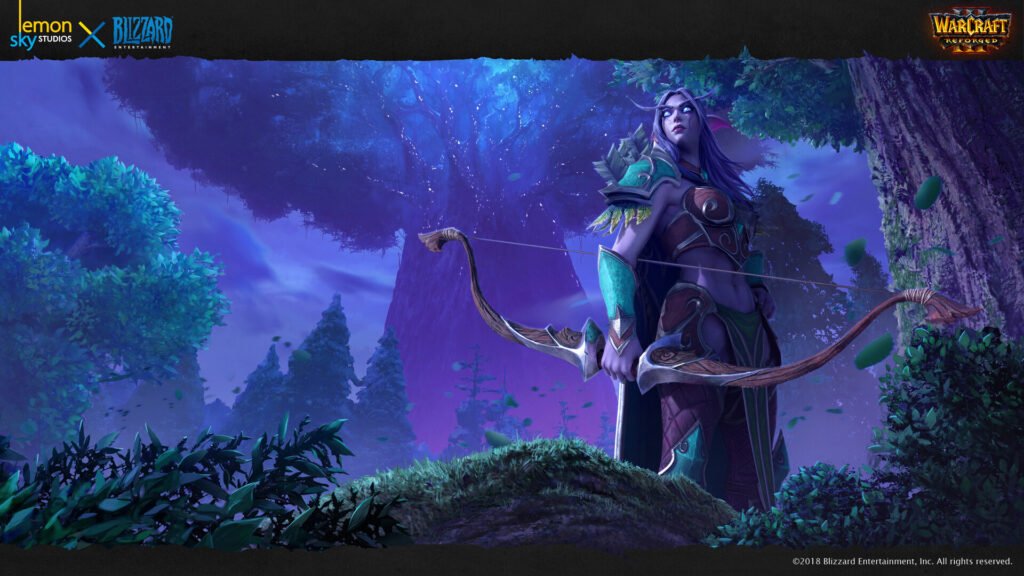

If you only ever played World of Warcraft, it is easy to forget that the whole universe used to live inside a real-time strategy game. Warcraft 3: Reign of Chaos dropped in July 2002, the expansion The Frozen Throne followed a year later, and together they did more for fantasy gaming than most studios manage in a decade. This is the game that turned orcs into tragic refugees, turned a paladin prince into a walking disaster, and quietly taught a generation of mapmakers how to invent new genres in the editor. Casual tone incoming, because this thing still slaps.
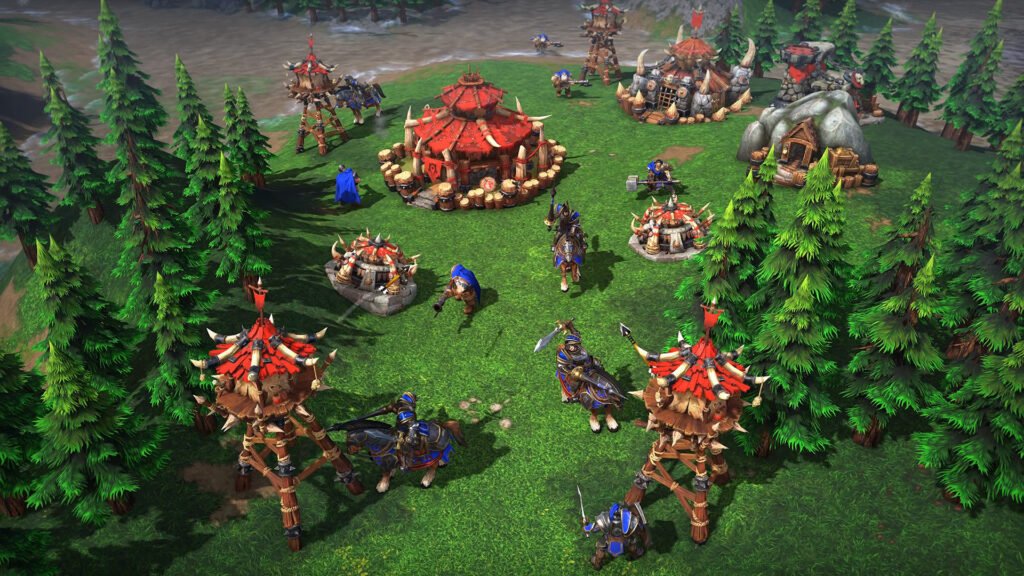
Before Warcraft 3, the series was already a big deal. Warcraft: Orcs & Humans and Warcraft II were 2D slugfests about gold, lumber, and who could click peasants faster. Then Blizzard spent years trying to make something weirder. Early pitches sounded closer to a squad RPG with a camera riding behind a hero. That version got dumped. What shipped instead was a 3D RTS that still felt like an RPG when it counted. You still built bases and harvested resources. You still microed units until your wrist hated you. But every army now orbited heroes who leveled up, bought items from shops, and unlocked flashy ultimates. That single idea is the DNA of almost every modern strategy game that pretends it invented “characters.”
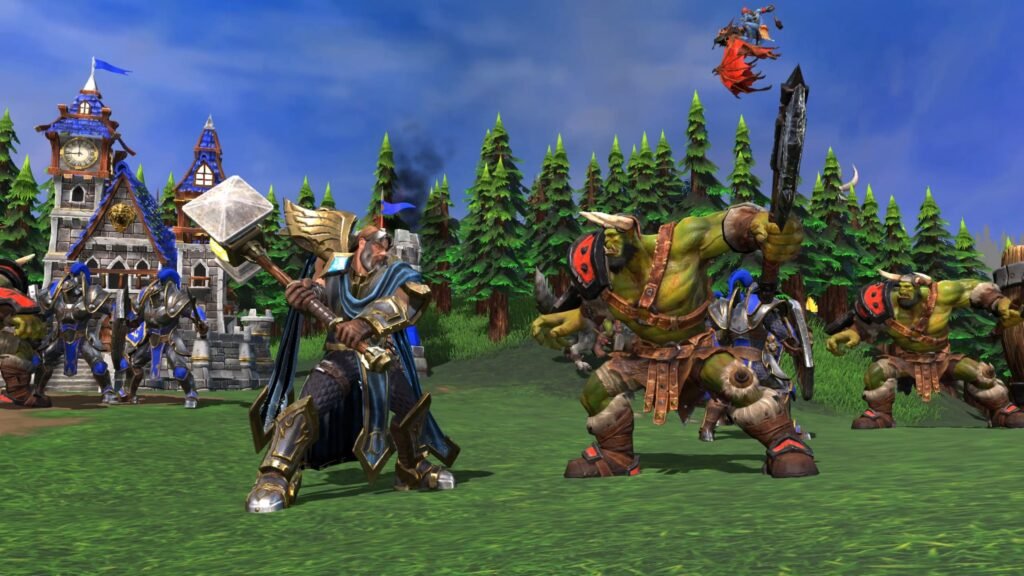
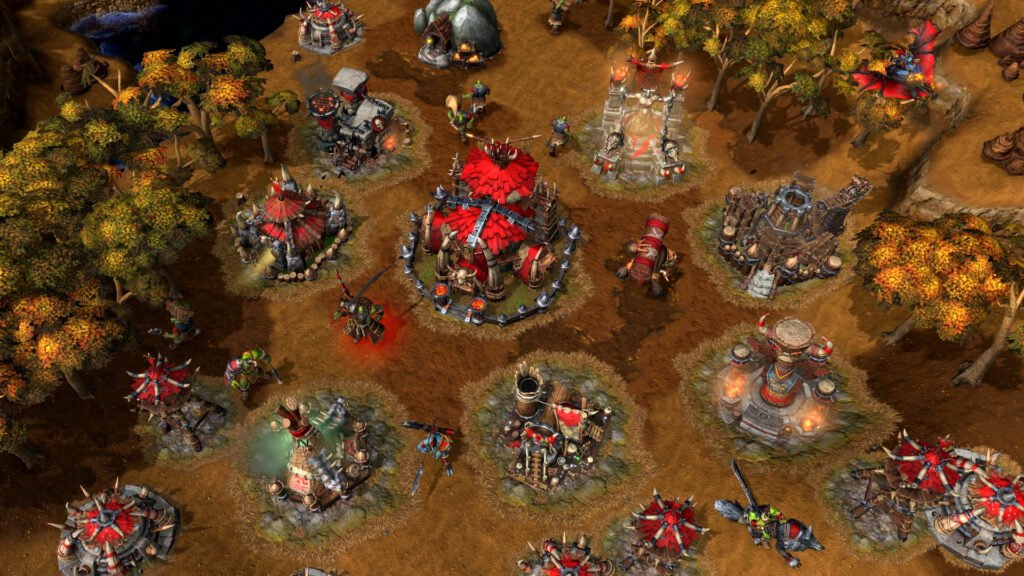
There are four playable races, and they are not reskins of each other. The Human Alliance is the classic combined-arms faction: peasants, knights, flying machines, and paladins who can heal or hammer you with holy fire. The Orcish Horde hits harder and lives closer to the edge, with shamans, raiders, and tauren that look like they wandered in from a different game and decided to stay. The Night Elves play like guerrilla druids who can hide in trees, uproot buildings, and call down stars. The Undead Scourge is the creep-show faction: blighted ground, ghouls eating corpses for extra gold, and necromancers who turn the battlefield into a second army. Learning all four is half the fun. Getting crushed by a random Crypt Lord beetle swarm at 3 a.m. is the other half.
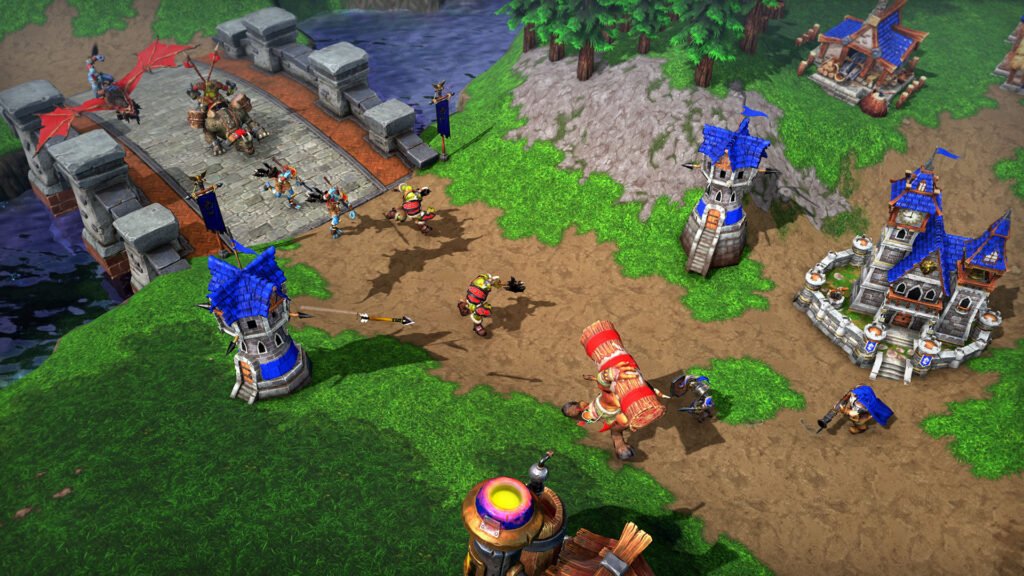
The campaign is where Warcraft 3 stops being “a good RTS” and becomes the origin story of half the characters you still see in WoW. Reign of Chaos walks you through the Third War in order. You start with Thrall getting his people out of internment camps after a prophet who is definitely Medivh tells him to sail west. Then you switch to Arthas Menethil, crown prince of Lordaeron, who investigates a plague, makes every worst possible choice, and slowly becomes the monster the story needs. Culling Stratholme is still one of the nastiest missions ever put in a strategy game, not because the mechanics are unfair, but because you are the one swinging the sword. After that you play the Undead, raise Kel’Thuzad, wreck Quel’Thalas, and help summon Archimonde. The Night Elf campaign closes the loop at Mount Hyjal, where orcs, humans, and elves actually work together for five minutes so the World Tree can explode in the demon lord’s face. It is operatic, a little silly, and somehow still emotionally loud more than twenty years later.
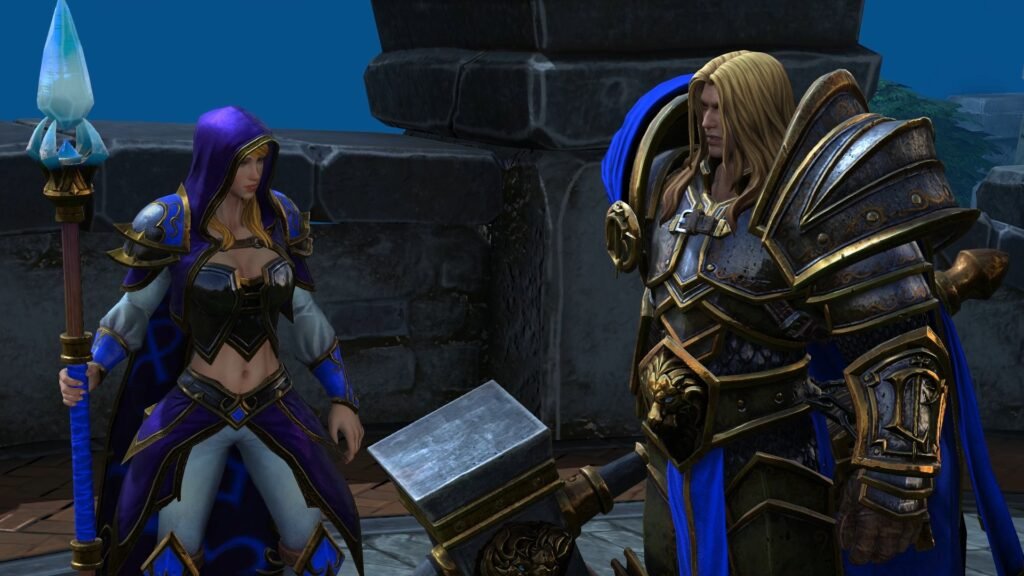
The Frozen Throne is the expansion that refuses to let anyone rest. Maiev Shadowsong hunts Illidan. Kael’thas and the blood elves get treated like garbage by the Alliance remnant and make a deal they will regret for the rest of franchise history. Arthas finishes his walk to the Frozen Throne and puts on the helmet. Those three campaigns are classic Blizzard campaign design: big set pieces, new units, and cutscenes that still look expensive even when the models are old.
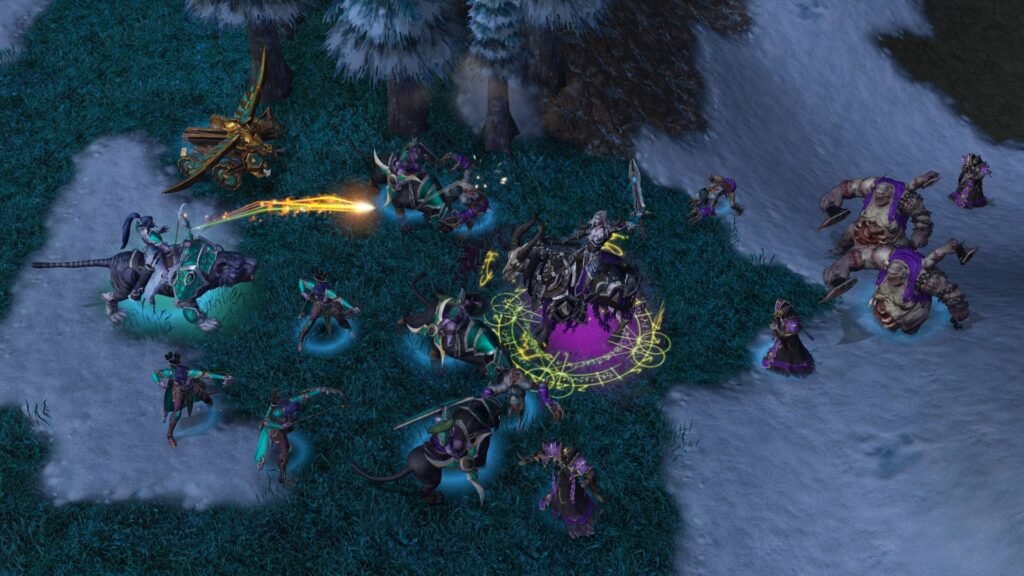
Then there is the bonus campaign almost nobody talks about unless they loved it, and those people loved it a lot. The Founding of Durotar is the RPG-shaped secret at the end of The Frozen Throne. After Hyjal, Thrall plants a flag in the dusty eastern Barrens and names the new orc home after his father. You do not play Thrall. You play Rexxar, a mok’nathal beastmaster wandering around with his bear Misha, who then picks up Rokhan the shadow hunter, and if you do the side stuff you also recruit Chen Stormstout and later fight alongside Cairne Bloodhoof. There is almost no traditional base-building grind. Maps are big, quests stack up, heroes come back at resurrection stones instead of ending the mission, and the whole thing feels like a prototype of the quest hubs World of Warcraft would ship two years later. The story is simple and mean in a good way. Kul Tiras shows up under Admiral Daelin Proudmoore, who cannot accept that the orcs are not the same Horde that burned his world. Jaina is stuck between her father and the peace she helped build. Rexxar ends up doing what Rexxar does: walking into the problem until the problem stops moving. Acts are titled To Tame a Land, Old Hatreds, and A Blaze of Glory, and if you have never played them you are missing the most “this is already WoW” hours in the entire RTS. It is also the only Frozen Throne campaign that does not orbit Illidan or the Scourge, which is exactly why it works.
Outside the story, Warcraft 3 became a laboratory. The World Editor was generous enough that kids in internet cafes started building tower defenses, hero arenas, and a little custom map called Defense of the Ancients. That map ate a decade of esports and turned into Dota 2 and, by extension, the entire MOBA industry. Blizzard never fully cashed that check themselves, which is either tragic or very on-brand depending on how cynical you are feeling. Ladder play, 4v4 chaos, and custom games kept the multiplayer scene alive long after most 2002 RTS titles were museum pieces.
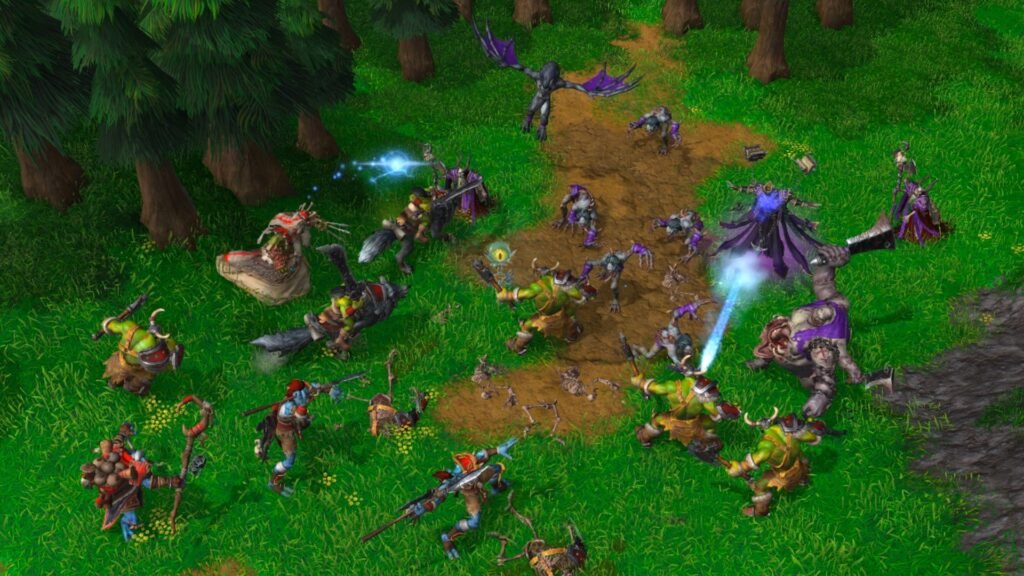
The production still holds up in the ways that matter. The voice acting is committed. The music slaps. Unit acknowledgements became memes before that was a business model. “Ready to work,” “Zug zug,” and every sarcastic peasant line are burned into muscle memory for anyone who grew up on this. Even the itemization, those tiny +3 agility claws you ferry between heroes, taught players to think about builds inside an RTS. That is why the game never really died. People just kept hosting games.
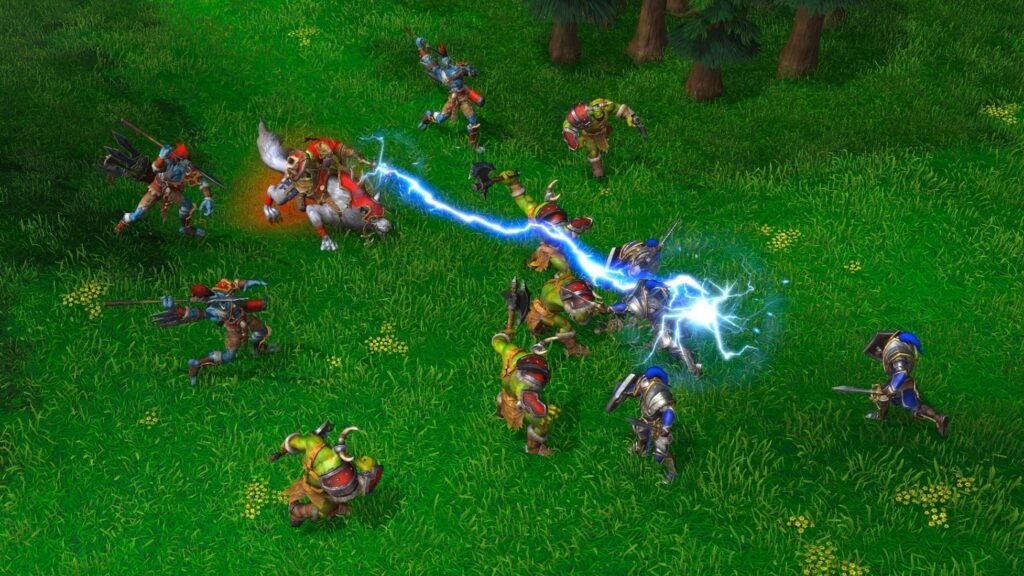
Which brings us, unfortunately and inevitably, to Warcraft 3: Reforged. Announced at BlizzCon 2018 like a victory lap, it shipped in late January 2020 as a remaster that was supposed to rebuild models, environments, and cinematics while keeping the soul intact. What players got was a messy launch. Promised campaign upgrades were incomplete. The interface felt worse to a lot of veterans. Online features that classic had for years went missing. The new client overwrote the old one, so you could not easily stay on the version you actually liked. Custom-map ownership language in the agreement made the community that invented DOTA feel like the studio wanted the recipe and the kitchen. User scores tanked. Blizzard offered refunds. Patches arrived later and the game is more playable now than it was in that first brutal month, and some of the updated art is genuinely handsome, especially on heroes and key campaign moments. But Reforged is still the example people reach for when they talk about a remaster that argued with its own fans. The original campaigns, the original editor energy, and that Rexxar road trip are still the reason to care. The remaster is a complicated footnote sitting on top of a classic that did not need rescuing so much as a careful polish and a promise not to break the save files.
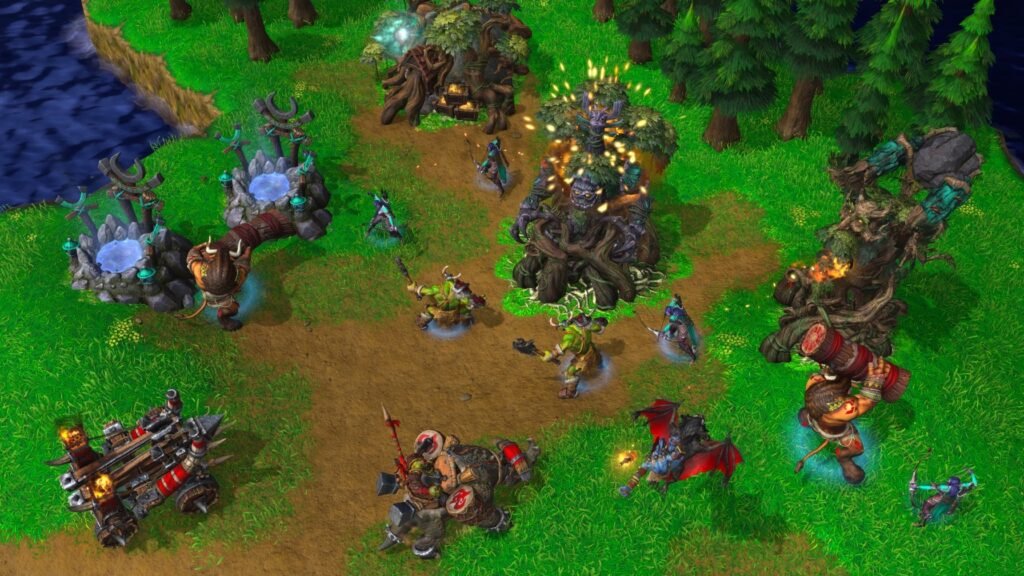
If you have never sat through Reign of Chaos into The Frozen Throne, do that first. Play the human campaign when you are in a slightly grim mood. Play the orc campaign when you want to feel like the underdog who actually makes it. Save The Founding of Durotar for a weekend when you want the game to stop yelling “build more barracks” and start feeling like an adventure. Warcraft 3 is the rare strategy game that is also a character drama and a custom-game engine that escaped containment. Twenty-plus years on, that combination is still rare. The demons came. The prince fell. The warchief built a home in the dirt. And somewhere in a custom lobby, somebody is still hosting a map that will accidentally invent the next genre.