
Release Date: August 21, 2001 Developer: Troika Games
Get It On: GOG
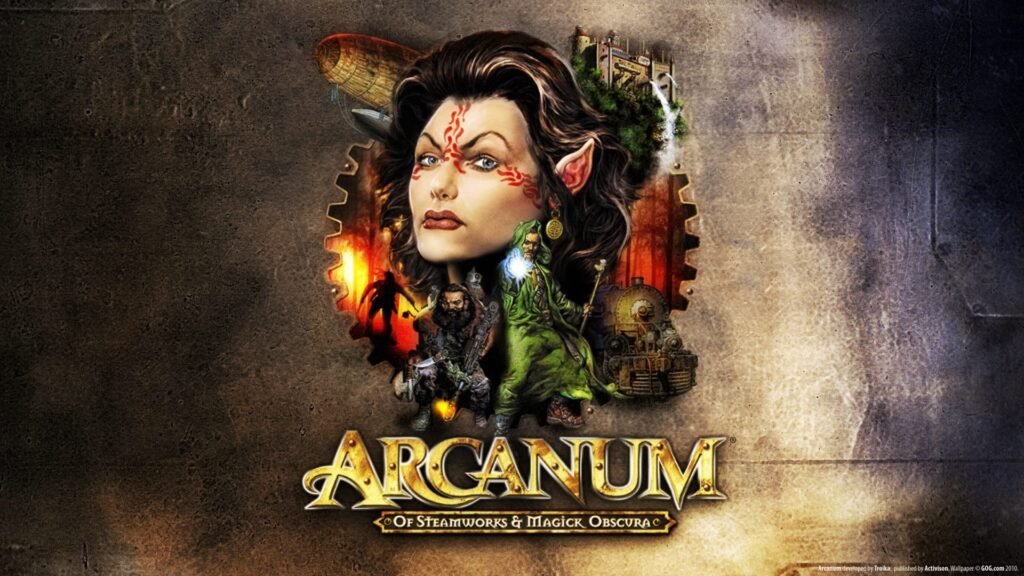
When discussing the golden age of Computer Role-Playing Games, few titles command as much reverence and cult fascination as the 2001 masterpiece Arcanum: Of Steamworks and Magick Obscura. Developed by Troika Games, a studio founded by the visionary minds behind the original Fallout, this title stands as a monumental achievement in world-building and player agency. It dared to ask a question seldom explored in high fantasy: what happens when a world of ancient spells and mythical dragons is suddenly thrust into the soot-covered gears of an Industrial Revolution?
A World Defined by Friction
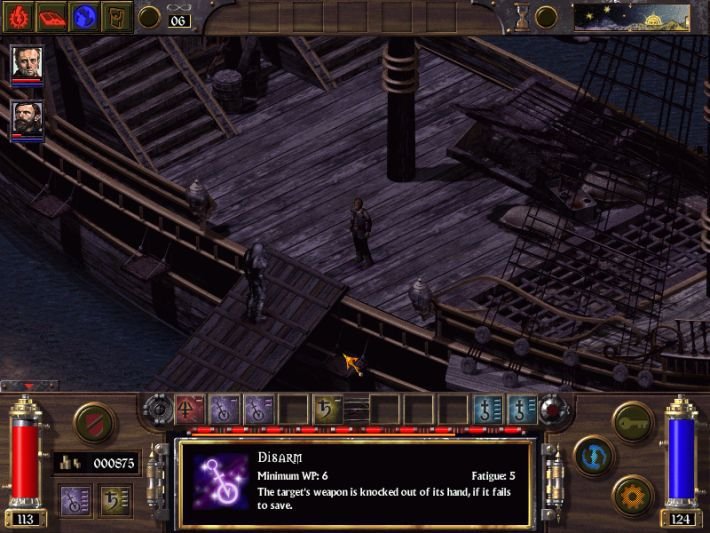
The heart of Arcanum lies in its unique central conflict, which is a philosophical and physical war between Magic and Technology. Unlike most fantasy settings where the two coexist comfortably, in the land of Arcanum, they are fundamentally incompatible. High-level magical energies warp the laws of physics, causing complex machinery to jam or explode. Conversely, the rigid laws of science dampen the ethereal flow of the Arcane, leaving powerful wizards sputtering and helpless in a room full of humming engines.
This dichotomy is not just a narrative theme; it is baked into the very soul of the game’s mechanics. As a player, you must navigate a world that is actively changing. The sprawling city of Tarant represents the peak of human ingenuity, filled with steam-powered subways and telegraph offices, while the elven stronghold of Qintarra remains hidden in the deep forests, clinging to the old ways. This friction creates a sense of social commentary, touching on themes of class warfare, environmental destruction, and the loss of wonder in the face of relentless progress.
The Unrivaled Freedom of Character Development
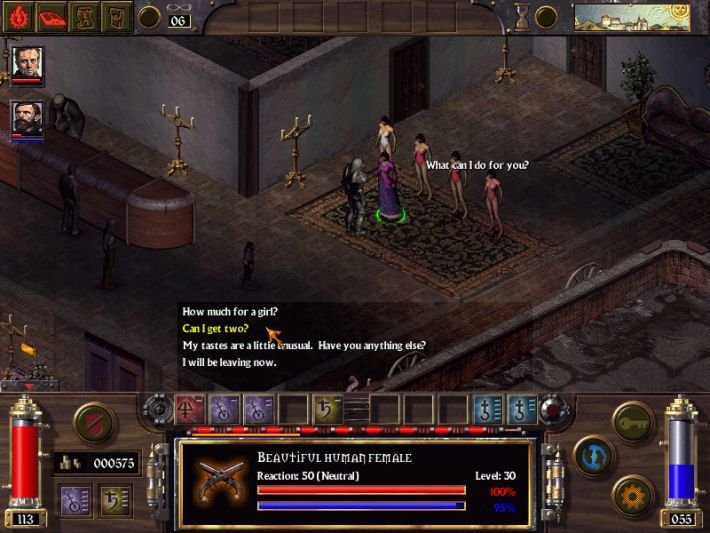
One of the most praised aspects of Arcanum is its incredibly deep character creation and progression system. The game utilizes a point-buy system that eschews traditional classes in favor of total freedom. A player can choose to be a traditional Dwarf technologist, a charismatic Human diplomat, or a half-orc thief struggling against the systemic prejudices of a Victorian-era society.
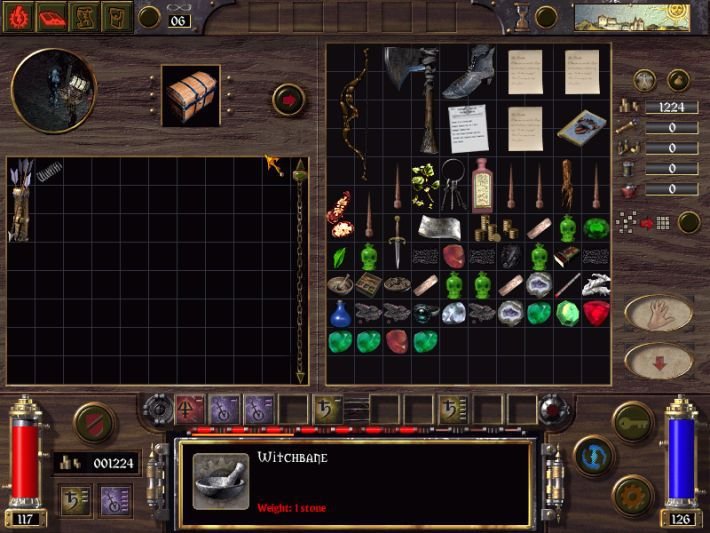
The depth of the Technical Trees is staggering, allowing players to learn disciplines like Chemistry, Electricity, and Smithing to craft their own gear, such as the iconic Balanced Sword or the devastating Elephant Gun. On the flip side, the Magical Colleges offer dozens of spells across sixteen different schools, ranging from necromancy to the manipulation of time itself. The genius of the system lies in the Technological/Magical Alignment meter. The more you lean into one side, the more the other side of the world rejects you. Shopkeepers may refuse to sell to you if your aura is too magical for their gadgets, or a train conductor might bar you from a carriage for fear that your presence will derail the locomotive.
Narrative Depth and Philosophical Quests
The story begins with a dramatic airship crash—the ill-fated Zephyr—leaving you as the sole survivor and the presumed “Living One,” a figure of religious prophecy. From this humble and tragic start, the game expands into a sweeping conspiracy that involves ancient gods, banished kings, and the dark secrets of the Panarii Religion.
What sets the writing apart is its commitment to non-linear storytelling. Almost every quest in the game can be solved in a multitude of ways. You can use your silver tongue to persuade a villain to stand down, use your mastery of Lockpicking to bypass a heavily guarded fortress, or simply slaughter everyone in your path. The game even tracks your alignment and reputation across various towns, ensuring that your actions have lasting consequences. This level of reactivity remains rare even by modern standards, making the world feel reactive and alive in a way that few successors have managed to replicate.
A Flawed Masterpiece with an Eternal Legacy
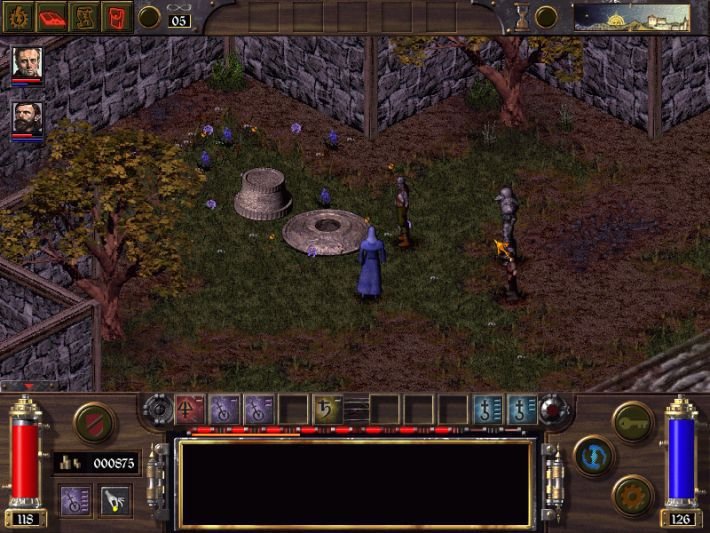
Despite its brilliance, Arcanum is often remembered for its technical “jank” and unbalanced combat. The Real-Time combat mode was notoriously chaotic, leading most veterans to stick strictly to the Turn-Based option. Some character builds, particularly those focused on Harm spells or specific firearms, could become wildly overpowered, while others struggled to survive the early game. Furthermore, the game was plagued by bugs upon release, a hallmark of the ambitious but underfunded Troika Games.
However, these flaws have done little to dim the game’s reputation. A dedicated community of modders has spent decades creating high-resolution patches and restoring cut content, ensuring that new generations can experience the game in its best possible form. The atmospheric soundtrack, composed by Ben Houge and performed entirely by a string quartet, perfectly captures the melancholy and grandeur of a world in transition
Arcanum: Of Steamworks and Magick Obscura remains a towering example of what is possible when developers prioritize atmosphere and player freedom over accessibility. It is a game that respects the player’s intelligence and rewards curiosity, offering a gritty, complex, and hauntingly beautiful vision of a world caught between the wand and the wrench.