
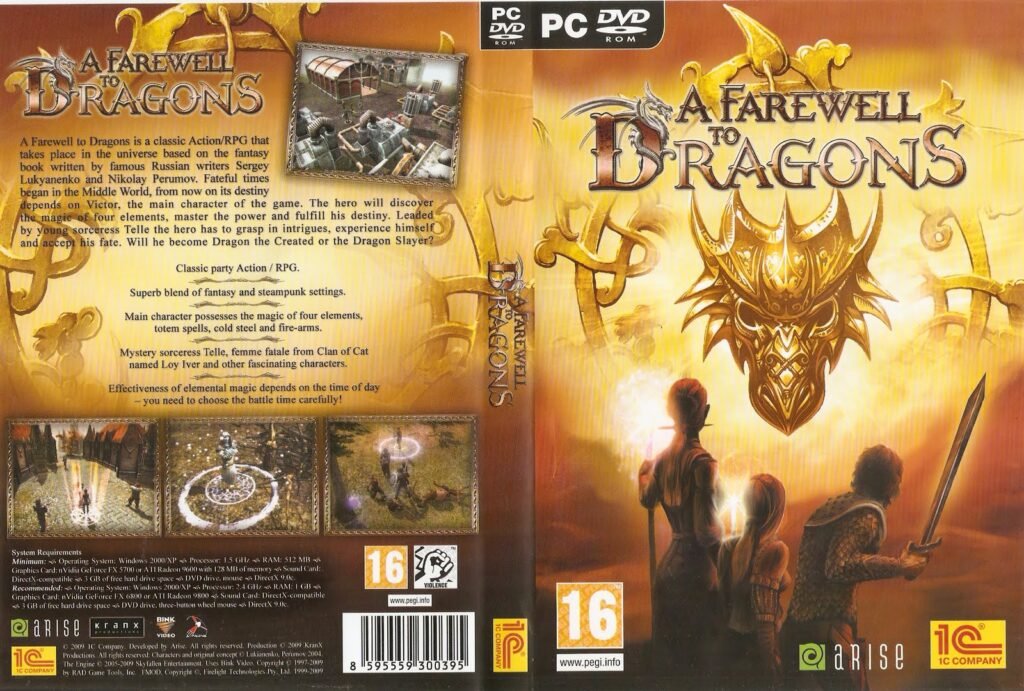

Release Date: 2007 Developer: KranX Productions
If you look back at the late 2000s PC gaming landscape, you will find a treasure trove of incredibly ambitious, beautifully bizarre role-playing games coming out of Eastern Europe. Before a certain Polish studio turned Geralt of Rivia into a household name, publishers like 1C Company were regularly dropping obscure titles that pushed boundaries while simultaneously holding themselves together with digital duct tape. Standing proudly in this hyper-specific hall of fame is A Farewell to Dragons, a 2007 isometric RPG developed by KranX Productions. It is a game that almost completely vanished from the collective gaming memory, yet it remains one of the most fascinating examples of classic PC Jank ever made.
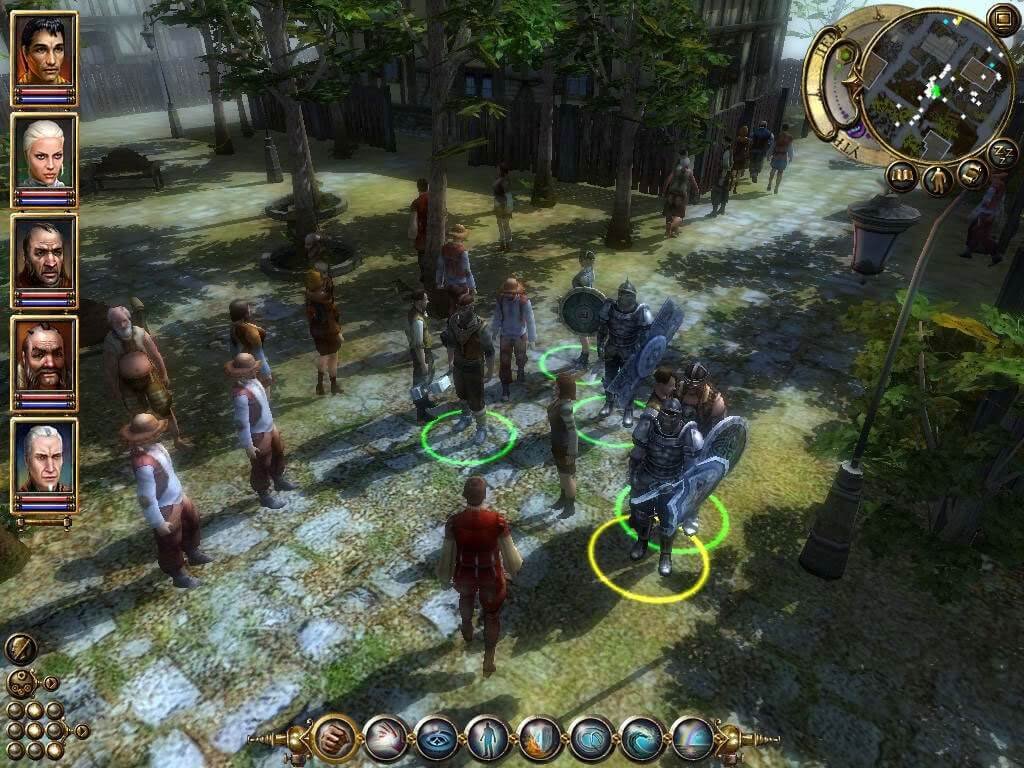
The narrative foundation of the game is rooted in a popular Russian fantasy novel co-authored by Sergey Lukyanenko—the brilliant mind behind the Night Watch series—and Nikolay Perumov. You step into the shoes of Victor, an ordinary, middle-aged doctor from our world who gets yanked across reality after an attack leaves him unconscious. He wakes up in the Middle World, a realm trapped in a delicate balance between four elemental wizard clans and a rapidly advancing faction of technological pragmatists. The world is changing, magic is actively leaving the environment, and Victor finds out he is the prophesied central figure who will either become the ultimate savior or the ultimate destroyer. It is a classic “stranger in a strange land” setup, but the unique flavor of the world-building instantly sets it apart from your standard Tolkienesque fantasy clones.
A Wild Mashup of Sorcery and Steampunk
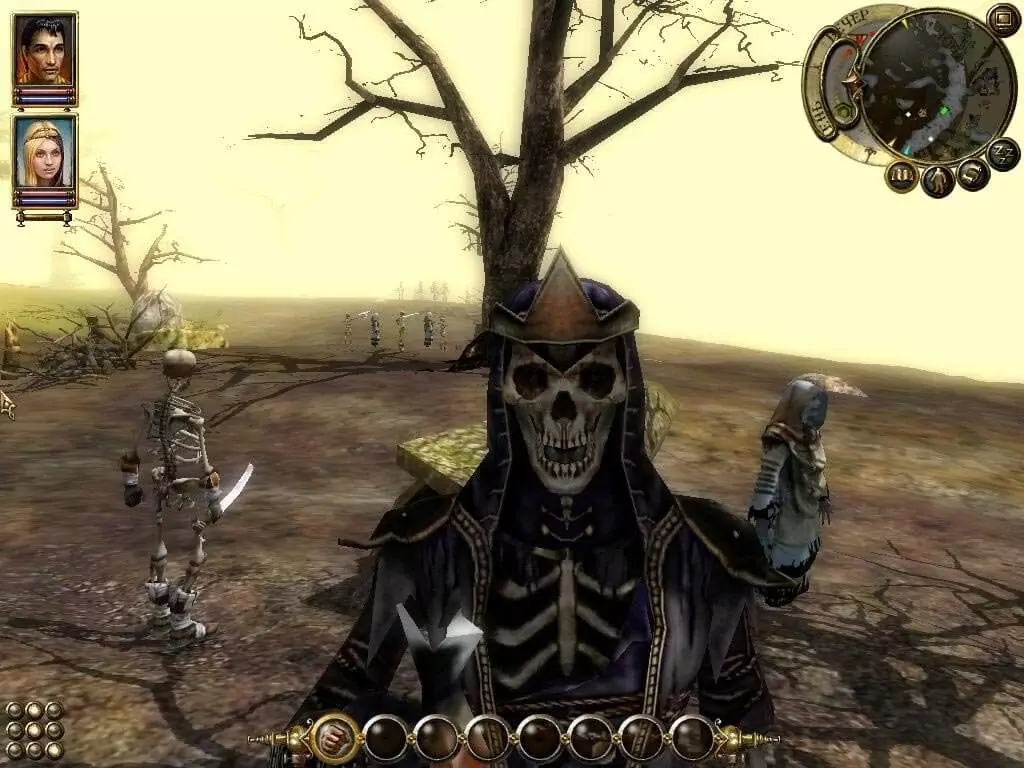
What makes this title such an absolute trip to play is its unapologetic dedication to a pure steampunk and sorcery blend. One minute you are recruiting a traditional young sorceress named Telle who heals your wounds with elemental water magic, and the next minute you are teaming up with a grizzled engineer named Torry who brings literal dual-wielded machine guns to a sword fight. The game mechanics fully embrace this identity crisis. The skill trees are beautifully chaotic, allowing you to build characters that specialize in heavy plate armor and massive war hammers, or go down the chemistry and mechanics route to wield a gasoline-powered chainsaw and hurl high-yield explosive grenades into crowds of fantasy monsters.
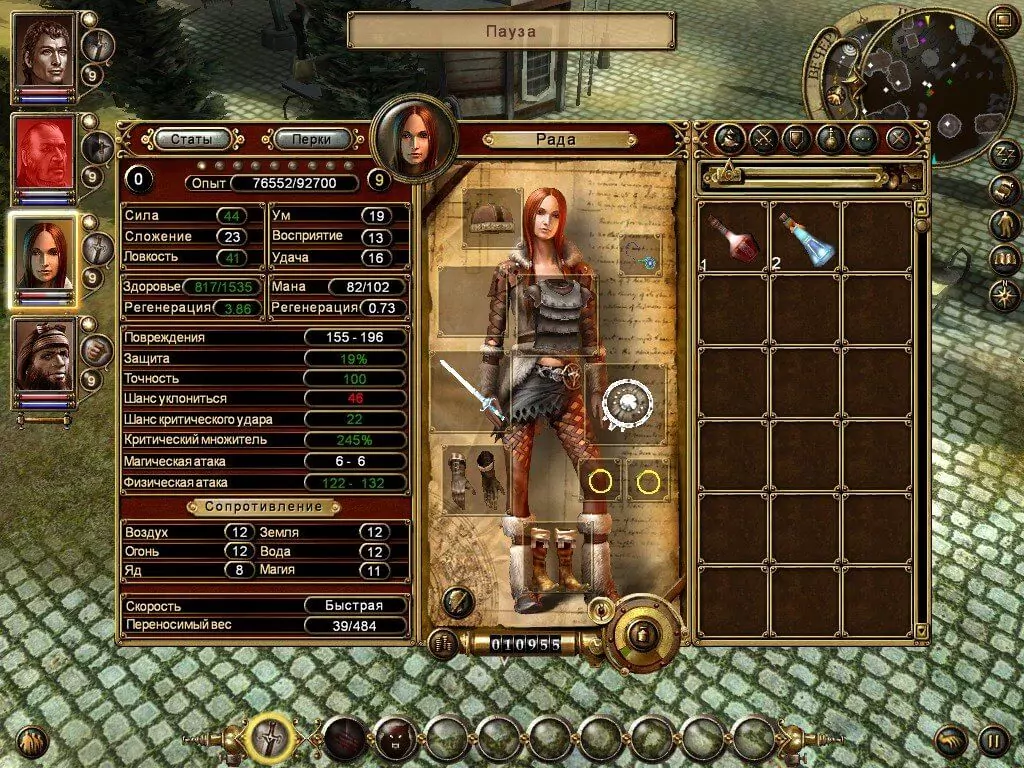
The combat relies on a real-time with pause framework that heavily channels the spirit of Baldur’s Gate. You control a small party, and because the difficulty curve is notoriously unforgiving, you will spend a massive chunk of your time pausing the action to carefully queue up your next moves. Position matters, crowd control is vital, and the elemental interactions are genuinely deep. You can cast a devastating fire spell to leave a damage-over-time burning effect on an enemy, or use freezing spells to halt a charging beast right in its tracks while your steampunk companions turn it into Swiss cheese with an absolute barrage of lead.
The Beautiful Flaws of Late-2000s PC Gaming
We cannot talk about an obscure 2007 PC release without addressing the elephant in the room: the incredible level of jank. The localization and English translation are notoriously dodgy, frequently serving up bizarre sentence structures and text strings that feel like they were run through an early version of Google Translate. The pacing is a massive grindfest. The game world structure is wildly unpredictable; it is entirely possible to walk across an invisible zone boundary and accidentally aggro a pack of level 40 monsters while your entire party is barely scraping level 5. This leads to hours of punching giant rats and scouring every corner of the map just to gain the raw stat attributes needed to survive the next story beat.
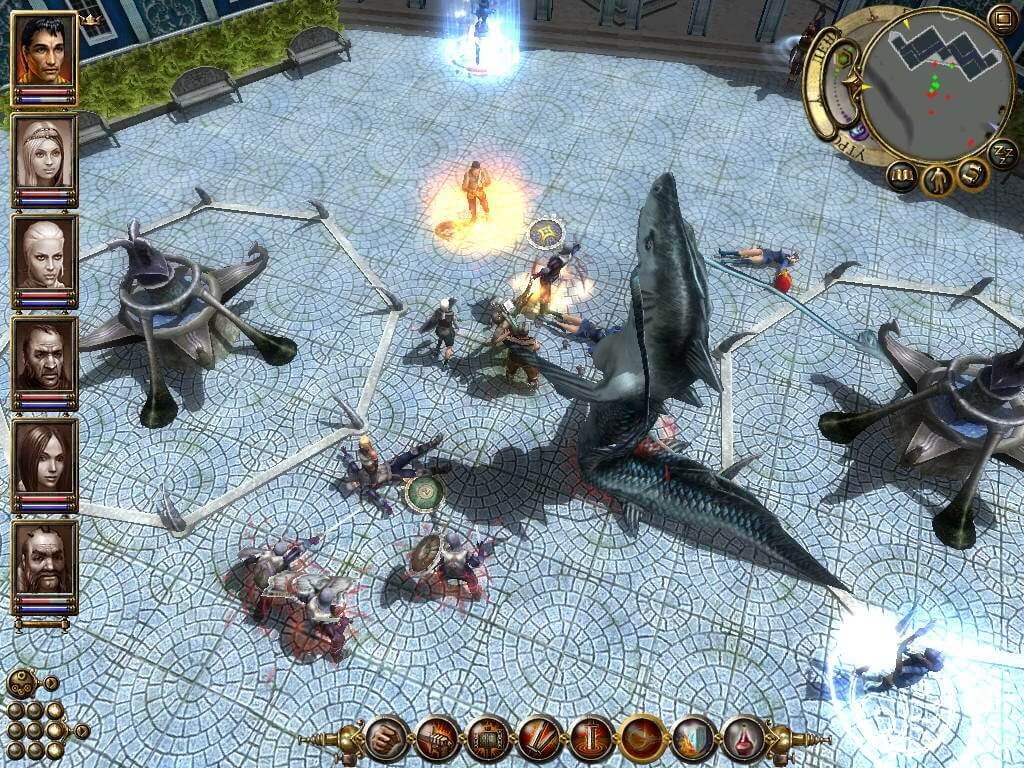
Yet, there is a distinct charm to the visual and auditory presentation that holds up surprisingly well if you appreciate retro aesthetics. The pre-rendered backdrops are vibrant, colorful, and packed with interesting atmospheric details like turning cogs and leaking steam pipes. The musical score is arguably the finest component of the entire package, offering a sweeping, melancholy fantasy soundtrack that perfectly captures the feeling of a world that is slowly losing its magical wonder to the cold march of industrial progress.
Is This Forgotten Gem Worth Unearthing?
A Farewell to Dragons is definitely not a title for the impatient modern gamer who expects seamless tutorials, balanced encounters, and pristine presentation. It is a stubborn, difficult, and frequently confusing relic of a bygone era. However, if you are a dedicated fan of isometric RPG history who loves deep character build customization, complex stat sheets, and unique world-building that refuses to follow the safe, predictable Western fantasy tropes, this game is a fascinating historical artifact. It stands as a testament to a time when AA developers were willing to throw completely conflicting ideas into a blender just to see what kind of wild, mechanical dragon would emerge.