
Release Date: October 10, 2017 Developer: Monolith Productions
Get It On: GOG
Welcome Back to the Chaos of Mordor
Look, I know what you’re thinking. It’s 2026, and there are a million newer games with ray-traced reflections that look so real you’d think your monitor was a window. But even with all the shiny new toys on the market, there’s one game that I keep coming back to like a moth to a very angry, flaming eye. That game is Middle-earth: Shadow of War. If you missed it back in 2017, or if you only played its predecessor, Shadow of Mordor, then you are missing out on one of the most delightfully unhinged power trips ever coded. Developed by the wizards over at Monolith Productions, this sequel takes everything that worked about the first game and cranks the volume up to eleven until the speakers start smoking. It’s big, it’s loud, and it features an Orc that will literally sing you a song before trying to carve your initials into his own forehead.
The Lore Is… Well, It’s Something
Let’s get the elephant in the room out of the way immediately. If you are a Tolkien purist who has the entirety of The Silmarillion memorized and you get upset when someone misplaces a comma in the Elvish language, this game might give you a mild twitch. Shadow of War treats the established Middle-earth lore more like a suggestion than a rulebook. We’re talking about a game where the giant spider Shelob can transform into a beautiful woman in a black dress to give you cryptic advice. We’re talking about Talion, our undead ranger protagonist, and his spectral roommate Celebrimbor forging a literal new Ring of Power in the fires of Mount Doom. It is, for all intents and purposes, high-budget fan-fiction. But honestly? Once you lean into the absurdity, it’s a total blast. The game isn’t trying to be a scholarly adaptation; it’s trying to be a heavy metal album cover brought to life, and in that regard, it succeeds spectacularly.
The Nemesis System Is the Star of the Show
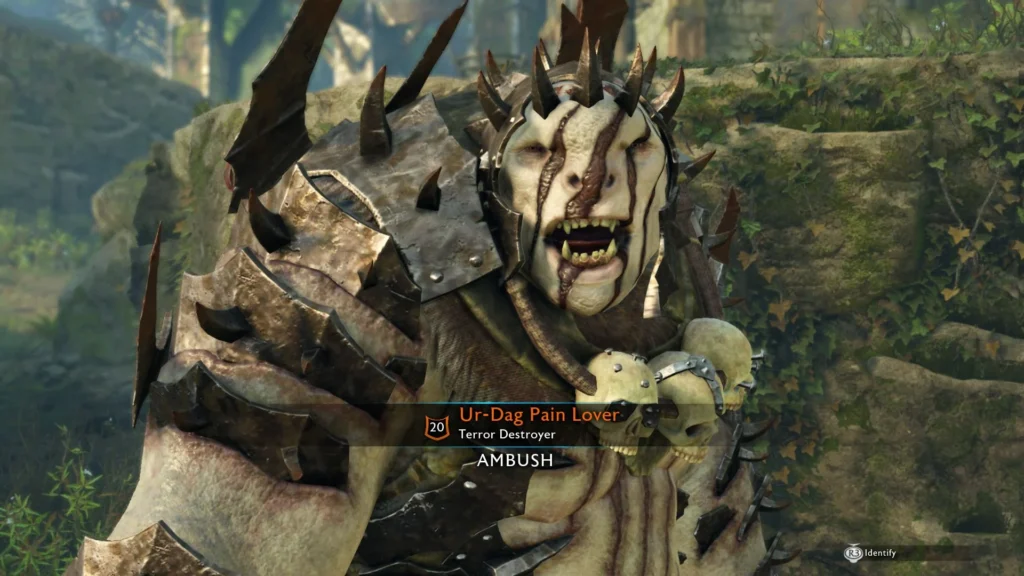
The real reason anyone plays these games is the Nemesis System. Even years later, no other developer has quite managed to replicate the magic of what Monolith built here. The system creates a living, breathing hierarchy of Orcs, Uruks, and Ologs that remember you. If an unnamed grunt happens to land the killing blow on you while you’re distracted, he doesn’t just disappear. He gets promoted. He gets a name like Pûg the Lucky, he gets a fancy new helmet, and the next time you see him, he’s going to mock you for being “the great Ranger” who got taken down by a nobody. It makes every defeat feel personal. You don’t just want to finish the mission; you want to find Pûg and show him exactly where he can shove that lucky helmet.
The variety in these procedurally generated villains is staggering. You’ll run into the Bard, who carries a lute made of bones and sings about your impending death. You’ll meet the Unashamed, an Orc who survived your previous attempt to execute him and now sports massive hand-shaped scars on his chest. The interactions aren’t just scripted cutscenes; they are dynamic memories. Some Orcs might develop a blood-brother bond with another captain, and if you kill one, the other will hunt you across the map for revenge. Others might be so terrified of you that they lose their minds, becoming “Deranged” and only capable of making clicking noises or screaming. It’s a sandbox of personality and emergent storytelling that makes your playthrough feel different from everyone else’s.
Building Your Own Monster Mash
While the first game was mostly about thinning the herd, Shadow of War is about building your own army. Using your spectral powers of Domination, you can “recruit” these captains into your service. This is where the game turns into a weirdly addictive management sim. You start looking at Orcs like they’re Pokémon with anger issues. You’ll find a legendary Feral Marksman and think to yourself that he would be the perfect bodyguard. Or maybe you find an Olog-hai with a flamethrower and decide he’s definitely destined for greatness. You can send your followers on missions to level up, order them to infiltrate enemy ranks as spies, or even have them act as a Bodyguard who jumps into the fray whenever you’re in a tight spot. There is nothing quite like being pinned down by three captains only to have your loyal Orc friend, Mug the Drunk, leap off a rooftop and tackle your attacker while shouting something incomprehensible.
Taking the Fortresses
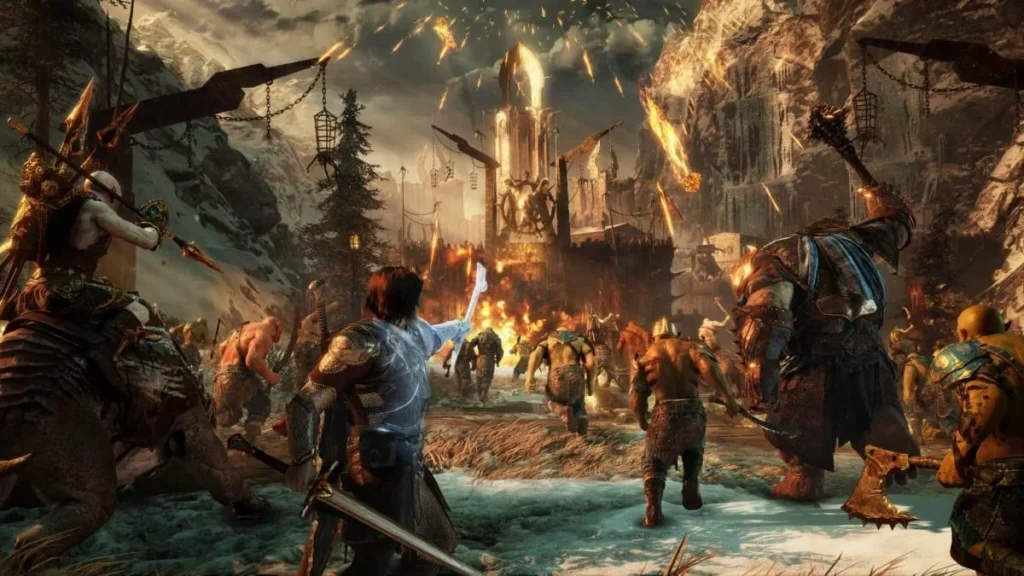
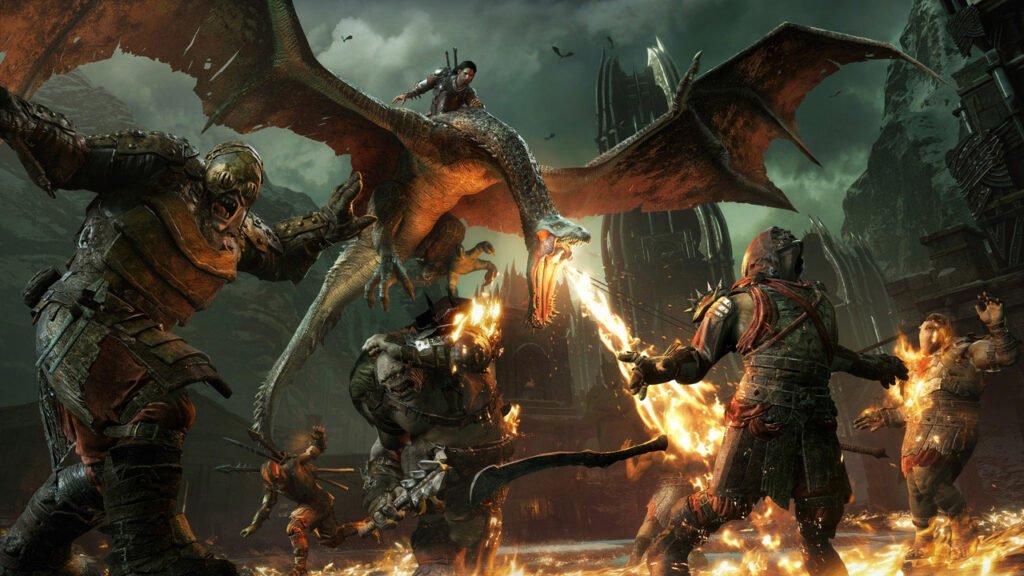
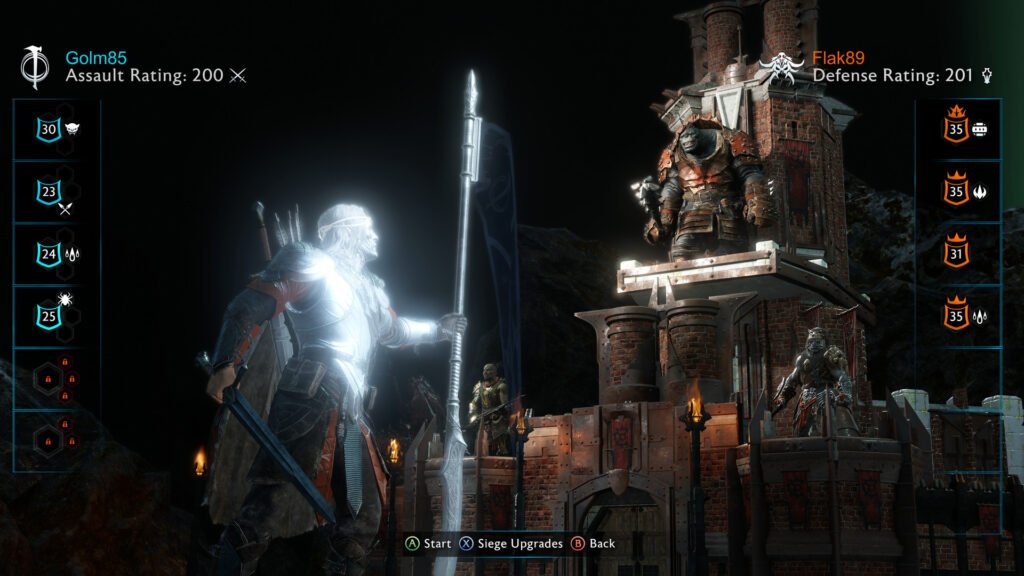
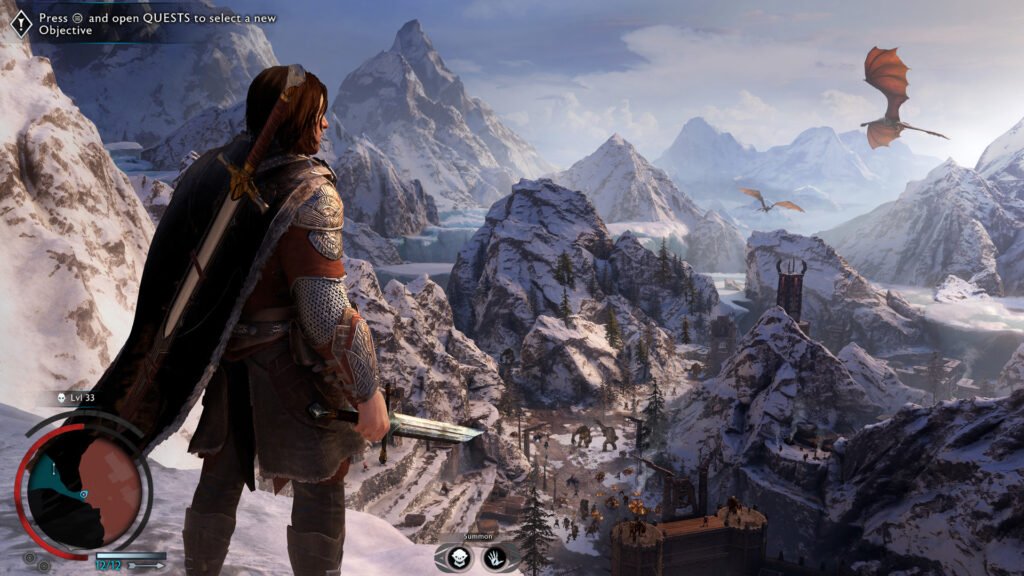
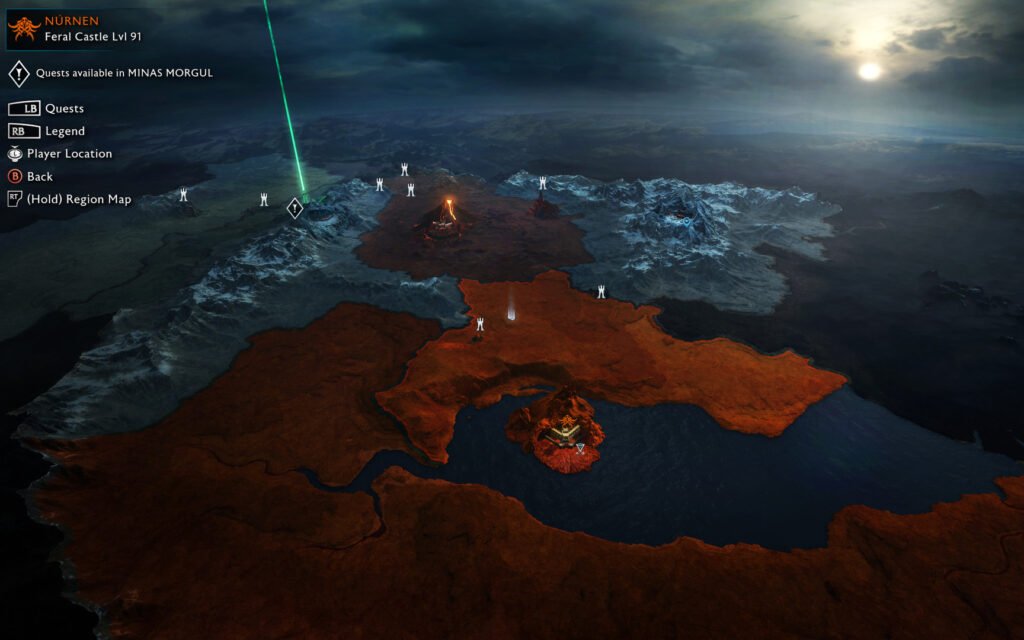
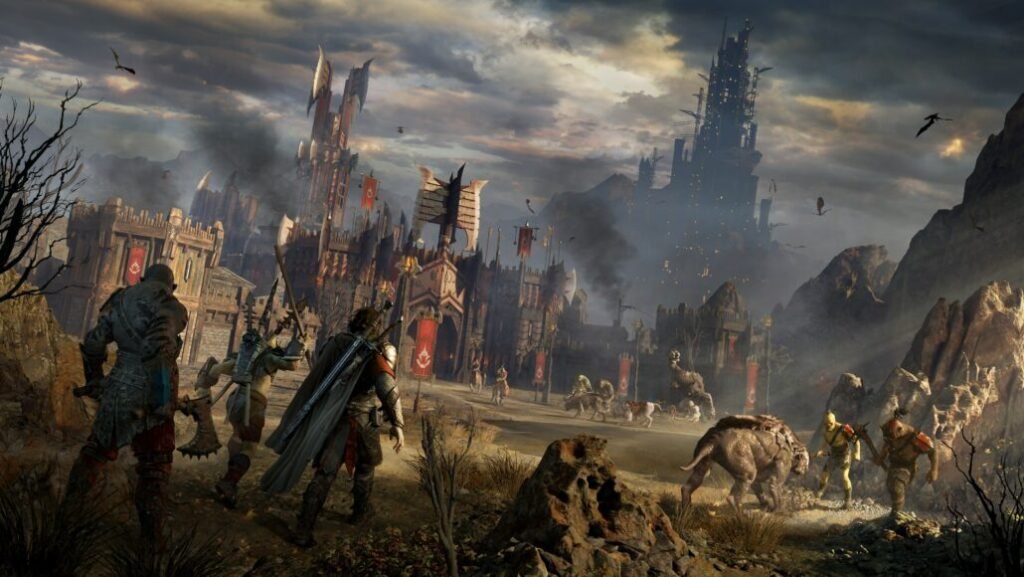
The scale of this game is massive compared to the first one. Instead of just wandering around two brown maps, you have five distinct regions to explore, from the icy mountains of Seregost to the lush forests of Nurnen. Each region is topped off with a massive stronghold that you need to conquer in a Fortress Siege. These sieges are the highlight of the gameplay loop. You pick your attacking force, choose upgrades like fire-breathing drakes or armored cavalry, and lead the charge against the walls. It’s pure cinematic chaos. Once you break through the gate and defeat the Overlord in the throne room, the fort is yours. You get to appoint your own Overlord, which changes the look of the entire region to match their tribe’s aesthetic. If you put a Machine Tribe Orc in charge, the fort becomes a steampunk nightmare of gears and smog. It gives you a real sense of ownership over the world.
Combat, Stealth, and the Grind
The actual moment-to-moment gameplay is a refined version of the “Freeflow” combat made famous by the Batman Arkham games. You’re flipping over enemies, parrying attacks, and using your Wraith powers to teleport across the battlefield. It feels incredibly smooth, and as you unlock more of the Skill Tree, you become a literal god of death. You can jump off a cliff, summon a Drake, and rain fire on a camp before landing and executing five Orcs in slow motion. It’s satisfying in a way that few action games are.
It’s also worth mentioning that the game is in a much better place now than it was at launch. If you remember the controversy about the Marketplace and microtransactions, you can breathe a sigh of relief. Monolith completely removed all of that years ago. They also rebalanced the final act, known as the Shadow Wars, so it’s no longer a soul-crushing grind. Now, the endgame feels like a victory lap where you defend your territory rather than a chore designed to make you open your wallet.
The Verdict for 2026
If you’re looking for a game that offers hundreds of hours of content, a system that actually makes you care about its enemies, and the ability to ride a fire-breathing dragon into a pile of screaming monsters, then Middle-earth: Shadow of War is still a top-tier choice. It’s a masterpiece of systemic design disguised as a licensed action game. Whether you’re playing for the story, the sieges, or just to see what kind of weird Orc the game generates next, it’s an absolute blast. Just do yourself a favor and don’t tell Tolkien about the sexy spider lady. What happens in Mordor, stays in Mordor.