
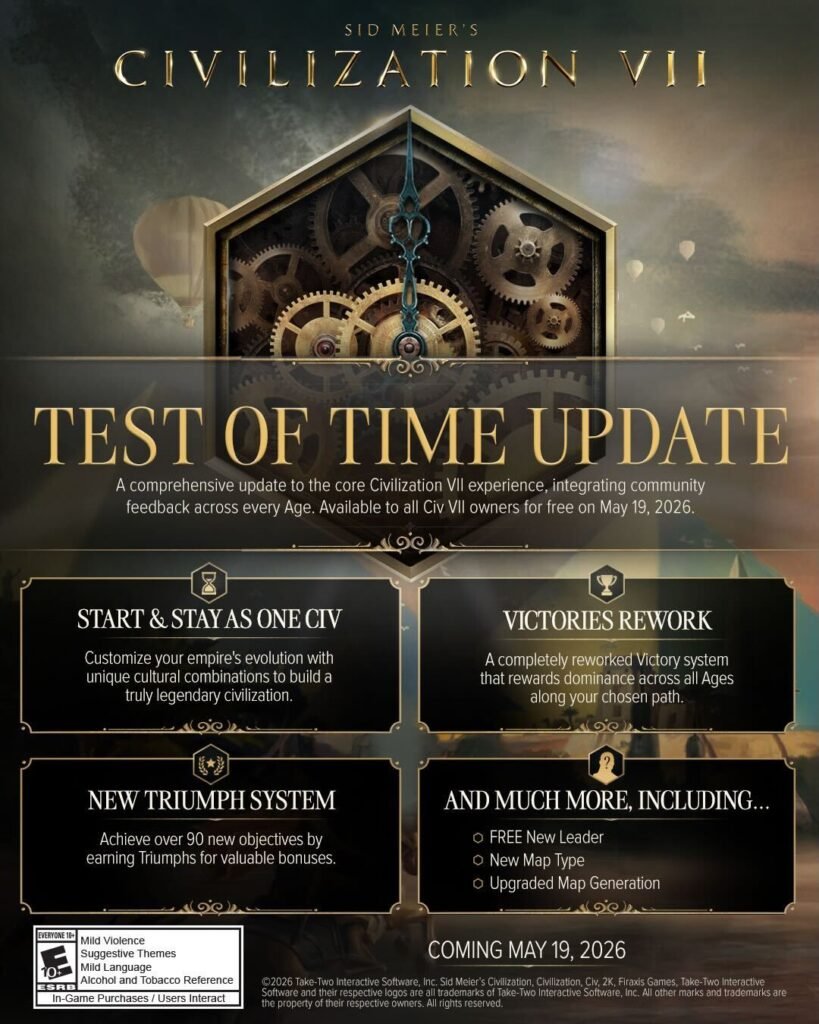

When Sid Meier’s Civilization VII launched back in February 2025, it was undeniably a gorgeous, technically impressive powerhouse of a strategy game. However, it also came with a few design choices that fractured the fan base right down the middle. The most controversial of those choices was the mandatory age-transition mechanic, which forced players to swap their empire’s culture when moving from antiquity into the exploration and modern eras. If you wanted to see Rome transition into the modern world as Rome, you were out of luck.
Firaxis Games has been paying close attention to that community feedback over the last year. The studio has spent months iterating, listening, and testing ideas alongside players in their specialized feedback workshop. The massive culmination of all that effort has finally arrived. Named version 1.4.0, the free Test of Time Update has officially rolled out to all platforms, and it is so fundamental to the core gameplay loop that the developers are jokingly calling it the second launch of the game.
One Empire to Rule Them All
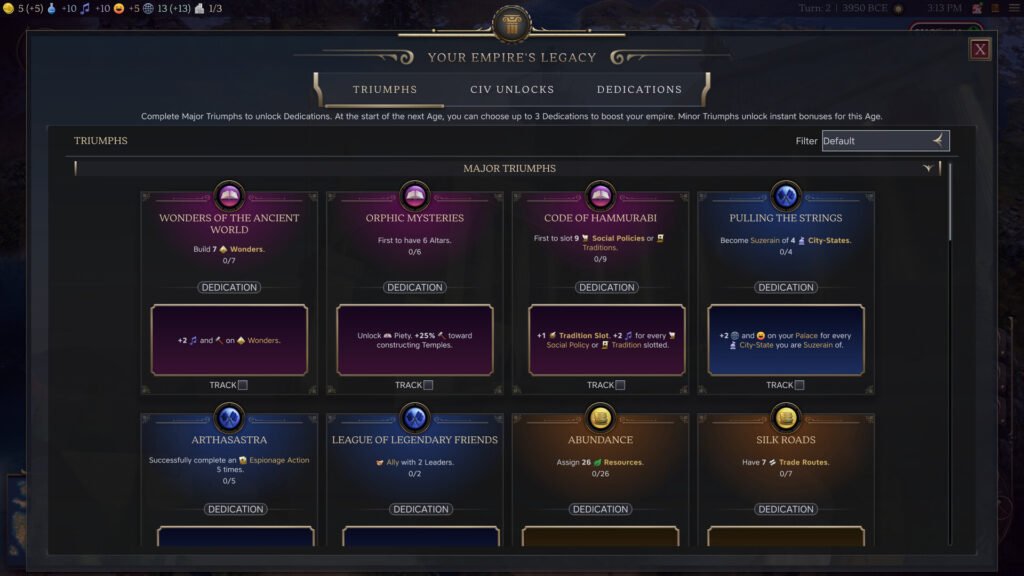
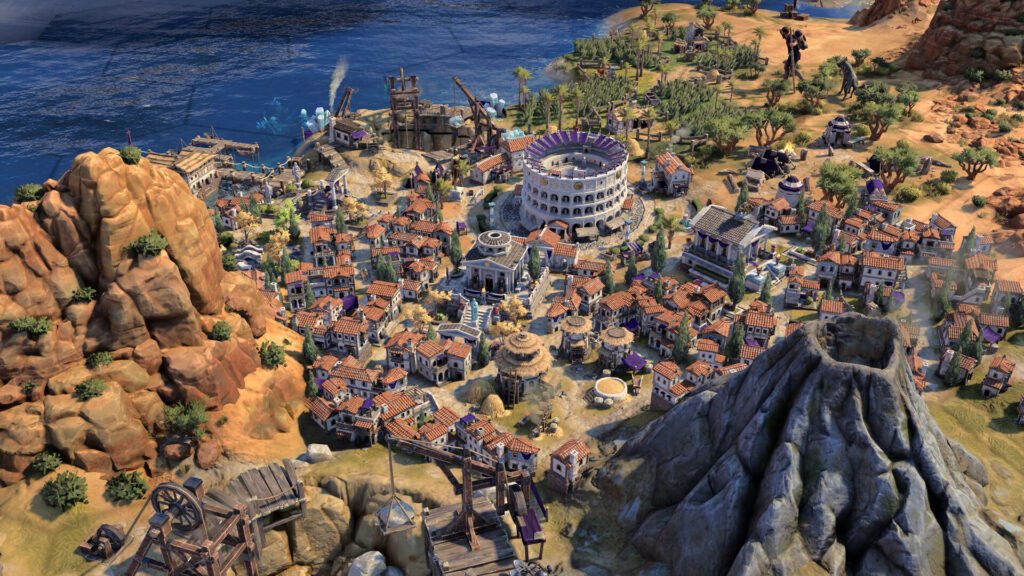
The absolute headline feature of this massive patch is the introduction of Time-Tested civilizations. Firaxis has effectively undone the handcuffs of the rigid age-swapping system. While you can still choose to evolve your empire into a totally different culture at an age transition if you enjoy that playstyle, you now have the official option to start and stay as a single civilization across all three historical eras. If you pick Egypt, you can guide Egypt all the way from ancient stone monuments to the space age.
To make sure this feels natural and robust, the developers didn’t just slap a cosmetic band-aid on the system. They completely built out brand-new, unique Civic Trees tailored specifically for these long-haul civilizations to cover the eras they didn’t historically occupy. Furthermore, to prevent things from feeling stagnant, they introduced a fascinating Syncretism mechanic. When your civilization rolls into a new era, Syncretism allows you to adopt unique units or infrastructural bonuses from neighboring empires currently enjoying their own historical peak. If you want to double down on your own native culture instead of adapting outside ideas, you can utilize the new Affirmation mechanic to supercharge your civilization’s innate traits. Best of all, the game’s artificial intelligence matches your pacing, meaning the AI leaders will respect the rules of whichever civilization mode you select at the setup screen.
Tearing Down the Legacy System
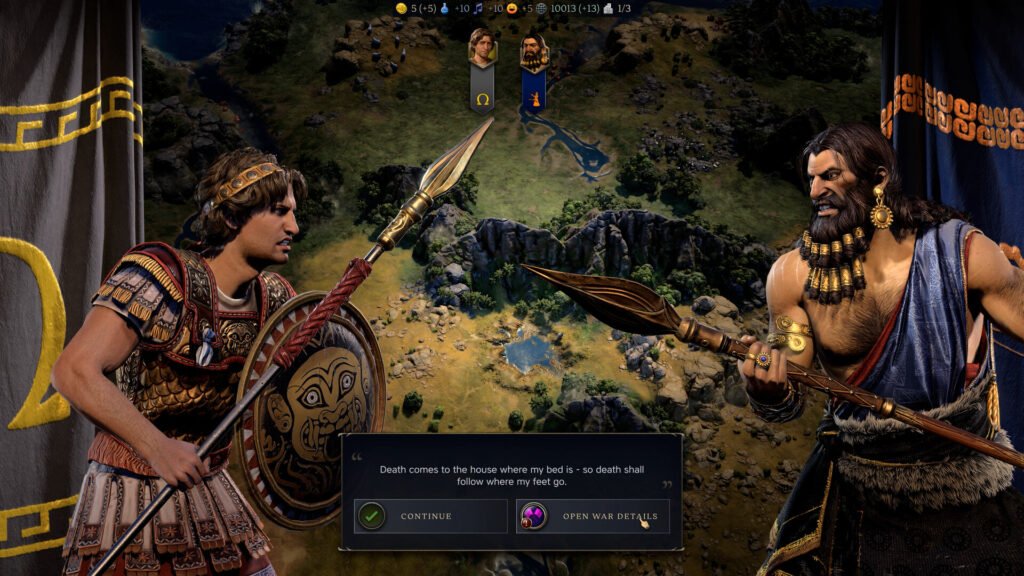
Another massive structural shift comes in how you progress through an individual game session. The old, sometimes restrictive Legacy Paths have been permanently dragged to the recycling bin. In their place stands the highly customizable Triumphs system. Instead of forcing you down a narrow, pre-determined historical path, Triumphs act as an open-ended, sandbox-driven checklist of goals.
There are over ninety new dynamic objectives split cleanly across the game’s six primary character attributes. Whether you are playing a game focused on being militaristic, cultural, scientific, economic, diplomatic, or expansionist, there is a distinct tier of Triumphs designed to reward your specific playstyle. These objectives give you concrete, mid-game milestones that provide immediate, valuable bonuses without locking your empire into a corner for the final eras of the campaign. It gives the mid-game a much more natural, rewarding flow.
A Total Overhaul to Winning the Game
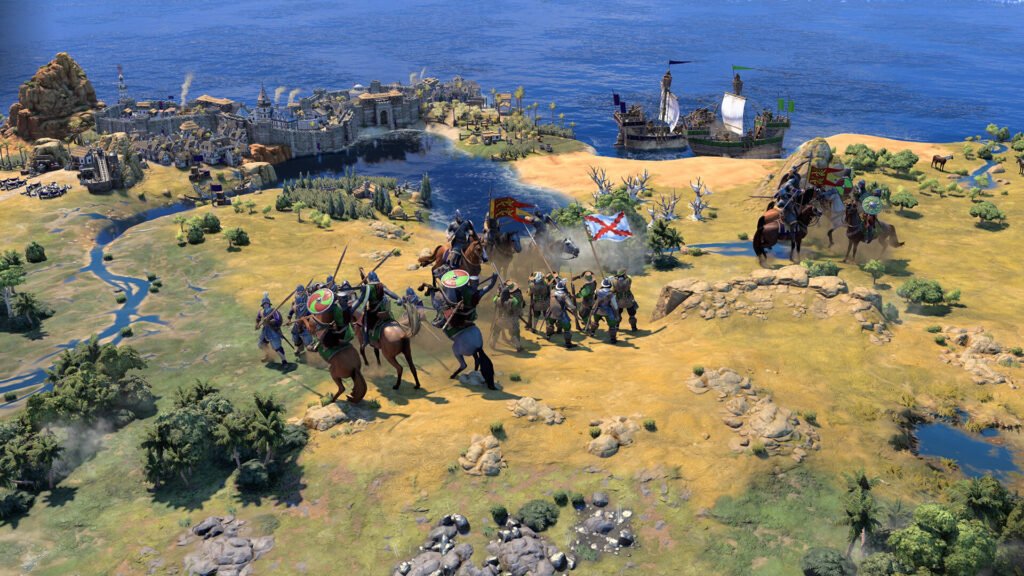
For a lot of strategy veterans, the endgame of a standard campaign can occasionally turn into a tedious click-fest once the ultimate winner becomes obvious. To combat this, the Test of Time update features a complete top-to-bottom redesign of the Victories system. Every single win condition has been reworked to reward your total dominance across all three major eras, making the final stages of a match significantly more explosive and unpredictable.
The game now utilizes a dominance model for military, cultural, and economic victories. Instead of hitting a static arbitrary number, your goal is to push your respective score a specific percentage higher than whoever is currently sitting in second place. This creates a highly competitive tug-of-war dynamic. If you want a military victory, your score is determined by total settlement control and establishing footholds in distant lands. A cultural victory relies heavily on building jaw-dropping wonders, maintaining unique infrastructure, and throwing massive empire-wide celebrations. An economic victory is all about driving gold yields, utilizing specialized resource slots, and protecting profitable treasure convoys.
The threshold to trigger a win scales down as time passes. During the exploration age, a dominant player needs a score six times higher than the runner-up to claim a transcendent victory. By the modern age, that requirement drops substantially, making it a tight, high-stakes sprint to the finish line where you only have to hold your lead for five consecutive turns to secure the win. Meanwhile, the science victory has been decoupled from the dominance model, focusing instead on an innovation currency generated by unique projects, tech masteries, and launching a final rocket project from a dedicated launch pad.
The Little Things and a Legendary Freebie
While the structural reworks are stealing the spotlight, the patch notes are absolutely stuffed with quality-of-life adjustments and mechanical tuning. Specialists have received a massive balance pass; they no longer give static base yields but instead grant a massive one-hundred percent bonus to a tile’s adjacency yields, which completely changes how you will want to optimize your urban planning. Towns have also been overhauled, stripping away old age-scaling rules and allowing players to purchase a wider variety of buildings directly through their specific town focuses.
The update also treats map explorers to an entirely new Fractal Continent map type alongside thoroughly upgraded map generation algorithms that create much more realistic geographical biomes. Visually, a new commerce screen helps manage your financial empire, an advisory council keeps your macro-strategy on track, and an automatic camera pan feature ensures you never miss a tactical combat skirmish across your borders. To top it all off, the developers threw in a treasure trove of fresh ambient music tracks alongside a completely free, historically dominant leader to add to your roster: Alexander the Great. Whether you fell off the game after launch or you have been playing consistently since day one, the Test of Time update fundamentally redefines what it means to build an empire.