
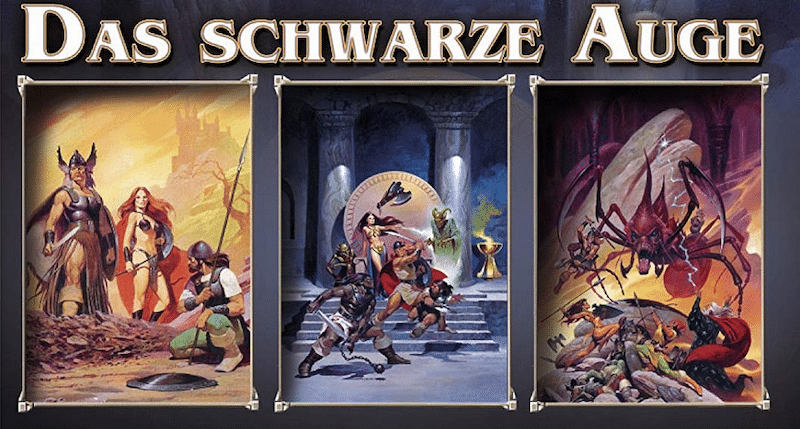

If you think modern role-playing games are demanding, it is time for a reality check. Long before the gaming industry decided to hold your hand with glowing quest markers, GPS mini-maps, and auto-saving every time you cross a room, a small German studio named Attic Entertainment Software was busy crafting a digital torture chamber disguised as high fantasy. They called it the Realms of Arkania trilogy. Known domestically in Germany as the legendary Northland Trilogy, this series took the dense ruleset of Germany’s most popular tabletop system, Das Schwarze Auge (The Dark Eye), and translated it into a computer experience so uncompromisingly detailed it made contemporary games look like child’s play.
The trilogy represents a fascinating era in PC gaming where simulation and role-playing didn’t just meet; they collided at Mach speed. Across three massive titles released in the 1990s, players didn’t just fight orcs and dragons. They fought pneumonia, starvation, rusted weapons, broken shoes, and the agonizing realization that they forgot to buy a tinderbox before wandering into an abandoned dwarfen mine. It was glorious, maddening, and brilliantly designed. Let us take a deep, nostalgic dive into the frozen valleys of Thorwal and the swampy streets of Riva to explore why these games remain absolute milestones of hardcore RPG design.
Part One: The Ultimate Tabletop Simulation
To understand why the Realms of Arkania games are the way they are, you have to understand Das Schwarze Auge. While North American gamers grew up on Dungeons & Dragons, German gamers were obsessed with Aventuria, the fictional continent where The Dark Eye takes place. While D&D focused heavily on heroic fantasy and abstract combat mechanics, the German ruleset leaned hard into simulation, granular skill checks, and complex character psychology.
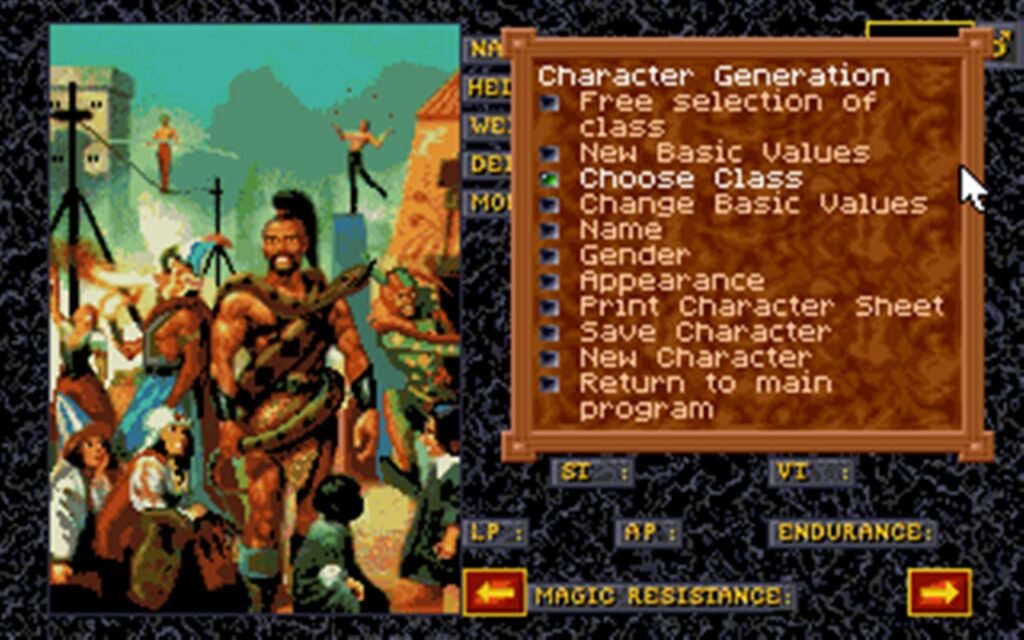
When Attic Entertainment set out to adapt this pen-and-paper system for MS-DOS, they chose not to streamline it. They didn’t shave off the rough edges to make it accessible. Instead, they weaponized the complexity. When you created a party of six characters, you weren’t just picking a class, rolling high strength stats, and buying a sword. You had to manage a massive sheet of positive attributes like cleverness and dexterity alongside deeply impactful negative attributes. Your brave warrior might be an absolute powerhouse in combat, but if his Superstition or Acrophobia (fear of heights) stats were too high, he might completely freeze up in a dungeon or refuse to cross a rickety mountain bridge. If your rogue possessed a high Avarice stat, good luck getting them to share loot equitably.
This fidelity to the source material created an unparalleled layer of emergent storytelling. Your party wasn’t a group of faceless avatars; they felt like a dysfunctional family of deeply flawed individuals trying to survive a harsh world. It set a standard for character depth that few contemporary studios could match.
Blade of Destiny: Walking Into the Blizzard
The madness officially began in 1992 with Realms of Arkania: Blade of Destiny, released in Germany as Das Schwarze Auge: Die Schicksalsklinge. The premise sounds simple enough on paper. An orc chieftain is rallying the disparate tribes to invade the civilized lands of Thorwal. To stop them, your party must recover the legendary sword of Hetman Hyggelik, the titular Blade of Destiny. The catch? The sword is lost, and its location can only be pieced together by finding the scattered remnants of a treasure map held by various NPCs across the entire northern region.
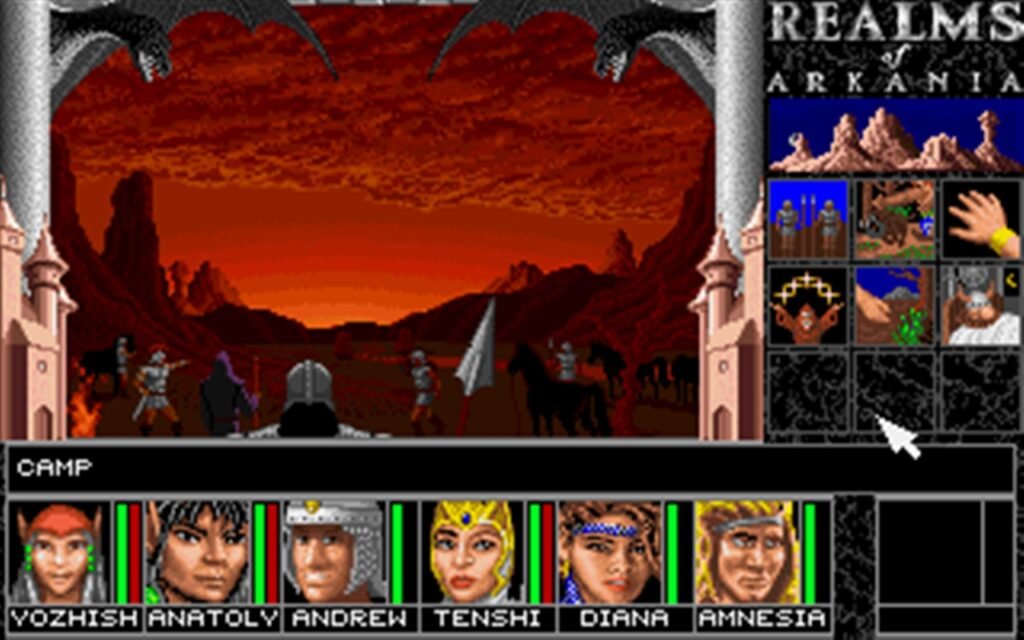
Mechanically, Die Schicksalsklinge was a hybrid beast. Exploration occurred in a first-person perspective, navigating through towns and dungeons grid-by-grid. Travel between locations shifted to a massive overland map, and this is where the game truly revealed its brutal nature. Travel in Arkania was a logistical nightmare. You had to assign camp duties every single night. Someone needed to forage for food, someone had to stand guard against roaming monsters, and your most skilled hunter needed to track game.
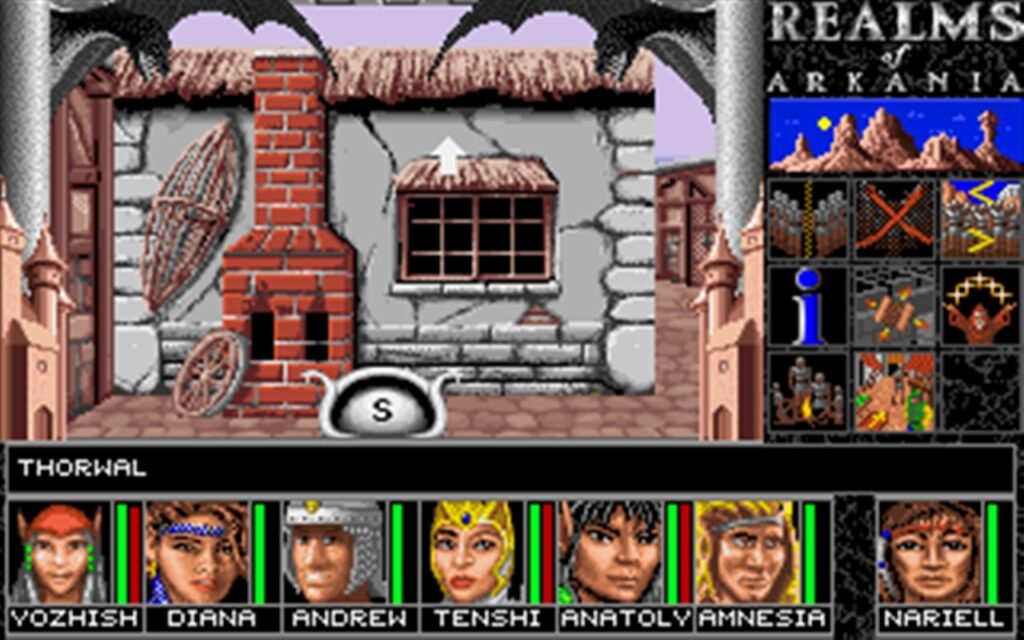
If it started raining or snowing and your party lacked proper winter clothing, blankets, or tents, characters would catch a cold. Left untreated, a simple cold turned into Blue Cough or worse, transforming your star wizard into a wheezing liability who died quietly in their sleep. Weapons would break mid-fight if they weren’t maintained by a blacksmith. Boots would wear out, causing your heroes’ feet to bleed, slowing down your travel map speed to a crawl, and leaving you stranded in the wilderness without rations. It was an exhausting, brutal cycle of survival, yet when you finally found a map piece and managed to limp back into a tavern alive, the sense of accomplishment was intoxicating.
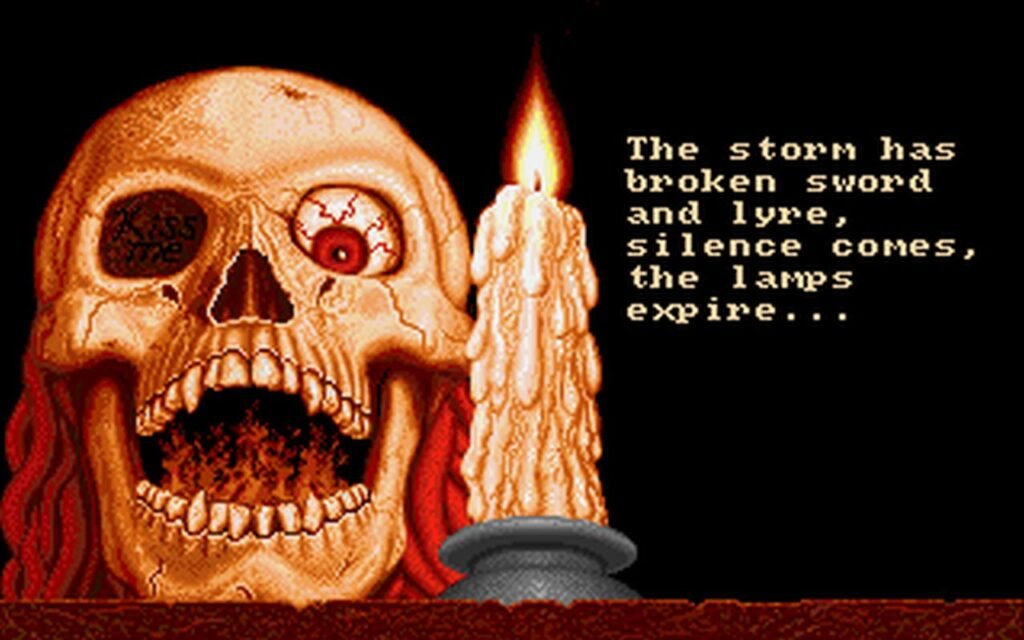
Star Trail: Perfection of the Formula
In 1994, Attic followed up their debut with Realms of Arkania: Star Trail, known natively as Sternenschweif. For many fans of classic computer role-playing games, this is the absolute pinnacle of the series. The story shifts focus toward the uneasy alliance between the elves and the dwarfs, tasks your party with recovering a lost artifact known as the Salamander Stone, and forces you to prevent a massive civil war while the orc menace continues to loom in the background.
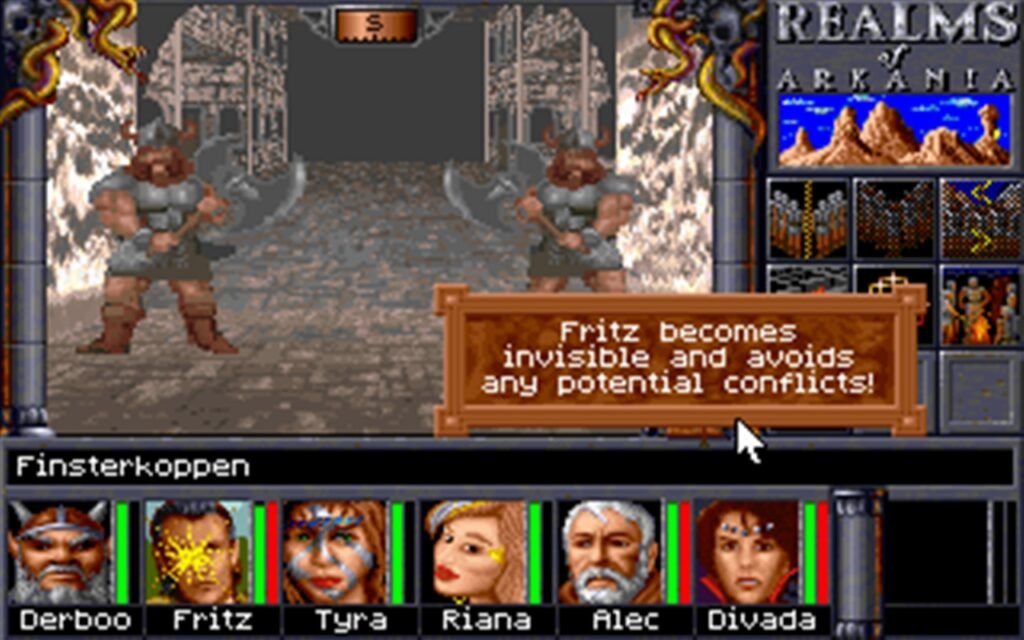
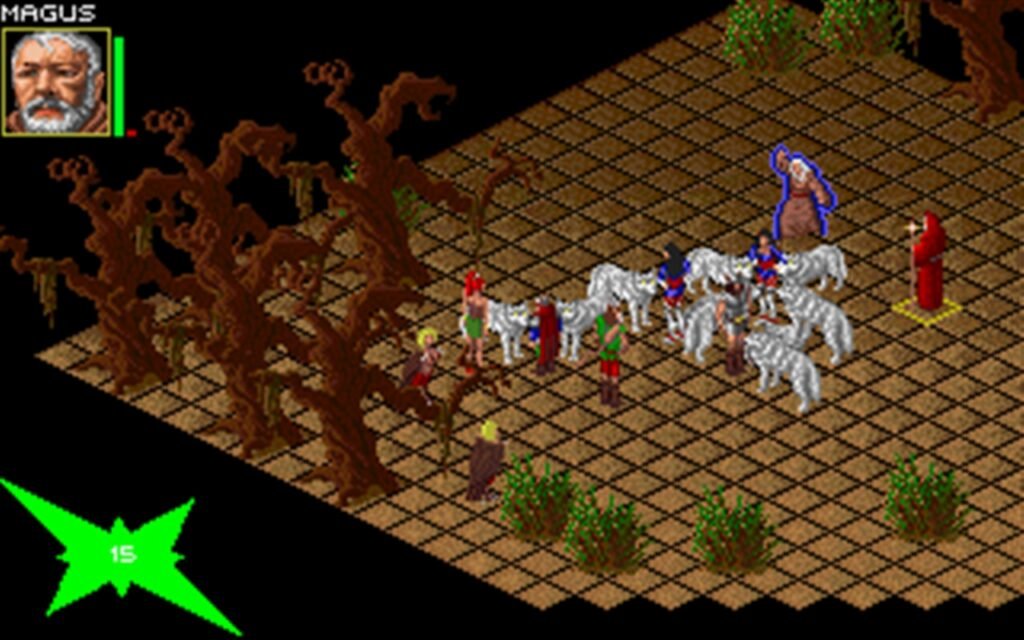
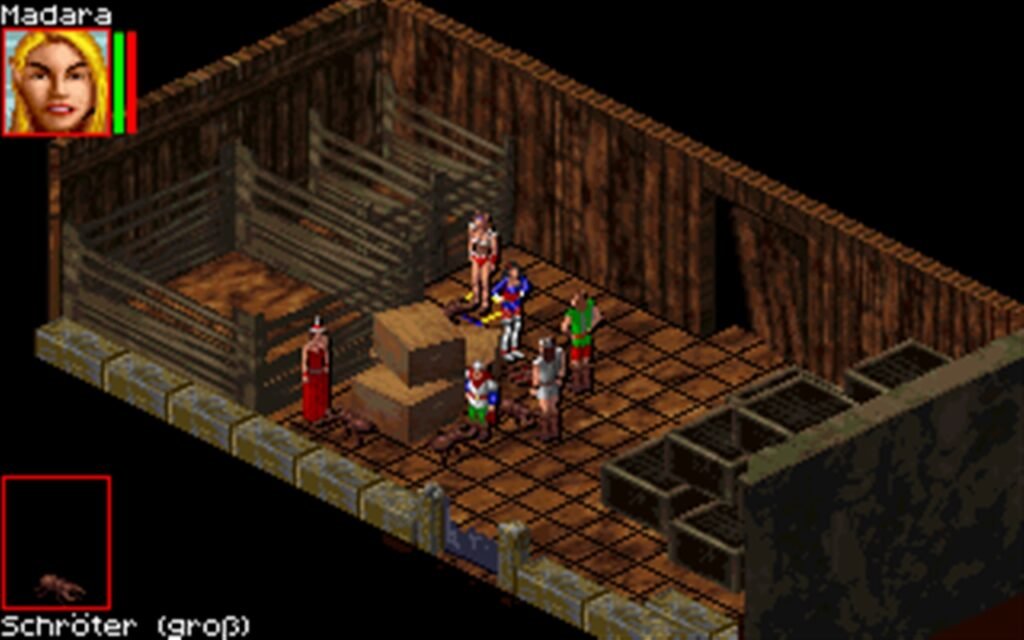
Sternenschweif took everything that worked in the first game and polished it to a mirror sheen. The first-person town exploration looked significantly better, the overland travel mechanics became even more detailed, and the isometric turn-based combat system grew incredibly tactical. Combat in the trilogy was played out on a grid, closely mimicking a tabletop miniature game. Every spell required you to spend precious astral points, and mismanaging your positioning meant your fragile spellcasters would be chopped to pieces by incoming axes.
What made Star Trail stand out was its masterclass dungeon design. Dungeons were no longer just corridors filled with monsters; they were intricate, multi-level environmental puzzles filled with traps, hidden riddles, and unique narrative interactions. You couldn’t just bash your way through. You had to think like an adventurer, pack the right gear, and utilize your characters’ individual non-combat talents, such as lockpicking, herbalism, and ancient languages, to survive.
Shadows Over Riva: The Claustrophobic Finale
The trilogy wrapped up in 1996 with Realms of Arkania: Shadows Over Riva, or Skatten ueber Riva. Unlike its predecessors, which featured sprawling wilderness travel across massive regions, this final chapter took a completely different approach. The entire game takes place within and directly underneath the coastal city of Riva and its surrounding areas.
The story is a dark, paranoiac political thriller. The city is seemingly safe from the outside world, but a strange, subversive force is corrupting it from within. Orcs are arriving, not as an invading army, but as refugees and workers, causing massive racial and social tension among the human population. Your party is called in to investigate a series of bizarre disappearances, occult cult activities, and a massive conspiracy reaching all the way to the upper echelons of the city guild leaders.
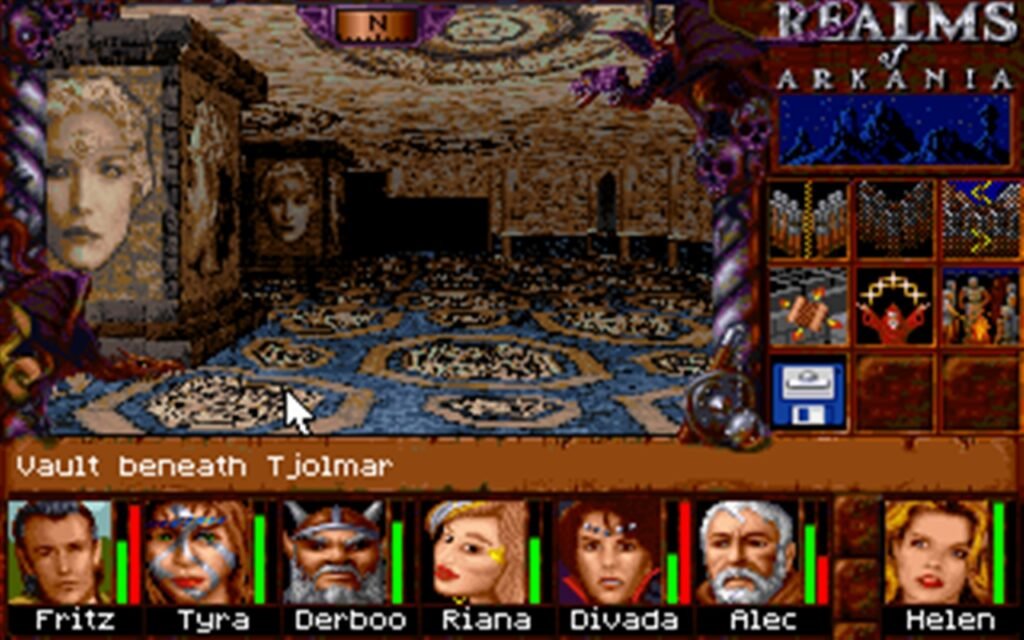
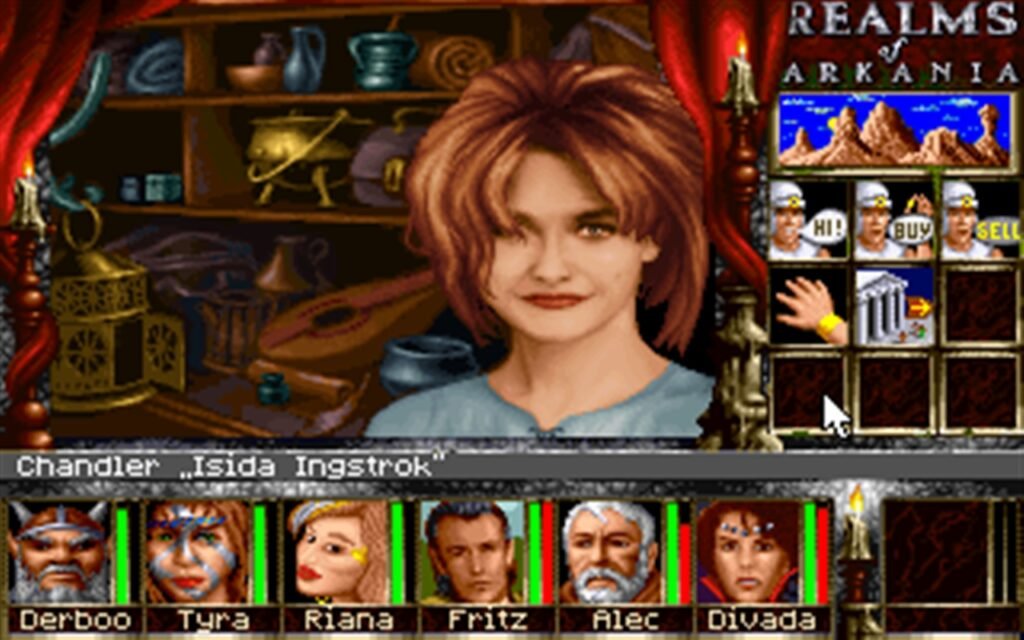
Because the scope was restricted to a single urban center, Schatten über Riva focused heavily on atmospheric storytelling and dense, interconnected questlines. The presentation shifted to a fully textured, pseudo-3D environment for exploration, which added immense immersion to navigating the dark alleys, sewers, and hidden underground temples of Riva. While some fans missed the grand overland expeditions and survival mechanics of the first two entries, the narrative focus and dark tone made it an incredibly satisfying conclusion to one of gaming’s toughest trilogies.
The Guido Henkel Connection: From Arkania to the Cage
The driving creative force behind Attic Entertainment Software and the structural architect of the trilogy was a legendary developer named Guido Henkel. As the series’ lead designer, co-founder of the studio, and producer, Henkel’s obsession with dense mechanics, deep world-building, and mature storytelling defined the entire identity of Arkania.
However, his impact on the broader RPG landscape didn’t stop in Germany. Following his time at Attic, Henkel moved across the Atlantic and joined Interplay’s Black Isle Studios, where he served as the producer for a little project you might have heard of: Planescape: Torment. Released in 1999, it is widely considered one of the greatest narrative achievements in video game history.
The DNA of Arkania’s philosophy can be felt directly in the streets of Sigil. Both games reject generic fantasy tropes, favor philosophical complexity, and treat dialogue and character choices with absolute seriousness. But Henkel’s contribution to Planescape: Torment went far beyond scheduling and production design; it became legendary in a literal, physical sense.
During the development of the game, the art team was struggling to capture the exact look they wanted for the main character, the immortal, heavily scarred protagonist known simply as The Nameless One. They needed someone with a rugged, intense, and distinct facial structure to anchor the dark, gritty aesthetic of the setting.
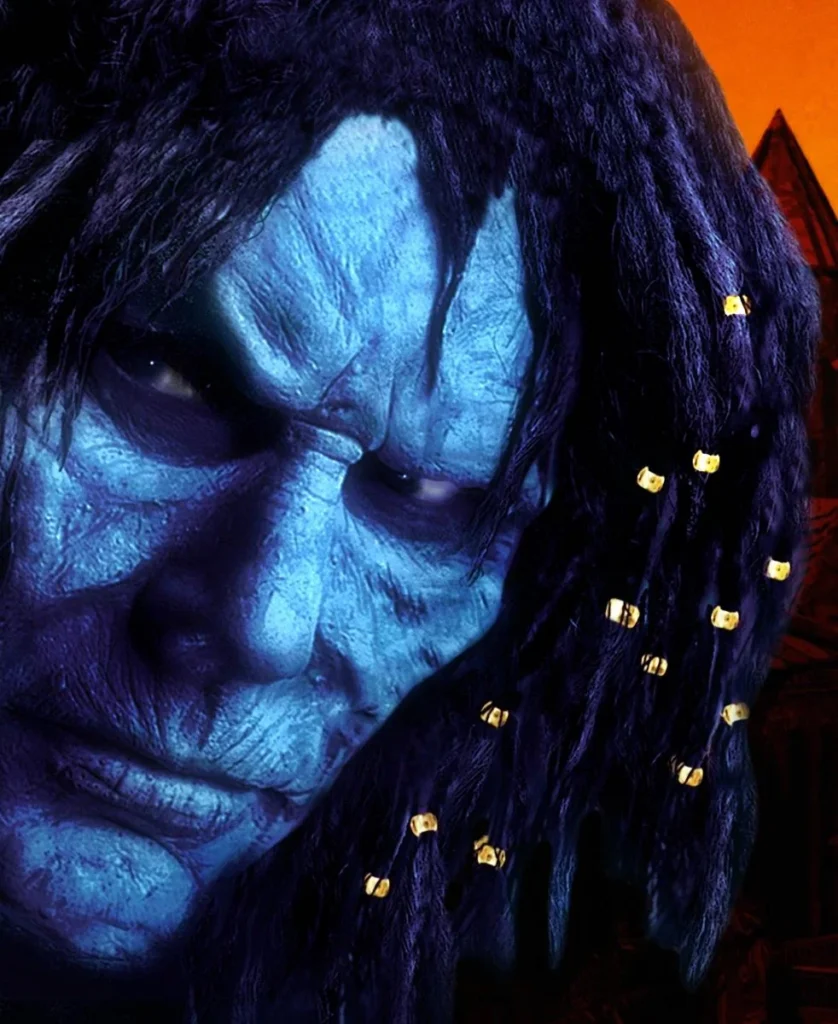
In a moment of classic development improvisation, they asked Henkel to step into the makeup chair. They applied prosthetics, fake scars, and heavy makeup directly to his face, took a series of reference photographs, and used his face as the literal blueprint for the character model.
When you look at the iconic cover art of Planescape: Torment, staring into the hollow, weathered, blue-tinted eyes of The Nameless One, you are looking directly at the face of the man who forced an entire generation of German gamers to buy extra shoes so their digital heroes wouldn’t bleed to death in a virtual blizzard. It is a brilliant, poetic bridge linking two distinct eras of classic, hardcore role-playing game design.
The Enduring Legacy of True Adventure
The Realms of Arkania trilogy represents a bygone golden era of uncompromising game design. They are games that genuinely respected the player’s intelligence by refusing to baby them. They asked you to be a cartographer, a logistical coordinator, a tactician, and a storyteller all at once.
While the original versions can be incredibly daunting to run and control on modern hardware without the help of modern digital storefront emulators, their influence echoes loudly through modern survival-RPGs. Every time you play a game where you have to balance a stamina meter, manage hypothermia, worry about weapon degradation, or deal with characters who have severe psychological flaws, you are playing a game that owes a massive debt of gratitude to Attic Entertainment’s masterwork. They built an unforgiving world, handed you a blank map, and dared you to survive it. And that is exactly what made it an unforgettable adventure.