
Release Date: June 26, 2006 (Original), November 2021 (Latest Expansion)
Developer Name: Iron Lore Entertainment / THQ Nordic / Pieces Interactive
Get It On: GOG
The Legend Begins: Slaying Hydras in the Sun
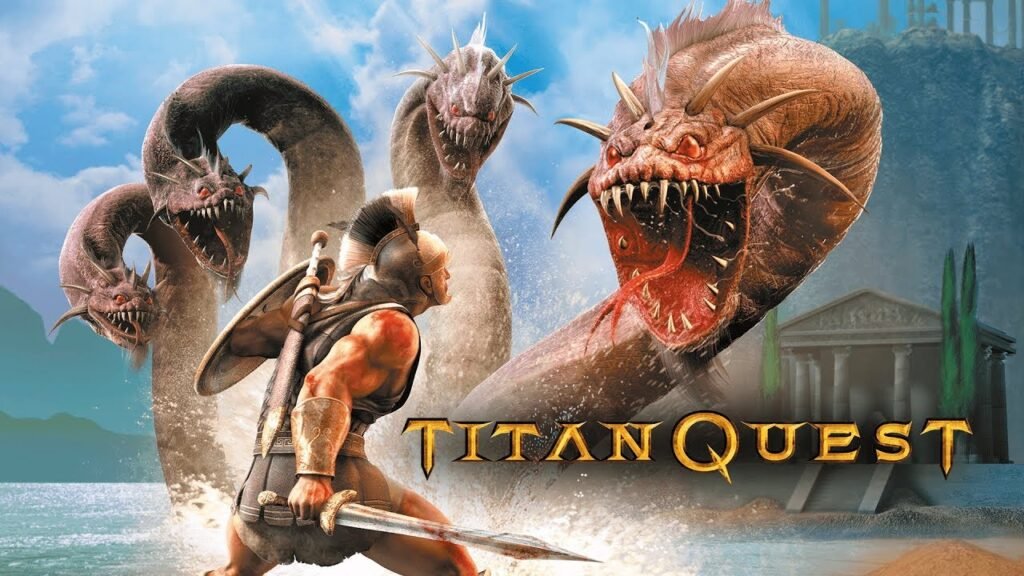
If you were a fan of clicking monsters until they exploded back in the mid-2000s, you probably remember the absolute stranglehold Diablo II had on the genre. But then, out of the Aegean mist, came Titan Quest. It was a breath of fresh, salty sea air. Instead of dark, dingy catacombs and gothic horror, we were treated to the vibrant, sun-drenched hills of Ancient Greece. It felt like a vacation, except for the part where satyrs were trying to poke your eyes out with spears. The game was a technical marvel for its time, especially with its ragdoll physics. There was something infinitely satisfying about hitting a skeleton with a mace and watching it fly over a cliffside like a bony frisbee.
The real genius of Titan Quest, though, wasn’t just the pretty scenery. It was the Mastery system. Instead of picking a single class and sticking to it, the game lets you combine two different skill trees to create a unique hybrid. You want to be a pyromaniac who also knows how to use a bow? Go for it. You want to be a defensive tank who summons liches? That is also a valid life choice. This level of customization meant that theory-crafting became a game in itself. You weren’t just playing a character; you were building a god-slaying machine. Even today, the loop of traveling from the Parthenon to the Great Wall of China feels epic in a way few other action RPGs manage to capture. It is a slow burn, sure, but the sense of scale is unmatched.
Immortal Throne: Going Through Hell (Literally)
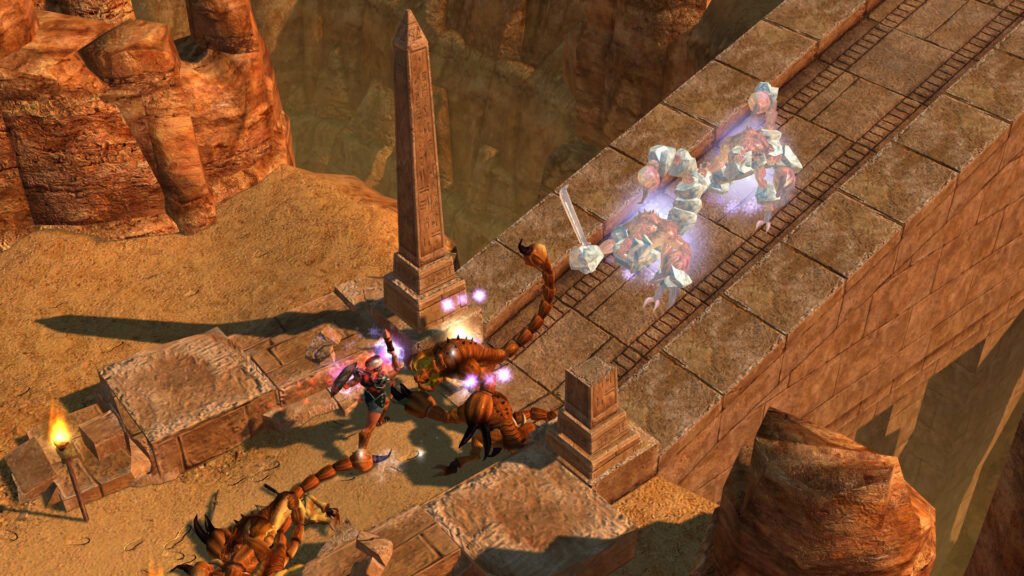
A year after the base game hooked us, Immortal Throne arrived and basically became the “must-have” companion. You can’t really talk about Titan Quest without this expansion because it fixed almost every nagging issue the original had. It introduced the Caravan, which finally gave us a place to store all that legendary gear we were hoarding “just in case.” It also added the Dream Mastery, which was—let’s be honest—completely overpowered but incredibly fun to play. The expansion took us into the dark, brooding depths of the Underworld to face Hades himself.
The shift in tone was palpable. We went from the bright Mediterranean sun to the somber, purple-hued banks of the River Styx. The level design took a massive leap forward here, with more verticality and some truly haunting set pieces. It also introduced Enchanters, allowing us to customize our gear with powerful artifacts. It felt like the developers at Iron Lore took everything that worked in the base game and cranked it up to eleven. If the base game was the foundation, Immortal Throne was the marble pillars and the gold-leaf roof. It turned a great game into a legendary one, providing the definitive endgame experience that kept players coming back for years.
Ragnarök: Frost Giants and Heavy Metal
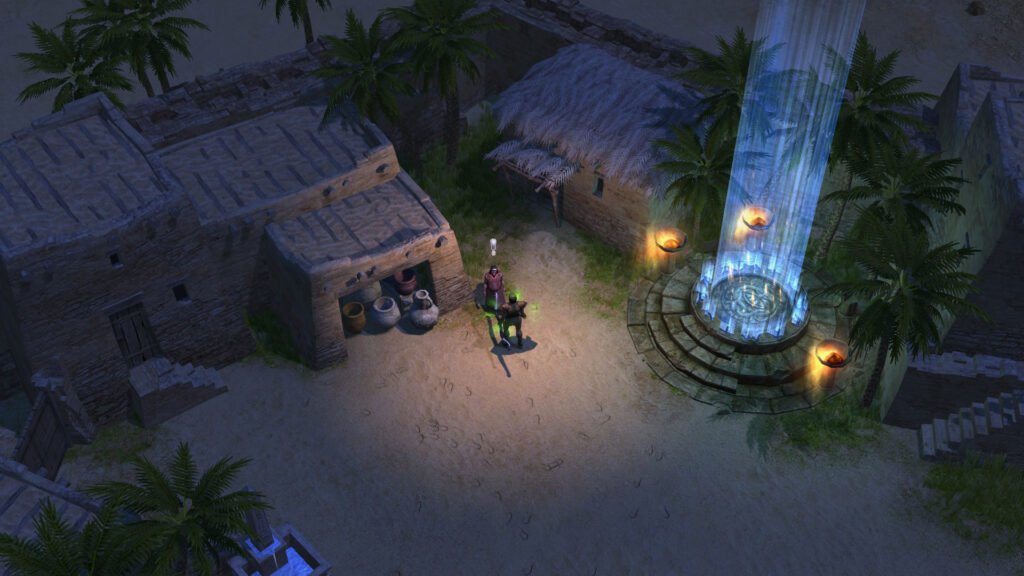
Fast forward a whole decade. Most people thought Titan Quest was a finished chapter in gaming history. Then, out of nowhere, THQ Nordic decided to revive the corpse and gave us Ragnarök. It was a total shock to the system. Suddenly, we were leaving the myths of the East and Mediterranean behind to head into the frozen north. This expansion added a massive fifth act that was arguably larger than any of the previous ones. It felt a bit like a homecoming for fans who had spent hundreds of hours in the game during their teenage years.
The addition of the Runemaster mastery was the icing on the cake. It allowed for even more weird and wonderful character builds, focusing on magical runes and elemental shields. The gear also got a Norse makeover, with throwing weapons finally becoming a viable, primary playstyle. While the graphics started to show their age a little bit compared to modern titles, the art direction carried it through. Wandering through snowy forests and battling giants felt distinct and fresh. It was a love letter to the fans, proving that a good gameplay loop is timeless, regardless of how many years have passed since the initial launch.
Atlantis: A Deep Dive into Mystery
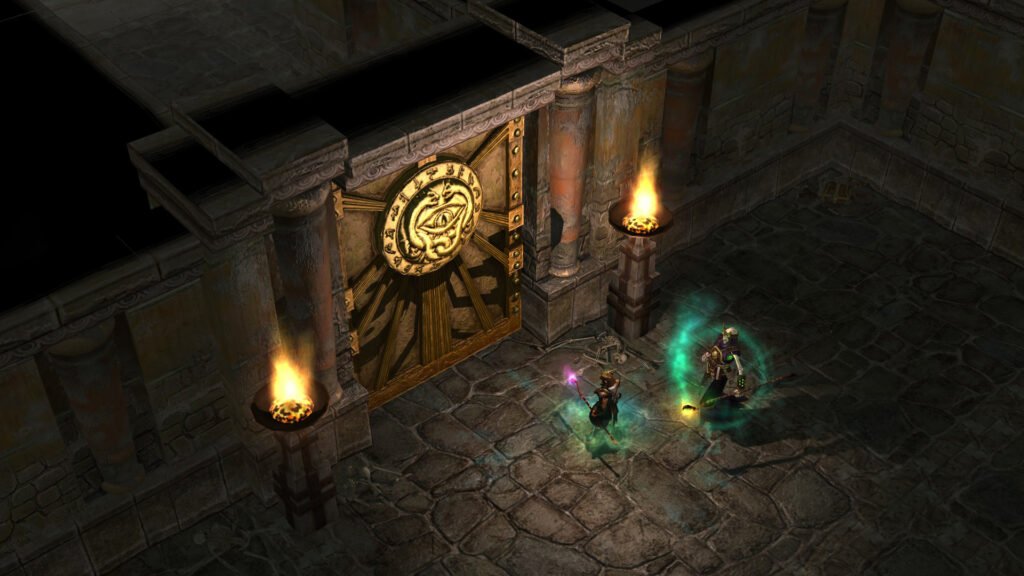
Shortly after the Norse adventure, we got Atlantis. This one was a bit of a departure because it wasn’t strictly a linear continuation of the story. Instead, it acted more like a massive side-quest or an “interstitial” adventure that you could tackle alongside the main campaign. It took us to the legendary sunken city, and while the story was a bit on the shorter side, the technical upgrades were the real stars of the show. We got a much-needed graphical update, better lighting, and some quality-of-life features that made the ancient engine feel a bit more modern.
The coolest addition in Atlantis was the Tartarus Endless Mode. For players who had already reached the level cap and had nothing left to kill, this provided a wave-based challenge that tested the limits of your build. It also introduced a gambling mechanic where you could sink your extra gold into “orbs” for a chance at high-tier loot. It was a bit of a grind, but in an ARPG, grinding is the point. Atlantis felt like the developers were experimenting with what Titan Quest could be in a modern era, adding “extra” tiers to existing masteries and giving us more reasons to keep clicking.
Eternal Embers: The Final, Fiery Hurrah
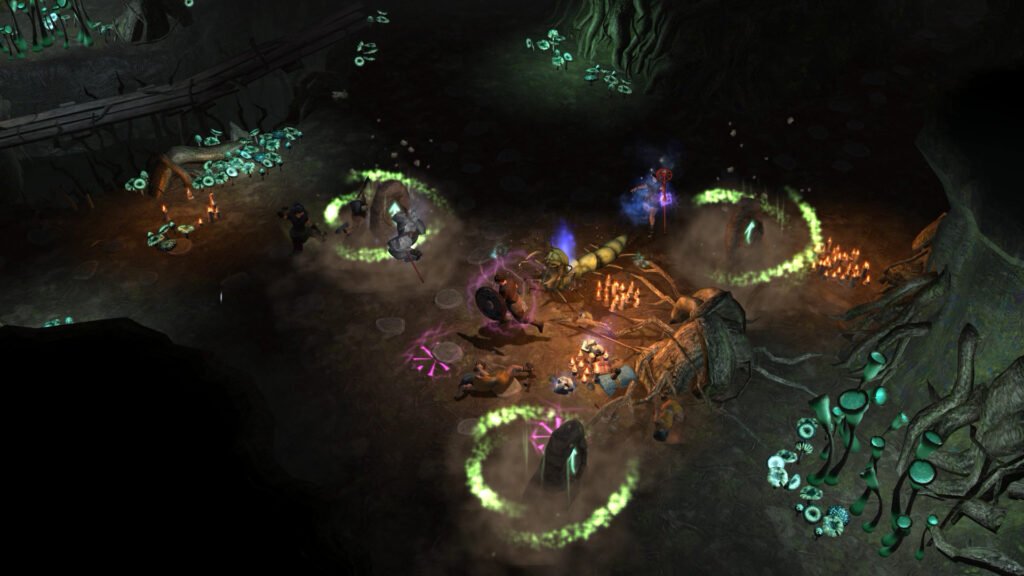
Finally, we have Eternal Embers, an expansion that is strictly for the veterans. You literally cannot play this content unless you have a character that has reached Legendary difficulty, which is a bold move. It brings the story full circle, returning to the East to deal with an ancient threat involving the legendary Ne Zha and the dragon kings. The difficulty spike here is real. If your resistances aren’t capped and your build isn’t optimized, the monsters in Eternal Embers will turn you into a grease spot on the floor faster than you can say “Mount Qiyun.”
The expansion added the Neidan mastery, which is all about alchemy, potions, and breath attacks. It’s a very technical mastery that rewards players who like to micro-manage their buffs and debuffs. The environments are gorgeous, featuring lush temples and mystical landscapes that push the old engine to its absolute limits. It serves as a fitting finale to the Titan Quest saga, offering a high-level playground for the most dedicated players. It’s a bit niche because of the entry requirements, but for those of us who have been playing since 2006, it was the perfect excuse to dust off our old characters and save the world one last time.
Pro Tip: When starting out, don’t spread your skill points too thin. Pick one primary attack skill and max it out early. You can always visit a Mystic later to buy back your points if you realize your “fire-breathing archer” build is actually a disaster.