

Release Date: August 13, 2003 Developer: Reflexive Entertainment
Get It On: GOG
When History Takes a Wild Left Turn
If you’ve ever sat in a history class and thought, “This is cool, but it needs more demons and interdimensional rifts,” then Lionheart: Legacy of the Crusader is basically your fever dream come to life. Developed by Reflexive Entertainment and published during the twilight years of the legendary Black Isle Studios, this game is one of the most fascinating “what ifs” in the history of CRPGs.
The premise is absolute gold. During the Third Crusade, a ritual gone wrong—sparked by King Richard the Lionheart’s mass execution of prisoners at the Siege of Acre—tore the fabric of reality. This event, known as the Disjunction, flooded the world with magic, spirits, and monsters. Fast forward to 1588, and you aren’t just in Europe; you’re in an alternate history Renaissance where the Spanish Inquisition isn’t just hunting heretics—they’re hunting actual wizards.
The SPECIAL Sauce
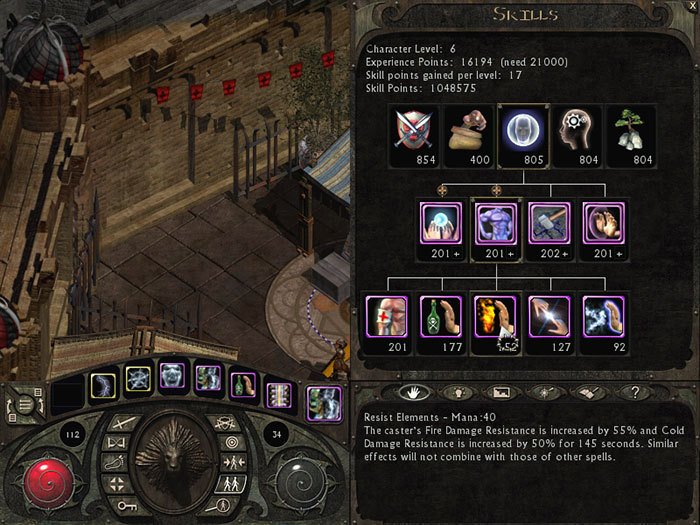
One of the biggest draws for any RPG nerd is that Lionheart is the only game outside of the Fallout series to officially use the SPECIAL system. You’ve got your Strength, Perception, Endurance, Charisma, Intelligence, Agility, and Luck. If you grew up obsessing over character builds in the Wasteland, you’ll feel right at home here.
The game adds a magical twist by letting you choose a Spiritkind to house within your soul. Whether you’re bonded with a demonic spirit, an elemental, or a celestial being, your choice fundamentally changes how NPCs react to you and what powers you can wield. Want to play a charismatic Sylvant who talks their way past the city guards? You can. Want to be a Feralkin warrior who just hits things really hard? Also an option. The character creation is deep, rewarding, and offers that crunchy customization we all crave.
Barcelona: The Golden Hour
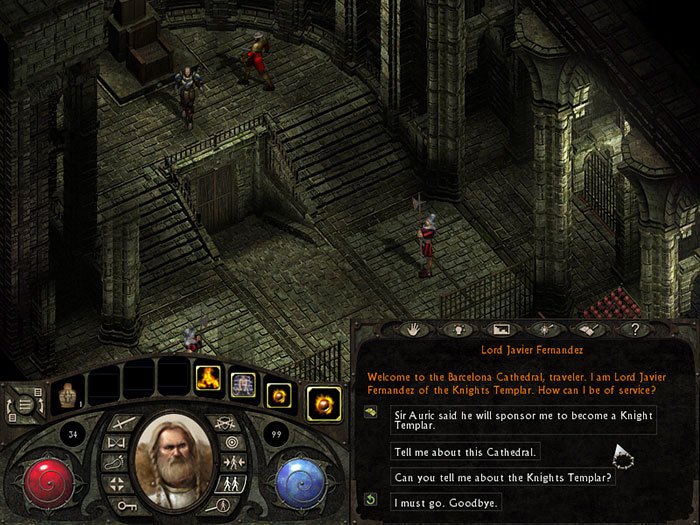
The first third of the game takes place in Nueva Barcelona, and honestly, it’s some of the best role-playing content of the early 2000s. The city is a vibrant, isometric playground filled with historical cameos that will make any liberal arts major geek out. You’ll run errands for a struggling playwright named William Shakespeare, discuss science with a confined Galileo Galilei, and get tactical advice from Niccolò Machiavelli. Even Leonardo da Vinci shows up as your eccentric mentor/inventor.
In Barcelona, the quest design is top-tier. You can navigate the political tensions between the Knights Templar, the Inquisition, and the secretive magic-wielders known as the Wielders. The dialogue is sharp, and the Speech skill actually matters. You can solve problems through diplomacy, stealth, or old-fashioned sword-swinging. It feels like a true successor to the Baldur’s Gate and Fallout lineage. If the whole game had maintained this level of quality, we’d be talking about Lionheart as an all-time masterpiece.
The Great Pivot to Hack-and-Slash
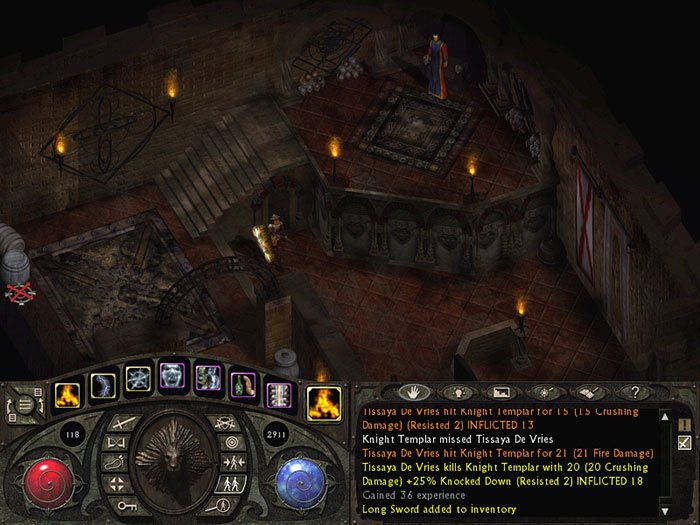
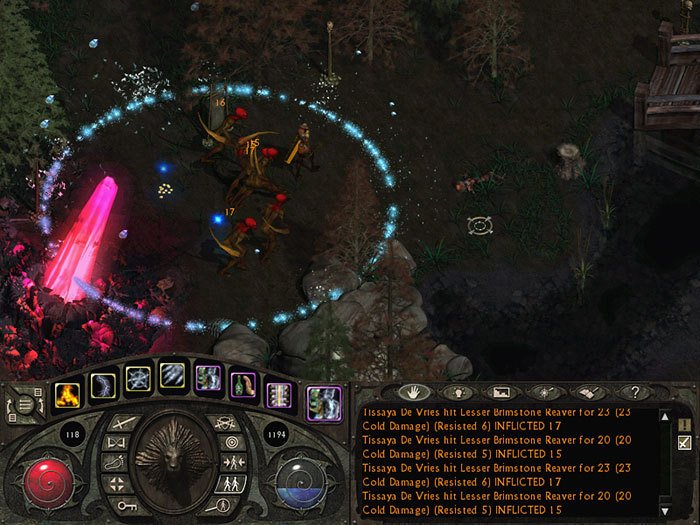
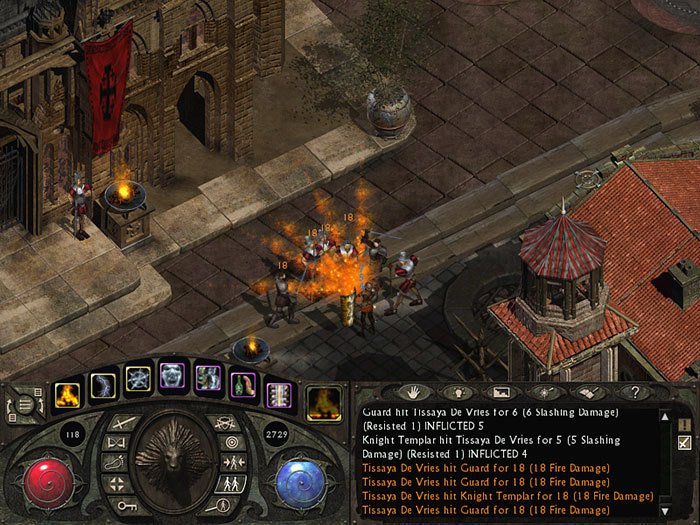
Here is where the review gets a little “tough love.” Once you leave the gates of Barcelona, Lionheart undergoes a bit of an identity crisis. It’s widely known in gaming circles that the development was rushed toward the end, and it shows. The deep, branching narrative suddenly pivots into a Diablo-style gauntlet of endless combat.
The lush city streets are replaced by monster-infested wilderness and repetitive dungeons. If you spent all your points on Barter and Diplomacy, the second half of the game is going to be a rough ride. The real-time combat—which feels a bit clunky compared to pure action-RPGs—becomes the primary way you interact with the world. You’ll find yourself clicking through hordes of enemies, wishing there was another historical figure to chat with instead of another pack of goblins to slay.
A Flawed Masterpiece Worth Your Time
Despite the dip in the latter half, I still find myself recommending Lionheart to anyone who loves a good isometric RPG. There is an undeniable supernatural charm to the world. The atmospheric music by Inon Zur is hauntingly beautiful, and the 2D hand-drawn backgrounds have a painterly quality that modern 3D games often struggle to replicate.
It’s a “flawed masterpiece” in the truest sense. Even if the gameplay loop becomes a bit of a slog, the lore and the setting remain incredibly unique. There just aren’t many games that let you fight alongside Joan of Arc while casting fireballs at undead Spanish soldiers.
If you decide to pick it up on GOG, my advice is to soak in every second of Barcelona. Do every side quest, talk to every NPC, and enjoy the brilliant writing. By the time the combat starts to feel heavy, you’ll be so invested in the world that you’ll probably want to see the journey through to the end anyway. Lionheart: Legacy of the Crusader is a relic of a time when developers took huge, weird risks with history, and for that alone, it deserves a spot in your digital library.