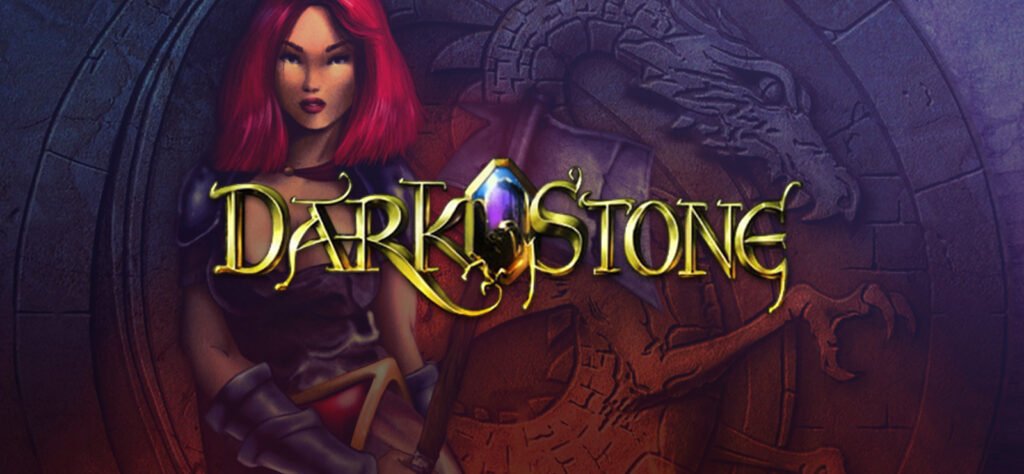

Release Date: July 31, 1999 Developer: Delphine Software
Get It On: GOG
The 3D Contender That Almost Toppled Diablo
In the late 90s, the Action RPG world was dominated by a little game called Diablo. It was dark, moody, and pixelated. But then, emerging from the workshops of Delphine Software (the legendary French studio behind Flashback), came Darkstone. It arrived with a bold proposition: “What if Diablo was in full 3D, and what if you didn’t have to go it alone?”
While it might have been labeled a “Diablo clone” back in the day, calling it that is a bit like calling a sports car a “bicycle clone” just because they both have wheels. Darkstone brought its own flavor of weirdness and innovation to the table. It was bright, colorful, and packed with a sense of adventure that felt less like a descent into hell and more like a high-fantasy Saturday morning cartoon.
Two Heads Are Better Than One
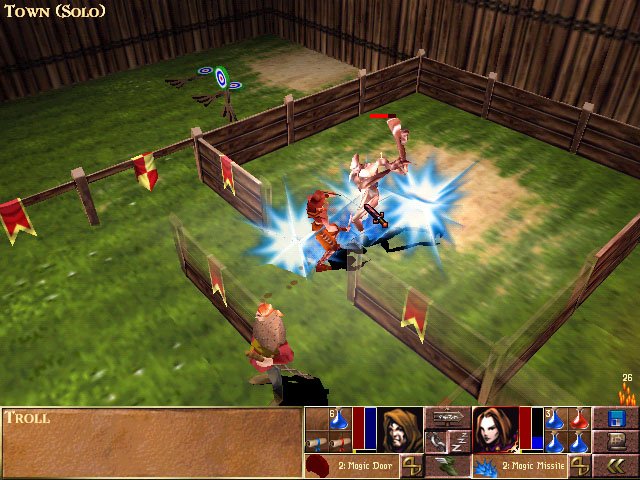
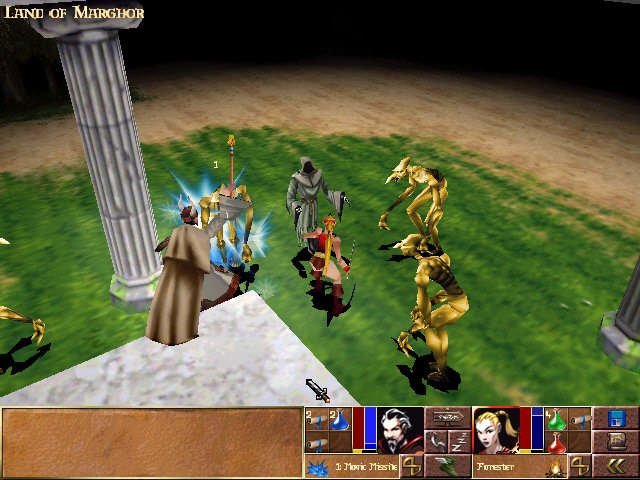
The absolute “killer app” of Darkstone—and the thing that still makes it worth a play today—is the dual-character system. Unlike almost every other click-fest of the era, you weren’t limited to a single lonely hero. You could create two characters and take them into the dungeons together.
This wasn’t just a cosmetic choice. While you controlled one hero directly, the AI took over the other. You could switch between them with a single button press, allowing for some genuinely tactical gameplay. You could have a beefy Warrior soaking up damage on the front lines while your Sorceress rained down fireballs from the back. It solved the age-old RPG problem of being a “glass cannon” wizard; in Darkstone, you simply brought your own bodyguard. Managing your team’s hunger, equipment, and spells felt like running a tiny, elite strike team against the forces of the evil dragon Draak.
A World of Infinite (and Odd) Possibilities
One of the most impressive things about Darkstone is its replayability. The game uses a clever randomization system that doesn’t just shuffle the dungeon layouts, but also the quests themselves. Each time you start a new journey to collect the seven crystals of the Time Orb, the game picks a selection of quests from a much larger pool. One run you might be hunting the vampire Nosferatu, and the next you’re helping a villager find a lost baby or dealing with a hive of giant wasps.
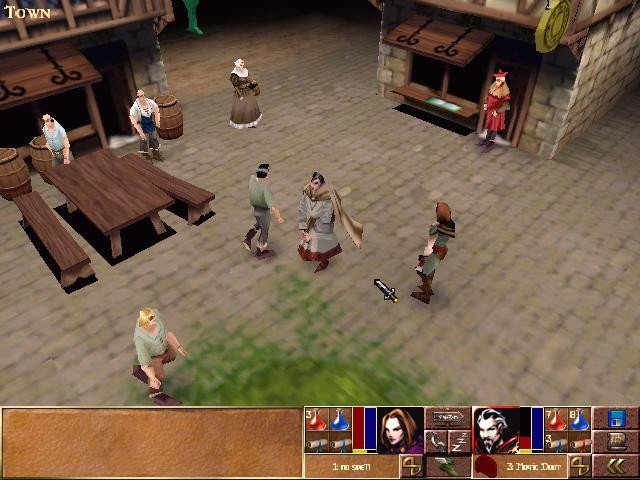
The world of Uma is surprisingly charming. The central hub, simply named Town, is filled with memorable characters like Gunther the Blacksmith and Madame Irma. And let’s talk about the music—specifically the “The Darkstone Will Shine” song. If you find the town musicians and toss a coin in their hat, they’ll perform a fully voiced, incredibly catchy folk song that has lived rent-free in the heads of gamers for over two decades. It’s these little touches of personality that make the game feel like more than just a loot grind.
The Crunch and the Polish
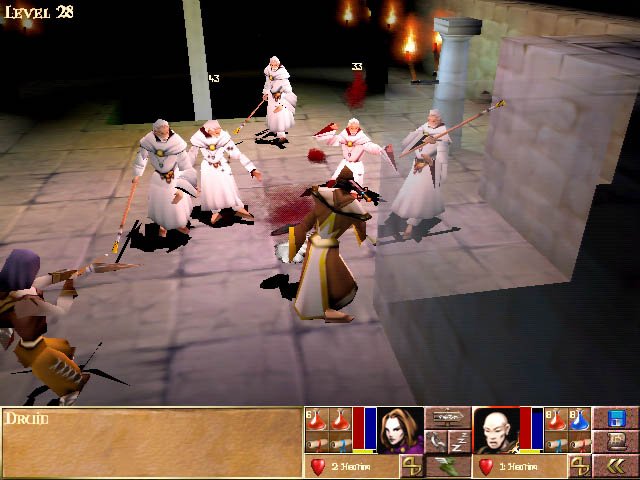
The gameplay loop is pure, unadulterated dopamine. You head into the wilderness, find the dungeon entrance, and descend into the depths. The 3D engine was a big deal in 1999, allowing for a rotatable camera and real-time lighting that made exploring those dark corridors feel much more immersive than the static maps of its competitors.
You’ve got eight classes to choose from—Warrior, Amazon, Wizard, Sorceress, Assassin, Thief, Monk, and Priestess—though they basically boil down to four archetypes with male/female variations. The skill system is surprisingly deep, allowing you to learn everything from Lycanthropy (turning into a werewolf!) to recharging magic items. There’s even a longevity mechanic where your characters actually age over time, requiring you to find or buy Potions of Youth to keep your stats from declining. It’s a weird, simulation-lite layer that you just don’t see in modern ARPGs.
Giving Uma a Facelift: Upscaled Textures
If those 1999 polygons feel a little too “retro” for your 4K monitor, the community has been hard at work. Because the game is a cult classic, modders have used AI-assisted tools to sharpen the experience.
One of the most notable projects is the Darkstone Gigapixel Textures Pack. This mod takes the original low-resolution files and runs them through AI upscaling to provide a much crisper look without losing the original art style. While there isn’t a central “Nexus Mods” hub as active as newer games, you can often find the Ivan89el HD Texture Pack and various Reshade presets on community forums and Steam guide pages. These mods specifically fix the “muddy” look of the ground and walls, making the descent into Draak’s lair feel significantly more modern.
You can find links to these community-driven visual updates here:
Is It Worth Revisitng in 2026?
Look, the graphics are definitely “retro.” We’re talking chunky polygons and textures that are a bit blurry by modern standards. But once you get past the initial “PlayStation 1 era” shock, the art style holds up remarkably well. It’s clean, readable, and full of character.
The GOG version is the way to go here. It runs smoothly on modern systems and preserves all that late-90s jank in the best possible way. Whether you’re a veteran looking for a hit of nostalgia or a newcomer who wants to see where the genre’s DNA came from, Darkstone is a blast. It’s a game that doesn’t take itself too seriously, yet offers enough depth to keep you clicking until the sun comes up.
It’s a “budget title” that out-thought its premium rivals. It’s quirky, it’s French, and it features a dragon-man named Draak who wants to eat the world. What more could you possibly want from a classic RPG?