
Release Date: June 26, 1997 Developer: Bullfrog Productions
Get It On: GOG
It Is Good To Be Bad
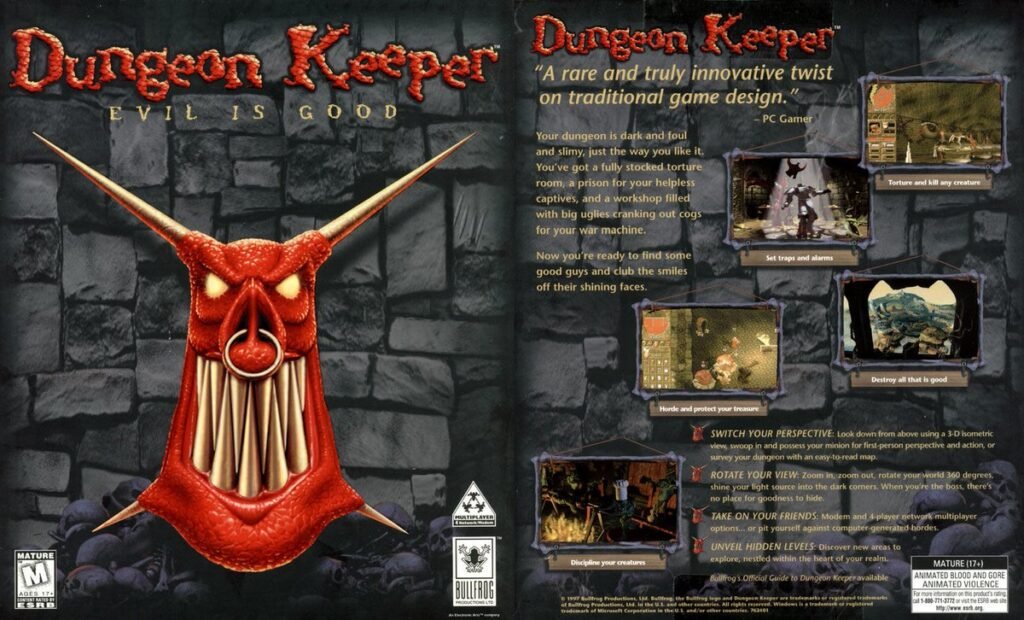
Let’s travel back to 1997 for a second. While every other game on the shelf was trying to make you the shining knight in pixelated armor saving a princess, Bullfrog Productions decided to do something a little more sinister. They handed you the keys to the underworld and told you to get to work. Dungeon Keeper isn’t just a strategy game; it’s a middle-management simulator where your employees happen to be bile-spewing demons and neurotic warlocks. The core philosophy of the game is simple: being the hero is boring, but being the Dungeon Keeper is an absolute blast. You aren’t just playing a level; you are building an ecosystem of evil, and thirty years later, it still feels more inspired than half the triple-A titles coming off the assembly line today.
The Art of Subterranean Real Estate
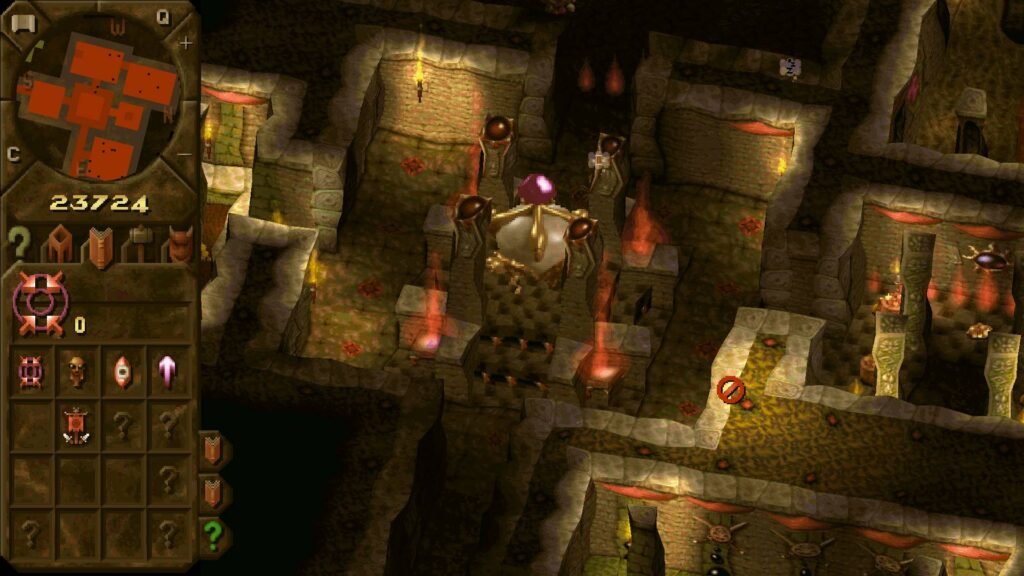
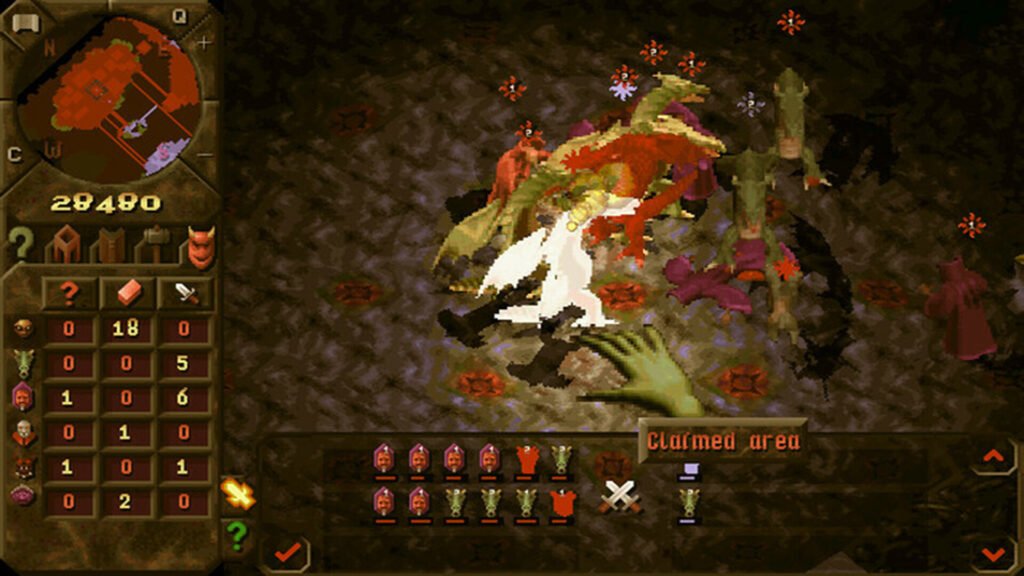
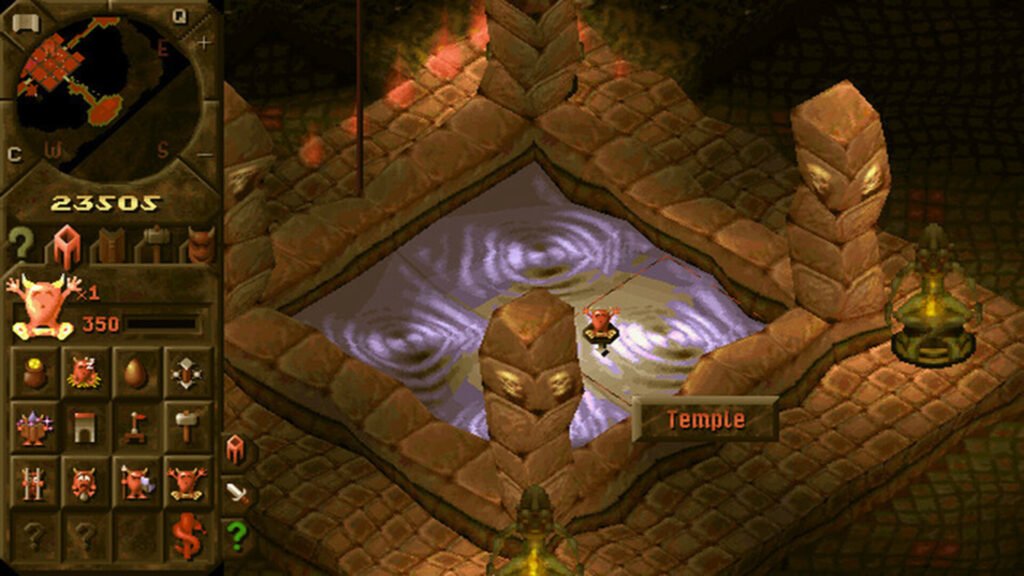
The game starts with a single Dungeon Heart, a pulsing red gem that represents your very soul. If that breaks, it’s game over. From there, you use your cursor—a giant, disembodied hand—to command your Imps. These little guys are the backbone of your entire operation. You don’t control them directly; instead, you tag blocks of dirt for excavation, and they scurry over to dig them out. This creates a sense of Indirect Control that defines the entire experience. You aren’t micromanaging every sword swing; you are designing a lair. You have to think about Efficiency and Flow. Do you put the Hatchery right next to the Sleeping Quarters so your monsters don’t have to walk far for their chicken dinner? Or do you tuck your Library deep in the back so your Warlocks can research new spells in peace? Every room you build has a specific function, and the way you layout your dungeon determines how well you can defend against those pesky “heroes” trying to ruin your day.
A Workforce From Your Worst Nightmares
What makes Dungeon Keeper truly special is the personality of its creatures. These aren’t just generic units; they are individuals with Needs and Temperaments. If you don’t pay them their Gold on time, they will go on strike. If you don’t provide enough food, they’ll start eyeing each other as snacks. Some creatures flat-out hate each other. If you put a Fly and a Spider in the same room, expect a bug-themed brawl to break out. The Bile Demon, a massive, flatulent creature that looks like a rotten potato, is great for the Workshop, but he’s incredibly slow and eats enough chickens to bankrupt a lesser keeper. Then you have the Mistress, who actually enjoys being slapped and is one of your most effective fighters. Managing this chaotic zoo of monsters requires a delicate balance of fear and reward, which keeps the gameplay loop constantly engaging.
The Power of the Slap
We have to talk about the Slap. In what other game is your primary interaction with your units a stinging backhand to the face? If an Imp is taking too long to reinforce a wall, you slap him. He works faster, though he loses a bit of health. It is a hilariously dark mechanic that reinforces your role as a cruel Overlord. But the disembodied hand isn’t just for violence; it’s your primary tool for Logistics. You can pick up a group of Orcs and drop them right into the middle of a battle, or grab a Troll and toss him into the Workshop to start building traps. This hands-on approach makes you feel connected to the world in a way that standard “point-and-click” RTS games usually miss. You feel like a physical presence in the dungeon, hovering over your minions like a vengeful cloud.
Seeing Through Evil Eyes
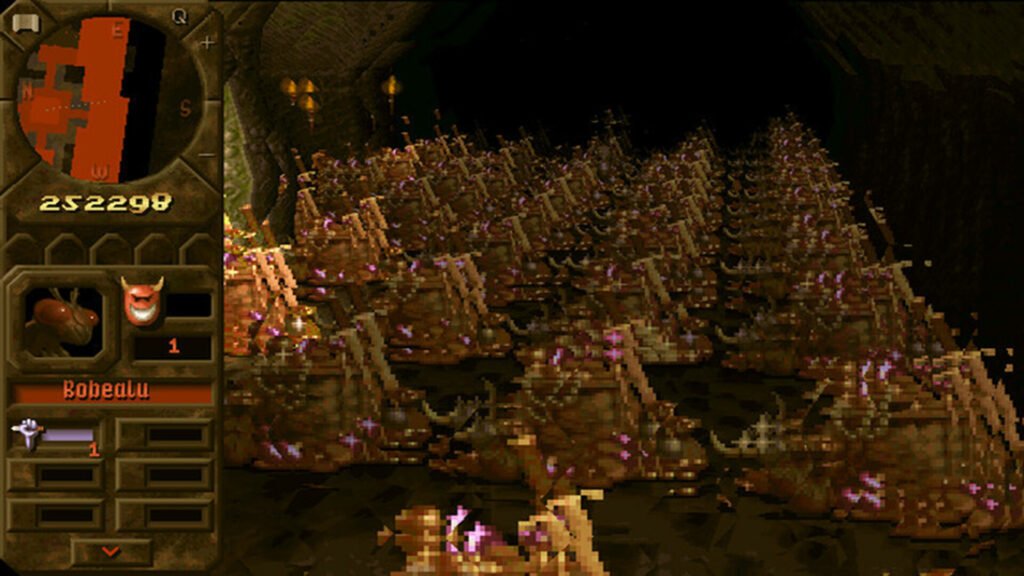
One of the most revolutionary features of Dungeon Keeper was the Possession spell. At any point, you can cast this spell and zoom down into the first-person perspective of any creature in your dungeon. Suddenly, you aren’t looking at a map; you are a Skeleton wandering through the dark, damp corridors you just built. The world takes on the visual quirks of the creature you inhabit. A Fly sees the world through a faceted, compound-eye filter and can buzz over water, while a Demon Spawn sees the world with a fiery tint. This isn’t just a gimmick, either. You can actually fight in first-person, using the creature’s specific abilities to turn the tide of a battle. It adds a layer of Immersion that was lightyears ahead of its time and makes the dungeon feel like a real, claustrophobic space rather than just a flat game board.
Atmosphere and the Mentor’s Voice
The aesthetic of Dungeon Keeper is thick with Atmosphere. The walls drip with slime, the ambient sound is filled with the echoes of distant screams and bubbling lava, and the lighting is deliciously moody. But the real star of the show is the Narrator, or the “Mentor.” Voiced by the legendary Richard Ridings, his deep, gravelly tone provides both guidance and dark humor. When he tells you “The spirits are uneasy,” or “Your dungeon is full of yogurt,” (wait, that was a different game, he actually says “Your dungeon is full of gold”), you feel the weight of his words. His dry wit and occasional mocking of your failures make him one of the most iconic voices in gaming history. He gives the game a Satirical edge that mocks the high-fantasy tropes of the 90s, reminding you that while you are being evil, you should at least be having a good time doing it.
The Eternal Struggle Against Heroes
The primary antagonists are the Heroes of the Realm, led by the pompous Avatar or the local Lord of the Land. These guys are everything you hate: bright, shiny, and obsessed with “justice.” They break into your dungeon through “Hero Gates,” and your job is to make sure they never leave. This is where the Tower Defense elements come into play. You can line your halls with Word of Power traps, Lightning traps, or the classic Boulder Trap that crushes everything in its path. Watching a group of high-level knights walk confidently into a corridor only to be decimated by a series of hidden traps is purely cathartic. And if they survive the traps? You capture them, throw them in your Torture Chamber, and wait for them to see the light—or rather, the darkness—until they eventually defect to your side.
Modern Evil: The KeeperFX Revolution
If you’re worried about trying to run a 1997 game on a 2026 rig, you need to know about KeeperFX. This isn’t just a simple patch; it is an incredible, open-source Fan Expansion and modernization project that has essentially rebuilt the game from the ground up. As of version 1.3.1, KeeperFX lets you play in glorious 4K Resolution, fixes hundreds of legacy bugs, and adds modern WASD Controls and mouse-wheel zooming that make the game feel fresh. It even introduces new units like the Druid and Time Mage, better Multiplayer stability, and a dedicated Workshop for community-made maps. It takes the original game files—like the ones you can grab on GOG—and turns them into a polished, high-performance masterpiece that keeps the classic “soul” intact while removing all the technical headaches of the DOS era.
Why It Still Holds the Crown
There have been sequels and plenty of spiritual successors like War for the Overworld or the Dungeons series, but none of them quite capture the specific Grime and soul of the original Dungeon Keeper. It was a lightning-in-a-bottle moment for Bullfrog. The game is a masterclass in Genre-Blending, mixing strategy, simulation, and first-person action into a cohesive, addictive package. It’s a game that respects your intelligence while appealing to your inner brat. If you haven’t played it, or if you haven’t revisited it in a decade, do yourself a favor and fire it up. Just remember to keep your gold piles high and your slapping hand ready.