
Release Date: April 16, 1992 (The Black Gate) / March 25, 1993 (Serpent Isle) Developer Name: Origin Systems
Get It On: GOG
The RPG That Ruined Every Other RPG
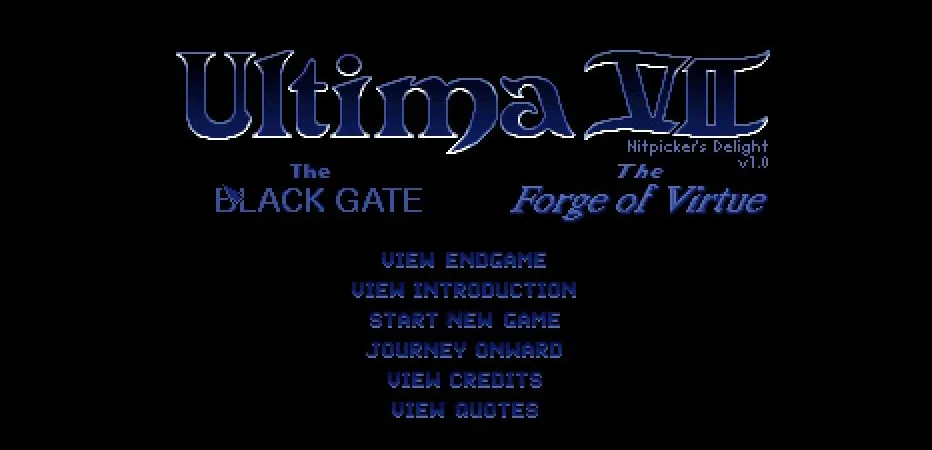
If you ask any gray-bearded gamer what the most immersive RPG of all time is, you’re going to hear one name over and over again: Ultima VII. Developed by the legends at Origin Systems under the “We Create Worlds” banner, this two-part epic—comprising The Black Gate and Serpent Isle—didn’t just raise the bar for role-playing games; it threw the bar into low earth orbit. While other games in 1992 were still making you move through grids or navigate menus to pick up a spoon, Ultima VII dropped you into a living, breathing world where you could grab, move, or interact with almost every single object on the screen. It was a simulation before we really knew what “immersive sims” were, and even thirty years later, the sheer level of detail in Britannia puts modern open-world titles to shame.
A World Where Everyone Has a Life
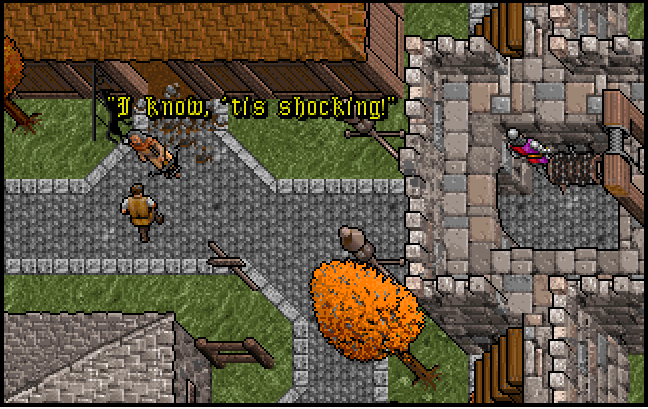
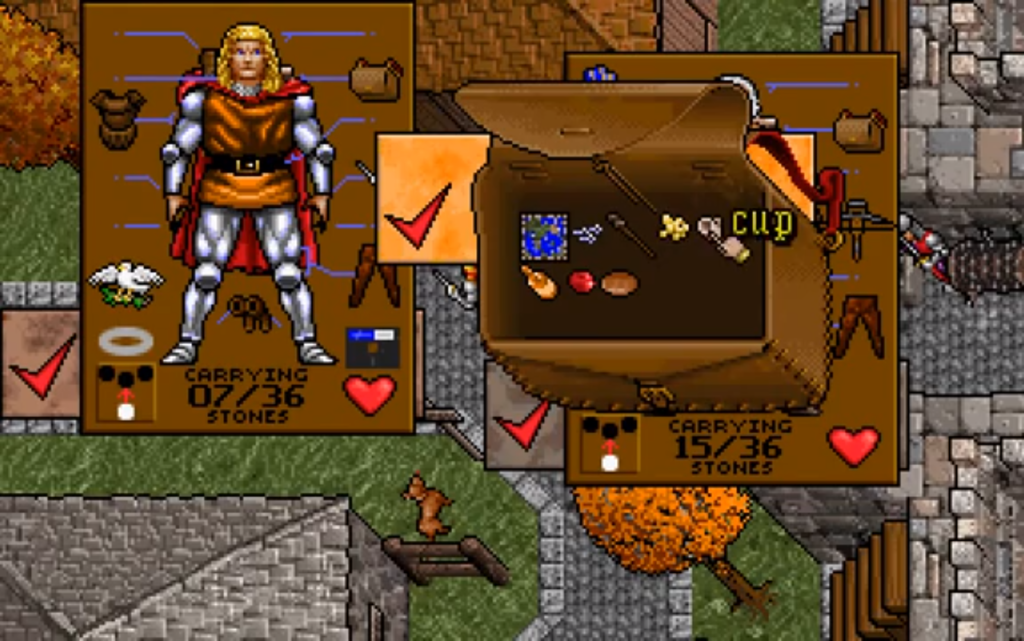
The first thing that hits you when you step into The Black Gate is that the world doesn’t revolve around you. In most games, NPCs stand around like mannequins waiting for a protagonist to trigger a quest. In Ultima VII, everyone has a Schedule. The baker wakes up, goes to the mill, grinds flour, bakes bread, and then hits the tavern at night for a pint. If you follow someone, you’ll see their entire life play out. This creates an incredible sense of Believability. You aren’t just playing a game; you are an intruder in a functioning society. You can walk into a house, double-click a clock to see the time, use a flour mill to make dough, and bake it in an oven to create a loaf of bread. Why? Because you can. This Environmental Interaction is the soul of the game. It makes the world feel tactile and heavy, turning simple exploration into a delight of discovery where “I wonder if I can do this” is almost always met with a “Yes.”
The Fellowship and the Face in the Sky
The story of The Black Gate is surprisingly mature and, quite frankly, a bit unsettling. You return to Britannia as the Avatar, the paragon of virtue, only to find that two hundred years have passed and things have gone a bit… weird. A new “benevolent” organization called The Fellowship has taken root, promising peace and prosperity to all. But as you dig deeper, you realize it’s a predatory Cult designed to pave the way for a massive, red-faced cosmic entity known as The Guardian. The Guardian is one of the greatest villains in gaming history because he talks directly to you, the player. He mocks you through your speakers, laughing at your failures and reminding you that he is winning. The plot deals with themes of Religious Manipulation, social inequality, and the slow erosion of morality, making it feel incredibly modern despite its age.
Your Party of High-Functioning Enablers
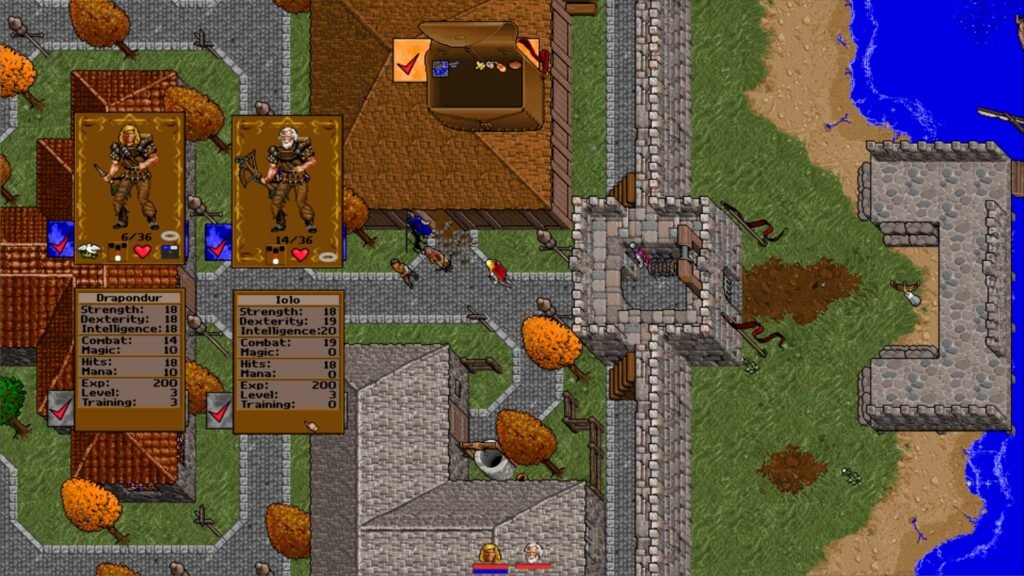
You aren’t alone in this quest. You’re joined by your classic trio of companions: Iolo, Shamino, and Dupre. These guys aren’t just stat blocks; they are your best friends. They’ll chime in during conversations, complain when they’re hungry, and occasionally give you grief if you start stealing everything that isn’t nailed down. The Party System in Ultima VII feels organic. Managing their equipment involves dragging items directly onto their paper-doll sprites, and keeping them fed is a constant (and sometimes hilarious) chore. There’s a specific kind of chaos that comes with a full party of eight people walking through a narrow dungeon, but the Comradery makes it worth it. When Dupre makes a sarcastic comment about the local nobility, you really feel like you’re traveling with a group of lived-in characters who have decades of history with the Avatar.
Serpent Isle: The Darker Side of the Avatar
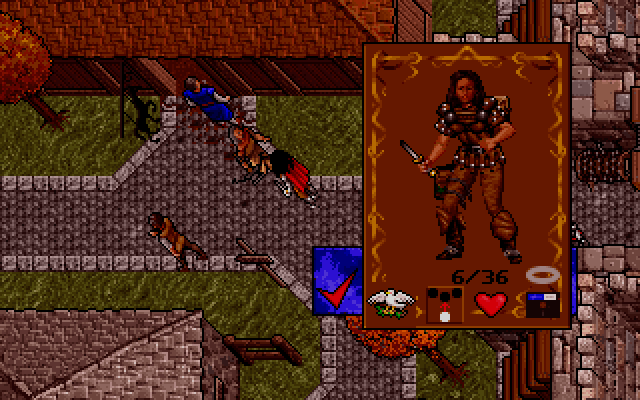
If The Black Gate is the grand open-world adventure, Serpent Isle is the intense, character-driven sequel that takes everything into much darker territory. It’s the first time an Ultima game took us away from Britannia to a new land—the titular Serpent Isle—populated by people who left Britannia long ago because they hated the Avatar’s Virtue System. This game is more linear but compensates with a Narrative Depth that is staggering. It’s a story about ancient civilizations, cosmic imbalance, and the personal failings of your companions. The stakes feel incredibly high, and the world is much more hostile. Serpent Isle is often cited as the pinnacle of the series’ writing, offering a tragic, complex ending that truly tests what it means to be a hero in a world that is fundamentally broken.
The Struggle of the Voodoo Memory Manager
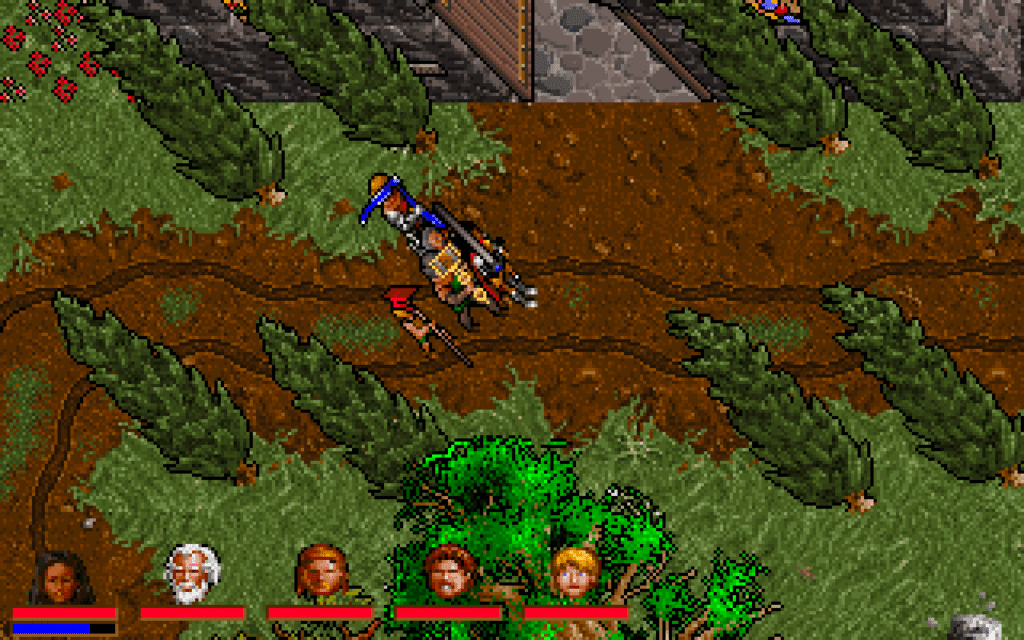
We have to acknowledge the elephant in the room: playing Ultima VII in 1992 was a technical nightmare. The game used a proprietary memory manager called Voodoo that famously hated almost every computer configuration on the planet. If you wanted to run the game, you usually had to create a custom Boot Disk just to free up enough “conventional memory” to get past the intro. It was a rite of passage for PC gamers of that era. Thankfully, we live in the future now, and we don’t have to suffer through the blue-screen-of-death gambit just to see the Avatar’s face.
Modern Magic: Playing with Exult
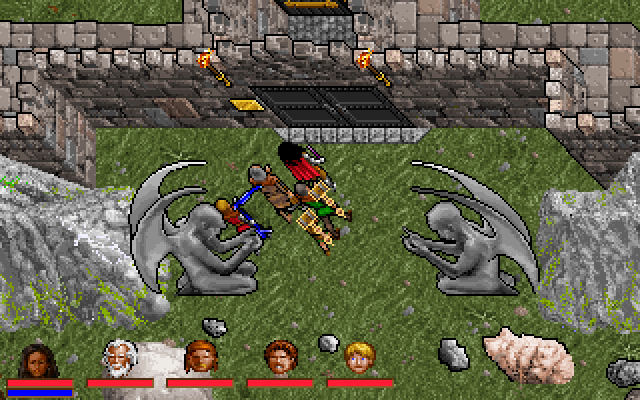
The absolute best way to experience this masterpiece today is through Exult. This is a fan-made, open-source engine reimplementation that allows Ultima VII to run natively on modern operating systems like Windows 11, macOS, and Linux. You can find everything you need at the Exult website. What makes Exult a game-changer isn’t just that it makes the game run; it adds a massive list of Quality of Life Features. You can play in higher resolutions (though stretching it too far can break the immersion), use a much better Digital Music soundtrack, and enjoy a smoothed-out interface. It even fixes thousands of bugs that were present in the original DOS version. Most importantly, it adds a “Paperdoll” system to The Black Gate (which originally didn’t have one), making inventory management much more intuitive.
The Ultimate Retro Flex: Ultima VI in Ultima VII
If you’re a real completionist, there is a legendary project you need to check out within the Exult ecosystem. The developers and community have actually made it possible to play a Modded Remake of Ultima VI entirely within the Ultima VII engine via Exult. This allows you to experience the story of the sixth game with all the Tactile Interaction and interface improvements of the seventh. It is a monumental feat of fan engineering that brings the entire “Age of Enlightenment” trilogy into a cohesive, playable format. You get the best of both worlds: the sprawling, classic plot of The False Prophet combined with the Immersive Simulation mechanics that made The Black Gate so famous. You can find information on how to set this up through the Exult Mods page.
The Verdict: Why You Must Play It
Ultima VII is a rare example of a game that had too much ambition for its time and somehow managed to pull it off anyway. It’s a game where you can solve a murder mystery, bake a cake, join a cult, and fight a trans-dimensional demon, all before lunch. It respects your curiosity and rewards you for poking at the edges of its world. While the Real-Time Combat can be a bit of a “cluster-cluck” (as your party often just runs in and swings wildly), the sheer joy of living in Britannia or Serpent Isle outweighs any mechanical clunkiness. It is a masterpiece of World Building and a testament to the idea that a game’s “graphics” aren’t nearly as important as the depth of its systems.