
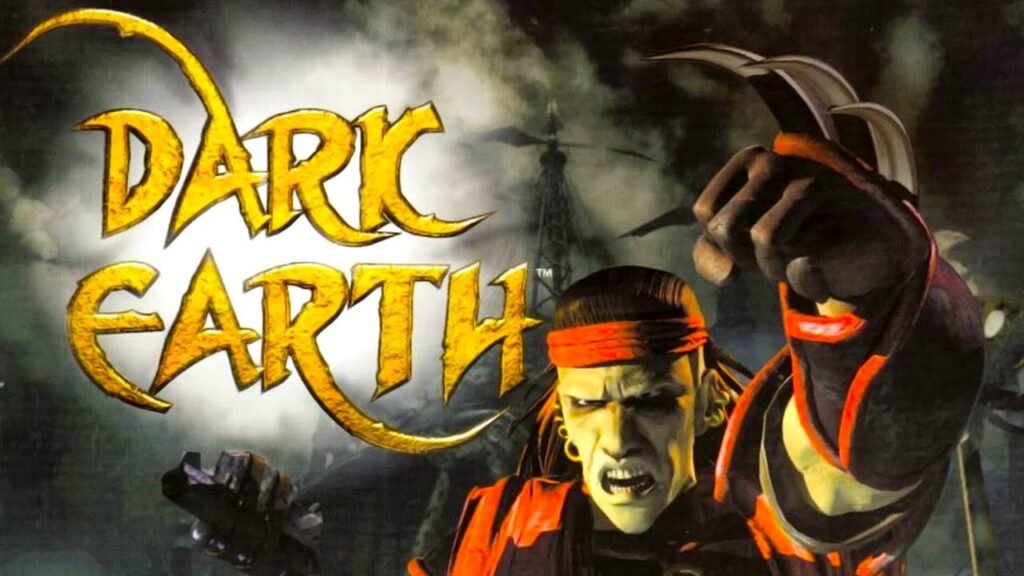

Release Date: September 1997 Developer: Kalisto Entertainment
A World Where the Sun Went on Vacation
Before everything became a standardized open-world shooter, developers were taking massive swings at world-building. One of the most ambitious and frankly atmospheric swings came from a French studio called Kalisto Entertainment. They gave us Dark Earth, a game that traded the usual radioactive deserts of the post-apocalypse for a haunting, sunless world where light is literally a religion and the ground itself wants to eat you.
The setup for Dark Earth is honestly one of the best in gaming history. After a massive disaster known as the Great Cataclysm, the sky was choked with dust, plunging the planet into a permanent twilight. Civilizations managed to survive in tiny pockets called Stalls, which are basically city-states built on high ground where the last rays of light can still reach. If you step outside a Stall, you are in the Dark Earth, a place filled with monsters and a creeping, sentient darkness. It’s a setting that feels both ancient and futuristic, mixing tribal politics with scavenged technology in a way that feels like Mad Max met The Dark Crystal at a goth club.
Meet Arkhan: The Hero With a Seriously Bad Day
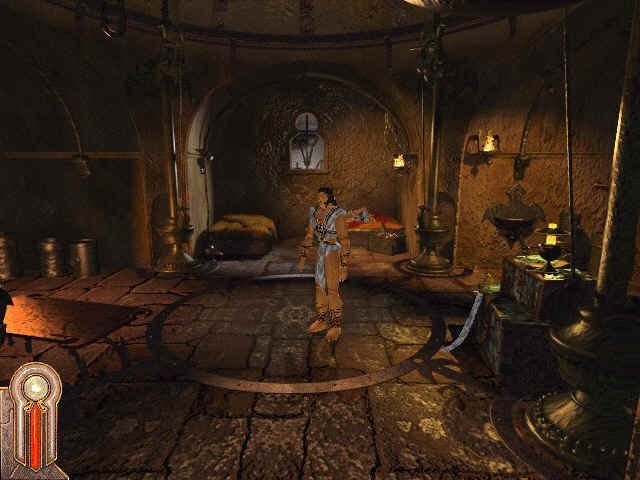
You play as Arkhan, a member of the Guardians of Fire. These guys are essentially the elite police force of the Stall of Siddhart, tasked with keeping the peace and protecting the “Great Fire” that keeps the city alive. Arkhan is your typical stoic hero at first, but his life gets turned upside down during a political assassination attempt. He isn’t just wounded; he is sprayed with a toxic, mutagenic substance called the Dark Earth.
This is where the game gets brilliant. Instead of just having a health bar that goes down, Arkhan is slowly mutating throughout the entire game. This isn’t just a plot point in a cutscene; it’s a core gameplay mechanic. As the clock ticks, Arkhan’s skin turns gray, his eyes start to glow, and his voice becomes a raspy growl. He is literally turning into one of the monsters he was sworn to hunt. This creates a massive sense of urgency because you aren’t just trying to save the city; you are desperately searching for a cure before you lose your humanity entirely.
Combat, Conversations, and the Art of the Swing
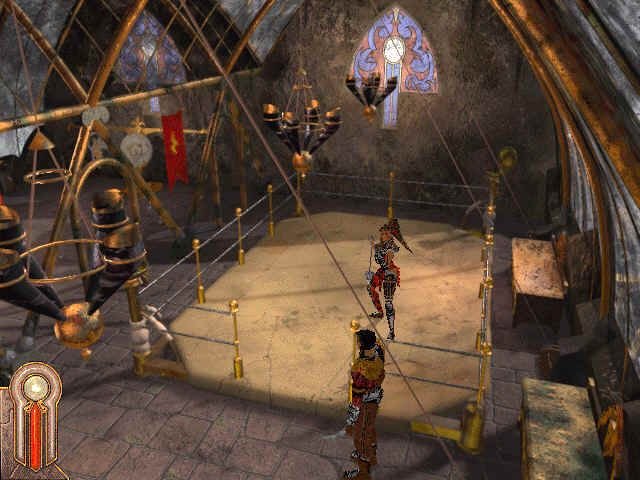
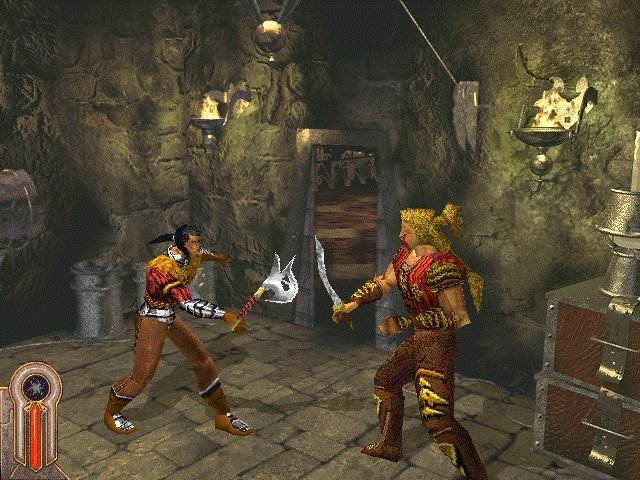
In terms of how it actually plays, Dark Earth was a bit of a pioneer in the action-adventure space. It used pre-rendered backgrounds with 3D character models, a style made famous by Alone in the Dark and Resident Evil. However, unlike those games which focused on shooting zombies, Dark Earth was all about melee combat. Since bullets are non-existent and technology is failing, you spend most of your time swinging scavenged pipes, glowing swords, and jagged axes.
The combat was surprisingly tactical for 1997. You could switch between different stances, choosing to be more aggressive or defensive depending on the enemy. But it wasn’t all just hitting things with sticks. The game put a huge emphasis on adventure and investigation. You had to talk to the citizens of Siddhart, navigate the complex political landscape of the High Priests, and solve puzzles that felt integrated into the world. What made it even cooler was that your mutation affected how people treated you. If you looked too much like a monster, NPCs might run away in terror or refuse to help you, forcing you to find alternative ways to progress.
The Haunting Beauty of Siddhart
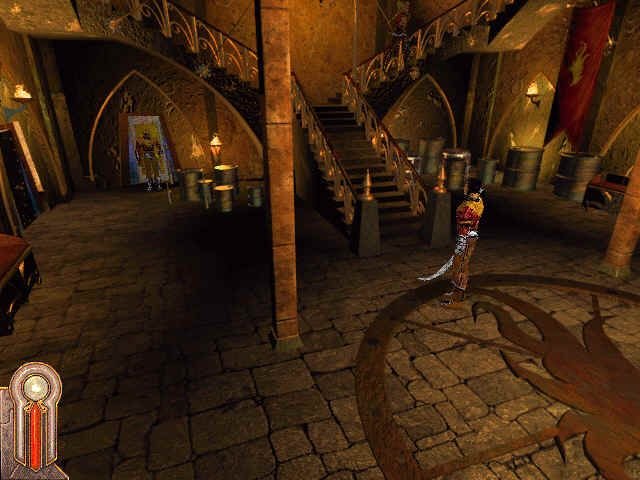
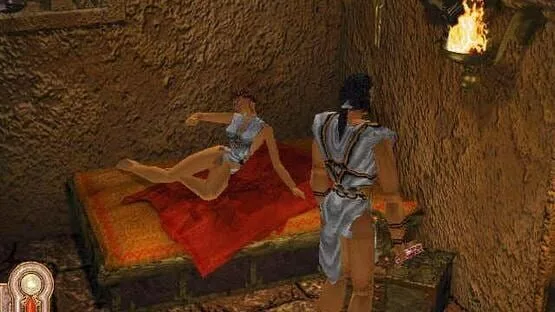
We have to talk about the visuals, because for 1997, Kalisto Entertainment were absolute wizards. The pre-rendered backgrounds of Siddhart are breathtakingly detailed. You move from the glowing, opulent upper districts where the rich bask in the Great Fire, down into the grimy, oil-stained lower levels where the Scavengers live. There is a sense of “lived-in” history in every screen. You see the pipes leaking steam, the strange religious icons etched into the walls, and the flickering lanterns that provide the only safety against the dark.
The atmosphere is further dialed up by a soundtrack that is nothing short of legendary. It’s moody, tribal, and deeply unsettling. It makes you feel the weight of the Dark Earth pressing in on the city walls. Even though the character models look like a collection of sharp triangles by today’s standards, the art direction is so strong that your brain fills in the gaps. It feels like a real place with a real culture, which is something many modern games with billions of polygons still struggle to achieve.
Why the Mutation Mechanic Was Ahead of Its Time
The mutation system in Dark Earth was doing things that games like Fable or Mass Effect wouldn’t touch for years. It wasn’t just a binary “good or evil” choice. It was a physical representation of your failure or success in the game’s world. If you took too long to solve a puzzle or got hit too much by certain enemies, the darkness within Arkhan would spread.
As you mutated, your physical strength would actually increase, making combat easier, but your intelligence and social standing would plummet. It created this amazing psychological tension for the player. You might want to be stronger to beat a tough boss, but at what cost? Watching Arkhan slowly lose his ability to speak clearly or seeing his armor burst as his muscles distorted was genuinely tragic. It turned the game from a simple “save the world” quest into a deeply personal survival horror story where the monster was inside you.
The Legacy of a Forgotten Classic
So, why aren’t we on Dark Earth 10 by now? Unfortunately, while the game was a hit in Europe, it didn’t quite set the world on fire in the US. Kalisto Entertainment actually started work on a sequel for the PlayStation 2, which looked absolutely incredible in early previews. It was supposed to take the concept even further, with more complex mutations and a larger world. Sadly, the studio ran into financial trouble and folded before the sequel could see the light of day.
Despite that, Dark Earth remains a cult classic for anyone who values atmosphere and originality. It’s a game that dared to be weird, dark, and challenging. It didn’t treat the player like a child; it dropped you into a dying world and told you to find your own way to the light. If you can stomach the “tank controls” of the 90s, it is well worth tracking down a copy or watching a long-play on YouTube. There really hasn’t been anything quite like it since. It’s a grim, beautiful reminder of a time when games were willing to get their hands dirty with some bio-organic weirdness.