
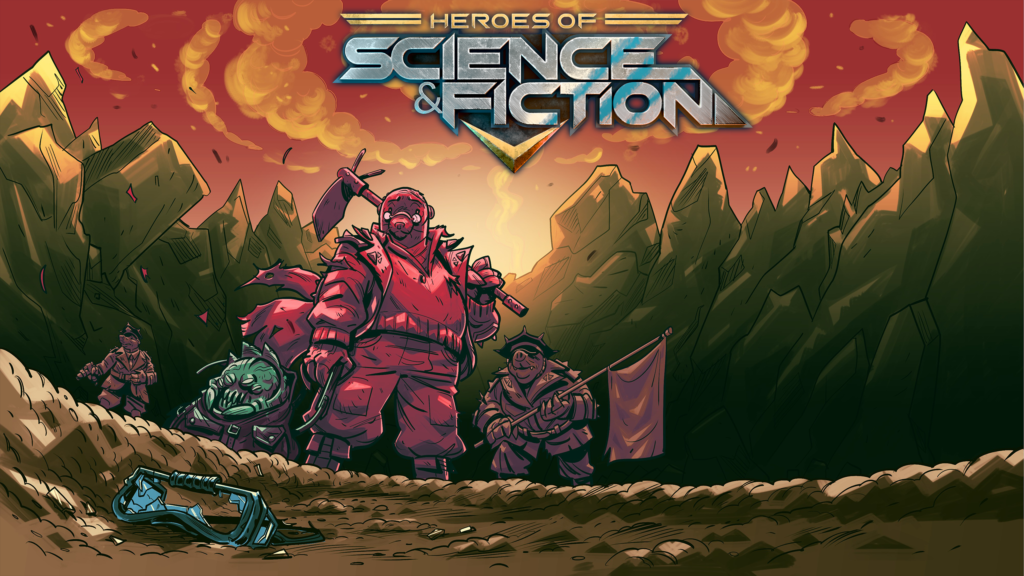

During the golden age of PC gaming, you probably remember spending entire weekends hunched over a flickering monitor, clicking through hexagonal maps and hoarding wood and ore like a digital dragon. We are talking about that specific brand of turn-based strategy magic that made the nineties so iconic. For the longest time, fans of that genre felt like they were living on breadcrumbs, waiting for someone to capture that lightning in a bottle again. Enter Oxymoron Games, the developers who previously proved they could handle complex management with Project Hospital. With their latest venture, Heroes of Science and Fiction, they haven’t just stepped into the ring; they’ve basically rebuilt the stadium. This game is a love letter to the classics, but it isn’t just wearing a nostalgia suit. It is a bold, weird, and incredibly addictive genre-blending strategy RPG that asks the very important question: why choose between a wizard’s staff and a plasma rifle when you can just have both?
A Universe Where Magic Meets the Machine
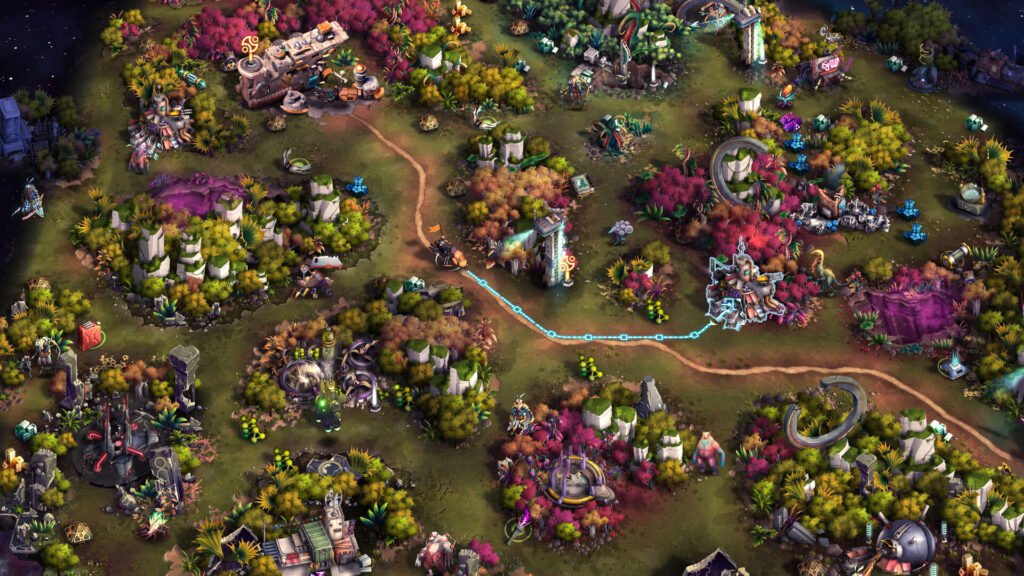
The first thing that hits you when you fire up Heroes of Science and Fiction is the setting. Most strategy games pick a lane. You’re either in a high-fantasy realm with elves and goblins, or you’re in a cold, metallic future with cyborgs and spaceships. Oxymoron Games decided to take the “why not both” approach, creating a hybrid universe where arcane rituals exist right alongside advanced robotics. This isn’t just a cosmetic choice, either. The lore weaves these elements together, making the world feel cohesive rather than cluttered. You might find yourself defending a shimmering crystal spire with a squad of cybernetically enhanced soldiers, or using a powerful sorcerer to call down a meteor strike on a group of rogue AI drones. This tonal duality keeps the exploration fresh because you truly never know if the next landmark on the map will be an ancient enchanted forest or a crashed interstellar freighter leaking radioactive fuel.
The Art of the Grand Overworld
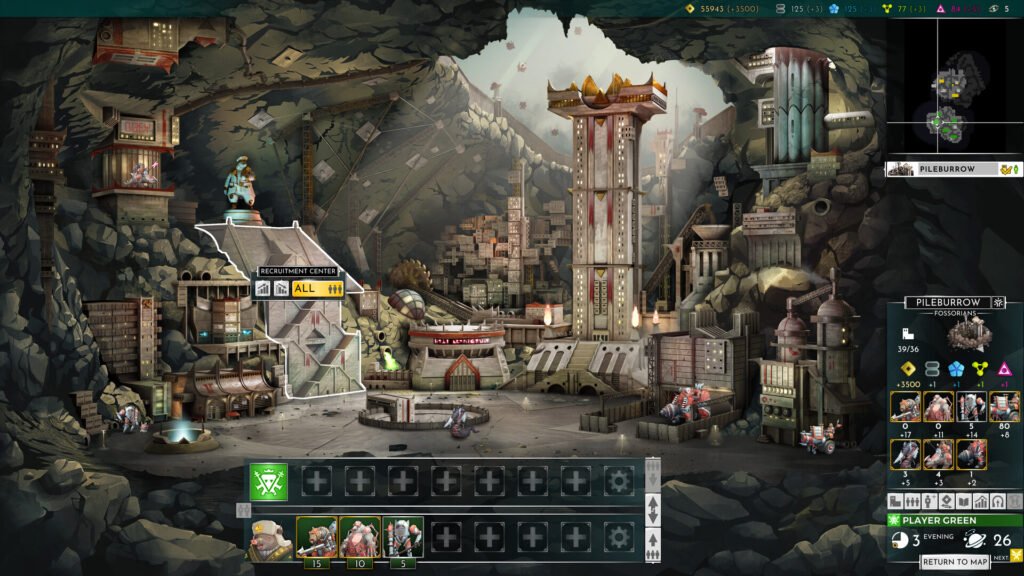
At its heart, the game follows the classic loop of exploration, expansion, and exploitation. You start with a single hero and a small base, and the map is shrouded in a thick fog of war. Moving your hero across the terrain feels immensely satisfying because the world is packed with detail. Every turn is a calculation. Do you head toward that gold mine to stabilize your economy, or do you take a detour to an ancient laboratory that might grant your hero a permanent stat boost? The resource management is tight and demanding, forcing you to prioritize what your empire needs most at any given second. You aren’t just clicking buttons; you are spinning plates. The sense of discovery is constant, and the game does a fantastic job of rewarding players who venture off the beaten path to find hidden artifacts or neutral dwellings where rare units can be recruited to bolster your ranks.
Building an Empire from the Ground Up
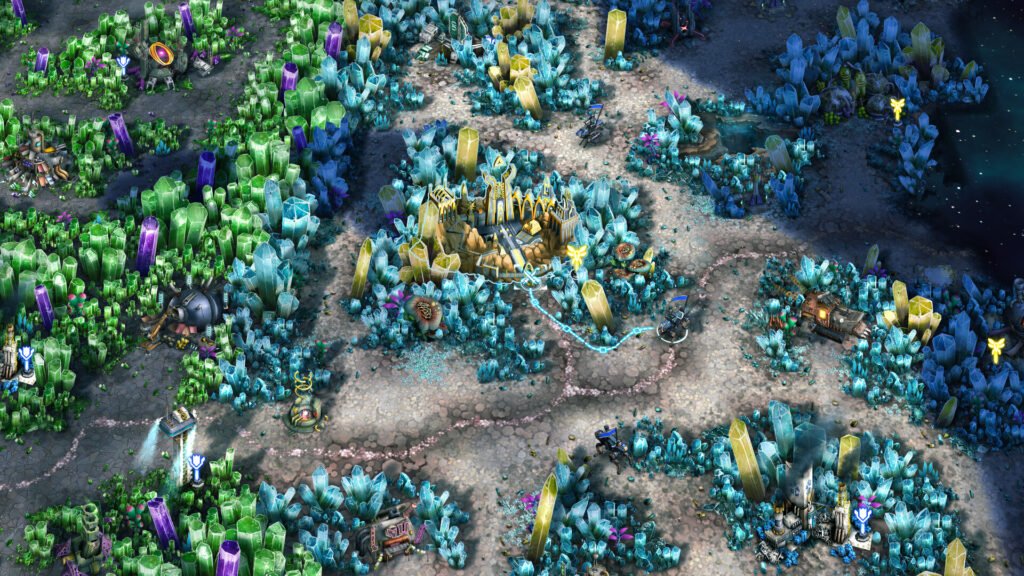
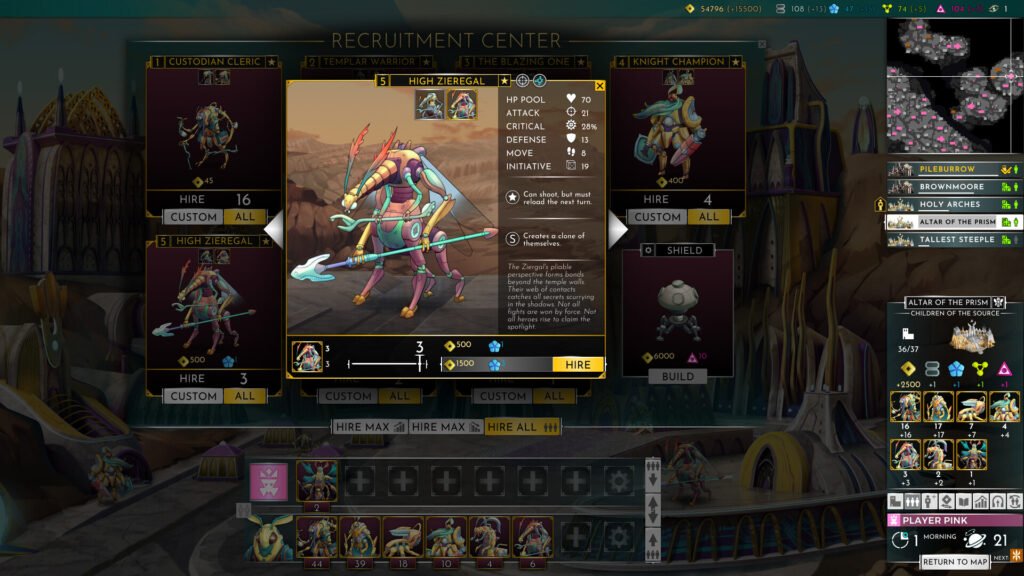
Your town is the beating heart of your operations, and city management in this game is surprisingly deep. Instead of just being a static menu, your base evolves visually as you pour resources into it. Deciding which structures to build first is where the real strategy begins. You might focus on unit production buildings to build a massive army early on, or you might invest in technological research centers to unlock powerful global buffs and advanced spells. There is a delicate balance to maintain here. If you neglect your defenses, a roaming enemy hero might swoop in and capture your hard-earned territory. If you ignore your economy, you’ll find yourself with a powerful army that you can’t afford to maintain. The progression system feels earned, and there is a genuine sense of pride when you finally upgrade your humble outpost into a sprawling metropolis of steel and sorcery.
Tactical Hex-Based Combat at Its Finest
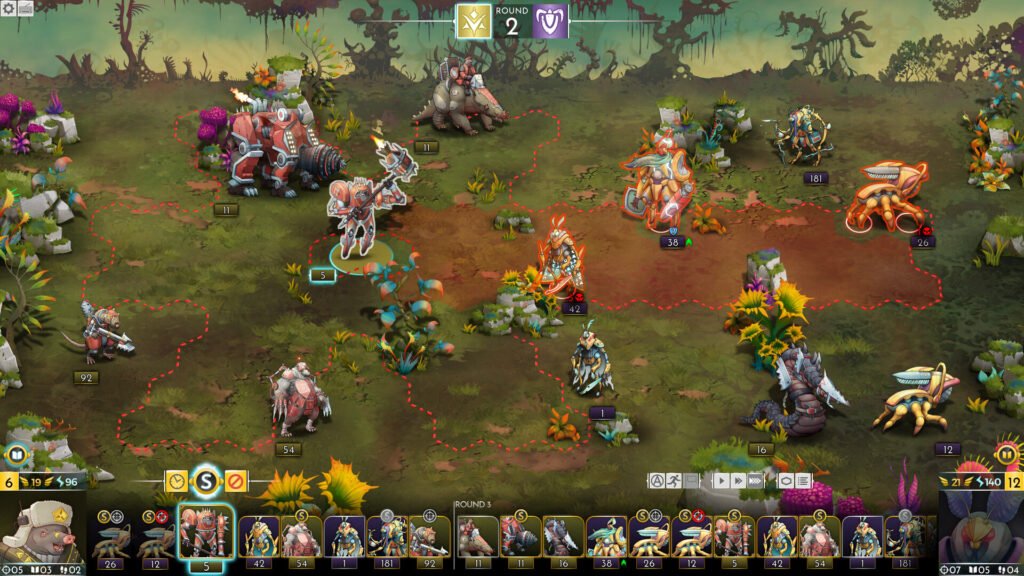
When two armies collide, the game shifts from the grand map to a dedicated tactical combat screen. This is where the “Heroes” part of the title really shines. Combat takes place on a hexagonal grid, and it is a pure test of tactical wit. Positioning is everything. You have to consider line-of-sight for your ranged units, the movement range of your melee fighters, and the unique special abilities of every creature in your stack. Your hero stands on the sidelines, acting as a commander who can turn the tide of battle with powerful spells or high-tech gadgets. One well-placed “Chain Lightning” or a perfectly timed “Nanite Repair” can be the difference between a crushing defeat and a flawless victory. The variety of units is staggering, ranging from ethereal spirits that can phase through obstacles to heavy tanks that act as literal shields for your glass-cannon mages.
The Hero’s Journey and Customization
Your heroes are not just faceless units; they are the anchors of your entire campaign. As they win battles and explore the world, they gain experience points and level up, allowing you to choose from a variety of skills. This RPG progression is incredibly flexible. You can build a “Might” focused hero who turns even the weakest peasants into a formidable fighting force through sheer leadership and combat buffs. Alternatively, you can go full “Magic” or “Tech,” focusing on devastating offensive abilities that can wipe out entire enemy squads in a single turn. The artifact system adds another layer of customization, as you can equip your hero with swords, shields, goggles, and rings found throughout the world. Hunting for that one perfect piece of gear to complete your hero’s build becomes a mini-game in itself, often leading to those “just one more turn” sessions that last until three in the morning.
A Modern Polish on a Classic Soul
What really sets Heroes of Science and Fiction apart from the clones of the past is the quality of life improvements. Oxymoron Games clearly looked at the frustrations of old-school strategy games and smoothed out the edges. The user interface is clean and intuitive, giving you all the information you need without burying it under twenty different menus. The visual style is vibrant and crisp, opting for a look that feels modern while still paying homage to the chunky, colorful sprites of the nineties. Even the original soundtrack hits the right notes, blending orchestral swells with synth-heavy beats to match the game’s dual themes. It is a game that respects your time while still providing a deep, complex experience for those who want to micromanage every single decimal point of their empire’s production.
Why You Need to Play This Game
The road through Early Access has been a productive one, with the developers constantly tweaking the balance and mechanics based on how people actually play. This journey is coming to its grand conclusion very soon. The official launch date of March 17, 2026, represents more than just a version number change; it is the culmination of years of work to perfect a formula that many thought was a relic of the past.
In a market saturated with fast-paced shooters and endless battle royales, there is something deeply therapeutic about a well-crafted turn-based strategy game. Heroes of Science and Fiction is a reminder of why we fell in love with this genre in the first place. It captures that elusive feeling of strategic agency, where every win feels like a result of your own cleverness and every loss is a lesson for the next attempt. Whether you are a veteran of the old-school classics or a newcomer looking for a deep, rewarding tactical experience, this title is a must-play. Oxymoron Games has delivered a masterpiece of cross-genre innovation that feels both comfortably familiar and excitingly new. It is a world where lasers meet legends, and it is a world you absolutely shouldn’t miss out on when it hits its full release this March.