
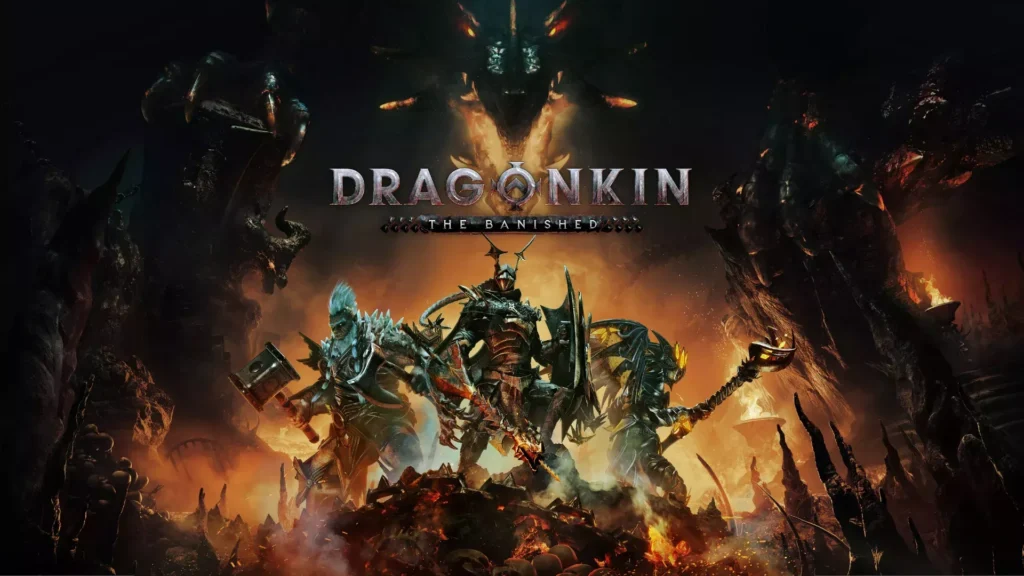

If you’ve spent any significant amount of time clicking on monsters until they explode into shiny loot, you know the “Diablo-clone” itch. We’ve all been there—scouring the map for that one legendary drop, obsessing over stat percentages, and wondering why every fantasy world seems to be having a really bad century. Enter Dragonkin: The Banished. Developed by Eko Software (the folks who gave us Warhammer: Chaosbane), this game dropped into a crowded Action RPG market with a very specific pitch: what if the dragons didn’t just burn the world, but corrupted the very DNA of the people living in it?
Now that we’ve had some quality time to sit with it, it’s time to talk about whether this draconic romp is a hoard worth guarding or just another pile of lizard scales.
The World Where “Dragon Breath” Isn’t Just a Morning Problem
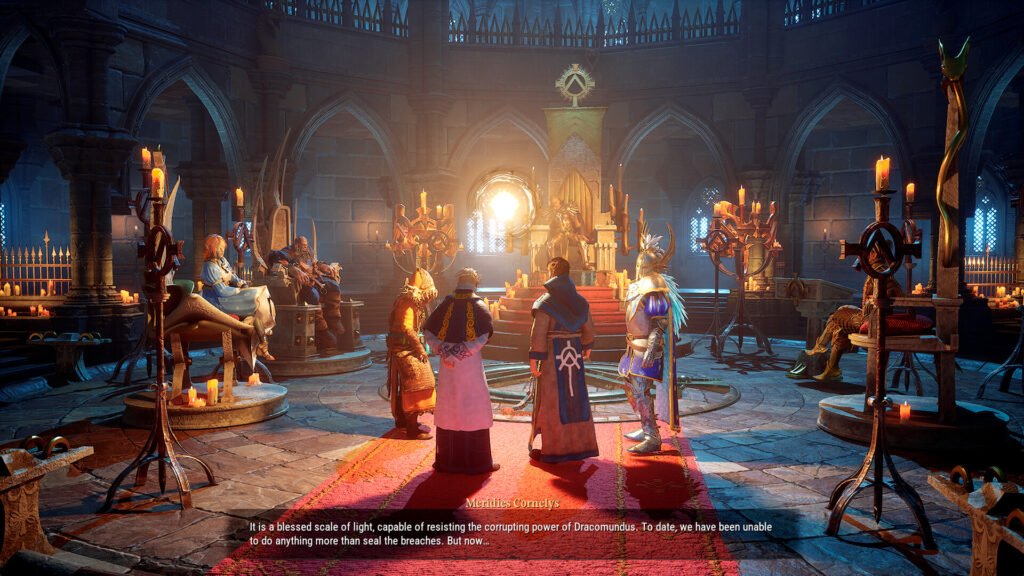
First off, let’s talk vibes. Dragonkin: The Banished doesn’t go for the high-fantasy glitter of some of its competitors. This is a grimdark world through and through. The lore centers on a world ruled by powerful Dragon Lords whose very presence has mutated the landscape and its inhabitants. You play as one of the “Banished”—warriors who have consumed dragon blood to gain the strength to fight back.
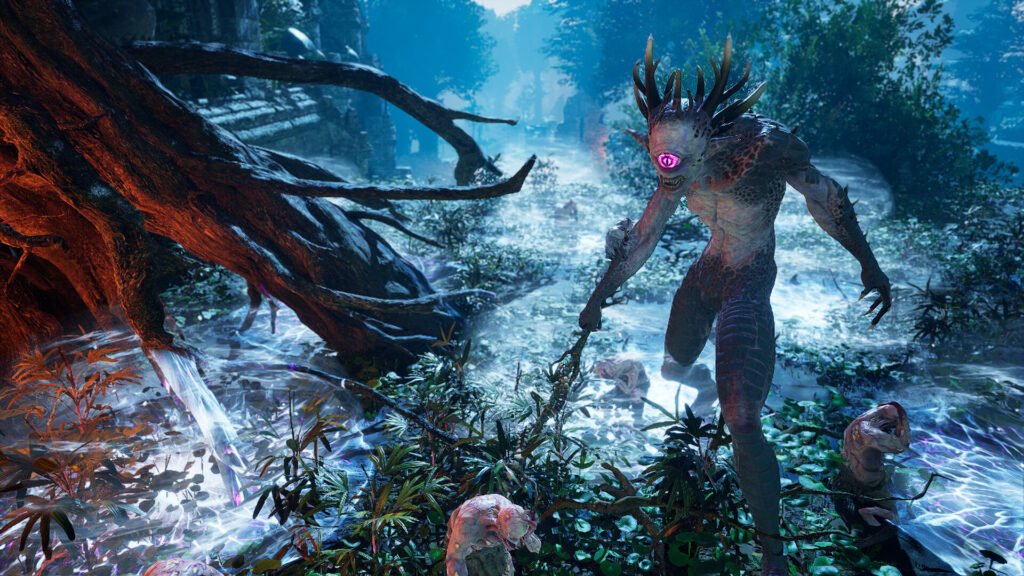
It’s a classic “fight fire with fire” scenario, but with more scales and existential dread. The environments are moody, ranging from toxic swamps to frozen wastes, all feeling like they’ve been chewed up and spat out by something much larger than you. It’s oppressive in a way that fans of Grim Dawn or Path of Exile will find comforting. It feels like a world that’s actually struggling, which makes your quest to hunt down the four Great Dragons feel a bit more personal.
The Ancestral Grid: A Puzzle for Your Power
If there is one thing that sets Dragonkin apart from the pack, it’s the Ancestral Grid. Usually, in ARPGs, you get a skill tree that looks like a giant spiderweb or a straight line of upgrades. Eko Software decided to do something a bit more… “Tetris-y.”
Your powers and buffs aren’t just clicked on a menu; they are placed on a physical grid. You find skill fragments and modifiers, and you have to fit them together to maximize your build. Do you want your fireball to explode twice? You need to find the right modifier and slot it next to the active skill. But wait, if you place it there, you block off the slot for your mana regeneration buff.
It turns character progression into a meta-game of spatial reasoning. It’s surprisingly addictive. There’s a genuine “Aha!” moment when you finally rearrange your grid to fit that one massive power spike you just found in a chest. It keeps the “looting” part of the game fresh because you aren’t just looking for better numbers; you’re looking for the right shapes to complete your build.
Choosing Your Flavor of Dragon-Slayer
The game offers four distinct classes, and while they hit the standard archetypes, they each have a “mutated” twist that keeps them interesting.
- The Barbarian: This is your classic front-line meat grinder. He’s all about momentum and physical dominance. If you like jumping into a pile of enemies and turning them into a fine red mist, he’s your guy. His draconic mutations make him feel more like a force of nature than just a guy with an axe.
- The Witch: This isn’t your “pointy hat and broomstick” witch. She uses draconic blood to fuel her spells, leading to some truly gnarly elemental effects. Her gameplay is a bit more tactical, relying on area denial and status effects to keep the scaly hordes at bay.
- The Knight: Think of him as the “tank,” but with a focus on mechanical ingenuity. He uses a mix of traditional martial prowess and specialized draconic gear. He’s the most “human” feeling of the bunch, which makes his struggle against the monsters feel even more heroic.
- The Archer: High mobility and high stakes. Playing the Archer requires a bit more finesse, as you’re constantly kiting enemies and looking for that perfect piercing shot. Her ability to infuse arrows with draconic corruption adds a layer of DOT (Damage Over Time) that can melt bosses if you play your cards right.
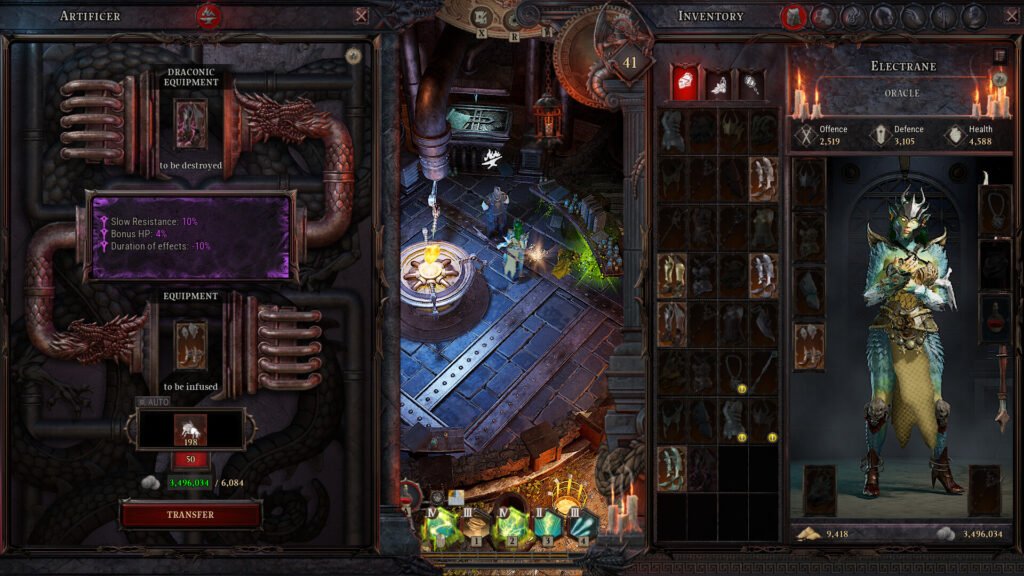
Combat: Meaty, Melodic, and Messy
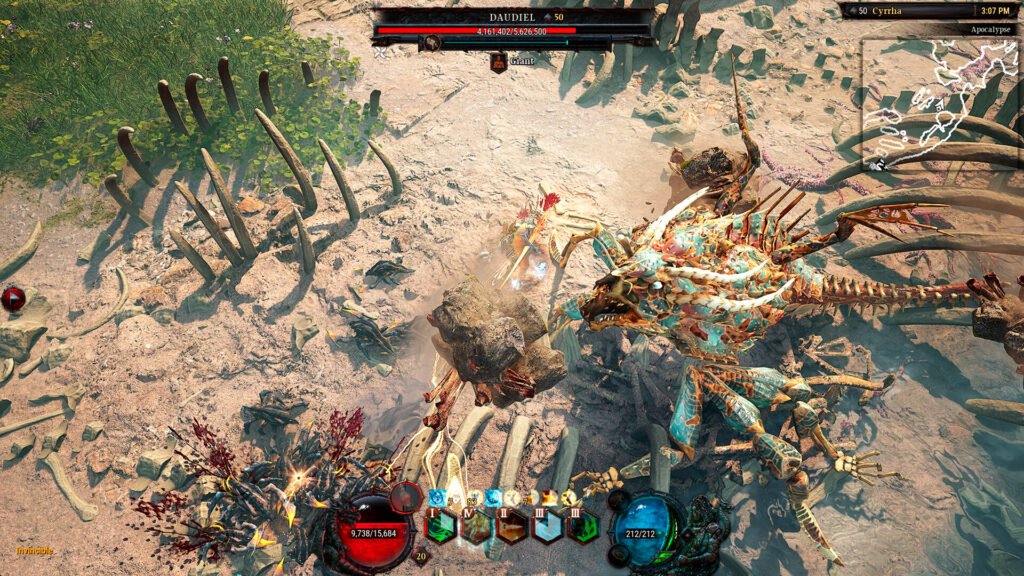
None of the fancy grids or lore matter if the combat feels like hitting a wet paper bag with a pool noodle. Fortunately, Eko Software learned a lot from their time with Chaosbane. The combat in Dragonkin is weighty. There is a satisfying “crunch” when you land a heavy blow, and the sound design does a lot of heavy lifting here.
The enemy variety is also a high point. You’re not just fighting generic skeletons (though there are plenty of those). You’re fighting half-transformed draconic monstrosities that have unique attack patterns. The boss fights against the Great Dragons are the clear highlights—they feel like actual “events” rather than just bigger versions of normal mobs. You have to watch their telegraphs, manage your cooldowns, and pray your Ancestral Grid was optimized for survivability.
The Co-op Factor
ARPGs are almost always better with friends, and Dragonkin supports up to four-player co-op (both local and online). This is where the game really shines. Combining the different classes and seeing how their skills interact on the screen is a beautiful, chaotic mess. There’s something special about having a Knight hold the line while a Witch rains down corrupted fire and an Archer picks off the stragglers from the back. The game scales decently with more players, though the screen can get a bit crowded with particle effects when everyone starts popping their ultimates at once.
Where it Stumbles (Just a Little)
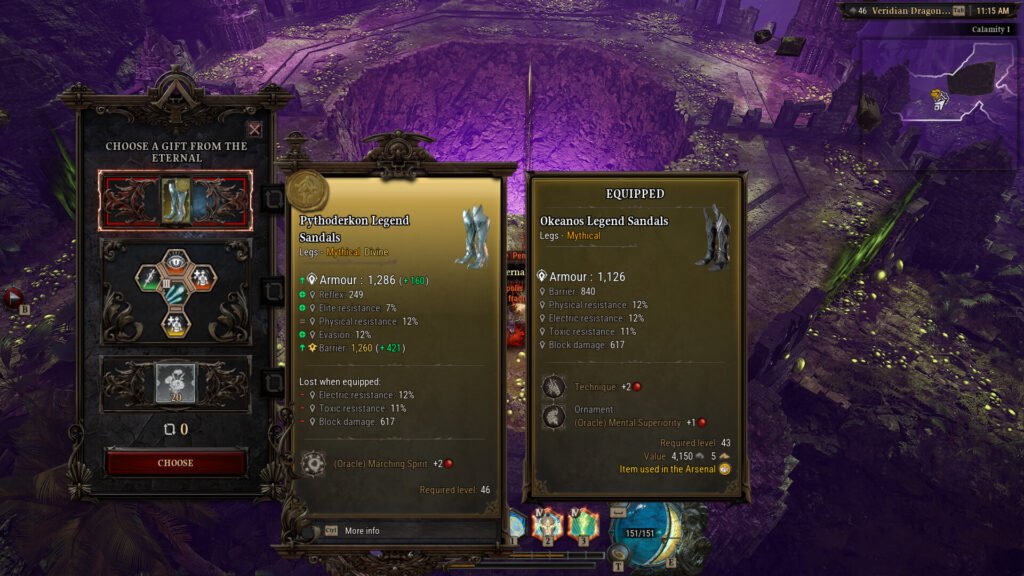
Is it perfect? Not quite. Like many games in this genre, the pacing can feel a bit sluggish in the middle chapters. There are moments where the “go here, kill X, return” quest loop starts to feel a bit transparent. Also, while the Ancestral Grid is brilliant, the UI can be a bit finicky on a controller. It’s clearly a system designed with a mouse and keyboard in mind, though the console port (especially on PS5) does its best to make it manageable.
Additionally, the end-game loop at launch is solid but could use more variety. Once you’ve taken down the big four, you’re mostly left with hunting for perfect grid pieces and higher-tier loot. It’s the standard ARPG treadmill, but if you were hoping for a revolutionary new take on the endgame, you might find it a bit familiar.
The Verdict
Dragonkin: The Banished is a confident, dark, and mechanically interesting entry into the ARPG pantheon. It doesn’t try to reinvent the wheel, but it adds some very cool spikes to it with the Ancestral Grid and the draconic mutation theme. It’s a great “comfort food” game for fans of the genre—perfect for putting on a podcast and slaying thousands of monsters on a Saturday afternoon.
If you’re tired of the “blessed hero” tropes and want something a bit more visceral and “blood-soaked,” this is definitely worth your time. Eko Software has carved out a nice little niche for themselves here, and I’m excited to see how they support the game with future updates.