
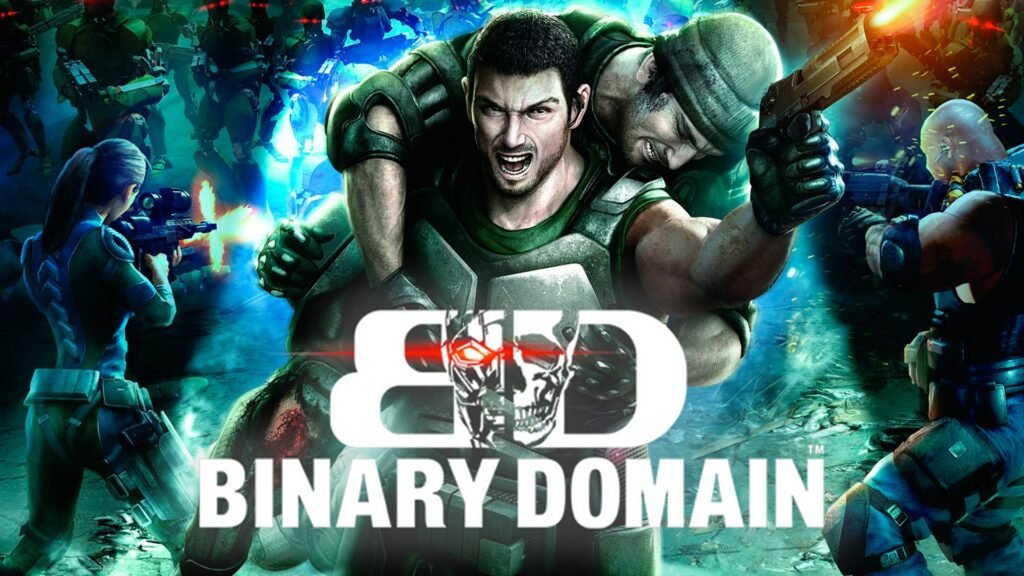

Release Date: February 2012 Developer: Ryu Ga Gotoku Studio
Get It On: Steam
Released in 2012 by the team behind the Yakuza series, Binary Domain remains one of the most fascinating “hidden gems” of the seventh generation of consoles. At first glance, it appears to be a standard cover-based third-person shooter in the vein of Gears of War, set in a dystopian 2080 Tokyo where rising sea levels have forced the construction of a two-tiered society. However, once you scratch the surface of its metallic exterior, you find a game with a surprising amount of heart, a unique tactical rhythm, and a narrative that explores the philosophical boundaries of artificial intelligence.
The most immediate triumph of the game is its “procedural destruction” system. Unlike many shooters where enemies are bullet sponges that simply fall over when their health reaches zero, the robots in Binary Domain react physically to every shot. You can systematically dismantle them; shooting out a robot’s legs forces it to crawl toward you with terrifying persistence, while blowing off its weapon arm causes it to switch to its other hand or resort to a melee charge. Aiming for the head doesn’t always result in an instant kill; instead, it often causes the machine to malfunction and start firing wildly at its own comrades. This mechanical feedback makes the act of shooting feel incredibly satisfying and tactical.
Complementing the combat is the Consequence System, which attempts to simulate the social dynamics of a squad under pressure. You play as Dan Marshall, a member of a “Rust Crew” tasked with investigating “Hollow Children”—androids so advanced they believe they are human. Throughout the journey, your teammates react to your performance and your dialogue choices. If you constantly friendly-fire or ignore their tactical suggestions, they may refuse to follow your orders during a heated firefight. While the voice recognition technology used for this system was finicky at launch, the underlying mechanic adds a layer of personality to your AI companions that is rarely seen in the genre.
The narrative also deserves significant praise for its tonal balance. It starts as a loud, machismo-filled action romp but gradually shifts into a poignant meditation on what it means to be human. The chemistry between the international cast—ranging from the dry British wit of the robot Cain to the stoic professionalism of Faye—grounds the high-stakes plot. By the time you reach the final act, the stakes feel personal rather than just global. Even with its slightly dated visuals and somewhat linear level design, Binary Domain stands as proof to creative ambition, proving that a generic-looking box can contain a deeply thoughtful and mechanically inventive experience.