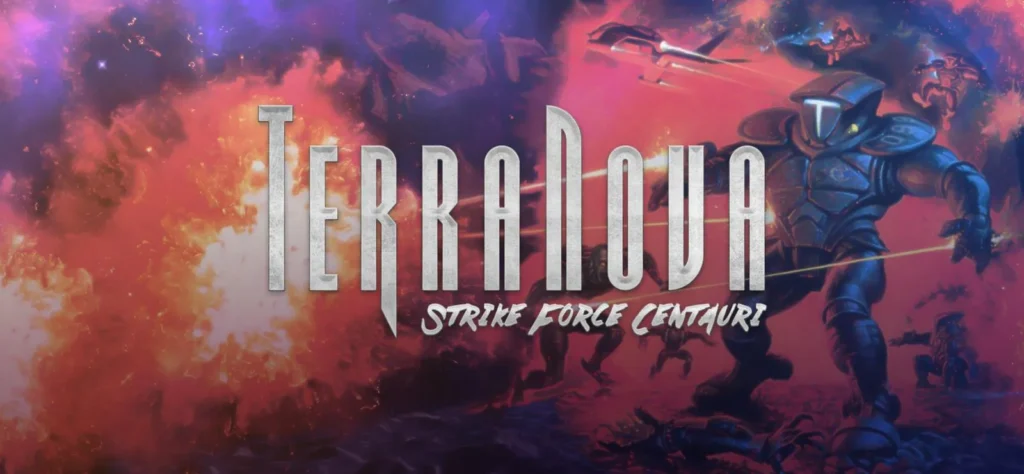

Release Date: March 5, 1996 Developer: Looking Glass Technologies (Looking Glass Studios)
Get It On: GOG
When discussing the pedigree of Looking Glass Studios, the conversation typically gravitates toward the shadows of Thief or the cerebral horror of System Shock. Yet, nestled in their 1996 catalog lies Terra Nova: Strike Force Centauri, a title that was years—perhaps a decade—ahead of its time. It remains one of the most sophisticated squad-based tactical shooters ever devised, blending simulation depth with a cinematic sci-fi ambition.
The Power Suit Reimagined
In Terra Nova, you play as Nikola Aphehelion, a leader of the Centauri colonial forces. While the FMV (Full Motion Video) cutscenes provide a charmingly “90s sci-fi” narrative wrapper, the true storytelling happens in the cockpit of your Powered Battle Armor (PBA).
Unlike the “walking tank” feel of MechWarrior, the PBAs in Terra Nova feel agile and athletic. The game captures the physics of momentum beautifully; you don’t just stop—you slide to a halt, your suit’s servos whining as they compensate for the weight. This tactile connection to the machine is the bedrock of the experience.
Tactical Depth and Squad AI
The brilliance of the game lies in its squad mechanics. At a time when most “teammates” in gaming were mere distractions, your squad in Terra Nova is essential.
- Specialized Roles: You can command scouts, electronics experts, and heavy weapons specialists.
- Complex Orders: You aren’t just clicking “attack”; you are setting waypoints, managing formations, and assigning specific demolition or sniping tasks.
- The AI Edge: The enemies don’t just stand in place. They flank, retreat, and use the rolling 3D terrain to their advantage, forcing you to think like a commander rather than a gunslinger.
Technical Marvel (and its Cost)
Looking Glass pushed the boundaries of outdoor environments. The game featured real-time shadows, reflection mapping on water, and vast, undulating landscapes that made the missions feel like genuine military sorties across a planet’s surface.
However, this ambition was its Achilles’ heel. The game required immense processing power for its era and lacked a hardware-accelerated version at launch. Consequently, it never reached the commercial heights of its peers, becoming a “cult classic” rather than a blockbuster.Terra Nova: Strike Force Centauri is a masterclass in emergent gameplay. It trusts the player with complex systems and rewards tactical patience over twitch reflexes. While the FMV acting is a relic of its time, the core gameplay loop—customizing a squad, dropping into a hostile valley, and executing a perfect pincer movement—remains as satisfying today as it was in 1996.
It adheres greatly to Looking Glass’s philosophy:
Games should be immersive simulations where the player’s agency is the primary engine of the experience.